
How Did the Indian Navy Rescue the Hijacked Fishing Vessel Azini Off Somalia in 48 Hours?
Key Takeaways
- The Indian Navy freed all 20 crew of the hijacked Iranian fishing vessel Azini on 2 November 2026 after a 48-hour operation.
- The Azini was seized by 12 armed pirates on 29 October off north-eastern Somalia, between Bandar Bayla and Hafun.
- The operation took place more than 3,000 km from Mumbai and involved a warship, a reconnaissance aircraft and MARCOS commandos airdropped from an IAF C-17.
- Authorities feared the hijacked vessel could be used as a 'mother ship' for attacks on commercial shipping.
- Iran publicly thanked India after the rescue; Somali piracy has resurged in the western Indian Ocean in 2026.
What happened off Somalia
The Indian Navy Azini rescue ended on 2 November 2026 with all 20 crew members of the hijacked Iranian fishing vessel Azini freed safely, more than 3,000 kilometres from Mumbai in the Arabian Sea. The operation lasted more than 48 hours and, according to the Defence Ministry, ended without any casualties or injuries. Defence Minister Rajnath Singh publicly congratulated the Navy for what he called a meticulously coordinated operation, and thanked the Indian Air Force for its timely support.
The vessel had been seized by armed pirates on 29 October 2026 off the north-eastern coast of Somalia, between the coastal towns of Bandar Bayla and Hafun in the semi-autonomous Puntland region. Twelve armed pirates took control of the fishing vessel, and maritime security authorities quickly warned that it could be turned into a "mother ship" — a captured vessel used as a mobile base from which pirates launch attacks on larger merchant ships far out at sea. That warning is what made the Azini case about much more than one fishing boat: left alone, a hijacked vessel drifting towards a busy commercial shipping lane becomes a threat to every ship that passes through the region.
How the Indian Navy rescued the Azini crew
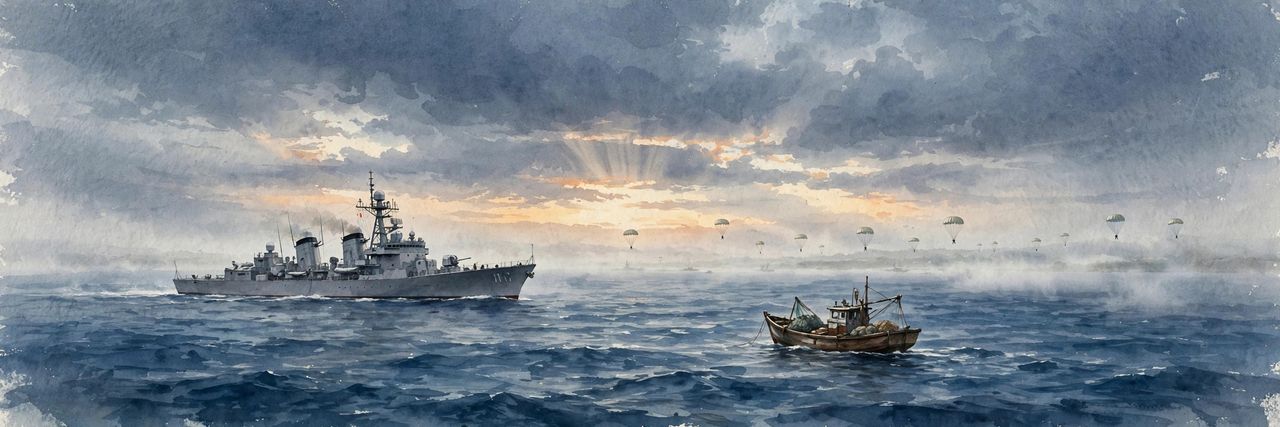
The Indian Navy deployed a mission-deployed warship to locate and intercept the vessel, supported by a maritime reconnaissance aircraft that tracked it through sustained surveillance. Marine Commandos (MARCOS), the Navy's elite special forces, were then brought into the operation through a precision airdrop from an Indian Air Force C-17 transport aircraft — a detail that underlines how far from the Indian coast this mission took place and how much coordination between the two services it required.
In the final phase, naval personnel stormed and secured the vessel, overcame the pirate threat and freed the crew. The Navy's statement described a swift and well-coordinated tactical intervention, and the Defence Ministry confirmed that the operation was completed on 2 November. The announcement itself came on 3 November, when the Defence Minister's message and the Navy's statement were reported by national media.
One detail in the reporting deserves care. The Navy and the Defence Ministry consistently report 20 crew members rescued. A Puntland maritime police official had earlier told the Associated Press that the vessel was carrying 21 Iranian crew members and two Somali security guards at the time of the hijacking, and that the suspected pirates were later disarmed, had their mobile phones confiscated, and were released, coming ashore at Bandar Bayla along with the guards. The difference between the two counts has not been publicly explained in full, and this article therefore reports the Navy's rescue figure of 20 while noting the earlier local account, rather than treating either number as the whole story.
Why the Azini was a danger to shipping
The Azini was not hijacked in isolation. The European Union's Maritime Security Centre for the Indian Ocean (MSCIO) issued an alert about the seizure and warned that the vessel was moving towards a busy merchant shipping lane, where it could have been used as a base for further attacks. A fishing dhow converted into a mother ship can carry pirate attack teams, fuel and supplies far beyond the range of small coastal skiffs, which is why navies treat a hijacked vessel as an urgent regional security problem rather than a private crime against one boat.
The Gulf of Aden and the western Indian Ocean carry a large share of the world's seaborne trade, including energy shipments and container traffic bound for Indian ports. When a hijacked vessel is left to roam those waters, insurance costs rise, shipping companies reroute vessels, and seafarers of every nationality face greater risk. By retaking the Azini quickly, the Indian Navy removed a potential launch pad for further attacks before it could be used.
Somali piracy is back — and India has been here before
The Azini hijacking fits a wider resurgence of Somali piracy across the Gulf of Aden and the western Indian Ocean in 2026. Regional security reporting has described the Azini as the third Iranian fishing dhow seized off Somalia since July 2026, and other reports put the number of pirate attacks in the region this year well above the quiet years that followed the international anti-piracy patrols of the 2010s. Piracy off Somalia had fallen sharply after coordinated naval patrols, industry security measures and prosecutions, but attacks have returned as attention and patrols shifted elsewhere.
India has recent experience of exactly this kind of mission. From December 2023 into early 2024, the Indian Navy responded to multiple piracy incidents under Operation Sankalp, its long-running maritime security deployment. In March 2024, the Navy rescued 17 crew members from the hijacked merchant vessel MV Ruen, around 2,600 kilometres from the Indian coast, and captured 35 Somali pirates. The Azini operation, more than 3,000 kilometres from Mumbai, extends that record further into the Arabian Sea and shows the same pattern: a warship already deployed in the region, aircraft for surveillance, and special forces for the final boarding.
What the rescue means for India
For India, the operation carries weight on several levels. First, it protects Indian interests directly: Indian seafarers crew a large share of the world's merchant fleet, Indian ports depend on safe passage through the western Indian Ocean, and any disruption in those lanes affects trade and energy supplies. Second, it reinforces India's role as a first responder in the Indian Ocean region — a navy that other countries' vessels, in this case an Iranian fishing boat, can rely on when pirates strike. That reputation was visible in the reaction from Tehran: the Iranian Embassy in New Delhi publicly thanked India, the Indian Navy and the Indian Air Force after the rescue, praising the operation that freed the 20 Iranian crew members.
Third, the mission demonstrates joint capability. A warship, a reconnaissance aircraft, Marine Commandos and an Air Force heavy transport aircraft, operating together more than 3,000 kilometres from home, is a test of logistics, communication and planning that few navies can pass at short notice. The Defence Minister's message made that point explicitly, saying the swift localisation, interception and safe release of the crew and vessel spoke well of the Navy's operational readiness and its ability to respond decisively to maritime threats across the region.
What happens next
With the crew freed and the vessel secured, attention turns to what follows a rescue of this kind. The suspected pirates were disarmed and released, according to the Puntland maritime police account reported by the Associated Press — an outcome that raises familiar questions about prosecution, since pirates released ashore can return to sea. International anti-piracy efforts have long wrestled with this gap: capturing pirates is only part of the problem, and without trials or detention, deterrence is weak.
For shipping, the immediate danger from the Azini itself has passed, but the wider piracy threat in the region has not. Shipping companies, regional navies and maritime security centres will keep watching for further hijackings, and the Azini case is likely to be cited in that monitoring as evidence that a hijacked fishing vessel must be intercepted early, before it becomes a mother ship. For India, the operation adds another entry to a growing record of distant-water rescues — and a reminder that maritime security in the Indian Ocean is not an abstract policy phrase, but a mission measured in kilometres, hours and lives brought home safely.
Conclusion
The Indian Navy Azini rescue was a 48-hour, long-distance operation that freed 20 crew members from a pirate-held fishing vessel, prevented a hijacked boat from becoming a floating base for further attacks, and drew thanks from Iran. It also showed, once again, that Somali piracy has returned to the western Indian Ocean and that the navies patrolling those waters — India prominent among them — remain the first line of defence for the ships and seafarers who pass through them. The Azini's crew are safe; the region's piracy problem is not yet solved.
Sources: this article is based on reporting by the Indian Express, DD India, the Associated Press (via NPR Illinois), the Economic Times and the Statesman, together with statements from the Indian Navy and the Defence Ministry. The full external reports are linked below.
- Indian Express report on the rescue: https://indianexpress.com/article/india/indian-navy-rescues-hijacked-vessel-azini-somalia-pirates-crew-10948913/
- DD India report on the operation: https://ddindia.co.in/2026/11/indian-navy-rescues-hijacked-fishing-vessel-off-somalia-frees-all-20-crew-members/
- Related reading on the Navy's new warships: https://indiaask.tech/question.php?slug=india-next-generation-corvettes-navy-rs-53866-crore-deal-explained
- Related reading on the recent US strike near Iran and regional security: https://indiaask.tech/question.php?slug=us-strike-iran-qeshm-island-oil-prices-india-explained
Frequently Asked Questions (FAQ)
What is the fishing vessel Azini, and when was it hijacked?
The Azini is an Iranian fishing vessel that was hijacked by 12 armed pirates on 29 October 2026 off north-eastern Somalia, between Bandar Bayla and Hafun. The Indian Navy freed all 20 crew members on 2 November 2026 after an operation lasting more than 48 hours, more than 3,000 km from Mumbai.
How did the Indian Navy rescue the Azini crew?
The Navy deployed a mission-deployed warship and a maritime reconnaissance aircraft to locate and track the vessel. Marine Commandos were then dropped in by a precision airdrop from an Indian Air Force C-17 aircraft, after which naval personnel secured the vessel, overcame the pirate threat and freed the crew. No casualties or injuries were reported.
Why was the Azini hijacking a danger to other ships?
Maritime security authorities warned the hijacked vessel could be used as a 'mother ship' — a mobile base from which pirates launch attacks on larger merchant ships far out at sea. The vessel was moving towards a busy commercial shipping lane, so retaking it quickly removed a threat to regional shipping, not just to one fishing boat.
Is Somali piracy increasing again in 2026?
Somali piracy has returned to the Gulf of Aden and the western Indian Ocean in 2026, with the Azini reported to be the third Iranian fishing dhow seized off Somalia since July 2026. India has responded to similar incidents before, including rescuing 17 crew from the hijacked MV Ruen in March 2024 under Operation Sankalp.
Read Next on IndiaAsk
- For how the Navy is strengthening its fleet, see the Rs 53,866 crore next generation corvettes deal. What Are India's New Rs 53,866 Crore Next Generation Corvettes, and Why Does the Navy Need Them?
- For the wider regional security picture near Iran, see the US strike on Qeshm Island and what it meant for oil prices and India. Why Did the US Strike Iran's Qeshm Island, and What Does It Mean for Oil Prices and India?
Related Articles


Answers
No approved answers yet — you can give the first answer.
Give Your Answer
Discussion
No approved comments yet.