
What Are India’s New Rs 53,866 Crore Next Generation Corvettes, and Why Does the Navy Need Them?
Key Takeaways
- The Defence Ministry signed Rs 53,866.50 crore contracts on 2 November 2026 for eight Next Generation Corvettes for the Indian Navy.
- GRSE will build five corvettes in Kolkata and Goa Shipyard Limited will build three, with the first delivery expected around 2030.
- The ships are indigenously designed by the Indian Navy, the first project built by defence public sector yards chosen through competitive bidding.
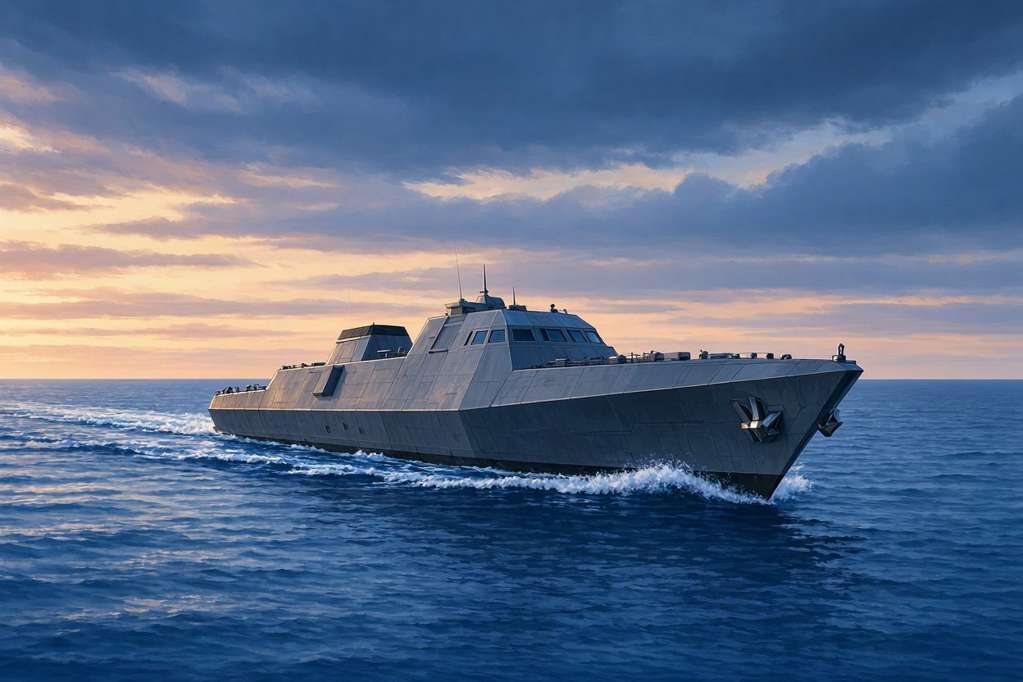
- Each corvette will be about 127 metres long, carry anti-ship and surface-to-air missiles plus torpedoes, and operate across air, surface and underwater missions.
- The programme is expected to generate about 72 lakh person-days of work in shipyards and 460 lakh person-days in ancillary industries and MSMEs over 10 years.
On 2 November 2026, the Ministry of Defence signed contracts worth Rs 53,866.50 crore for eight Next Generation Corvettes for the Indian Navy. These next generation corvettes, built entirely in India, will replace some of the Navy's ageing warships and give it a new class of fast, stealthy, multi-role combat ships. The contracts went to two state-run shipyards: Garden Reach Shipbuilders and Engineers (GRSE) in Kolkata will build five of the ships, and Goa Shipyard Limited (GSL) will build the remaining three.
The signing took place at Kartavya Bhawan-2 in New Delhi in the presence of Defence Secretary Rajesh Kumar Singh, less than a week after the Cabinet Committee on Security cleared the project. The Defence Ministry has described it as a milestone, because this is the first project in which warships are indigenously designed by the Indian Navy itself and then built by defence public sector undertakings selected through a competitive bidding process. GRSE had emerged as the lowest bidder when commercial bids were opened in May 2025.
What is a corvette, and what makes these "next generation"?
A corvette is a small warship, smaller than a frigate and larger than a patrol vessel, used for coastal defence, escort duties and combat near shore. The Indian Navy already operates corvettes, but the older Khukri and Kora-class ships they will replace were largely single-role vessels. The new Next Generation Corvettes (NGCs) are designed from the start as multi-role stealth surface combatants, meaning one ship can fight in the air, on the surface and under water.
That shift matters because modern naval threats do not come in one form. A ship on patrol may need to track an enemy aircraft, fire at a surface target and hunt a submarine in the same deployment. The NGCs are meant to do all three, instead of the Navy needing different ships for each job.
What the new corvettes will carry
According to GRSE and ministry statements reported in the press, each corvette will be about 127 metres long and 17.6 metres wide, with a deadweight tonnage of 4,950 tonnes. The ships will be able to stay at sea for 14 days without replenishment, reach a maximum speed of 26 knots, and carry 11 officers and 139 sailors. They will use a Combined Diesel and Gas turbine propulsion system with a cross-connect gearbox, driving two controllable pitch propellers, and will be able to operate helicopters.
The weapons and sensors planned for the ships explain the "multi-role" label. The proposed armament includes medium-range anti-ship missiles, medium-range surface-to-air missiles (MRSAM) and 324 mm torpedo tubes, along with a 76 mm Super Rapid Gun Mount, an AK-630 close-in weapon system for last-line defence against incoming missiles, and 12.7 mm stabilised remote-controlled guns. The sensor suite includes an electro-optical infrared search and track system and a multi-function surveillance, track and guidance radar (MFSTAR). Together, these systems let the ships attack surface targets, defend against air and missile threats, and hunt submarines.
Their missions will include offensive ship-to-ship and ship-to-surface missile attacks, anti-missile defence, anti-submarine warfare, escort duties, maritime interdiction operations including visit, board, search and seizure, and local naval defence.
Who builds what, and when will the ships arrive?
GRSE's share of the deal is worth approximately Rs 32,000 crore for its five ships, while the combined value of both contracts is Rs 53,866.50 crore. GRSE has built warships for the Navy before, including 10 corvettes, but none of the next-generation class. Reports put the first delivery around 2030, with the full programme stretching over the following years as the yards build the eight ships in sequence.
The long timeline is normal for warship building. Steel cutting, hull construction, fitting weapons and sensors, sea trials and final delivery take years for each vessel, and the yards will be building these ships alongside other naval orders. GRSE, for example, is already building nine warships, including a guided missile frigate under Project 17A, anti-submarine warfare shallow water craft and next-generation offshore patrol vessels.
Why this deal matters beyond the Navy
The most important feature of this deal may not be the ships themselves but how they are being made. The NGCs are indigenously designed by the Indian Navy and built by Indian public-sector yards chosen through competition, under the government's Aatmanirbhar Bharat and Make in India push in defence. That is a deliberate move away from importing warship designs and towards designing, building and maintaining them at home.
The economic footprint is large. The construction programme is expected to generate around 72 lakh person-days of employment in the shipyards and about 460 lakh person-days in ancillary industries and micro, small and medium enterprises (MSMEs) over the next 10 years. Shipbuilding pulls in steel, electronics, engines, weapons systems and hundreds of supplier firms, so a single naval order spreads work well beyond the two yards in Kolkata and Goa.
It also fits a wider pattern of defence spending. The Defence Acquisition Council has separately cleared large procurement packages this year, as explained in our article on the [Rs 2.12 lakh crore defence package](https://indiaask.tech/question.php?slug=dac-defence-package-2-12-lakh-crore-explained), and the Navy's leadership has been pushing self-reliance in naval innovation, as covered in our report on [SWAVLAMBAN 2026 and the Aatmanirbharta 2.0 call](https://indiaask.tech/question.php?slug=swavlamban-2026-aatmanirbharta-2-defence-explained). The corvette deal is the part of that pattern where a cleared proposal actually becomes signed contracts and steel on the slipway.
What to watch next
Three things will show whether the programme stays on track. First, steel cutting and keel laying for the first ship, which will confirm that construction has actually begun. Second, whether GRSE and GSL deliver the first vessels around the expected 2030 timeframe, since warship programmes around the world often slip. Third, how much of the weapons and sensor package is genuinely made in India versus imported, because that decides how self-reliant the class really is.
For now, the headline is clear: India has committed Rs 53,866.50 crore to eight home-designed, home-built stealth corvettes, split between two public-sector yards, in the largest corvette order the Navy has placed. The ships will not join the fleet overnight, but when they do, they will replace ageing single-role vessels with multi-role warships designed for the threats the Navy expects to face. The deal was reported by [The Hindu](https://www.thehindu.com/news/national/ministry-of-defence-seals-contracts-worth-over-53000-crore-to-procure-eight-warships-for-navy/article71656023.ece) and [Business Today](https://www.businesstoday.in/amp/india/story/big-boost-to-indian-navy-mod-signs-rs-53866-crore-contracts-for-8-indigenous-warships-565138-2026-11-02), based on the Defence Ministry's statement of 2 November 2026.
Conclusion
The Rs 53,866.50 crore Next Generation Corvette deal is more than a purchase order. It is the Indian Navy's first indigenously designed warship class built by competitively selected public-sector yards, a test of India's shipbuilding capacity, and a long-term investment in coastal and regional naval power. The first ships are still years away, but the contracts signed on 2 November 2026 lock in the design, the builders and the money — and that is what turns a plan into a fleet.
Frequently Asked Questions (FAQ)
What is the Rs 53,866 crore Navy corvettes deal?
The Ministry of Defence signed contracts worth Rs 53,866.50 crore on 2 November 2026 for eight Next Generation Corvettes (NGCs) for the Indian Navy. Garden Reach Shipbuilders and Engineers (GRSE) will build five ships and Goa Shipyard Limited (GSL) will build three.
What is a corvette, and what makes these corvettes next generation?
A corvette is a small warship used for coastal defence, escort duties and combat near shore. The next generation corvettes are multi-role stealth ships that can fight in the air, on the surface and under water, unlike the older single-role corvettes they replace.
What weapons and features will the new corvettes have?
Each ship will be about 127 metres long and 17.6 metres wide, with a deadweight tonnage of 4,950 tonnes, a 14-day endurance at sea, a maximum speed of 26 knots, and a crew of 11 officers and 139 sailors. They will carry anti-ship and surface-to-air missiles, torpedoes, a 76 mm gun, close-in weapon systems and advanced radar, and will be able to operate helicopters.
When will the first next generation corvette join the Indian Navy?
Reports put the first delivery around 2030, with the remaining ships following over subsequent years. Warship construction, fitting of weapons and sensors, and sea trials take several years per vessel, so the full class will join the fleet gradually.
Read Next on IndiaAsk
- The corvette contracts follow other large defence clearances this year, including the Defence Acquisition Council's big procurement package. Rs 2.12 Lakh Crore Defence Package: DAC Approval, What's Next
- The Navy has been pushing self-reliance in naval design and innovation, as seen in the SWAVLAMBAN 2026 Aatmanirbharta 2.0 call. SWAVLAMBAN 2026: Rajnath Singh's Aatmanirbharta 2.0 Call
Related Articles

Delhi to Guwahati Bullet Train: What Is the New North Corridor, Its Route and Travel Time?
A Delhi Guwahati bullet train moved from a long-discussed idea to an approved corridor on 1 November 2026, when Railway Minister Ashwini Vaishnaw announced that Prime Minister Narendra Modi has approved the north corrido…

Andhra Pradesh Municipal Elections 2026: Why Are 99 Lakh Voters Voting Today, and When Will Results Be Declared?
Polling is under way across Andhra Pradesh on Sunday, 1 November 2026, for the Andhra Pradesh municipal elections 2026, with nearly 99.35 lakh voters deciding the fate of 10,262 candidates in 92 urban local bodies. Votin…
Answers
No approved answers yet — you can give the first answer.
Give Your Answer
Discussion
No approved comments yet.