
What Are Delhi's New Pollution Rules From November 1, 2026? Vehicle Ban, Parking Fees and WFH Explained
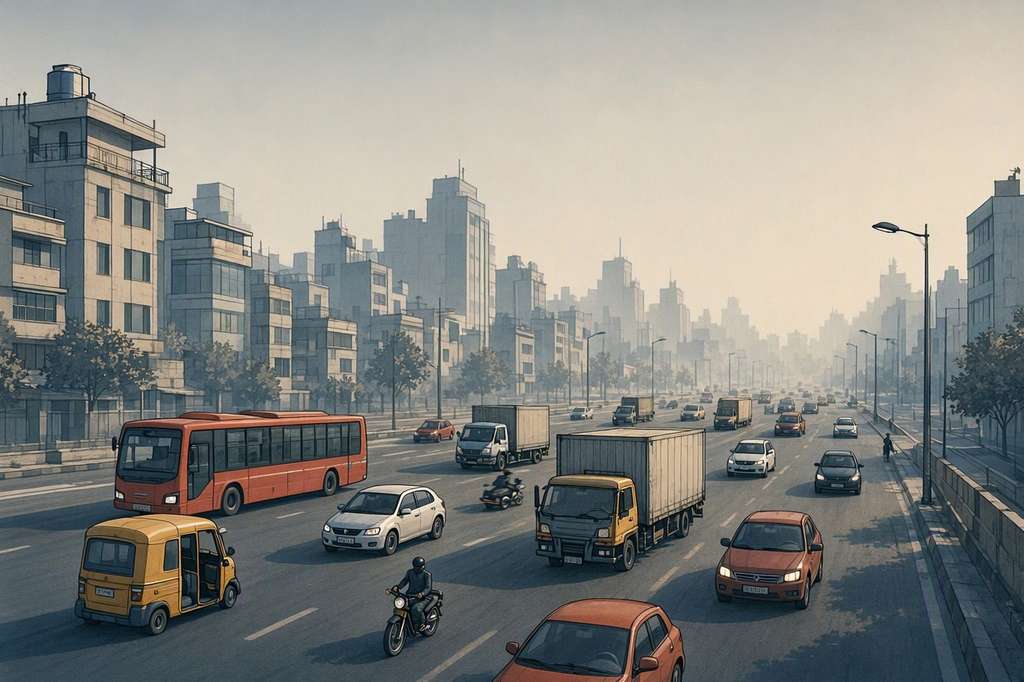
Key Takeaways
- From 1 November 2026 to 31 January 2027, vehicles registered outside Delhi that do not meet BS-VI emission standards cannot enter the capital; over 10 lakh NCR vehicles are estimated to be affected.
- Electric vehicles, CNG vehicles and emergency services are exempt, and Delhi-registered vehicles are not covered by the entry rule.
- Fuel stations in Delhi will deny petrol, diesel, CNG and LPG to vehicles without a valid Pollution Under Control Certificate, enforced through ANPR cameras and e-challans.
- Parking charges at authorised lots double from 1 November 2026 to 28 February 2027, except at Delhi Metro parking lots; electric vehicles are exempt from the extra charge.
- Offices must cap physical attendance at 50 per cent until 31 January, dust-generating construction is suspended until 31 January, and a near-total construction ban applies from 10 December to 20 January.
Delhi's pollution rules November 1 change daily life for lakhs of commuters, drivers, office-goers and builders across the National Capital Region. From Sunday, 1 November 2026, a set of winter pollution controls comes into force in the national capital: vehicles registered outside Delhi that do not meet BS-VI emission standards will be barred from entering the city, parking charges at authorised lots will double, fuel will be denied to vehicles without a valid pollution certificate, dust-generating construction will be suspended, and offices will have to limit physical attendance to 50 per cent. The measures, announced by Chief Minister Rekha Gupta on 20 October as part of the Delhi government's Winter Action Plan, will run until 28 February 2027, with the vehicle and construction curbs in force until 31 January 2027.
The timing is deliberate. Every winter, Delhi's air turns hazardous as cold, still air traps vehicle exhaust, construction dust, smoke and other pollutants close to the ground. The Commission for Air Quality Management (CAQM) had already invoked Stage I of the Graded Response Action Plan (GRAP) from 21 October, after air quality slipped into the 'Poor' category. The November 1 measures sit alongside GRAP, and officials have said that whenever a stricter GRAP stage is invoked, the stricter measures will take precedence.
What are Delhi's new pollution rules from November 1?
The headline measure is the entry restriction on older vehicles from outside the capital. From 1 November 2026 to 31 January 2027, petrol and diesel vehicles registered outside Delhi that do not meet BS-VI (Bharat Stage VI) emission standards will not be allowed to enter the national capital. BS-VI became mandatory for new vehicles across India on 1 April 2020, when the country moved directly from BS-IV to BS-VI, so in practice most cars and SUVs sold after that changeover are compliant. The restriction applies to private vehicles as well as commercial goods vehicles registered outside Delhi, and to interstate buses that do not run on BS-VI diesel, CNG or electricity.
Transport Department estimates cited in reporting put the number of affected vehicles at more than 10 lakh across Gurugram, Faridabad, Noida, Greater Noida and Ghaziabad alone. These are cities where a large number of vehicles still comply only with BS-IV or lower standards. Delhi-registered vehicles are not covered by this entry rule, and the restriction is not a blanket ban on all older vehicles in the city.
Which vehicles are exempt from the Delhi entry ban?
Several categories are exempt. BS-VI-compliant petrol and diesel vehicles registered outside Delhi can enter as before, subject to other applicable rules. Electric vehicles (EVs) and vehicles running on CNG are fully exempt from the entry restriction, as are emergency and essential-service vehicles such as ambulances, fire tenders and police vehicles. Goods vehicles running on BS-VI diesel, CNG, LNG or electricity are also permitted, and buses registered in Delhi are exempt. Tractors and jugaad vehicles, and trucks not destined for Delhi, face restrictions under the wider plan.
For drivers weighing a switch, the exemption structure clearly favours cleaner vehicles. Electric two-wheelers and cars, and CNG vehicles, face none of the entry restrictions, which is one reason the winter plan is being read as a further push towards cleaner transport in the NCR. Readers considering an EV can check what the first year of ownership actually involves in our guide to the [EV first-year ownership checklist](https://indiaask.tech/question.php?slug=ev-first-year-ownership-checklist-explained).
No PUC, no fuel: how enforcement will work
A second rule affects every driver in Delhi, not just visitors. The 'No PUC, No Fuel' policy will be strictly enforced at fuel stations across the capital: petrol, diesel, CNG and LPG outlets will not supply fuel to vehicles that do not have a valid Pollution Under Control Certificate (PUCC). Vehicles registered outside Delhi must also carry a valid PUC certificate while entering the capital, irrespective of their emission standard.
Enforcement will rely heavily on cameras. Automatic Number Plate Recognition (ANPR) cameras have been installed at Delhi's entry points and at around 500 fuel stations, linked to a command centre, to flag vehicles without a valid certificate. E-challans will be generated automatically against non-compliant vehicles, and the Delhi Traffic Police can impound vehicles in accordance with the rules. Last winter, driving without a valid PUCC drew a challan of Rs 10,000, a reminder of how expensive an expired certificate can be. Drivers should check the emission standard on their registration papers and renew their PUCC before setting out.
Parking fees doubled, office attendance capped at 50 per cent
To discourage private vehicle use during the winter pollution season, parking charges at authorised parking facilities across Delhi will be doubled from 1 November 2026 to 28 February 2027. Parking facilities owned and managed by the Delhi Metro Rail Corporation (DMRC) are exempt from the hike, and electric vehicles are exempt from the additional charges. One caveat reported by the Economic Times is that the doubling has rarely been implemented in practice in past years, with the Municipal Corporation of Delhi citing contractual obligations with private parking operators; civic officials have said the hike will be implemented in accordance with official orders this time, but commuters should check the boards at individual lots.
Offices face a parallel change. From 1 November to 31 January, government and private offices in Delhi must limit physical attendance to a maximum of 50 per cent of staff, with the remaining employees working from home. Essential and emergency services, including healthcare, public transport, power, water supply, sanitation and emergency services, are exempt. To reduce peak-hour congestion, office timings are also being staggered: Municipal Corporation of Delhi offices will run from 8:30 am to 5 pm, while Delhi government offices will function from 10 am to 6:30 pm, from November 1 to February 28.
Construction ban and dust controls
Construction is the other major target. From 1 November to 31 January, all dust-generating demolition and outdoor civil construction activities will remain suspended across Delhi. Essential public infrastructure projects are exempt, subject to prescribed conditions, and indoor finishing, plumbing and electrical work may continue provided dust-control standards are strictly followed. Large commercial buildings and eligible construction sites must deploy anti-smog guns or mist systems to control dust, and AI-enabled cameras linked to the government's command centre will monitor major sites.
The restrictions tighten further in December: a complete ban on construction and demolition activities, except specified exemptions for urgent government and emergency works, will apply from 10 December to 20 January. Vehicles carrying construction materials such as sand, bricks, cement and debris will also be barred from entering Delhi during the stricter phase, subject to exemptions for essential infrastructure, strategic projects and emergency works. Dedicated teams from the Delhi Pollution Control Committee, the Municipal Corporation and other agencies will inspect sites, and unauthorised activity will draw an immediate stop-work notice plus environmental compensation penalties.
Why Delhi acts every winter, and what GRAP adds
Delhi's winter pollution problem is structural, not a single event. Falling temperatures and low wind speeds trap emissions near the ground, while stubble burning in neighbouring states, Diwali fireworks, road dust and heavy traffic add to the load. That is why the city's winter plan runs on a fixed annual calendar — the framework notified on 23 June operates from November 1 to February 28 each year — rather than waiting for a crisis week.
GRAP adds an emergency layer on top of that calendar. It is a set of graded measures implemented by the CAQM that kick in when air quality reaches, or is forecast to reach, a certain threshold in Delhi-NCR, with Stage IV the strictest. Stage I, already in force since 21 October, strengthens dust mitigation and the enforcement of existing rules on construction, waste management and other pollution sources. If air quality worsens, higher GRAP stages can add measures such as restrictions on diesel vehicles, industrial activity and public movement — and those stricter measures override the winter plan where they overlap. The entry restrictions, exemptions and office rules described above are detailed in reporting by [The Indian Express](https://indianexpress.com/article/cities/delhi/delhi-pollution-revised-grap-vehicle-restrictions-november-1-bs-6-rules-explained-10944445/) and [Business Standard](https://www.business-standard.com/india-news/delhi-bs6-vehicle-ban-ncr-entry-curbs-exemptions-evs-pollution-winter-plan-126102700337_1.html). Delhi's pollution controls have also been tested in court, including the Supreme Court's hearings on green crackers in the NCR, covered in our report on the [Delhi-NCR pollution and green crackers hearing](https://indiaask.tech/question.php?slug=delhi-ncr-pollution-supreme-court-green-crackers-hearing-october-2026-explained).
What it means for commuters, businesses and builders
For the lakhs of people who drive into Delhi from Noida, Gurugram, Ghaziabad and Faridabad each day, the practical checklist is short: confirm your vehicle's emission standard, renew your pollution certificate, and check border advisories before travelling. Those with BS-IV or older vehicles registered outside Delhi will need to switch to public transport, a compliant vehicle, or a CNG or electric option for the three months of the restriction.
Businesses face a mixed picture. Traders and offices in central Delhi have already been dealing with disruption from the November 1 opposition rally at Ramlila Maidan, and the parking hike and attendance cap add a further squeeze on footfall and staffing through the winter. Construction firms, meanwhile, face a near-total stop during the December-January stricter phase, with penalties for violations. On the other side, the plan strengthens the case for public transport, car-pooling and electric mobility, all of which are exempt from or unaffected by the curbs.
What the November 1 rules do not do
It is worth being precise about the limits of the plan. The entry ban does not apply to vehicles registered in Delhi, however old they are, and it does not ban all older vehicles from the city's roads. It does not close Delhi's borders: compliant vehicles, CNG and electric vehicles, and exempt categories continue to move freely. And the parking hike does not apply to Delhi Metro parking lots. The plan is a seasonal filter, not a shutdown — designed to cut the dirtiest vehicles and the dustiest activity during the months when Delhi's air can least absorb them.
Conclusion
Delhi's new pollution rules from November 1, 2026, are the most far-reaching version of the city's winter plan yet: an entry ban on non-BS-VI vehicles from outside the capital, no fuel without a valid pollution certificate, doubled parking charges, a 50 per cent office attendance cap, staggered office hours, and a construction suspension that becomes a near-total ban in December and January. Together with GRAP Stage I, already in force since 21 October, they amount to a four-month attempt to keep winter air from reaching emergency levels. Whether they work will depend less on the announcements than on enforcement at borders, fuel stations and construction sites — and on whether commuters, offices and builders plan around them rather than test them.
Frequently Asked Questions (FAQ)
Can my BS-IV car from Noida enter Delhi after November 1, 2026?
No. From 1 November 2026 to 31 January 2027, petrol and diesel vehicles registered outside Delhi that do not meet BS-VI emission standards are barred from entering the national capital. A BS-IV car registered in Noida would therefore not be allowed in, and would face e-challans or impounding if it tried. Delhi-registered vehicles are not covered by this entry rule.
Are electric and CNG vehicles exempt from Delhi's November 1 entry ban?
Yes. Electric vehicles and vehicles running on CNG are fully exempt from the entry restriction, as are emergency and essential-service vehicles such as ambulances, fire tenders and police vehicles. BS-VI-compliant petrol and diesel vehicles registered outside Delhi can also enter, subject to other applicable rules.
Will parking really cost double everywhere in Delhi from November 1?
Parking charges at authorised parking facilities across Delhi double from 1 November 2026 to 28 February 2027, but parking lots owned and managed by the Delhi Metro Rail Corporation are exempt, and electric vehicles are exempt from the additional charges. Reporting has noted that the doubling was rarely implemented in past years, so commuters should check the charges at individual lots.
Do Delhi offices have to send half their staff home from November 1?
Government and private offices in Delhi must limit physical attendance to a maximum of 50 per cent of staff from 1 November 2026 to 31 January 2027, with the rest working from home. Essential and emergency services are exempt. Office timings are also staggered: Municipal Corporation of Delhi offices run 8:30 am to 5 pm and Delhi government offices 10 am to 6:30 pm.
Read Next on IndiaAsk
- Delhi's pollution controls have also been tested in court — the Supreme Court has heard arguments on green crackers in the NCR. Delhi Pollution Supreme Court Hearing: Green Crackers, Stubble
- Electric vehicles are fully exempt from the entry ban — here is what the first year of EV ownership actually involves. Electric Scooter First Year: Ownership Checklist for Owners
Related Articles


Answers
No approved answers yet — you can give the first answer.
Give Your Answer
Discussion
No approved comments yet.