What Should Your First Year With an Electric Scooter Look Like? A Practical Ownership Checklist
Key Takeaways
- Ride in the gentlest mode for the first few days and learn braking and regenerative braking
- Charge overnight at a properly installed home point and keep daily charge between roughly 20 and 90 percent
- Follow the service schedule for tyres, brakes, suspension and software, even though servicing is short
- Renew insurance before expiry and keep every service record for warranty and resale
- Learn your real-world range in the first month instead of trusting the brochure figure
What Should Your First Year With an Electric Scooter Look Like? A Practical Ownership Checklist
The first year with an electric scooter decides whether ownership feels effortless or frustrating. The scooter itself is simple: no engine oil, no gears, no clutch, and far fewer moving parts than a petrol scooter. But the habits around it are new: charging instead of refuelling, watching battery health instead of engine temperature, and managing software and connected features that a petrol scooter never had. Owners who get the first year right usually enjoy years of cheap, quiet commuting. Owners who ignore the basics often end up with avoidable range anxiety, a degraded battery or a surprise service bill.
This checklist walks through the first twelve months in the order you will actually face them: the first week, the charging routine, the service schedule, the paperwork, and the habits that protect the battery and the resale value.
The First Week: Learn the Scooter Before You Trust It
Electric motors deliver their full torque instantly, which feels very different from a petrol scooter that builds power gradually. For the first few days, ride in the gentlest mode your scooter offers, practise braking in an empty area, and get used to how regenerative braking slows the scooter when you roll off the throttle. Learn what every dashboard warning means, how to switch riding modes, and how the scooter behaves when the battery is low: many models reduce power near the end of the charge, and you do not want to discover that in fast traffic.
Do the paperwork in the first week too. Confirm that the registration certificate, insurance policy and invoice are in your name and stored safely, both as physical copies and as photos on your phone. Note the service schedule, the battery warranty terms and the roadside assistance number in one place. If your scooter has a connected app, set it up now: it usually shows charge status, location and service reminders, and it is much harder to configure later when you actually need it.
Build a Charging Routine That Fits Your Life
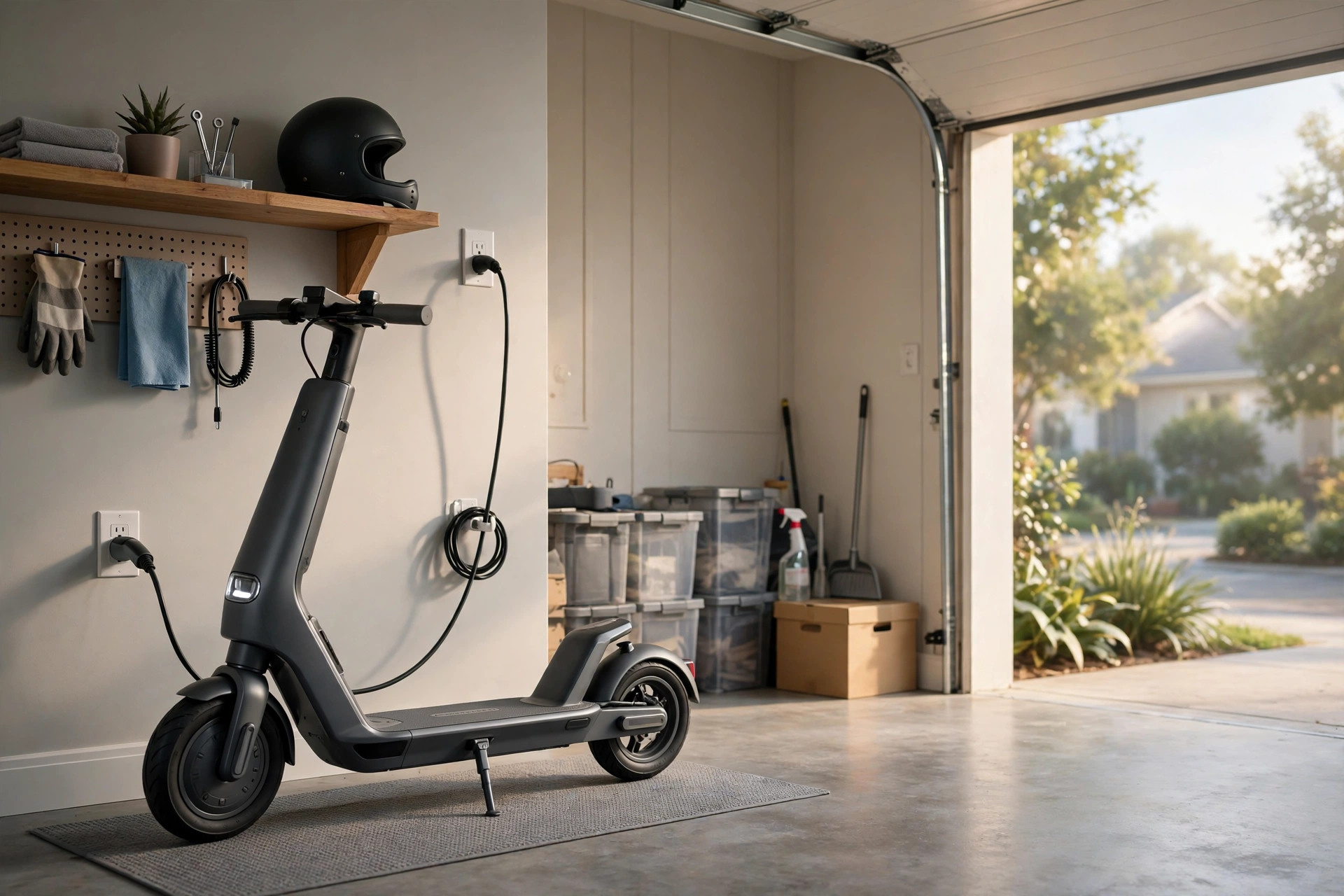
Charging should become as automatic as plugging in your phone. The most convenient pattern for most owners is overnight charging at home, using a properly installed point checked by a qualified electrician, with correct earthing and a dedicated circuit breaker. If you live in an apartment, get the society's permission in writing before installation, and agree on how the electricity will be metered, so that there is no dispute later.
For battery health, the widely recommended habit is to avoid the extremes: do not run the battery to zero every day, and do not leave it at 100 percent for days on end. For daily commuting, charging to around 80 to 90 percent and recharging before it falls below 20 percent is a gentle routine that suits most lithium-ion batteries. Use slow home charging as your default and keep fast charging for longer trips or emergencies, since frequent fast charging generates more heat. If you will not ride for two weeks or more, leave the battery at roughly half charge in a cool, shaded place, and check the manufacturer's guidance for long storage.
Follow the Service Schedule, Even Though It Is Short
Low maintenance does not mean no maintenance. In the first year, the items that actually need attention are tyres, brakes, suspension and the electrical connections. Check tyre pressure every couple of weeks, because under-inflated tyres reduce range and wear out faster. Brakes deserve a check at every service: electric scooters rely on both mechanical brakes and regenerative braking, and the brake pads still wear with use. Ask the service centre to inspect the charging port, the wiring and any software updates at each visit, and keep every service record, since a complete service history protects both the warranty and the resale value.
Do not skip the first service because the scooter feels fine. Early services catch loose fasteners, software bugs and minor issues while they are still covered under warranty. Also, only use authorised service centres for warranty-period work unless the manufacturer clearly allows otherwise, and keep the receipts. A scooter with a documented service history is worth more to a second buyer than one with a blank record, even if both look identical.
Paperwork, Insurance and Software Through the Year
Insurance renewal is the one date in the first year that must not slip. Set a reminder at least two weeks before expiry, compare quotes rather than auto-renewing blindly, and confirm that the battery cover and add-ons you chose at purchase are still in place. If you moved house, changed your parking arrangement or added accessories, tell the insurer, since undisclosed changes can complicate a claim.
Software is the other quiet item. Many electric scooters receive over-the-air updates that improve range estimation, fix bugs or add features. Install updates when the scooter is parked and charging, and read the release notes so you understand any change in riding modes or charging behaviour. If the connected app asks for permissions or a subscription renewal, check what you actually use before paying: a feature you never open is not worth an annual fee.
Habits That Protect Range, Battery and Resale Value
Range anxiety usually disappears once you know your real-world range. In the first month, note how far a full charge actually takes you in your normal riding, including pillion load, traffic and hills, and plan your charging around that number rather than the brochure figure. Keep a simple log of charging and any unusual behaviour, such as sudden range drops or charging that stops early, because a pattern in the log is far more useful at a service centre than a vague complaint.
A few daily habits add up. Avoid riding through deep water, since water damage is treated differently from normal wear under most warranties. Park in shade when possible, because sustained heat is hard on batteries. Clean the scooter with a damp cloth rather than a pressure washer aimed at electrical parts. And ride smoothly: hard acceleration and harsh braking waste energy, wear tyres and brakes faster, and shorten the range you get from every charge.
Conclusion
The first year of electric scooter ownership is mostly about routine: a safe charging setup, gentle charging habits, on-time services, insurance renewed before expiry, and a realistic sense of your real range. None of these tasks is difficult on its own, and together they protect the two things that matter most: the battery, which is the scooter's most expensive part, and your confidence that the scooter will be ready every morning. Get the first year right, and the following years largely take care of themselves.