Why Did Delhi Record Its Coldest October Day in 75 Years? 20.7°C, Record Rain and Cleaner Air Explained
Key Takeaways
- Delhi's coldest October day in 75 years was 30 October 2026, when Safdarjung recorded a maximum of just 20.7°C, 10.3 degrees below normal — the lowest October maximum since 1951.
- Two days of persistent rain drove the record: Safdarjung received 61.4 mm in 24 hours, the sixth-wettest October day since 1951, and 123.3 mm for the month against a normal of 15.1 mm.
- The record is about daytime temperature, not the night: Safdarjung's minimum was 17.2°C, actually above normal, because cloud cover traps heat overnight.
- The rain also cleaned Delhi's air, with AQI at 60 on Friday — the cleanest October day since October 2022 — and the month's average AQI of 167 the lowest for October since 2015.
- The IMD forecast a recovery for Saturday, 31 October, with partly cloudy skies and temperatures around 24°C maximum and 16°C minimum.
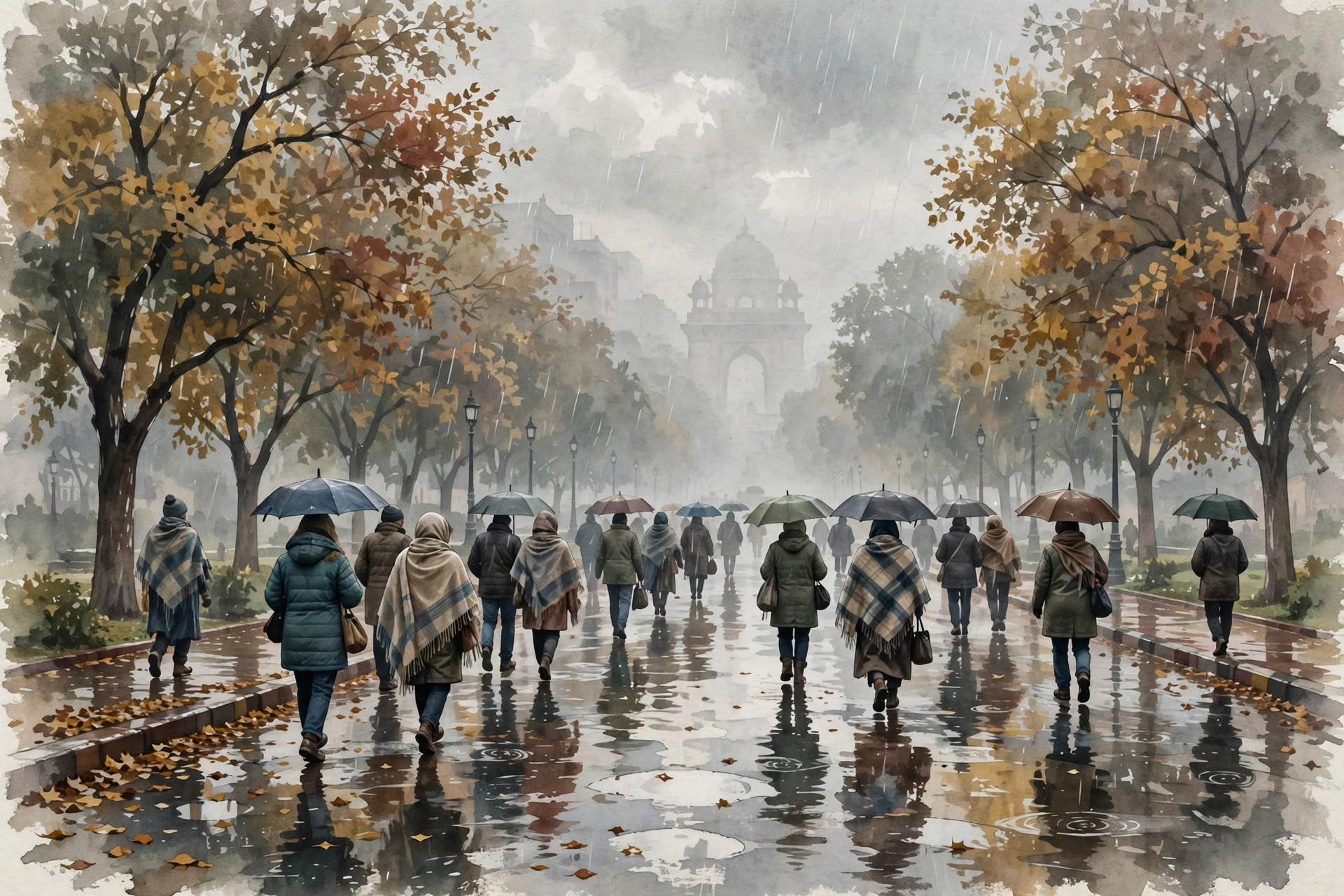
Delhi's coldest October day in 75 years arrived not with a winter chill in the air at night, but with a grey, rain-soaked afternoon. On Friday, 30 October 2026, the maximum temperature at Safdarjung, Delhi's base weather station, settled at just 20.7 degrees Celsius — 10.3 degrees below normal, and the lowest October daytime temperature recorded there since 1951. For a city where October afternoons usually still feel warm, residents reached for windbreakers and heavy shawls as wintry conditions gripped the capital in the middle of autumn.
The record is about the daytime high, not the night. That distinction matters, because the night itself was close to normal. But as a daytime record, it is remarkable: no October day in three-quarters of a century has stayed this cool in Delhi, and the same spell of rain also delivered the city's wettest October day in four years and its cleanest October air in years. Here is what happened, why it happened, and what it does — and does not — mean.
What exactly happened on 30 October?
According to the India Meteorological Department (IMD), Safdarjung recorded a maximum of 20.7 degrees Celsius on Friday, 30 October 2026. That was 10.3 degrees below the seasonal normal, and the lowest maximum temperature recorded in October at the station since 1951, according to available data.
The rest of the city told the same story. Palam recorded a maximum of 20.5 degrees Celsius, 11.1 degrees below normal. Lodhi Road recorded 20.6 degrees, 10.4 degrees below normal. The Ridge recorded 20.8 degrees, 10.1 degrees below normal, and Ayanagar recorded 20.4 degrees, 10.6 degrees below normal. In other words, this was not a quirk of one thermometer: every major station in the capital stayed roughly ten degrees cooler than usual through the day.
Friday was also a strikingly wet day. Safdarjung received 61.4 mm of rain in the 24 hours ending at 8.30 am on Friday, making it the sixth-wettest October day at the observatory since records began in 1951. The last time Delhi received more rain on a single October day was 9 October 2022, when the station recorded 74 mm. With that, October 2026 became the city's wettest October in four years: cumulative rainfall at Safdarjung reached 123.3 mm by 8.30 am on Friday, against a monthly normal of just 15.1 mm — more than eight times the usual October total.
Why did the temperature fall so sharply?
The short answer is two days of persistent rain under thick cloud. Daytime temperature depends heavily on sunshine: on a clear October day, the sun warms the ground through the morning, and the air above it warms in turn, pushing the afternoon maximum towards 31 degrees or so. When dense cloud covers the sky and rain keeps falling, much of that sunshine never reaches the ground. The surface stays cool, evaporation of rainwater draws further heat from the air, and the afternoon high stays far below normal.
That is exactly what happened over 29 and 30 October. The rain was steady rather than a brief shower, so the cooling was sustained through the day instead of recovering by afternoon. The result was a daytime temperature more typical of mid-winter in Delhi than of late October.
This mechanism also explains the most counter-intuitive part of the record: the nights were not especially cold. Cloud cover works in both directions. By day it blocks incoming sunshine and keeps things cool; by night it acts like a blanket, trapping heat that would otherwise escape into the clear sky. So while the daytime maximum crashed, the night-time minimum stayed near normal.
Why was the rain so unusual for October?
October is normally Delhi's transition month. The monsoon has withdrawn, the skies clear, and rainfall drops sharply — the monthly normal at Safdarjung is only 15.1 mm. A month that delivers 123.3 mm is therefore not just a wet October, it is a completely different kind of October.
The daily figure is equally striking in historical context. A single day bringing 61.4 mm puts 30 October 2026 (measured over the 24 hours to Friday morning) among the six wettest October days since 1951. Only a handful of October days in 75 years of records have been wetter, the most recent being 9 October 2022 with 74 mm.
For residents, the practical effect was a city that felt like it had skipped a season. October in Delhi is usually the month when people put away the monsoon gear and enjoy pleasant evenings. This year, the last days of the month felt like December afternoons instead, with umbrellas out and warm clothing back on.
What did the rain do to Delhi's air?
The same rain that chilled the city also washed its air clean, at least temporarily. Delhi's Air Quality Index (AQI) stood at 60 on Friday, in the satisfactory range, making it the cleanest October day since 10 October 2022, when the AQI was recorded at 44. Rain removes dust and pollutants from the air, and the cool, wet conditions kept pollution from building up again through the day.
The improvement was not just a one-day story. According to the Centre for Research on Energy and Clean Air (CREA), Delhi recorded an average AQI of 167 for October 2026 — the lowest monthly average for October since 2015. That suggests the wet month as a whole kept pollution lower than in recent Octobers, even if a single rainy day cannot fix the city's longer-term air quality challenge.
By Saturday morning, 31 October, the effect was already fading as the rain eased: the AQI was recorded at 110 at 8 am, back in the moderate category. That is the normal pattern after rain in Delhi — a sharp improvement, followed by a gradual return towards usual levels once dry conditions resume.
Was it cold at night too?
No, and this is the detail most often lost in the headlines. The minimum temperature at Safdarjung on Friday settled at 17.2 degrees Celsius, which was actually 1.1 degrees above normal. Palam recorded a minimum of 15.4 degrees, 1.6 degrees below normal, while Lodhi Road recorded 18 degrees, three degrees above normal. The Ridge and Ayanagar recorded minimum temperatures of 16.8 degrees and 17.4 degrees respectively.
So the record is specifically a daytime record: the lowest October maximum in 75 years. People who stepped out in the morning or evening would not have felt anything extraordinary by Delhi's standards. It was the middle of the day — normally the warmest part — that felt like winter. Anyone describing 30 October as Delhi's "coldest October day" should really mean its coldest October afternoon.
What happens next?
Delhi woke up on Saturday, 31 October, to a chilly morning, with the unusual cold lingering even as the rain eased. The IMD forecast partly cloudy skies for Saturday, with maximum and minimum temperatures likely to settle around 24 and 16 degrees Celsius respectively. That would still be cooler than a normal late-October day, but well above Friday's record low, as sunshine returns and the daytime temperature recovers.
In practical terms, residents can expect a slow return towards normal October weather: cool mornings and evenings, milder afternoons, and air quality drifting back towards the moderate range unless fresh rain arrives. The sudden chill is also a reminder to dig out light woollens earlier than usual this year, especially for early mornings, children and elderly people who feel sudden temperature swings most.
What does a record day like this actually mean?
A single record day is a weather event, not a climate verdict. One cold, wet October day does not by itself prove anything about long-term climate trends, just as one hot day does not. What it does show is how much day-to-day weather in Delhi can swing when a sustained spell of rain arrives at the wrong — or right — time of year.
What makes 30 October 2026 genuinely notable is the combination, not just one number. A 75-year daytime temperature record, a top-six wettest October day, the wettest October in four years, and the cleanest October air in years all arrived together, driven by the same two days of rain. Each record is verified against IMD station data going back to 1951; together, they make the last days of October 2026 one of the most unusual late-October spells Delhi has seen.
It is also a useful reminder of how weather records are measured. The headline "coldest October day in 75 years" sounds like a freezing night, but the data shows a cool afternoon under cloud and rain. Reading past the headline to the actual numbers — maximum versus minimum, one station versus the whole city, one day versus the whole month — gives a much clearer picture of what Delhi actually experienced.
Conclusion
Delhi's coldest October day in 75 years was a daytime record made by rain, not by a freezing night. On 30 October 2026, Safdarjung's maximum of 20.7 degrees Celsius — 10.3 degrees below normal — broke a record standing since 1951, while 61.4 mm of rain made it one of the wettest October days on record and pushed the AQI down to a clean 60. As the skies clear, temperatures will climb back towards normal, but the last days of October 2026 will stand in the record books as a reminder that in Delhi, the most extraordinary weather sometimes arrives disguised as an ordinary rainy day.