What Does the NVS-03 Launch Success Mean? GSLV-F18, NavIC Restoration and What Happens Next Explained
Key Takeaways
- GSLV-F18 lifted off at 11:51 pm IST on 30 October 2026 from Sriharikota and placed NVS-03 into its intended geosynchronous transfer orbit about 18 minutes later; ISRO declared 'Mission Success' at 12:23 am on 31 October.
- ISRO Chairman V. Narayanan said the success restores the NavIC constellation to its minimum operational configuration of four satellites.
- NVS-03 carries an indigenous atomic clock alongside procured clocks and adds the widely used L1 signal to the existing L5 and S-band signals, covering India and up to 1,500 km beyond.
- The mission was the 20th GSLV flight and set a pace record: 56 days since the previous GSLV launch, with a 47-day launch campaign.
- Launch success is not instant service: NVS-03 must still climb to its final slot at 32.5 degrees East and pass in-orbit validation before serving users.
The NVS-03 launch success has given India's home-grown navigation system a much-needed boost. Late on the night of 30 October 2026, the Indian Space Research Organisation (ISRO) launched its next-generation navigation satellite, NVS-03, aboard the GSLV-F18 rocket from Sriharikota, and within minutes of midnight confirmed that the satellite was in its intended orbit. For a system that had been running short of working satellites, the result matters far beyond one night's launch.
But a successful launch is not the same as an instantly working navigation service. The satellite still has to climb to its final orbit and pass checks before it starts serving users. This article explains what happened, why the mission was so important for NavIC, what makes NVS-03 different from older satellites, and what happens next.
What Happened on the Night of 30 October 2026?
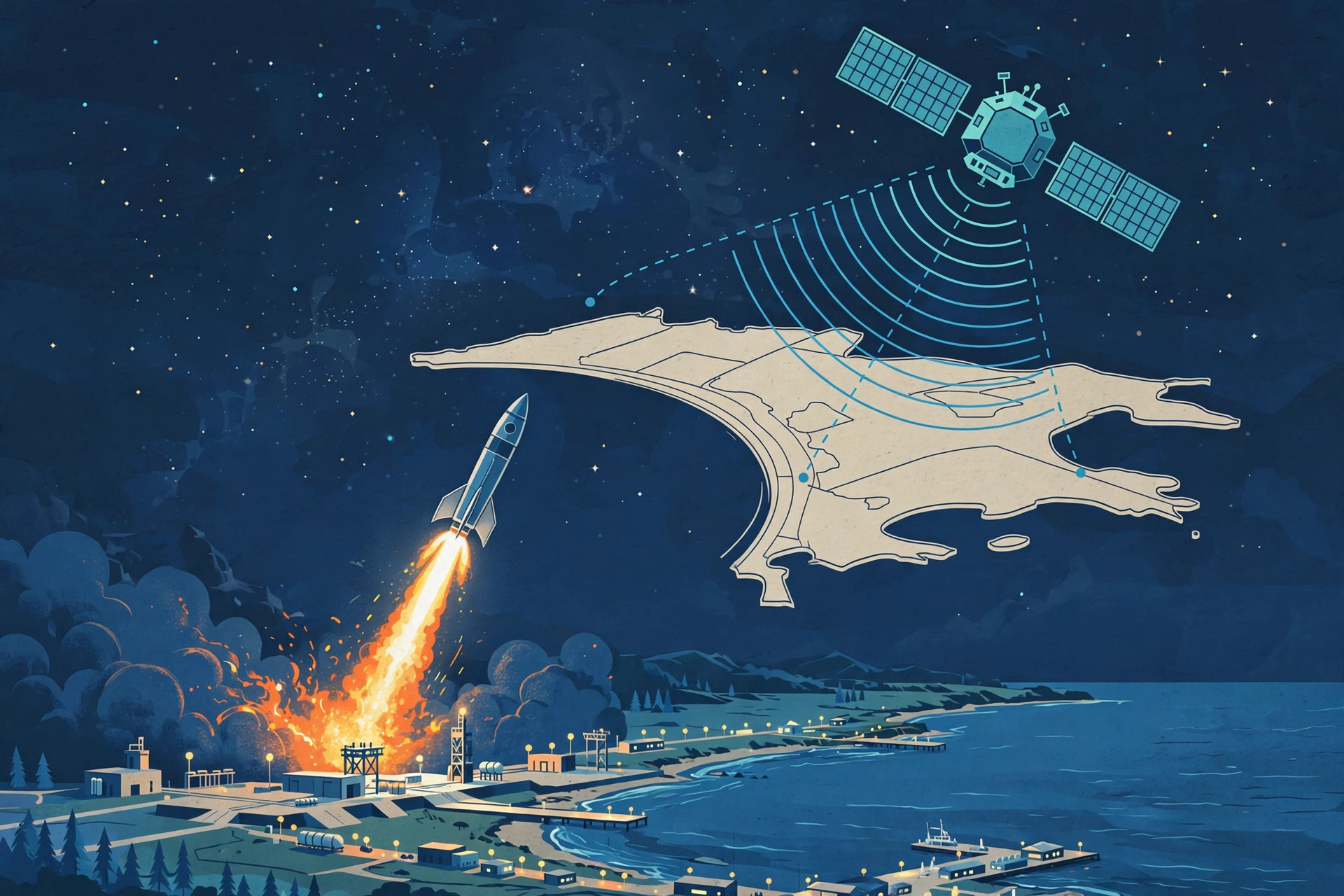
The Geosynchronous Satellite Launch Vehicle, GSLV-F18, lifted off at 11:51 pm IST on Friday, 30 October 2026, from the Second Launch Pad at the Satish Dhawan Space Centre (SDSC SHAR) in Sriharikota, Andhra Pradesh. The roughly 50-metre-tall, three-stage rocket, with a lift-off mass of about 420 tonnes, carried the NVS-03 satellite, weighing roughly 2,250 kg.
About 18 minutes after liftoff, the rocket placed NVS-03 into its intended geosynchronous transfer orbit (GTO), an elliptical path from which the satellite will gradually climb to its final position. At 12:23 am IST on 31 October, ISRO announced on X: "Mission Success! GSLV-F18 has successfully placed NVS-03 in the intended orbit."
ISRO Chairman Dr V. Narayanan said the vehicle had "successfully and precisely injected" the satellite into the intended elliptical orbit, and congratulated the ISRO teams, industry partners and academic institutions involved. The mission was the 20th flight of India's GSLV programme and ISRO's third space launch of 2026.
The launch also set a pace record for ISRO's heavy-lift programme. Narayanan said the mission was accomplished within 56 days of the previous GSLV launch, the shortest interval between two GSLV missions so far. The launch campaign itself was completed in 47 days, and the four L40 strap-on boosters were prepared in a record 37 days.
Why the NVS-03 Launch Success Matters for NavIC
The most important line in the post-launch briefing was about the constellation, not just the rocket. Narayanan said that with NVS-03, the NavIC constellation has been restored to its minimum operational configuration of four satellites. NavIC is a strategic national asset, he said, because it gives India independent access to position, navigation and timing services instead of depending entirely on foreign systems.
That framing matters because NavIC had been weakened. The system is designed to provide accurate positioning, navigation and timing across India and up to about 1,500 km beyond the country's borders, but reports ahead of the launch noted that it had too few fully operational satellites to provide standalone positioning services reliably. Atomic clocks, the extremely precise timekeepers at the heart of any navigation satellite, had failed on older spacecraft, including IRNSS-1F, whose last procured atomic clock was reported to have stopped functioning in March 2026.
NVS-03 does not fix everything overnight, and it is important to be honest about that. The satellite must still complete orbit-raising manoeuvres, reach its designated slot at 32.5 degrees East, and undergo in-orbit validation before it can begin providing services. What the launch does is restore the numbers: with NVS-03 in orbit, the constellation is back to the minimum strength from which reliable services can be rebuilt and then expanded.
What Is NavIC, and Why Did India Build Its Own System?
NavIC stands for Navigation with Indian Constellation. It was formerly known as the Indian Regional Navigation Satellite System (IRNSS). Like the American GPS, Russia's GLONASS and China's BeiDou, it is a satellite navigation system — but it is regional rather than global, designed to serve India and the surrounding region.
A navigation satellite works by broadcasting precisely timed signals. A receiver on the ground compares signals from several satellites, works out how long each signal took to arrive, and calculates its own position. That is why atomic clocks matter so much: an error of even a billionth of a second in timing translates into metres of error on the ground.
India's reasons for building its own system are both practical and strategic. Navigation and timing now underpin transport, aviation, shipping, disaster management, surveying, agriculture and the synchronisation of telecom and power networks. A system controlled by another country can be degraded or switched off in a crisis, and its signals are optimised for that country's needs. An Indian system gives India control over coverage, accuracy and availability in its own region, and it is a backup if global systems are unavailable.
The second-generation NVS series is meant to ensure continuity of these services as the first-generation satellites age. ISRO has planned five second-generation navigation satellites in total. NVS-01 was launched on 29 May 2023 aboard GSLV-F12, and NVS-02 followed, so NVS-03 is the third in the series. Two more are expected to follow as the constellation is built back towards full strength.
What Makes NVS-03 Different From Older Navigation Satellites?
Two upgrades on NVS-03 stand out, and both were highlighted by ISRO before the launch.
First, the satellite carries an indigenous atomic clock alongside procured atomic clocks. Atomic clocks are the single most failure-prone and strategically sensitive part of a navigation satellite, and India has been working for years to build its own. NVS-01 and NVS-02 carried the first two locally developed atomic timekeeping units; NVS-03 carries the third. Having a home-built clock reduces dependence on imported components and gives ISRO more control over the system's long-term health.
Second, NVS-03 introduces the L1 navigation signal in addition to the existing L5 and S-band signals. The L1 frequency is the one most widely used by civilian receivers around the world, including in smartphones and other mass-market devices. Adding it is expected to improve positioning accuracy and make NavIC signals easier for ordinary devices to use, expanding the system's usefulness beyond specialised receivers.
The satellite's planned transfer orbit gives a sense of the precision involved: a perigee (closest point to Earth) of about 170 km, an apogee (farthest point) of about 37,023 km, and an inclination of 20.75 degrees, before orbit-raising takes it to its final geosynchronous slot.
What Happens Next for NVS-03?
The next phase is quieter than a launch but just as critical. Using its own propulsion system, NVS-03 will perform a series of orbit-raising manoeuvres to climb from its transfer orbit to its final geosynchronous orbit at 32.5 degrees East. Engineers will then switch on and test its payloads, including the atomic clocks and the navigation signal transmitters, and validate the accuracy of its signals.
Only after those checks will the satellite be declared operational and folded into NavIC services. ISRO has not announced a date for that milestone, and it would be wrong to promise one. What can be said is that the hardest part of getting a satellite into space — the launch itself — is done, and it went exactly as planned.
There is also a wider programme context. ISRO's chairman noted after the launch that the EOS-05 geo-imaging satellite, launched aboard GSLV-F17 on 4 September 2026, was functioning as intended and providing data. Together, the two missions underline a busy period for India's launch programme, with the GSLV now flying at its fastest cadence yet.
What This Means for Everyday Users
For most people, NavIC works invisibly. You will not notice a new satellite the way you notice a new phone feature. But the services it supports are part of daily life: finding a route, tracking a vehicle or a shipment, guiding a ship or an aircraft, mapping a field, responding to a flood or a cyclone, and keeping mobile networks and power grids synchronised to the same precise time.
A stronger NavIC means those services can increasingly rely on an Indian system rather than a foreign one, and it opens the door for Indian device makers to build NavIC support into more products, especially once the widely used L1 signal is available. For strategic users — the armed forces, disaster response teams and critical infrastructure operators — an independent system is not a convenience but a safeguard.
None of this happens the morning after a launch. The honest timeline is: successful launch, then orbit-raising, then testing, then service. But each successful NVS launch shortens the distance to a fully restored constellation, and NVS-03 has brought that goal measurably closer.
Conclusion
The NVS-03 launch success is a genuine milestone for India's space programme: a textbook GSLV-F18 flight, a satellite precisely placed in its intended orbit, a record turnaround between launches, and a constellation restored to its minimum operational strength of four satellites. The mission's real significance, though, will be judged in the months ahead, as NVS-03 climbs to its final orbit, proves its indigenous atomic clock and new L1 signal, and begins serving users.
For now, the headline is simple and verified: on the night of 30 October 2026, India launched its next navigation satellite, and it reached exactly the orbit ISRO aimed for. The work of turning that orbital success into everyday navigation services is the next chapter — and it is already under way.