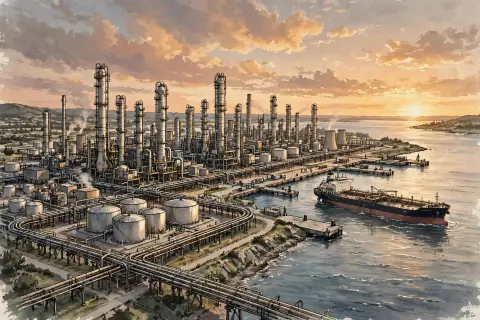
Why Did the Centre Scrap the Petrol Export Duty and Raise the Diesel Levy to Rs 11.5? SAED Rates, Reasons and What It Means Explained
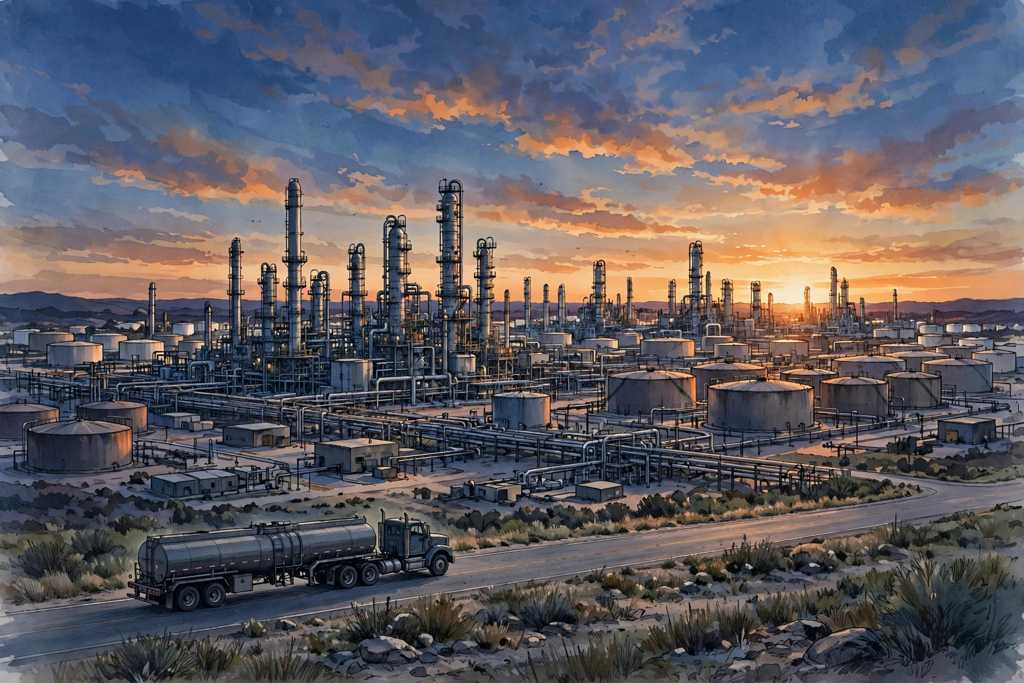
Key Takeaways
- From 31 October 2026, the petrol export duty (SAED) is nil, down from Rs 2.5 per litre; the diesel export levy rises to Rs 11.5 per litre, up from Rs 8.5; and the ATF levy rises to Rs 11 per litre, up from Rs 10.5.
- The rates were notified by the Department of Revenue, Ministry of Finance, and took effect on publication in the Official Gazette on 31 October.
- SAED applies only to exports, so this revision does not directly change petrol or diesel prices at Indian pumps.
- The levies were introduced on 27 March 2026 amid the West Asia crisis to protect domestic availability by discouraging exports, and are revised fortnightly.
- The split move — petrol freed, diesel restrained — suggests the government wants to support petrol exports while keeping diesel, the economy's workhorse fuel, at home.
Why did the Centre scrap the petrol export duty and raise the diesel levy to Rs 11.5? On 31 October 2026, the Central government revised the special additional excise duty (SAED) on petroleum exports: the export duty on petrol was cut to zero, while the levy on diesel exports was raised to Rs 11.5 per litre and the levy on aviation turbine fuel (ATF) exports was raised to Rs 11 per litre. The new rates took effect on 31 October, the date the notifications were published in the Official Gazette. The first thing to understand about this change is what it is not: it is not a change in the price you pay at a petrol pump in India. SAED applies only to fuel that is exported from India, not to fuel sold to domestic consumers.
The new rates, in full
The revision was notified by the Department of Revenue under the Ministry of Finance. The changes, reported consistently across several news outlets, are:
- Petrol: SAED on exports reduced from Rs 2.5 per litre to nil. Petrol exports will no longer attract this levy at all.
- High-speed diesel: SAED on exports raised from Rs 8.5 per litre to Rs 11.5 per litre, an increase of Rs 3 per litre.
- Aviation turbine fuel (ATF): SAED on exports raised from Rs 10.5 per litre to Rs 11 per litre, an increase of 50 paise per litre, through Notification No. 56/2026-Central Excise.
The previous revision, effective 16 October 2026, had fixed the rates at Rs 2.5 for petrol, Rs 8.5 for diesel and Rs 10.5 for ATF. The 31 October revision therefore moves petrol and diesel in opposite directions — a complete withdrawal on one product and a sharp increase on another — while ATF moves up only slightly. Reports describe the revision as part of a fortnightly review of fuel prices and export levies, which is why these rates change regularly rather than staying fixed for months.
What is SAED, and why does it exist?
SAED stands for special additional excise duty. In this context it is a duty charged on petroleum products when they are exported, over and above the normal taxes and duties that apply. According to reports of the latest revision, export levies on petrol, diesel and ATF were introduced on 27 March 2026 amid the West Asia crisis, with the stated objective of ensuring domestic availability of petroleum products by discouraging exports when global markets are disrupted.
The logic is straightforward. When international prices spike, refiners can earn more by selling fuel abroad than at home. An export levy narrows that gap: it makes exporting less profitable, which encourages refiners to keep more fuel for the domestic market, and it also raises revenue for the government from the exports that do take place. Cutting the levy has the opposite effect — it makes exporting more attractive — while raising it discourages exports further.
That is why the direction of each change matters. Scrapping the petrol levy entirely suggests the government no longer sees a need to discourage petrol exports at this moment, or wants to support refiners' export earnings on petrol. Raising the diesel levy by Rs 3 per litre, a much larger jump, suggests the opposite concern for diesel: keeping diesel at home matters more right now, whether because diesel demand is high, because diesel is critical for transport, agriculture and industry, or because the government wants the additional revenue from diesel exports.
Why scrap the petrol export duty but raise the diesel levy?
The reports do not give a single official reason for splitting petrol and diesel in opposite directions, and readers should be careful about claims that go beyond what the notifications say. What is clear from the context is that the revision comes during continuing uncertainty in global energy markets linked to the West Asia crisis, at a time when crude prices have been volatile — Brent crude was reported near $115 a barrel earlier in the week after a claim of a Saudi refinery strike.
Diesel is also the workhorse fuel of the Indian economy. Trucks, buses, tractors, construction equipment and generators all run on it, so a domestic diesel shortage would be felt far more widely than a petrol shortage. A higher export levy on diesel therefore acts as a stronger brake on diesel leaving the country. For petrol, where the domestic market is dominated by private vehicles, the government may have judged that export discouragement is no longer needed, or that Indian refiners should be free to compete in export markets without the extra charge.
There is also a revenue angle, though it cuts both ways. The government gives up the Rs 2.5 per litre it was collecting on petrol exports, but gains an extra Rs 3 per litre on every litre of diesel exported and 50 paise more on ATF. Whether total revenue rises or falls depends on export volumes of each product, which are not given in the notifications themselves, so any claim about the net revenue effect would be speculation.
Does this change petrol or diesel prices at the pump?
No, not directly. This is the most common misunderstanding about export duty revisions, and it is worth stating plainly. The SAED revised on 31 October applies to exports only. The price of petrol or diesel at a pump in Delhi, Mumbai or any other Indian city is determined separately, by domestic pricing, domestic taxes such as central excise and state VAT, dealer commission and the pricing decisions of oil marketing companies.
That does not mean the change is irrelevant to consumers. If export levies keep more diesel in India, domestic supply stays comfortable, which supports price stability over time. If they make exporting petrol more profitable, refiners may export more petrol, but that only becomes a consumer issue if domestic supply tightens — which is exactly what the levy system is designed to prevent. The immediate, direct effect, however, is on refiners and exporters, not on your next fuel bill.
What it means for refiners, airlines and the economy
For refiners, the change reshapes export margins overnight. Petrol exporters keep Rs 2.5 per litre more than they did before 31 October. Diesel exporters pay Rs 3 per litre more, which will eat into their margins on every export shipment unless international diesel prices rise to compensate. ATF exporters face a smaller squeeze of 50 paise per litre, but aviation fuel is a high-volume business, so even small per-litre changes add up.
For airlines, the direct effect is limited, because the levy applies to ATF exports, not to ATF sold to airlines in India. Indirectly, anything that affects refinery economics can feed into domestic ATF pricing over time, but there is no announced change to domestic jet fuel prices in this revision.
For the wider economy, the revision is best read as a tuning measure, not a policy U-turn. The government has kept the export-levy framework in place since March 2026 and is adjusting the dials every fortnight as crude prices, product demand and the West Asia situation evolve. The petrol cut and the diesel hike together suggest a more targeted approach than a blanket increase or decrease: support petrol exports, restrain diesel exports, and leave ATF broadly where it was.
What to watch next
Three things will show whether this revision was well judged. First, the next fortnightly revision — if rates move again quickly, it will signal that global prices or export volumes are still shifting fast. Second, India's fuel export and import data for November, which will show whether diesel exports actually fell and petrol exports rose. Third, the trajectory of crude oil prices and the West Asia crisis, which set the backdrop for the whole levy system. India's crude oil imports already hit a record in October 2026, a reminder of how exposed the country is to global oil markets and why the government keeps a close hand on fuel flows.
Conclusion
The Centre's 31 October 2026 revision scrapped the Rs 2.5 per litre export duty on petrol, raised the diesel export levy to Rs 11.5 per litre and nudged the ATF levy to Rs 11 per litre. It is a technical-sounding change with a simple message: the government is using export levies as a flexible tool to balance refiner earnings, domestic availability and revenue, product by product. It does not change pump prices directly, but it does change the incentives for every litre of fuel that leaves India — and in a volatile global oil market, those incentives matter.
Frequently Asked Questions (FAQ)
What are the new petrol, diesel and ATF export duty rates?
From 31 October 2026, the SAED on petrol exports is nil (down from Rs 2.5 per litre), on high-speed diesel exports it is Rs 11.5 per litre (up from Rs 8.5), and on aviation turbine fuel (ATF) exports it is Rs 11 per litre (up from Rs 10.5). The rates were notified by the Department of Revenue, Ministry of Finance, and took effect on publication in the Official Gazette.
Does scrapping the petrol export duty cut petrol prices at the pump?
No. SAED in this revision applies only to fuel exported from India. Pump prices for domestic consumers are set separately, through domestic taxes and oil marketing companies' pricing. The export levy can affect domestic supply indirectly over time, but it does not directly change what you pay at the pump.
What is SAED and why was it introduced?
SAED is the special additional excise duty charged on petroleum exports. Reports say the export levies were introduced on 27 March 2026 amid the West Asia crisis, to ensure domestic availability by discouraging exports when global markets are disrupted.
Why did the government raise the diesel levy while scrapping the petrol levy?
Diesel is the fuel for trucks, buses, tractors and industry, so keeping it available at home matters more for the wider economy. Raising its export levy by Rs 3 per litre makes exporting diesel less profitable and encourages refiners to supply the domestic market instead, while also raising more revenue per litre exported.
Read Next on IndiaAsk
- India's crude imports already hit a record in October 2026, which is part of why the government watches fuel flows so closely. Why Did India's Crude Oil Imports Hit a Record in October 2026? Russian Share, New Suppliers and What It Means Explained
- For the domestic side of the story, see why pump prices did not change on 28 October even as Brent crude neared $115. Petrol and Diesel Prices on 28 October 2026 Explained: No Change at the Pump Even as Brent Crude Nears $115 After Saudi Refinery Strike Claim
Related Articles


Answers
No approved answers yet — you can give the first answer.
Give Your Answer
Discussion
No approved comments yet.