Home > E-Bikes & EV > Why Has India Banned Lithium-Ion Battery Black Mass Exports? DGFT Order, Critical Minerals and EV Impact Explained
Why Has India Banned Lithium-Ion Battery Black Mass Exports? DGFT Order, Critical Minerals and EV Impact Explained
By Vijay Pawar · 2026-11-12 · 7 min read · E-Bikes & EV
India has banned the export of lithium-ion battery black mass to keep critical minerals like lithium, cobalt and nickel at home for domestic recycling.
Key Takeaways
The DGFT banned lithium-ion battery black mass exports on 10 November 2026, moving ITC (HS) code 85491400 from 'Free' to 'Prohibited' with immediate effect.
Black mass is the dark powder left after shredding used lithium-ion batteries; it contains lithium, cobalt, nickel, manganese and graphite and is about 40-50% of an EV battery's weight.
India has over 100,000 MT of battery shredding capacity but generates under 15,000 MT of black mass a year, leaving refiners short of feedstock.
The ban supports the National Critical Mineral Mission and the Rs 1,500 crore recycling incentive scheme and the Rs 2,814 crore critical mineral processing scheme.
The ban is narrow — it covers only unsorted battery waste and scrap in the named category, not all battery exports — and EV prices are unlikely to change immediately.
India's lithium-ion battery black mass export ban took effect on 10 November 2026, when the Directorate General of Foreign Trade (DGFT) changed the export policy for this mineral-rich battery waste from 'Free' to 'Prohibited'. The move is aimed at keeping a valuable raw material inside the country so that Indian recyclers, rather than overseas buyers, can recover the lithium, cobalt, nickel and manganese it contains. Here is what black mass is, why the government has acted now, and what the ban means for electric vehicles, batteries and prices.
What Is Black Mass — and What Exactly Has Been Banned?
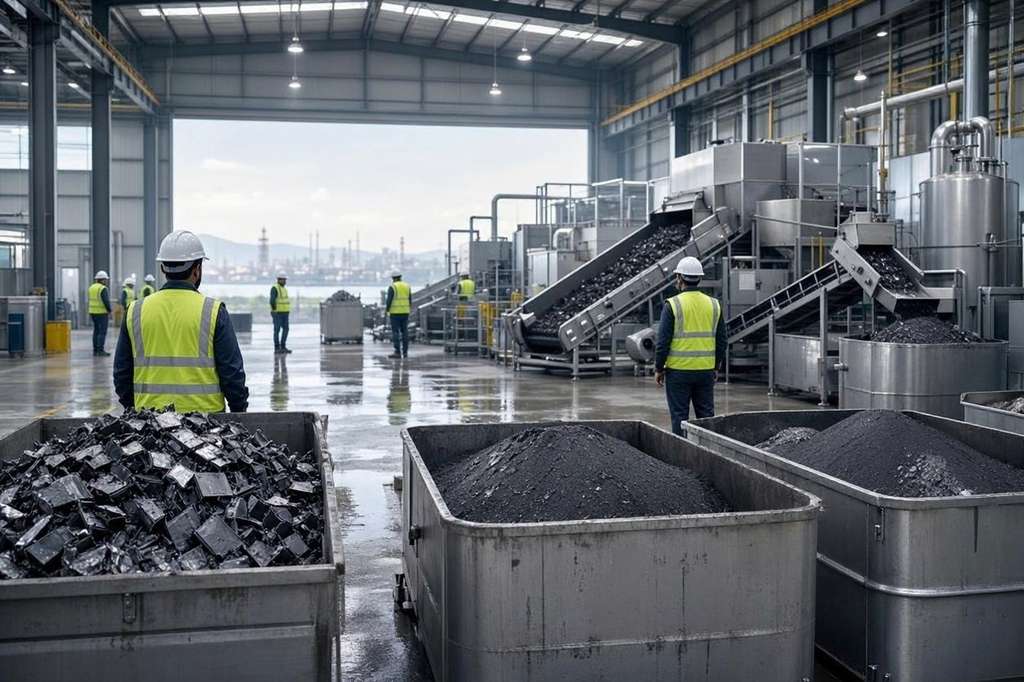
Black mass is the dark, powder-like material left behind when used lithium-ion batteries are dismantled, shredded and separated from their larger metal and plastic parts. It is called black mass because it contains a large share of graphite, which is naturally very dark, and it makes up roughly 40 to 50 percent of the total weight of an electric vehicle battery.
The powder is valuable because of what can be recovered from it. Apart from graphite, black mass contains recoverable quantities of critical minerals such as lithium, cobalt, nickel and manganese, which can be refined and reused to manufacture new batteries, energy storage systems and electronics.
The ban itself is specific. Through Notification No. 49/2026-27, dated 10 November 2026, the DGFT amended the export policy for waste and scrap of primary cells, primary batteries and electric accumulators — spent cells, batteries and accumulators that are unsorted and do not contain lead, cadmium or mercury — classified under ITC (HS) code 85491400, which specifically names lithium-ion battery black mass. The policy for that category moved from 'Free' to 'Prohibited' with immediate effect, until further orders. Transitional arrangements under Para 1.05 of the Foreign Trade Policy, 2023 will apply.
It is important to note what the ban does not cover. It is not a blanket prohibition on the export of every battery or battery-related material. It applies only to the unsorted waste and scrap category named in the notification. Finished batteries, sorted scrap and other battery materials are not covered by this order.
Why the Government Moved Now
India has limited domestic reserves of the minerals that go into lithium-ion batteries and remains heavily dependent on imports for them. At the same time, the supply of these minerals has become less certain: China, the dominant supplier, tightened exports of rare-earth elements and several lithium-ion battery technologies and equipment last year. Against that background, the waste stream from used batteries and discarded electronics is increasingly seen as an important secondary source of critical minerals — a domestic mine, in effect, that already exists.
The ban is the latest step in a series of government measures to build that domestic supply chain. In January 2025, the government approved the National Critical Mineral Mission, with government expenditure of Rs 16,300 crore and expected investments of Rs 18,000 crore over seven years. In September 2025, the Union Cabinet approved a Rs 1,500 crore incentive scheme to develop recycling capacity for separating and producing critical minerals from secondary sources such as battery waste and e-waste, offering a 20 percent capital expenditure subsidy for plant and machinery and running until FY31. Days before the export ban, the Cabinet approved another scheme, with an outlay of Rs 2,814 crore, to provide capital expenditure support for critical mineral processing, focused on building an ecosystem for lithium and nickel processing to support electric mobility, battery energy storage systems, electronics, defence and specialty steel.
The export ban connects directly to these schemes. The government has said the prohibition is intended to ensure that black mass generated in India is recycled and refined within the country, so that the recycling capacity being built under the incentive scheme has enough raw material to work with.
The Numbers Behind the Decision
The core problem the ban addresses is a mismatch between capacity and feedstock. Industry estimates suggest India has built more than 100,000 metric tonnes of annual battery shredding capacity and over 60,000 metric tonnes of refining capacity, while domestic black mass generation remains below 15,000 metric tonnes a year. In other words, India can process far more black mass than it produces — and some domestic recyclers have had to import material to meet their requirements, even as Indian-generated black mass was being shipped abroad.
Trade data underlines that the ban is preventive rather than a reaction to large current exports. India recorded zero exports worldwide under this ITC (HS) code in 2025-26, according to the Global Trade Research Initiative (GTRI). Ajay Srivastava, the founder of GTRI, has pointed out that India has more capacity to process black mass than it generates, leaving refiners short of raw material, and that recovering more of these materials at home could reduce battery makers' reliance on imports.
Reports have also pointed to an enforcement gap that the ban is meant to close: some shredding companies were found shipping black mass abroad under incorrect labels, such as cobalt powder or another industrial product, to get around export checks. Making the prohibition explicit in the export policy gives customs authorities a clearer basis to stop such shipments. Black mass can also contain toxic electrolyte residues and heavy metals that need further treatment, which is another reason its movement is regulated.
The Material Recycling Association of India has welcomed the restriction, saying it will help conserve critical mineral resources and promote their recovery, recycling and processing within India.
What the Ban Means for EVs, Batteries and Prices
For the battery recycling industry, the immediate effect should be better feedstock availability and higher utilisation of existing plants. The government has said the measure is expected to assure feedstock for domestic recycling and refining units, improve their capacity utilisation, and encourage further investment and employment in the sector.
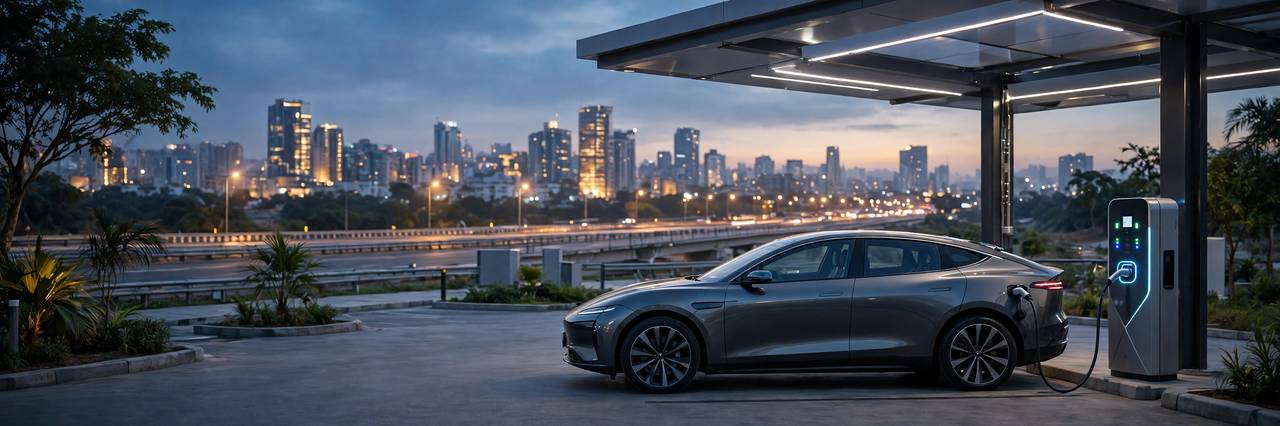
For electric vehicles, the impact is structural rather than immediate. Recovered lithium, cobalt, nickel and manganese feed into new batteries, and a stronger domestic supply chain should, over time, reduce India's dependence on imported minerals and the foreign exchange that goes with them. But nobody buying an electric scooter or car this month should expect the showroom price to change because of this notification: India exported almost none of this material in the first place, and black mass is a small upstream input in the overall cost of a battery. The benefit, if it comes, will arrive gradually, as recycling capacity is used more fully and more minerals are recovered at home.
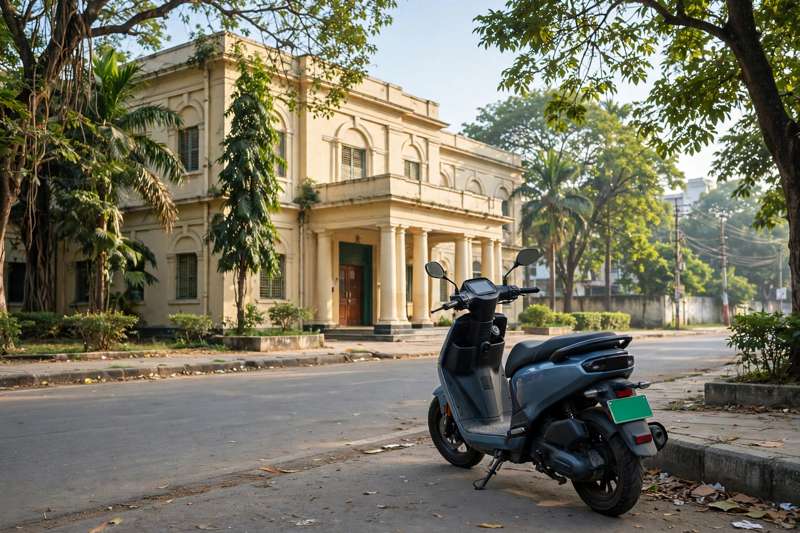
That is also why the ban matters for India's wider EV push. Cheaper and more secure battery supply supports everything from two-wheelers to grid-scale storage, and the same minerals feed electronics and defence manufacturing. For readers considering an electric two-wheeler, our guides explain [how to claim an electric scooter subsidy in India](https://indiaask.tech/question.php?slug=how-to-claim-electric-scooter-subsidy-india-explained) and [how to register an electric scooter, including the RTO process and green number plate](https://indiaask.tech/question.php?slug=how-to-register-electric-scooter-in-india-rto-process-explained).
What Happens Next
Three things are worth watching. First, enforcement: whether customs can identify and stop mislabelled shipments, since the ban's value depends on the material actually staying in India. Second, whether domestic recyclers now get the feedstock they need, and whether refining capacity grows to match it. Third, how quickly the Rs 2,814 crore critical mineral processing scheme and the Rs 1,500 crore recycling incentive scheme translate into working plants.
The ban itself will remain in force until further orders, and the transitional arrangements under the Foreign Trade Policy will govern contracts already in place. If it works as intended, India's old batteries will increasingly become the raw material for its new ones — a small but concrete step towards a circular economy for batteries.
Conclusion
India's ban on lithium-ion battery black mass exports, effective 10 November 2026, is a targeted move: keep a mineral-rich waste stream at home so that domestic recyclers can recover the lithium, cobalt, nickel and manganese inside it. It sits alongside the National Critical Mineral Mission and two incentive schemes worth thousands of crores, and it addresses a real mismatch — far more recycling capacity than domestic feedstock. The effect on EV prices will be slow and indirect, but for India's battery and EV supply chain, retaining this material at home is a logical step.
Sources: [The Indian Express](https://indianexpress.com/article/business/india-bans-lithium-ion-battery-black-mass-exports-10958913/) and [The Hindu](https://www.thehindu.com/business/govt-prohibits-export-of-unsorted-lithium-ion-batterywaste-scrap/article71688575.ece).
Black mass is the dark, powder-like material left after used lithium-ion batteries are dismantled and shredded. It contains recoverable quantities of lithium, cobalt, nickel, manganese and graphite, and makes up roughly 40 to 50 percent of an electric vehicle battery's weight.
Why has India banned black mass exports?
The government wants the material recycled and refined in India so that domestic recyclers have enough feedstock and India recovers more critical minerals at home, reducing dependence on imports. The ban was imposed by DGFT Notification No. 49/2026-27 on 10 November 2026, changing the export policy for the category from 'Free' to 'Prohibited'.
Does the ban cover all battery exports?
No. It applies only to unsorted waste and scrap of primary cells, batteries and electric accumulators that do not contain lead, cadmium or mercury, classified under ITC (HS) code 85491400. Finished batteries and other battery materials are not covered.
Will the ban make electric vehicles cheaper in India?
Not immediately. India exported almost no black mass in 2025-26, so the ban's effect is structural and long-term: better feedstock for domestic recyclers, fuller use of recycling capacity, and gradually lower dependence on imported minerals for batteries.