Home > Economy > What Is the ₹2,700 Crore Chinese Gaming Payment Network Case? Explained
What Is the ₹2,700 Crore Chinese Gaming Payment Network Case? Explained
By Vijay Pawar · 2026-11-23 · 10 min read · Economy
The Income Tax Department exposed a Chinese-linked gaming payment network that collected around ₹2,700 crore from Indian players.
Key Takeaways
The Income Tax Department exposed a payment network linked to Chinese online gaming platforms through which around ₹2,700 crore was collected from Indian players via the intermediary 1stPe.
Shell companies posing as digital-art businesses gave the transactions a legitimate-looking cover; cryptocurrency worth $650,000 was seized and undisclosed foreign properties were identified.
The DGGI is separately probing gaming transactions estimated at ₹1 lakh crore, with searches in Hyderabad and Vijayawada and platforms including Superwinner and bigrummywinner under scrutiny.
Investigators say hundreds of crores of rupees may have been converted into USDT cryptocurrency and transferred to recipients in China, Dubai and Singapore.
Real-money games were banned from taking deposits under the Promotion and Regulation of Online Gaming Bill, 2025, which received Presidential assent on 22 August 2025.
India's tax and GST investigators have uncovered one of the largest illegal online gaming money trails in recent years. The Income Tax Department has exposed a payment network linked to Chinese online gaming platforms through which around ₹2,700 crore was collected from Indian players, and in a parallel action the Directorate General of GST Intelligence (DGGI) is probing gaming transactions estimated at nearly ₹1 lakh crore. So what is the Rs 2700 crore Chinese gaming payment network case, how did the money move, and why does it matter for ordinary Indians? Here is the full story, explained.
What Is the ₹2,700 Crore Chinese Gaming Payment Network Case?
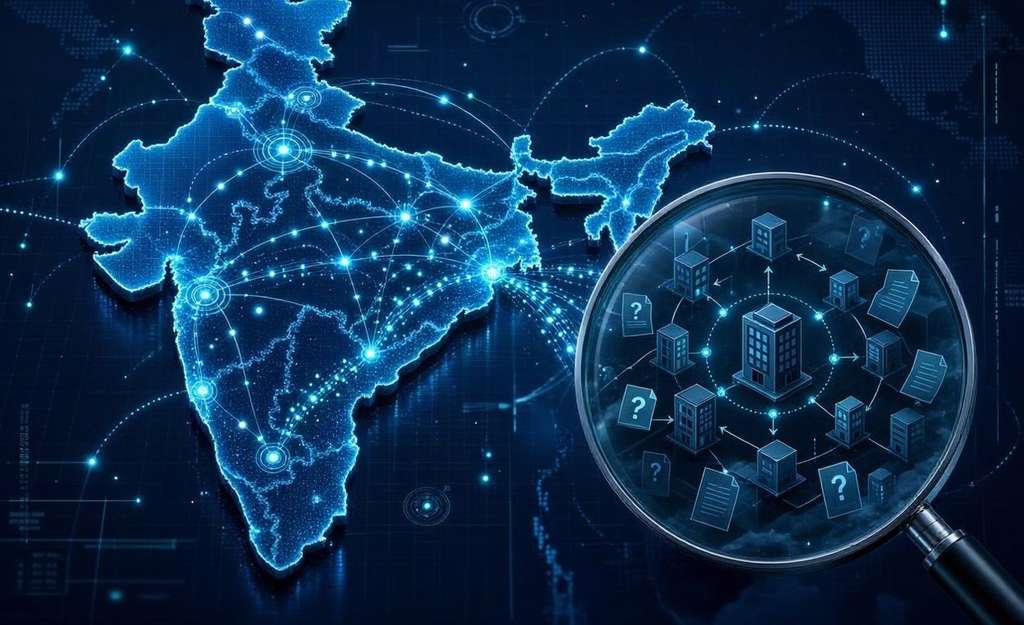
The Income Tax Department's operation, reported by The Economic Times on 22 November 2026, exposed a substantial payment network linked to Chinese online gaming platforms. According to the report, approximately ₹2,700 crore was collected from Indian players using a fraudulent intermediary called 1stPe. The investigation found shell companies masquerading as digital-art businesses to facilitate the illegal transactions. Authorities have seized cryptocurrency valued at $650,000 and identified undisclosed foreign properties, and investigators are now tracing the ultimate beneficiaries behind the scheme.
The case is not a single raid on a single company. It is a window into a much larger ecosystem of illegal real-money gaming platforms that operate from outside India, collect money from Indian players through Indian payment channels, and then move the funds abroad — often through cryptocurrency — beyond the reach of Indian tax and law-enforcement agencies.
How Did the Payment Network Work?
The network worked in layers, which is exactly what made it hard to detect. First, the gaming platforms themselves were hosted and operated by Chinese-linked entities, but they targeted Indian players with Indian-language marketing and easy payment options. Players deposited money believing they were playing skill or chance-based games on legitimate apps.
Second, the money did not go directly to the gaming companies. It passed through an intermediary — in this case 1stPe — which collected payments from Indian players. Intermediaries like this sit between the player and the platform, so the money trail looks like an ordinary online purchase rather than a payment to an illegal betting site.
Third, the investigators found shell companies posing as digital-art businesses. These front companies gave the transactions a legitimate-looking cover: on paper, the money appeared to be payment for digital art or other services, not gambling deposits. Shell companies are firms that exist mostly on paper, with little real business, and they are a classic tool for hiding the true source and destination of money.
Finally, the money was moved out of India, at least partly through cryptocurrency. The seizure of crypto worth $650,000 shows that digital currencies were part of the exit route, because crypto transfers can cross borders quickly and are harder to trace than bank transfers. The identification of undisclosed foreign properties suggests that some of the proceeds were also parked in assets abroad.
The DGGI's Parallel ₹1 Lakh Crore Probe
The Income Tax case is not the only action under way. The DGGI has launched a sweeping investigation into a massive online gaming network, uncovering transactions estimated at ₹1 lakh crore routed through various payment gateways, according to a Mirror Now report dated 21 November 2026. Officials conducted coordinated searches in Banjara Hills in Hyderabad and in Vijayawada, and the probe is examining large-scale GST evasion, the involvement of Chinese entities in domestic gaming operations, and the illicit transfer of funds abroad via cryptocurrency.
Investigators are scrutinising the financial activities of several gaming platforms, including Superwinner, bigrummywinner, bigluckywinner and rummyruler. According to internal DGGI documents cited in the report, these platforms were allegedly established with the assistance of Chinese entities. Officials believe promoters from Hyderabad met a Chinese intermediary in 2023 to coordinate the setup of payment gateway services, while a digital marketing team based in China reportedly managed promotional efforts to target Indian gamers.
A central focus of the DGGI investigation is the alleged use of dummy merchant accounts by payment aggregators. These accounts, the investigators suspect, were used to bypass regulatory oversight and move massive sums of money. The probe is also examining evidence that hundreds of crores of rupees may have been converted into cryptocurrencies such as USDT and transferred to recipients in China, Dubai and Singapore.
The inquiry has also put the spotlight on the First Finance Credit Cooperative Society Ltd, led by chairman and managing director Satyanarayana Itakari, which is being examined for its potential role in the gaming payment network. The society had earlier drawn law-enforcement attention in connection with the Karnataka Maharshi Valmiki Scheduled Tribes Development Corporation scam, in which siphoned funds were allegedly moved through fraudulent accounts at the institution.
In a recent development, Nalin Gupta of Nalsan Enterprises Pvt Ltd — a firm associated with the payment solutions brand BankNyou — was detained at Delhi airport after officials issued a lookout circular when he reportedly failed to respond to multiple summons. He was released after his statement was recorded, but he remains a person of interest. The DGGI continues to record statements from various stakeholders, including Gali Kiran Kumar, as it maps the full scale of the network.
Why Do Chinese Gaming Platforms Target Indian Players?
India is one of the largest gaming markets in the world, with hundreds of millions of smartphone users and cheap mobile data. That scale makes it an attractive target for gaming operators, including illegal ones. The platforms lure players with easy sign-ups, small initial deposits, promises of quick winnings, and aggressive advertising on social media and messaging apps.
The business model depends on the money moving fast. Players deposit through UPI, wallets and payment gateways; the operators take a cut; and the rest is funnelled out through layers of intermediaries and crypto. Because the platforms are hosted abroad and the companies are registered overseas, Indian regulators have found it difficult to shut them down directly — which is why the crackdown has focused on the payment layer inside India: the intermediaries, the payment aggregators, the dummy merchant accounts and the front companies.
This is also why the two investigations matter together. The Income Tax Department's ₹2,700 crore case shows how one intermediary moved money for Chinese platforms, while the DGGI's ₹1 lakh crore probe suggests the total scale of the ecosystem could be far larger. The ₹1 lakh crore figure is the estimated size of the transactions under investigation, not a confirmed amount of tax evaded or money seized — that distinction matters, and the probe is still under way.
What the Law Says: The 2025 Online Gaming Ban
The crackdown sits on top of a major legal change. Parliament passed the Promotion and Regulation of Online Gaming Bill, 2025, in August 2025 — the Lok Sabha on 20 August, the Rajya Sabha on 21 August — and the President gave assent on 22 August 2025. The law bans real-money games from taking deposits from players in India, which means platforms that collect money from Indian players for games involving stakes are operating illegally.
The ban is itself being challenged in court, and a plea against the real-money gaming ban is listed for hearing on 2 December. But until a court says otherwise, the law stands, and the agencies are using it — along with tax, GST and anti-money-laundering provisions — to go after the payment networks that keep these platforms alive.
For players, the legal position is simple and worth remembering: depositing money on an unregulated offshore gaming platform is not just risky, it can mean the money is gone for good. There is no Indian regulator to complain to, no refund mechanism, and winnings from an illegal platform cannot be enforced in court.
What Happens Next
Both investigations are still in progress, so more details are likely to emerge. The Income Tax Department is tracing the ultimate beneficiaries of the ₹2,700 crore network, which could lead to further searches and arrests. The DGGI is still recording statements and mapping where the money went, and its ₹1 lakh crore estimate may be revised as the evidence is analysed.
The crackdown is also likely to tighten scrutiny of payment aggregators and merchant onboarding. The use of dummy merchant accounts is the weak point the agencies have identified, and regulators have been pushing payment companies to verify their merchants more carefully. For the gaming industry, the message is that the enforcement focus has shifted from the apps themselves — which are hard to reach — to the money pipes inside India, which are not.
There is also a wider policy question that the case raises: how should India deal with offshore platforms that target Indian users from outside the country's jurisdiction? Blocking apps and websites has been tried before, but new ones appear quickly. Going after the payment layer, as these two operations do, is a more durable approach — if the intermediaries are shut down, the platforms lose their ability to collect money from Indian players at all.
Why This Matters for Ordinary Indians
Even if you never play online games, this case matters. First, the money involved is enormous — ₹2,700 crore in one network and an estimated ₹1 lakh crore of transactions in another — and money that leaves India untaxed is money that does not fund schools, hospitals and roads. GST evasion on this scale, if confirmed, is a direct loss to the exchequer.
Second, the same techniques — shell companies, dummy merchant accounts and crypto — are used in other frauds, from fake investment schemes to phishing rackets. Every time investigators map one of these networks, they learn how the next one works.
And third, the case is a warning to players. The platforms that promise easy winnings are often the front end of a money-laundering operation. The deposit you make can become part of a trail that investigators are following — and the platform can vanish overnight with your money. If a gaming app asks for deposits through unfamiliar intermediaries, promises guaranteed returns, or operates without any Indian registration, that is a reason to stay away, not to deposit more.
Conclusion
The ₹2,700 crore Chinese gaming payment network case, and the DGGI's parallel probe into transactions worth an estimated ₹1 lakh crore, together show how big the illegal online gaming economy in India had become — and how it was kept alive by payment intermediaries, shell companies and crypto transfers rather than by the games themselves. The Income Tax Department has seized crypto worth $650,000 and identified foreign properties; the DGGI has searched premises in Hyderabad and Vijayawada and is recording statements as it traces where the money went. With real-money gaming now banned under the 2025 law, the enforcement focus is on the money pipes, and that is where the next phase of this story will play out. For players, the lesson is plain: unregulated offshore gaming apps are not just a bad bet — they may be part of a criminal network.
The crackdown also fits a wider pattern in how India handles online payments. For context on how payment charges and rules are changing for ordinary users, see our explainer on [whether UPI payments will become chargeable](https://indiaask.tech/question.php?slug=will-upi-payments-become-chargeable-mdr-charges-explained). And for how courts are responding to online fraud more broadly, see our piece on [the Supreme Court's order on the digital arrest scam](https://indiaask.tech/question.php?slug=what-is-digital-arrest-scam-supreme-court-whatsapp-order-explained).
The two main sources for this article are [The Economic Times' report on the Income Tax Department's operation](https://thefinancialcapital.com/story/income-tax-department-busts-2700-cr-chinese-gaming-payment-network-/r145260250) and [Mirror Now's report on the DGGI's ₹1 lakh crore probe](https://www.mirrornow.in/hyderabad-news/dggi-probes-1-lakh-crore-online-gaming-network-china-links-article-156545036). As both investigations continue, the figures and details may be updated — and this article will be read alongside those developments.
What is the ₹2,700 crore Chinese gaming payment network case?
The Income Tax Department exposed a payment network linked to Chinese online gaming platforms through which around ₹2,700 crore was collected from Indian players using a fraudulent intermediary called 1stPe. Shell companies posing as digital-art businesses were used to hide the transactions, cryptocurrency worth $650,000 was seized, and undisclosed foreign properties were identified. Investigators are tracing the ultimate beneficiaries.
How did the payment network move money out of India?
Players deposited money through an intermediary, 1stPe, while shell companies posing as digital-art businesses gave the transactions a legitimate-looking cover. The DGGI's parallel probe found that dummy merchant accounts were used by payment aggregators to bypass oversight, and that hundreds of crores of rupees may have been converted into cryptocurrencies such as USDT and transferred to recipients in China, Dubai and Singapore.
What is the DGGI's ₹1 lakh crore online gaming probe?
The Directorate General of GST Intelligence is investigating online gaming transactions estimated at ₹1 lakh crore routed through payment gateways, with alleged Chinese links. Searches were conducted in Banjara Hills in Hyderabad and in Vijayawada, and platforms under scrutiny include Superwinner, bigrummywinner, bigluckywinner and rummyruler. The probe is examining GST evasion and the illicit transfer of funds abroad via cryptocurrency.
Is real-money online gaming banned in India?
Yes. Parliament passed the Promotion and Regulation of Online Gaming Bill, 2025, in August 2025 and the President gave assent on 22 August 2025. The law bans real-money games from taking deposits from players in India. A court plea challenging the ban is listed for hearing on 2 December 2026, but until a court says otherwise, platforms collecting deposits from Indian players are operating illegally.