Home > Economy > Will UPI Payments Become Chargeable? UPI MDR Charges Explained (November 2026)
Will UPI Payments Become Chargeable? UPI MDR Charges Explained (November 2026)
By Vijay Pawar · 2026-11-13 · 7 min read · Economy
UPI MDR is a merchant-side fee on payments above Rs 2,000. Customers pay nothing extra.
Key Takeaways
UPI MDR is 0.4% on merchant payments above Rs 2,000, capped at Rs 300 — paid by merchants, not customers.
Payments up to Rs 2,000, person-to-person transfers and small merchants (up to Rs 1 lakh a month via QR) stay free.
No start date has been announced; the rollout was deferred from 15 October 2026 to a post-Diwali date yet to be notified.
Merchants cannot pass the fee to customers, and UPI apps cannot add platform fees.
The framework is challenged in the Supreme Court, which refused a stay on 28 September 2026.
Will UPI payments become chargeable?
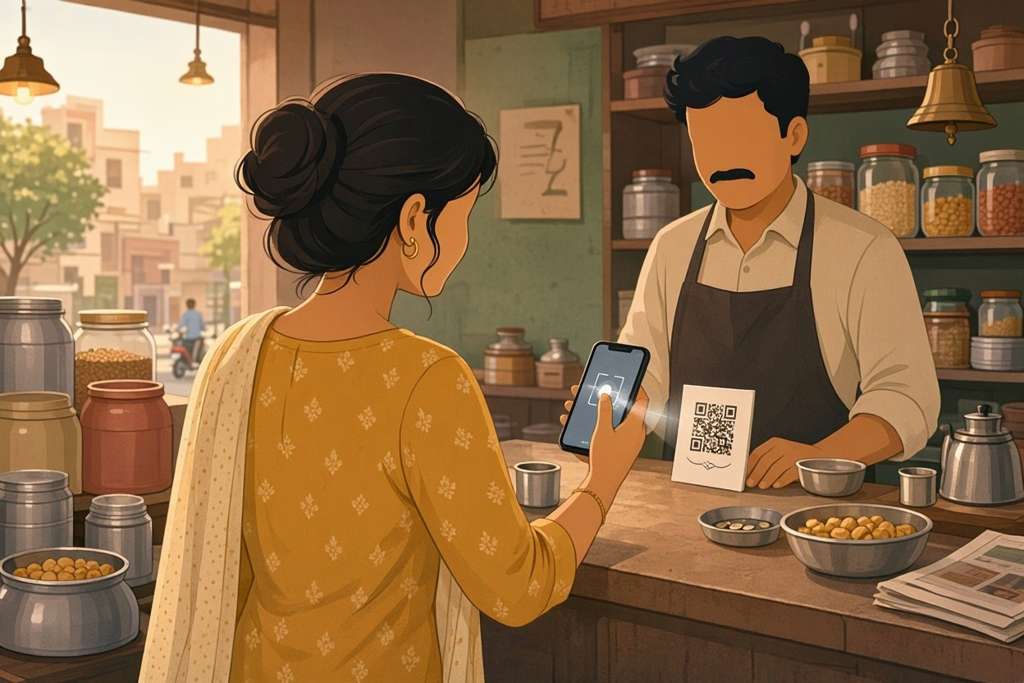
If you pay for groceries, medicines or a train ticket by scanning a QR code, you have probably heard the rumour: UPI charges are coming, and your free payments are about to end. The short answer is that ordinary users will not pay anything extra. The National Payments Corporation of India (NPCI) has introduced a Merchant Discount Rate (MDR) on some UPI payments, but it is a fee paid by merchants, not by customers — and most everyday payments are not covered at all. Even so, the change matters, because it ends more than six years of completely free UPI for merchants. Here is what the new UPI charges actually are, who pays them, what stays free, and when they will start.
What is UPI MDR?
MDR, or Merchant Discount Rate, is the fee a merchant pays to accept a digital payment. When you pay by credit card, the shop already pays a small percentage of the transaction to banks and payment companies. UPI was different: since 1 January 2020, the government had banned any MDR on BHIM-UPI and RuPay debit card payments through Section 10A of the Payment and Settlement Systems Act, 2007. Merchants paid nothing, and that zero-cost model helped UPI grow into the world's largest real-time payment system.
In September 2026, Parliament changed that position. The Taxation and Other Laws (Amendment) Act, 2026 amended Section 10A, and a Finance Ministry notification dated 14 September 2026 (S.O. 5067(E)) made UPI merchant transactions above Rs 2,000 legally chargeable. NPCI then published its framework on 15 September 2026, setting the actual rates.
How much is the UPI MDR, and who pays it?
Under NPCI's framework, the standard rate is 0.4% of the transaction value on person-to-merchant (P2M) UPI payments above Rs 2,000, capped at Rs 300 per transaction. The cap kicks in at payments of Rs 75,000 and above. A few examples make it concrete: on a Rs 5,000 purchase, the merchant pays Rs 20; on a Rs 50,000 purchase, the merchant pays Rs 200; on a Rs 1,00,000 purchase, the merchant pays Rs 300, not Rs 400, because of the cap. The customer pays exactly the same amount as before in every case. A [plain-language explainer of the 0.4% fee](https://www.tldr.money/articles/banking/upi-merchant-fee-myth-vs-fact) puts it simply: the fee is paid by the merchant, and NPCI says it cannot be passed on to you.
Some sectors get cheaper rates because their margins are thin. Railways, telecom, insurance, fuel and agricultural inputs pay a flat Rs 5 per transaction above Rs 2,000. Payments into mutual funds, securities and stockbrokers attract 0.02%, also capped at Rs 300.
Crucially, NPCI's rules say merchants cannot pass this cost on to customers as a separate charge, and UPI apps cannot add a platform fee on payments. In its affidavit to the Supreme Court, NPCI said violations can be enforced through contract, up to termination of a payment provider's UPI membership.
What stays free under the new UPI charges?
Most UPI payments stay free. First, every payment of Rs 2,000 or less carries no MDR — NPCI says these make up more than 95% of merchant payments by volume. Second, person-to-person transfers — sending money to friends and family — remain free at any amount. These account for about 37% of UPI's transaction volume and 70% of its value. Third, small merchants are fully exempt: any merchant receiving up to Rs 1 lakh a month through UPI QR codes pays zero MDR. Put together, NPCI told the Supreme Court that only about 4% of person-to-merchant transactions are affected, and about 96% remain untouched.
NPCI has also said that 5% of the MDR collected will go into a dedicated fund to promote UPI adoption among small merchants with annual turnover of up to Rs 20 lakh.
When will UPI MDR start?
This is the part that is still undecided. The framework was originally scheduled to take effect on 15 October 2026. But on 13 October 2026, NPCI's UPI and Services Steering Committee deferred it, saying it would be implemented "immediately post Diwali, at a date to be notified separately". Diwali fell on 8 November 2026, and as of 13 November 2026, NPCI has not announced a start date. [The Hindu's editorial analysis of 13 November notes that NPCI has no announcement to make about it at present](https://ambitiousbaba.com/the-hindu-editorial-analysis-13th-november-2026/). Some media reports have pointed to 1 January 2027 as a possible date, but NPCI has not confirmed this. Until NPCI notifies a date, the existing zero-MDR rules remain in effect for all UPI transactions.
Why is UPI MDR being challenged in the Supreme Court?
The new framework is already facing a legal challenge. Advocate Anjan Datta filed a public interest litigation challenging the amendment to Section 10A, the Finance Ministry notification and NPCI's framework. On 28 September 2026, the Supreme Court sought responses from the Centre and NPCI, but refused to stay the framework.
On 3 November 2026, NPCI filed its counter-affidavit, defending the charge. [The New Indian Express reported that NPCI told the court merchants cannot pass MDR charges on to customers](https://www.newindianexpress.com/india/2026/Nov/05/npci-defends-upi-mdr-in-sc-says-merchants-cannot-pass-charges-to-customers). NPCI argued that a fee touching only about 4% of merchant transactions leaves little scope for merchants to raise prices across their whole customer base, and that fears of the cost being passed on to customers are unfounded because pass-through is prohibited. The Union government, in its own affidavit the same week, told the court that merchants were "never assured of zero MDR on UPI indefinitely". The case is still being heard, and the court's final view could shape how the framework works in practice.
What does this mean for you?
For most people, nothing changes. If you pay a vegetable vendor, a kirana store or a friend through UPI, you will not be charged. Household budgets are already under pressure — [retail inflation rose to 6.09% in October 2026](https://indiaask.tech/question.php?slug=why-retail-inflation-rose-6-09-percent-october-2026-explained) — and the last thing most families need is a new charge on daily payments. The only payments touched by the new rules are merchant payments above Rs 2,000 at larger merchants, and even there the merchant pays, not you. The [Indian rupee has also been under pressure against the US dollar](https://indiaask.tech/question.php?slug=why-indian-rupee-falling-against-us-dollar-explained), which is a separate strain on prices, but it has nothing to do with UPI charges.
The practical things to watch are whether any shop tries to add a separate "UPI charge" to your bill (NPCI says this is not allowed, and you can report it to your bank or payment app), and the date NPCI finally notifies for the rollout. The bigger question is structural: UPI's free model was paid for by the government and banks, and the MDR is an attempt to make the system pay for itself without burdening small users. Whether that balance holds will become clear only once the fee actually starts.
Conclusion
UPI is not becoming a paid service for ordinary users. The new MDR is a narrow, merchant-side fee — 0.4% above Rs 2,000, capped at Rs 300 — that leaves roughly 96% of merchant payments and all person-to-person transfers free. Small merchants are fully exempt, and passing the fee to customers is prohibited. The open questions are the start date, which NPCI has still not notified, and the Supreme Court case, which will test whether the framework survives. Until then, your UPI payments work exactly as before.
No. UPI charges under the new framework are a merchant-side fee. NPCI's rules say customers cannot be charged separately, and UPI apps cannot add platform fees on payments.
Are UPI payments to friends and family still free?
Yes. Person-to-person transfers remain free at any amount, regardless of the new MDR framework. They account for about 37% of UPI's transaction volume and 70% of its value.
Which UPI payments attract MDR?
Only person-to-merchant payments above Rs 2,000 at merchants who are not covered by the small-merchant exemption. The standard rate is 0.4%, capped at Rs 300. Payments up to Rs 2,000 and small merchants receiving up to Rs 1 lakh a month via QR codes pay nothing.
When will UPI MDR charges start?
No start date has been announced. NPCI deferred the rollout from 15 October 2026 to 'immediately post Diwali', with the date to be notified separately. As of 13 November 2026, no date has been notified.