Home > E-Bikes & EV > How to Claim Electric Scooter Subsidy in India? PM E-DRIVE Amount, State Benefits and Documents Explained
How to Claim Electric Scooter Subsidy in India? PM E-DRIVE Amount, State Benefits and Documents Explained
By Vijay Pawar · 2026-11-08 · 8 min read · E-Bikes & EV
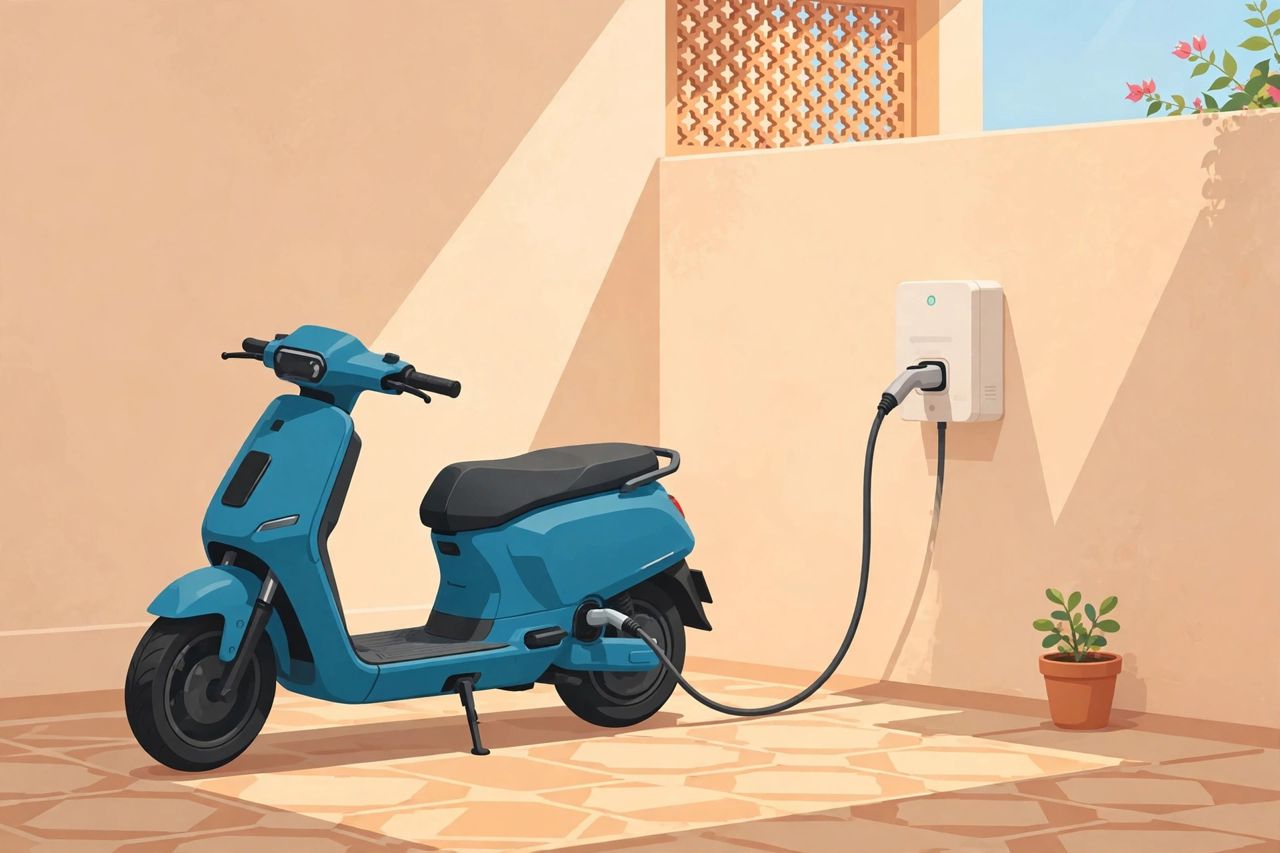
Editorial illustration: a teal electric scooter charging at a wall-mounted home charging point in a sunny courtyard.
Key Takeaways
Under PM E-DRIVE, eligible electric two-wheelers registered between 1 April 2025 and 31 March 2028 get Rs 2,500 per kWh, capped at Rs 5,000 per vehicle and 15% of the ex-factory price, whichever is lower.
Only scooters with an ex-factory price of Rs 1.5 lakh or below, with a lithium-ion battery and PM E-DRIVE certification, qualify; one vehicle per Aadhaar is allowed.
You do not apply separately for the central subsidy: the dealer does Aadhaar e-KYC, generates an e-Voucher and deducts the amount from your invoice before you pay.
State incentives stack on top of the central subsidy, but figures change often, so the current position must be confirmed with the dealer and RTO before buying.
The scheme is fund-limited and was extended to 31 March 2028 in August 2026, so the benefit is not guaranteed indefinitely.
If you are buying an electric scooter this year, the sticker price is not the price you actually pay. Between the central government's PM E-DRIVE scheme and the extra incentives many states offer, a buyer can save thousands of rupees — but only if the scooter is eligible and the dealer applies the benefit correctly. This guide explains how to claim electric scooter subsidy in India, how much money you can actually get, and the mistakes that can cost you the discount.
How much subsidy can you get on an electric scooter?
The central subsidy comes from PM E-DRIVE, short for Prime Minister Electric Drive Revolution in Innovative Vehicle Enhancement. It replaced the older FAME-II scheme in October 2024 and is the current central demand-incentive programme for electric two-wheelers. For scooters registered between 1 April 2025 and 31 March 2028, the incentive is Rs 2,500 per kWh of battery capacity, capped at Rs 5,000 per vehicle. There is a second cap as well: the incentive cannot exceed 15% of the scooter's ex-factory price, so the amount you get is whichever of these limits is lower.
Take a practical example. A scooter with a 2 kWh battery would calculate to Rs 5,000 at Rs 2,500 per kWh — exactly at the cap. A scooter with a 3 kWh battery would calculate to Rs 7,500, but the Rs 5,000 cap applies, so the benefit stays Rs 5,000. A smaller 1.5 kWh battery would give Rs 3,750. In the scheme's first year the rate was higher — Rs 5,000 per kWh capped at Rs 10,000 — but the current rate is the one that applies to new purchases.
Two more limits matter. First, only scooters with an ex-factory price of Rs 1.5 lakh or below qualify, which covers most mass-market scooters but excludes premium models. Second, the scheme is fund-limited. In August 2026 the government extended the two-wheeler subsidy to 31 March 2028 and raised the allocation for the segment to Rs 2,767 crore, covering up to 45.79 lakh vehicles. Even so, a fund-limited scheme can close for a category before its last date if the money runs out, so the subsidy is not something to assume will be there forever. The extension and the current rates were [reported by Moneycontrol](https://www.moneycontrol.com/news/business/pm-e-drive-centre-extends-electric-two-wheeler-subsidy-to-fy28-expands-coverage-to-45-79-lakh-vehicles-14002015.html) after the Ministry of Heavy Industries notification of 10 August 2026.
Who is eligible for the PM E-DRIVE subsidy?
Eligibility is decided by the vehicle and the buyer, not by an application form. The scooter must be a registered electric two-wheeler with a lithium-ion battery, it must be certified under PM E-DRIVE by an approved testing agency, and its ex-factory price must be within the Rs 1.5 lakh ceiling. Low-speed scooters that run below 25 kmph and need no licence or RTO registration generally fall outside the scheme's certification framework, so they do not get this benefit.
On the buyer's side, the key condition is Aadhaar. Only one vehicle per Aadhaar-linked individual is permitted under the scheme, and Aadhaar-based e-KYC is mandatory at the time of purchase. The scooter must be bought from an authorised dealer who is registered on the PM E-DRIVE portal — if the dealer is not on the portal, the subsidy cannot be processed at all.
There is also a tax benefit that applies regardless of the subsidy. Electric vehicles attract only 5% GST, far below the rate on petrol two-wheelers, and that lower rate is already built into the price you see. It is worth remembering when comparing an electric scooter with a petrol one, because the running-cost maths changes further once you look at the full picture — our comparison of [electric vs petrol scooter costs over five years](https://indiaask.tech/question.php?slug=electric-vs-petrol-two-wheeler-total-cost-5-years) shows how fuel and maintenance savings add up on top of the subsidy.
How to claim the subsidy, step by step
The most common misunderstanding about the subsidy is that you have to apply for it yourself. For the central PM E-DRIVE benefit, you do not. The process is handled at the dealership and the discount is applied upfront, before you pay. Here is how it works in practice.
First, confirm before booking that the exact model and battery variant you want is PM E-DRIVE certified. Ask the dealer to show you the certification or the model listed on the portal — a verbal assurance is not enough. Second, carry your Aadhaar and the mobile number linked to it, because the dealer will complete Aadhaar-based e-KYC at the time of purchase. Third, the dealer generates an e-Voucher on the PM E-DRIVE portal against your Aadhaar. Fourth, the subsidy amount is deducted directly from your invoice, and you pay only the reduced price. The manufacturer then claims the reimbursement from the government — you never wait for a refund cheque.
The one thing you must do is check the invoice. Ask the dealer to show you the invoice after the subsidy is applied, and confirm the deducted amount is visible as a separate line. If a salesperson says the subsidy is not applicable, or that you will have to claim it later through a government portal, treat that as a red flag. For the central scheme, that is not how it works — verify independently before paying any money.
If you are financing the purchase, the subsidy also changes the loan maths, because the loan is usually calculated on the post-subsidy price. Our guide to [electric scooter loans, EMI and documents](https://indiaask.tech/question.php?slug=ev-scooter-loan-emi-guide-explained) explains how the EMI, interest and total cost work out once the subsidy is factored in.
State subsidies: the second layer of savings
The central subsidy is only the floor. Several states add their own purchase incentives on top of PM E-DRIVE, along with road tax waivers and registration fee exemptions, and the total saving can be considerably larger than the central Rs 5,000 alone. Delhi's earlier EV policy, for example, offered a purchase incentive of up to Rs 30,000 for two-wheelers plus a scrapping incentive for buyers replacing an old petrol vehicle, alongside a full road tax and registration waiver. Maharashtra's policy has offered a subsidy of up to 15% of the purchase price for two-wheelers, with a full road tax exemption.
But state figures change often, and different sources quote different current numbers — Delhi is working on a new EV Policy 2.0, and older policy phases have expired or been revised. So treat any state figure you read online, including in this article, as a starting point only. Before you buy, confirm the current position with your dealer and your state transport department or RTO. The practical questions to ask are: is the state incentive still active, does it apply to your model, is it deducted at the dealership or paid later by direct benefit transfer to your bank account, and how long does it take? In states where the incentive is paid later, buyers typically apply on the state EV portal after registration, with Aadhaar, proof of residence and bank details, and the money arrives in 30–45 days. [Tata Power's 2026 guide to central and state EV incentives](https://www.tatapower.com/blogs/ev-subsidies-in-india-2026-central-and-state-incentives) is a useful cross-check, but the dealer and the RTO are the final word for your state.
Mistakes that can cost you the subsidy
A few avoidable errors quietly erase the benefit. The first is choosing a scooter that looks electric but is not PM E-DRIVE certified — always verify the model, not just the brand. The second is buying from a dealer who is not registered on the portal, or not checking the invoice to confirm the deduction. The third is assuming a low-speed, unregistered scooter qualifies; it generally does not. The fourth is timing: because the scheme is fund-limited, waiting indefinitely for a better price can mean the allocation for your category is exhausted. And the fifth is forgetting the state layer altogether — many buyers never ask about it and leave thousands of rupees on the table.
One more check is worth doing before you sign anything: choose the right scooter in the first place. A subsidy does not fix a bad purchase, so compare range, battery warranty and service network before deciding. Our guide to [choosing your first electric scooter in India](https://indiaask.tech/question.php?slug=how-to-choose-first-electric-scooter-india) covers the checks that matter most for a first-time buyer.
Conclusion
Claiming the electric scooter subsidy in India is simpler than most buyers expect: pick a certified scooter under the Rs 1.5 lakh ex-factory ceiling, buy from a registered dealer, complete Aadhaar e-KYC, and the Rs 2,500-per-kWh benefit — capped at Rs 5,000 — comes off your invoice on the spot. The real work is in the verification: confirm the model is eligible, read the invoice, and ask about your state's additional incentives before you pay. Do those three things and the subsidy is money saved, not money chased.
How much subsidy do you get on an electric scooter in India?
Under the central PM E-DRIVE scheme, an eligible electric two-wheeler registered between 1 April 2025 and 31 March 2028 gets Rs 2,500 per kWh of battery capacity, capped at Rs 5,000 per vehicle and also limited to 15% of the ex-factory price, whichever is lower. State incentives can add more on top, so the total saving depends on where you buy.
Do I have to apply separately for the electric scooter subsidy?
No. For the central PM E-DRIVE benefit you do not file a separate application. The dealer completes Aadhaar-based e-KYC, generates an e-Voucher on the PM E-DRIVE portal, and deducts the subsidy directly from your invoice, so you pay the reduced price. Some state incentives are different and may need an application on the state EV portal after registration.
Which electric scooters are eligible for the subsidy?
The scooter must be a registered electric two-wheeler with a lithium-ion battery, certified under PM E-DRIVE, with an ex-factory price of Rs 1.5 lakh or below. Only one vehicle per Aadhaar-linked individual is allowed. Low-speed scooters below 25 kmph that need no registration generally do not qualify.
Can I get both the central and the state subsidy on one scooter?
Yes, where your state has an active policy, the central and state benefits stack. The central PM E-DRIVE amount comes off the invoice at the dealership, while the state benefit may be deducted at purchase or paid later by direct benefit transfer after registration. State figures change often, so confirm the current position with your dealer and RTO before buying.