Electric Scooter Theft Protection Explained: Locks, GPS Tracking and What to Do If Your Scooter Is Stolen
Key Takeaways
- Park in well-lit, visible spots near foot traffic or cameras
- A hardened steel U-lock or chain plus a disc lock beats any single lock
- GPS tracking improves recovery chances but does not prevent theft
- Keep chassis, motor and registration numbers plus photos stored safely
- After a theft, screenshot tracking data, file a police complaint and inform the insurer promptly
Electric Scooter Theft Protection Explained: Locks, GPS Tracking and What to Do If Your Scooter Is Stolen
An electric scooter is light, quiet and easy to push away, which unfortunately also makes it attractive to thieves. Unlike a car, it can be lifted into a van in seconds if it is not secured, and unlike a bicycle, it is worth far more on the resale market. The good news is that most thefts are opportunistic: thieves look for the easiest target in a parking area. A scooter that is visibly locked, tracked and parked thoughtfully is often skipped in favour of an easier one.
Protection works in layers. No single lock or device makes a scooter theft-proof, but each layer adds time, effort and risk for a thief, and together they make your scooter a poor choice. Think of it as making theft slow, noisy and traceable, rather than trying to make it impossible.
Layer One: Parking Choices That Cost Nothing
Where you park matters more than any gadget. A well-lit spot near foot traffic, a security camera, or a building entrance is far safer than a dark corner at the far end of a lot. Thieves prefer places where they can work unseen. If your building has a dedicated two-wheeler parking area, use it rather than leaving the scooter on an open street overnight. At home, a locked garage or a covered parking bay beats an open driveway, even if the driveway feels more convenient.
When you park, lock the steering if your scooter has a steering lock, and always take the key with you. It sounds obvious, but many thefts happen because a scooter was left unlocked for a quick errand. Turn the scooter so it is not easy to roll straight out, and if there is a fixed object nearby, such as a railing or a ground anchor, park close to it so a chain or lock can reach it. Small habits like these take seconds and remove the easiest opportunities.
Layer Two: Locks That Actually Slow a Thief Down
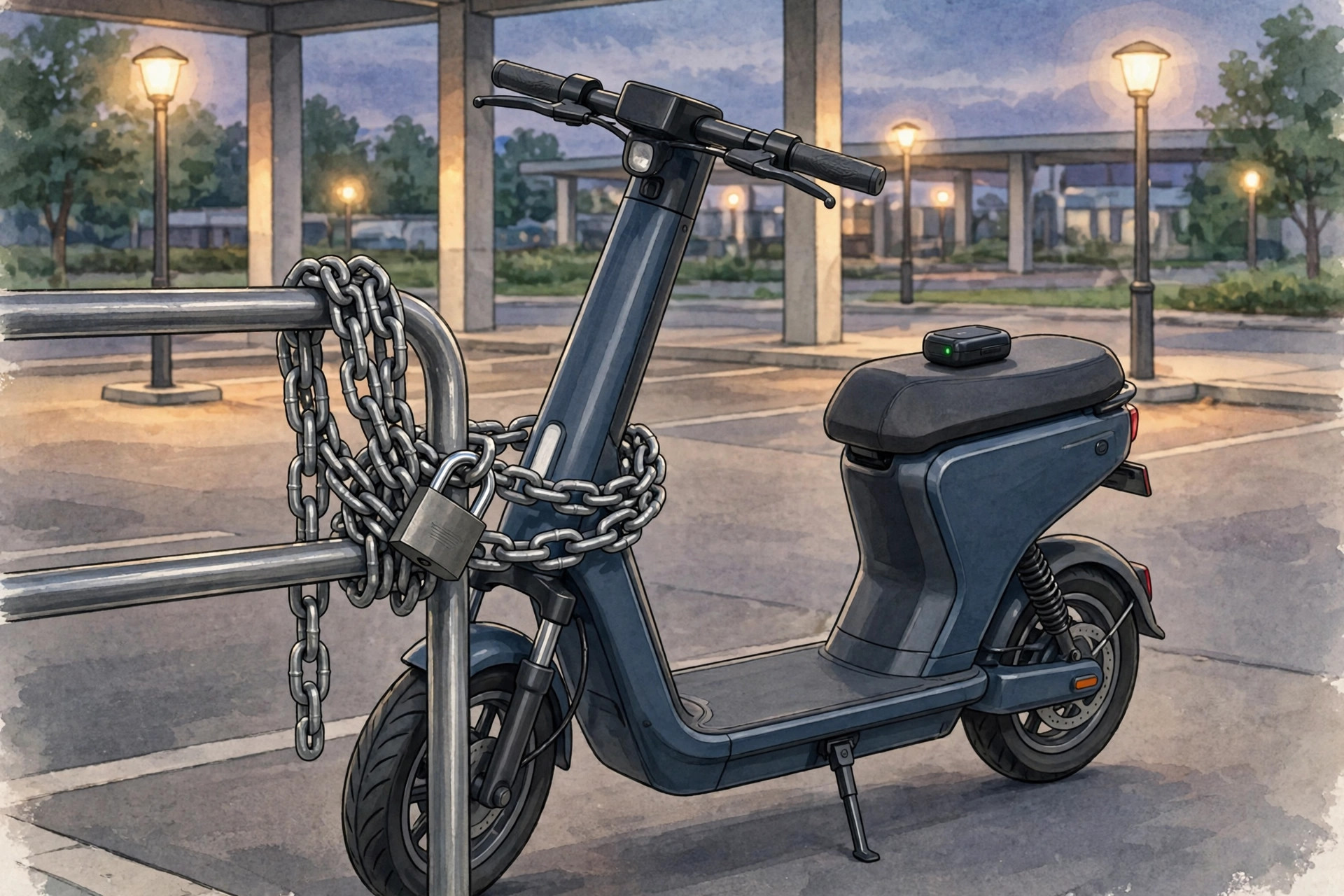
Not all locks are equal. A thin cable lock can be cut quickly with basic tools, while a hardened steel U-lock or a heavy-duty chain lock takes far longer and makes noise. For an electric scooter, a disc lock on the front wheel prevents it from being rolled away, and a chain or U-lock securing the scooter to a fixed object prevents it from being lifted into a vehicle. Using both together is much stronger than either alone, because a thief must defeat two different mechanisms.
When you buy a lock, look for one made of hardened steel with a robust locking mechanism, and check independent reviews rather than relying on packaging claims. A lock is only as strong as what it is attached to: chaining a scooter to a thin signpost or a flimsy railing defeats the purpose, since the post can be cut or lifted. Test the fit before you rely on it daily; a lock that is awkward to use will be the lock you stop using.
Remember that locks also protect against casual tampering. A visible, sturdy lock signals to a passer-by that this scooter is not an easy target. Keep the lock maintained: a lock that jams or rusts will frustrate you more than any thief, so lubricate it occasionally and keep the key somewhere you will not lose it.
Layer Three: GPS Tracking and Connected Features
Many modern electric scooters come with connected features, including GPS tracking through the manufacturer's app. If yours has this, make sure it is activated and that you know how to use it. A GPS tracker does not prevent theft, but it dramatically improves the chances of recovery, because it shows the scooter's location in real time and can record its route.
If your scooter does not have built-in tracking, an aftermarket GPS tracker is an option. These are small devices that hide inside the scooter's body panels or under-seat storage and report their position to a phone app. Some need a SIM card and a small subscription, while others use a Bluetooth network. The hidden placement matters: a tracker that is easy to find and remove is of limited use. Ask a trusted technician to fit it discreetly, and test it before you depend on it, checking that location updates are accurate and timely.
Connected features can also include alerts. Some systems notify you if the scooter is moved without the key, if it leaves a designated area, or if someone tampers with it. Set these alerts up and keep notifications enabled for the scooter's app. An alert that arrives while the theft is happening is far more useful than one discovered hours later. Keep the app updated and make sure the scooter's connectivity subscription, if any, stays active.
Layer Four: Records, Identification and Insurance
Before anything goes wrong, keep a record of your scooter's identity. Note the chassis number, motor number, registration number and any serial numbers, and keep photos of the scooter from several angles, including any distinctive marks, accessories or scratches. Store these somewhere safe, such as a cloud folder, not only on the scooter's own app. If the scooter is stolen, these details are what the police and your insurer will ask for first.
Marking your scooter can also help. Some owners use discreet markings or a visible identification sticker, which makes the scooter harder to sell on and easier to identify if recovered. Keep the purchase invoice, registration papers and insurance documents accessible, and keep copies separate from the originals. These documents prove ownership, which matters both for a police complaint and for an insurance claim.
What to Do If Your Scooter Is Stolen
Act quickly, because the first hours matter most. First, check the GPS tracking app immediately and note the last known location, then take screenshots before the battery or connectivity is cut off. Second, file a police complaint at the nearest station, giving the registration number, chassis number, photos and the tracking information. Ask for a copy of the complaint, since your insurer will need it.
Third, inform your insurer promptly and start the claim process, following the steps in your policy. Fourth, inform the scooter manufacturer's support team if the scooter has connected features; they may be able to help track it or disable it remotely. Share the details with local parking attendants and nearby shopkeepers, since a scooter is sometimes spotted locally before it is moved far away. Do not attempt to confront anyone yourself if the tracker shows a location; pass that information to the police.
Recovery is not guaranteed, and that is why the earlier layers matter so much. But a scooter with GPS tracking, a prompt police complaint and complete documentation has a far better chance of being found than one with none of these.
Conclusion
Electric scooter theft protection is not about one perfect device. It is about layers: park in visible, secure places, use strong locks that slow a thief down, keep GPS tracking active and tested, and maintain the records that make recovery and insurance claims possible. Each layer on its own is modest; together they turn your scooter from an easy target into a difficult one. Spend an evening setting these up once, and they will quietly protect your scooter every day after.