Home > E-Bikes & EV > How to Choose Your First Electric Scooter in India: Range, Battery, Charging and Running Cost Explained
How to Choose Your First Electric Scooter in India: Range, Battery, Charging and Running Cost Explained
By IndiaAsk Editorial Team · 2026-10-26 · 6 min read · E-Bikes & EV
Choosing an electric scooter starts with your daily distance and your charging routine, not the brochure range.
Key Takeaways
Match realistic range to your daily distance plus about a 50 percent buffer.
Check battery type, warranty terms and replacement cost before buying.
Sort out home or apartment charging before taking delivery.
Compare total costs over three years, not just the showroom price.
Test ride for 15 to 20 minutes on roads like your commute, with a pillion if you normally carry one.
Choosing your first electric scooter feels very different from buying a petrol scooter. There is no familiar mileage figure to compare, no fuel station on every corner, and the most important part of the vehicle — the battery — is hidden inside the floorboard. The good news is that the decision becomes much simpler once you work backwards from your own daily life: how far you ride, where you can charge, how much weight you carry, and how long you plan to keep the scooter.
This guide does not recommend a particular brand or model. Instead, it gives you a practical way to compare scooters, ask better questions in a showroom, and avoid the most common first-buyer mistakes.
Start with your real daily distance, not the brochure number
The first question is not which scooter is best, but how far you actually travel. Think about a normal week rather than a single good day. Add up your commute, school or college run, market trips, and weekend rides. If your round trip to work is 12 km, that is 60 km in a five-day week, plus errands on top.
Most buyers are comfortable when the scooter's realistic range is roughly one and a half times their daily distance. That buffer matters because range falls with higher speeds, a pillion rider, hilly roads, headwinds, and heavy traffic with frequent stops. A scooter that claims a high range in ideal test conditions may deliver noticeably less at a steady 50 to 60 kmph with two people on board.
If you ride 40 km or more a day, or cannot charge daily, look for a larger battery and check the realistic range figures from independent reviews and owner groups, not only the headline claim.
Battery size, battery type and what they mean for you
Battery capacity, measured in kilowatt-hours (kWh), is the main driver of range. A bigger battery generally means more range, but it also adds weight, cost and charging time. A 2 kWh battery may suit short city trips, while a 3 to 4 kWh battery suits longer commutes and heavier use.
Also ask whether the battery is fixed or removable. A fixed battery is charged where the scooter is parked, which works well if you have a home parking spot with a power point. A removable battery can be carried indoors to charge, which helps people who park in a shared basement or on the street — but check the battery's weight first, because some packs are heavy to lift daily.
Ask about the battery warranty separately from the vehicle warranty. Battery warranties are often given in both years and kilometres, and they may cover a minimum capacity level. Read what happens if capacity drops below that level, whether the warranty is transferable, and what a replacement battery costs outside warranty. That replacement cost is the single biggest long-term expense on an electric scooter, so do not skip this question.
Charging: where, how fast, and how practical
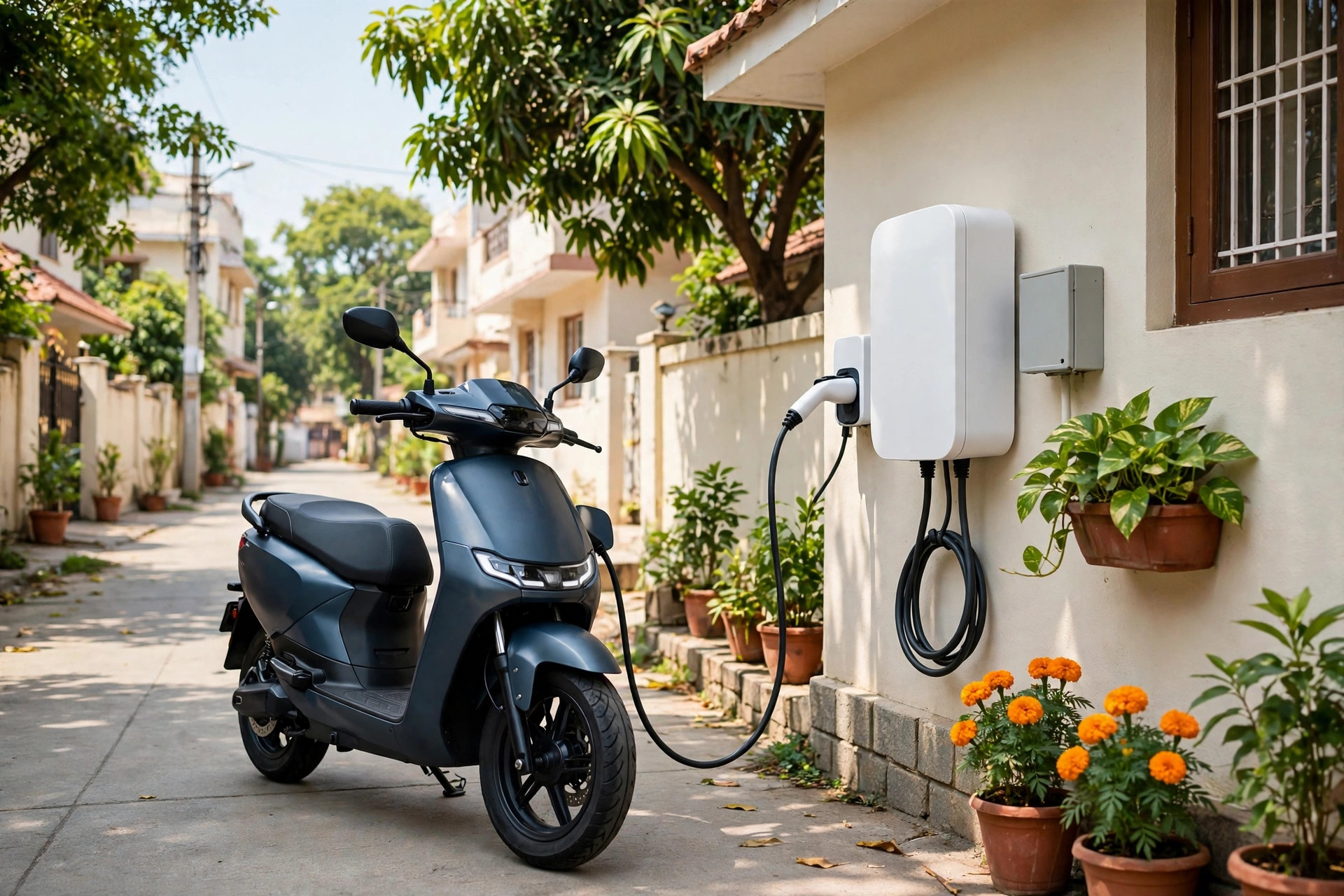
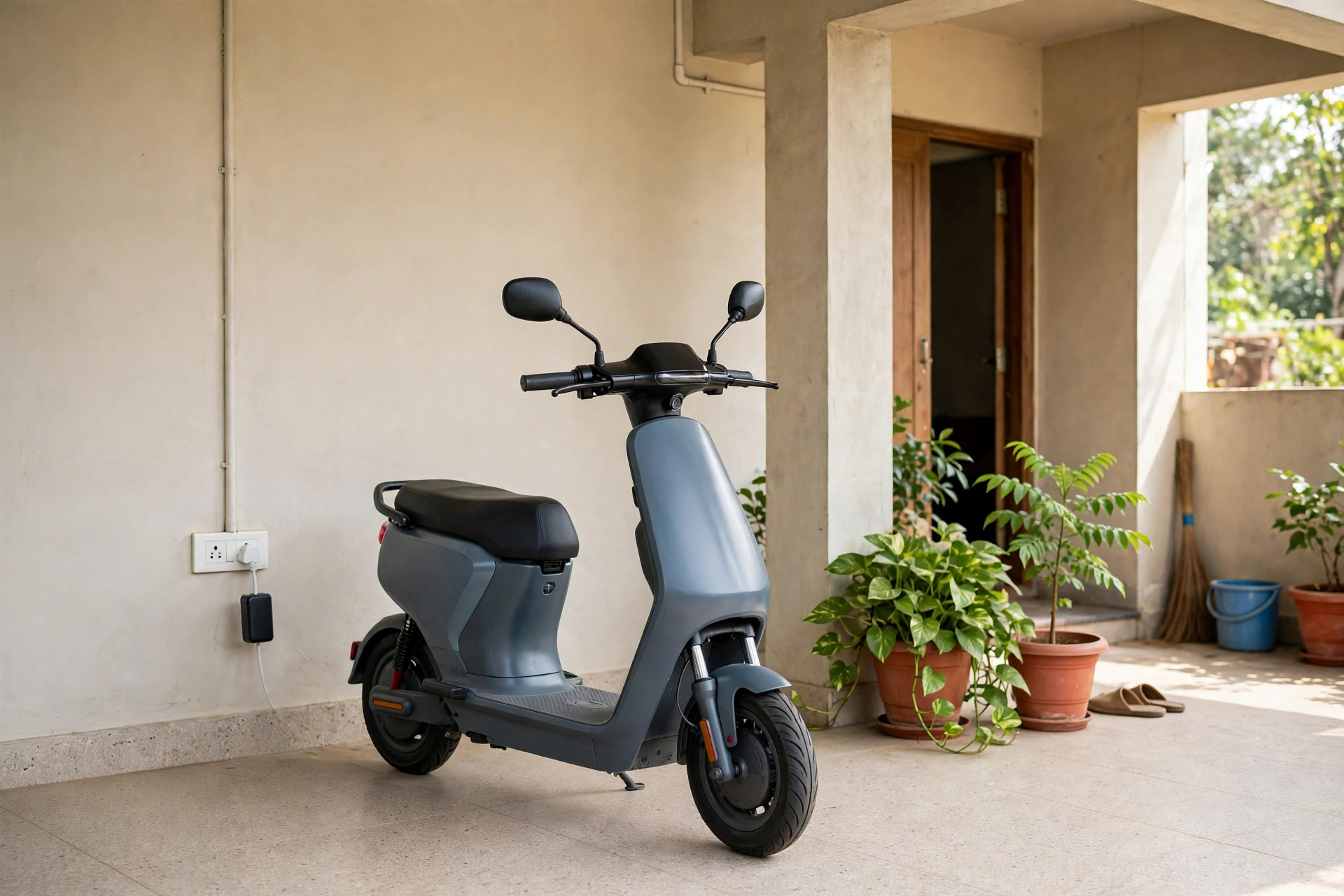
Most electric scooters charge from an ordinary home socket, which is one of their biggest advantages. A full charge from a standard socket typically takes several hours, so overnight charging fits naturally into daily life. Fast charging, where offered, is usually available at public chargers or dealerships rather than at home, and not every scooter supports it.
Before buying, walk through your charging routine honestly. Is there a socket near your parking spot? Is it weather-protected? Who controls that socket in an apartment building, and will the housing society allow a dedicated point or a metered connection? These practical questions matter more than a small difference in charging speed on paper.
If you live in an apartment without a fixed parking spot, talk to your building management early, ask existing EV owners in the building how they charge, and check whether the scooter's battery is removable. Planning charging before delivery saves a lot of frustration afterwards.
Running cost: compare the whole picture, not just fuel versus electricity
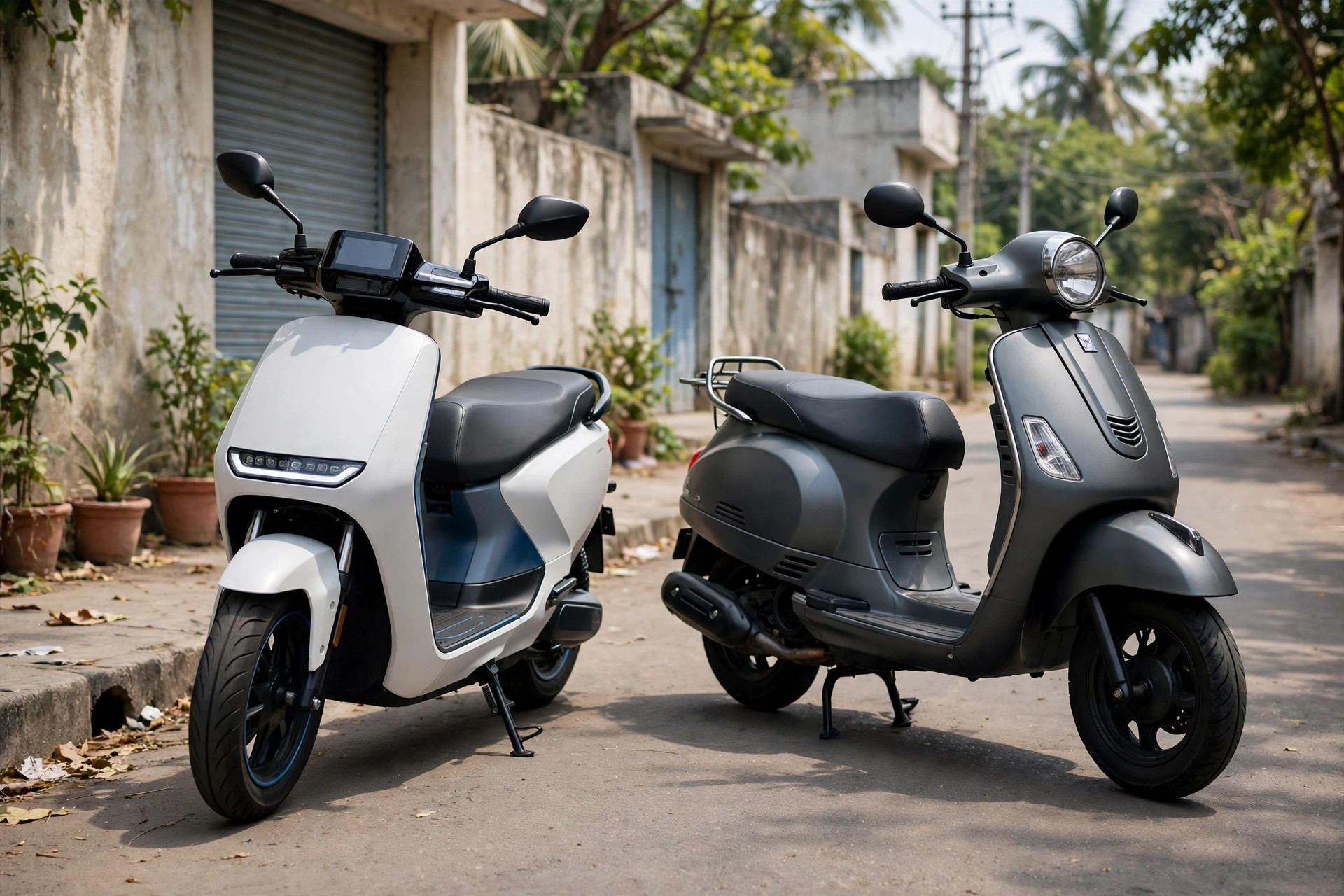
Electric scooters usually cost less per kilometre to run than petrol scooters, because electricity is cheaper than petrol for the same distance and there are fewer moving parts to service. There is no engine oil, spark plug, or clutch to replace, and brake wear can be lower because of regenerative braking, which recovers some energy when you slow down.
But a fair comparison includes more than fuel. Add up the purchase price, insurance, servicing, tyre replacement, and an allowance for battery replacement or degradation over the years you plan to keep the scooter. Also factor in the value of your time: a petrol scooter can refuel in minutes, while an electric scooter needs planned charging. For most city riders who charge at home, that trade is easy. For riders who cover very long distances daily with no home charging, it may not be.
A simple exercise helps. Write down your expected daily distance, multiply it by 300 riding days, and compare the annual energy cost of each option at your local electricity and petrol prices. Then compare servicing costs over three years. The scooter that looks cheapest in the showroom is not always cheapest over three years, especially if it needs an early battery replacement or expensive parts.
FAQ
Q: How much range do I really need for daily city use?
A: Take your longest normal daily distance and add about 50 percent as a buffer for speed, load, hills and battery ageing. If you ride 30 km a day, a realistic range of around 45 km or more gives comfortable headroom.
Q: Is a removable battery better than a fixed battery?
A: It depends on parking. Removable batteries help when you cannot charge at your parking spot, but they can be heavy to carry. Fixed batteries are simpler if you have a home socket near your parking space.
Q: How long does it take to charge an electric scooter at home?
A: From an ordinary home socket, a full charge typically takes several hours, which is why overnight charging works well. Exact time depends on battery size and how empty the battery is; check the manufacturer's figures for the specific model.
Q: Are electric scooters cheaper to maintain than petrol scooters?
A: Usually yes, because there is no engine oil, spark plug or clutch, and fewer moving parts wear out. You still need to budget for tyres, brakes, servicing and, eventually, battery replacement or degradation.
Conclusion
The best first electric scooter is not the one with the biggest headline numbers. It is the one that fits your daily distance with a comfortable buffer, charges where you actually park, carries the load you actually carry, and has a battery warranty and replacement cost you understand before you pay. Measure your real riding, sort out charging early, test ride properly, and compare total costs over three years rather than only the showroom price. Do those four things and your first electric scooter is far more likely to feel like a good decision a year later.
Frequently Asked Questions (FAQ)
How much range do I really need for daily city use?
Take your longest normal daily distance and add about 50 percent as a buffer for speed, load, hills and battery ageing. If you ride 30 km a day, a realistic range of around 45 km or more gives comfortable headroom.
Is a removable battery better than a fixed battery?
It depends on parking. Removable batteries help when you cannot charge at your parking spot, but they can be heavy to carry. Fixed batteries are simpler if you have a home socket near your parking space.
How long does it take to charge an electric scooter at home?
From an ordinary home socket, a full charge typically takes several hours, which is why overnight charging works well. Exact time depends on battery size and how empty the battery is.
Are electric scooters cheaper to maintain than petrol scooters?
Usually yes, because there is no engine oil, spark plug or clutch, and fewer moving parts wear out. You still need to budget for tyres, brakes, servicing and, eventually, battery replacement or degradation.