Home > E-Bikes & EV > Electric Bike Battery Care: How to Make Your EV Battery Last Longer
Electric Bike Battery Care: How to Make Your EV Battery Last Longer
By IndiaAsk Editorial Team · 2026-10-26 · 6 min read · E-Bikes & EV
Gentle charging, cool parking and avoiding extremes are the habits that protect an EV battery.
Key Takeaways
Keep everyday charging mostly between about 20 and 80 percent.
Make slow home charging the default and fast charging the exception.
Avoid charging a hot battery immediately after a hard ride, and park in shade.
Store an unused battery at around 40 to 60 percent charge in a cool, dry place.
Use only the approved charger and watch for sudden range drops or unusual heat.
The battery is the most expensive part of an electric bike or scooter, and it is also the part whose life depends most on daily habits. Unlike a petrol tank, which does not care how you fill it, a lithium-ion battery slowly loses capacity with every charge, every hot afternoon, and every deep discharge. The good news is that small, consistent habits can slow that decline a lot, and none of them require special tools or technical knowledge.
Think of battery care as three simple ideas: avoid extremes, keep charging gentle when you can, and do not leave the battery stressed for long periods. This guide explains what each idea means in practice for Indian roads, summers and parking conditions.
Why batteries lose capacity, in plain language
Every lithium-ion battery ages in two ways. Calendar ageing happens over time even when the bike is parked, and it speeds up in heat and at very high or very low charge levels. Cycle ageing happens each time the battery is charged and discharged, and it speeds up when the battery is pushed hard — fast charging every day, draining it to empty, or riding at full throttle continuously in extreme heat.
Manufacturers usually define battery life by how many charge cycles it takes before capacity falls to a certain level, often around 70 to 80 percent of the original capacity. That does not mean the battery suddenly stops working at that point. It means range gradually shrinks, so a bike that once did 90 km may eventually do 70 km. Good habits delay that point, which is why two identical bikes can have very different ranges after three years.
The 20 to 80 habit for everyday riding
For daily city riding, try to keep the battery mostly between about 20 percent and 80 percent charge. You do not need to follow this rigidly, and an occasional full charge before a long trip is perfectly fine. But making 20 to 80 your normal range reduces stress on the battery cells, especially if you charge every day.
In practice, this means plugging in when the battery falls to around a quarter, and unplugging around four-fifths, rather than running it to near-empty and then charging to 100 percent overnight every single night. Many bikes and chargers let you set a charge limit, or at least show a clear percentage, so you can build this habit without guessing. If your bike only shows bars, learn roughly how many kilometres each bar represents on your usual route.
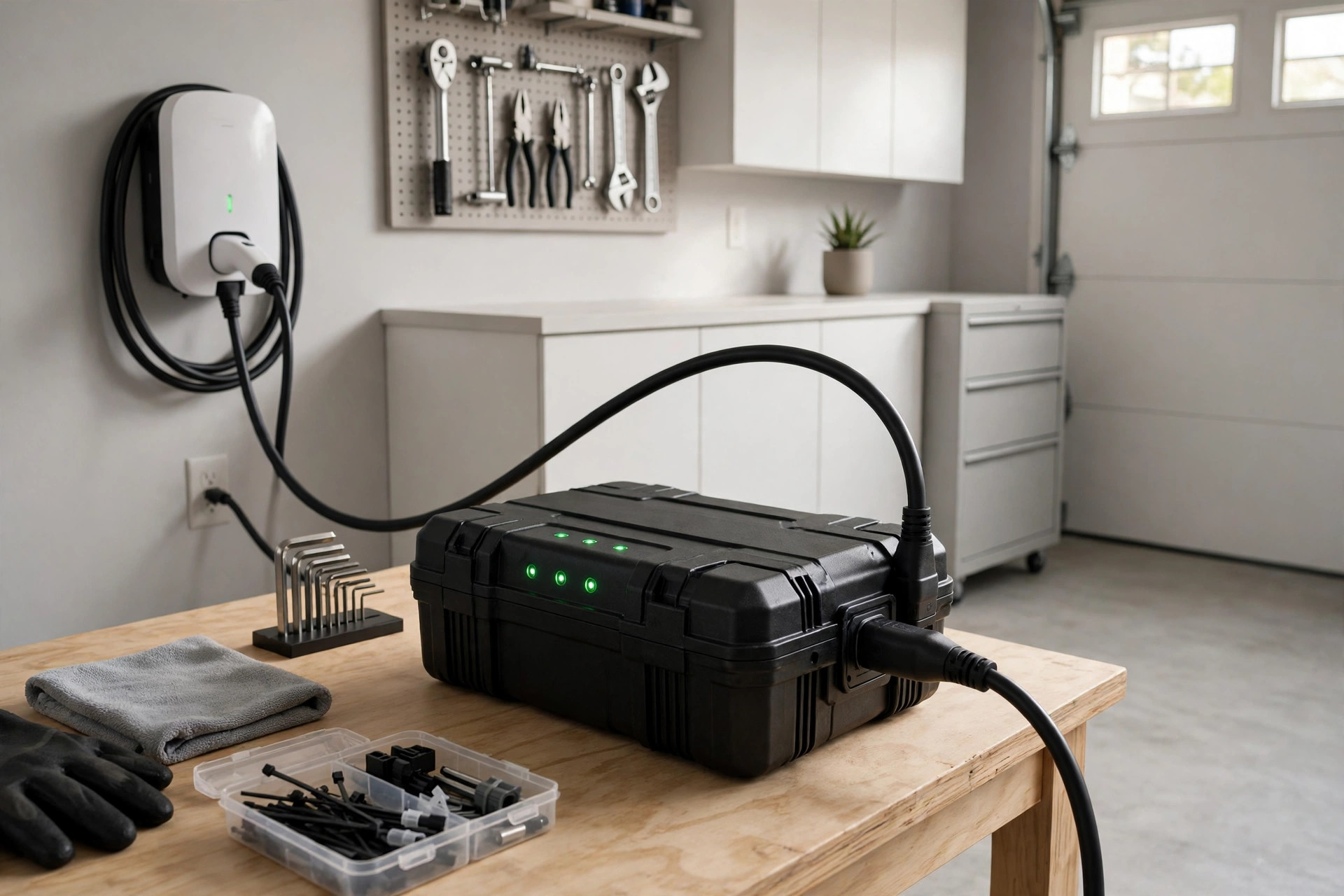
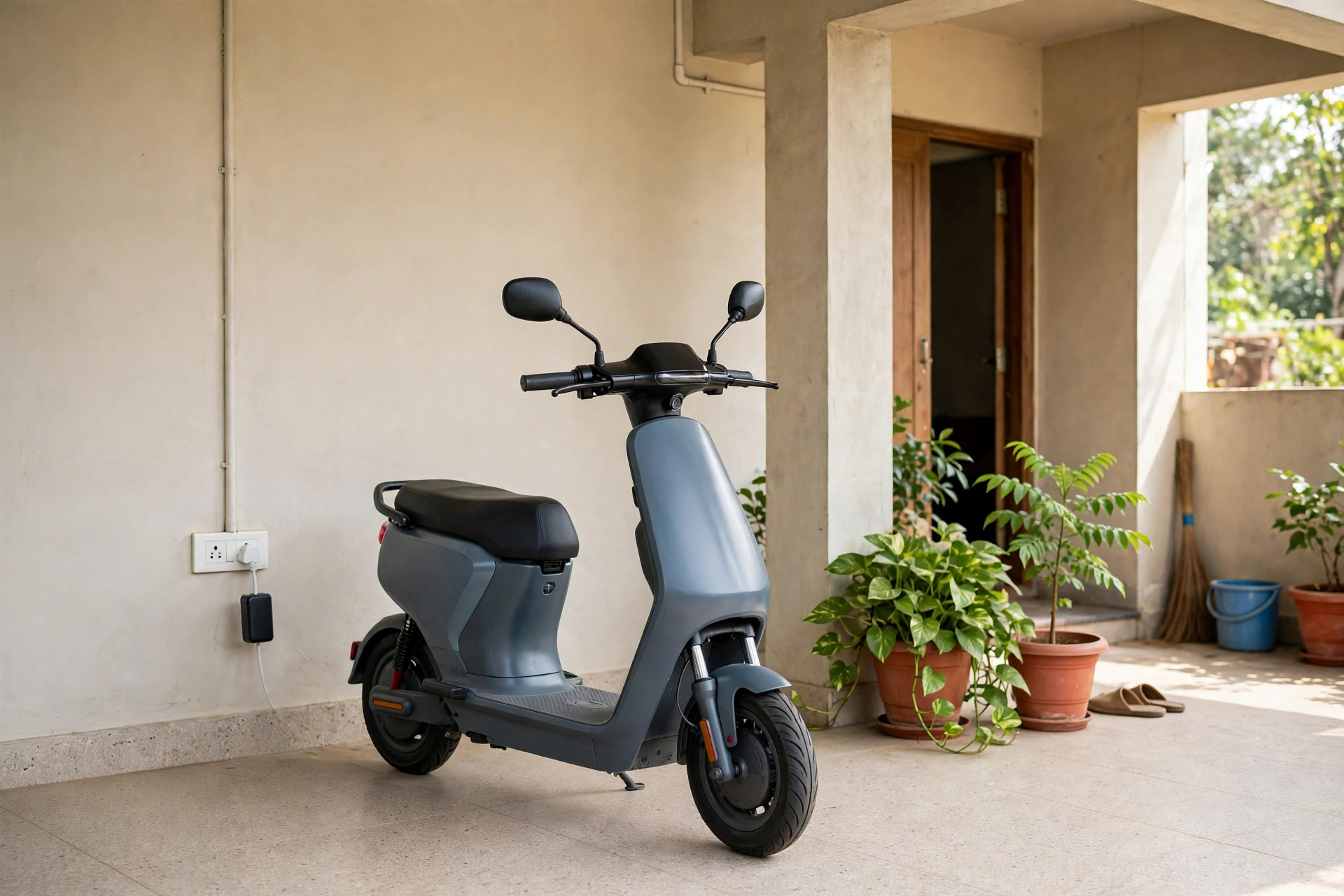
Charging speed matters too. Slow, overnight charging from a home socket is gentler on the battery than frequent fast charging. Fast charging is useful on a long trip or when you are in a hurry, but using it as your everyday method adds heat and stress. If you have the choice, make slow charging the default and fast charging the exception.
Heat is the biggest enemy in Indian summers
Heat accelerates battery ageing more than almost anything else a rider can control. Parking in direct sun on a 45-degree afternoon, charging immediately after a hard high-speed ride while the battery is already hot, and storing a bike in a closed metal shed all push battery temperature up.
A few habits help. Park in shade wherever possible, especially for long daytime stops. After a long or fast ride, let the bike cool for 20 to 30 minutes before plugging in, rather than charging a hot battery straight away. If you must charge outdoors, charge in the cooler morning or evening hours rather than at midday. And never cover a charging battery with a blanket or plastic sheet that traps heat — charging needs ventilation, as the manufacturer directs.
Riding style plays a role as well. Constant full-throttle riding and aggressive acceleration draw high current and generate heat. Smooth, steady riding not only extends range on a single charge, it also keeps the battery cooler and calmer over its whole life.
Storage: what to do when the bike will sit unused
Sometimes a bike sits unused for weeks — during travel, monsoon repairs, or a move. How you store it matters. Do not store a battery fully charged or nearly empty for a long period. A charge level around 40 to 60 percent is a good middle ground for storage.
Store the bike in a cool, shaded, dry place if you can, and check the charge every few weeks. If it has dropped a lot, top it up back to the middle range rather than to full. If the battery is removable, follow the manufacturer's storage advice for removing it and keeping it indoors away from heat and moisture. Never store a damaged, swollen or punctured battery at home — contact the dealer or manufacturer for advice, and do not try to charge it.
Also avoid leaving the bike plugged in for weeks at a time. Once charging is complete, unplug it. A charger left connected indefinitely is not a storage solution, and it can keep the battery sitting at a stressful high charge level.
FAQ
Q: Should I charge my EV battery to 100 percent every time?
A: For daily use, charging to around 80 percent is gentler on the battery. Charge to 100 percent when you need the full range for a longer trip; occasional full charges are fine.
Q: Does fast charging damage an EV battery?
A: Occasional fast charging is designed to be safe, but using it every day adds heat and stress. Slow home charging is better as your everyday routine, with fast charging kept for trips and emergencies.
Q: How should I store my electric bike if I will not use it for a month?
A: Leave the battery at around 40 to 60 percent charge, park in a cool shaded place, unplug the charger once charging is done, and check the charge every few weeks.
Q: What is the first sign that my EV battery is ageing?
A: A gradual fall in range on your usual route is normal ageing. A sudden drop, much longer charging times, or unusual heat during charging are signs to get the battery checked by the dealer.
Conclusion
You cannot stop a battery from ageing, but you can decide how fast it ages. Keep it out of extreme heat, avoid running it to empty or sitting at full charge for days, favour slow charging for everyday use, and store it at a middle charge level when the bike is idle. Those four habits, repeated daily, are worth more than any single trick or product. They protect your range, delay an expensive replacement, and keep the bike you bought feeling like the bike you bought for much longer.
Frequently Asked Questions (FAQ)
Should I charge my EV battery to 100 percent every time?
For daily use, charging to around 80 percent is gentler on the battery. Charge to 100 percent when you need the full range for a longer trip; occasional full charges are fine.
Does fast charging damage an EV battery?
Occasional fast charging is designed to be safe, but using it every day adds heat and stress. Slow home charging is better as your everyday routine, with fast charging kept for trips and emergencies.
How should I store my electric bike if I will not use it for a month?
Leave the battery at around 40 to 60 percent charge, park in a cool shaded place, unplug the charger once charging is done, and check the charge every few weeks.
What is the first sign that my EV battery is ageing?
A gradual fall in range on your usual route is normal ageing. A sudden drop, much longer charging times, or unusual heat during charging are signs to get the battery checked by the dealer.