Home > E-Bikes & EV > Electric vs Petrol Two-Wheeler: Real Total Cost of Ownership Over 5 Years, With a Worked Example
Electric vs Petrol Two-Wheeler: Real Total Cost of Ownership Over 5 Years, With a Worked Example
By IndiaAsk Editorial Team · 2026-10-26 · 6 min read · E-Bikes & EV
Over five years, the cheaper option depends on annual distance, battery life and resale value — not just the showroom price.
Key Takeaways
In the worked example, 45,000 km over five years cost about Rs 10,800 in electricity versus Rs 90,000 in petrol.
After servicing and tyres, the electric scooter saved about Rs 97,200 on running costs in the example.
Subtracting the Rs 25,000 purchase premium left the electric scooter about Rs 72,200 ahead in that example.
Low annual distance or a battery replacement inside five years can narrow or reverse that advantage.
Test your own numbers at half your expected distance and with a battery replacement included.
Ask a showroom which two-wheeler is cheaper and you will get two different answers, because both sides compare different things. The petrol seller points to the lower purchase price. The electric seller points to the lower cost per kilometre. Both are right about their own number, and both miss the full picture. The only fair comparison is total cost of ownership: everything you pay over the years you actually keep the vehicle, divided by the distance you actually ride.
This article works through one clear example, with every assumption labelled, so you can replace the numbers with your own and see which option wins for your riding pattern. The figures are illustrative, not quotes for any particular model, and they are deliberately rounded so the method is easy to follow.
The worked example: assumptions stated openly
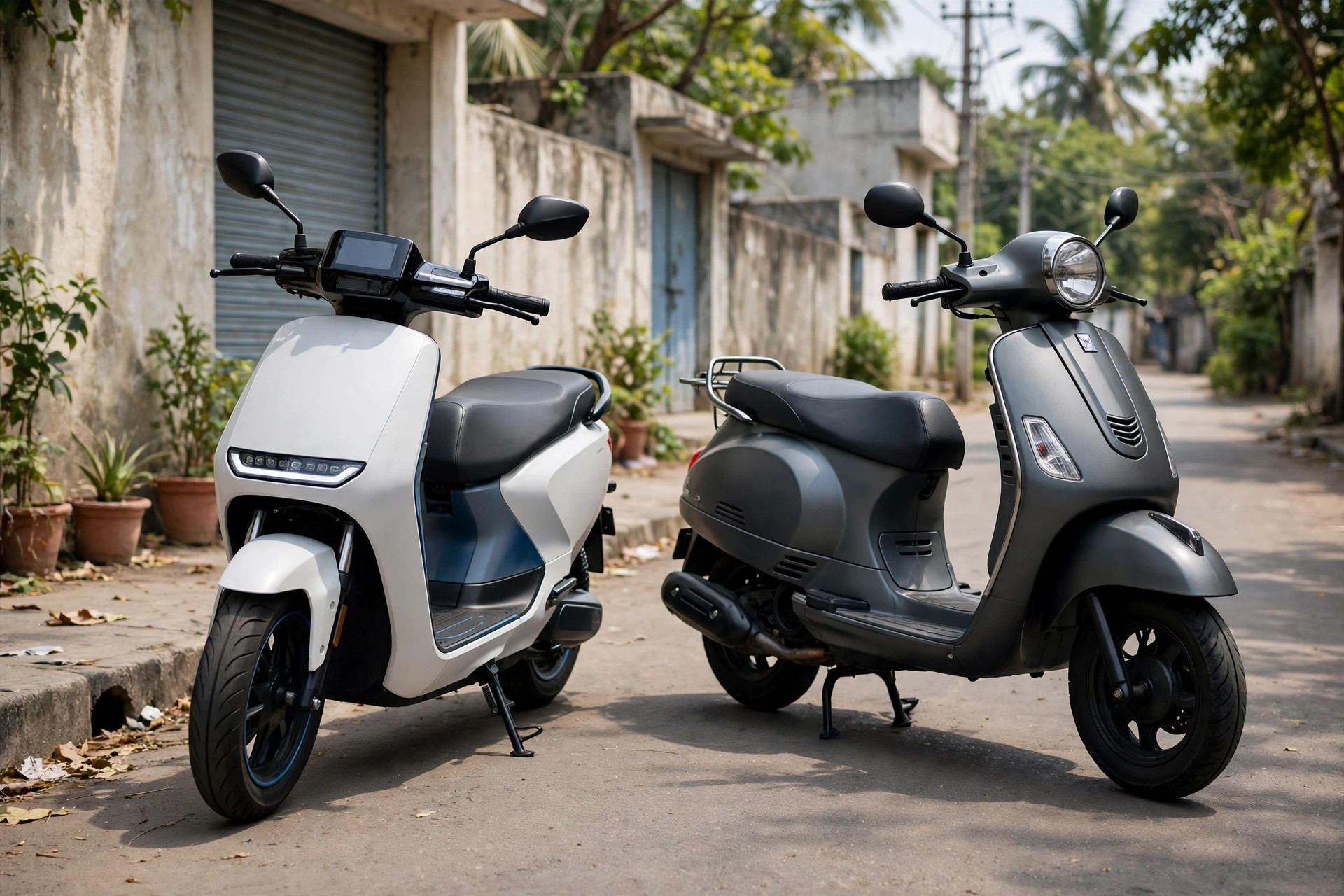
Imagine a city rider, Priya, who rides 30 km a day, about 300 days a year. That is 9,000 km a year, or 45,000 km over five years. She is comparing two similar scooters: an electric scooter bought for Rs 1,20,000 and a petrol scooter bought for Rs 95,000. Both prices are on-road assumptions for this example.
For running costs, assume the electric scooter uses about 3 units of electricity per 100 km at an average home tariff of Rs 8 per unit, giving an energy cost of about Rs 0.24 per km. Assume the petrol scooter averages 50 km per litre at Rs 100 per litre, giving a fuel cost of Rs 2.00 per km. Those two numbers alone create a large gap, but they are not the whole story.
For servicing, assume the electric scooter costs Rs 2,000 a year and the petrol scooter costs Rs 5,000 a year, reflecting oil changes, filters and engine-related parts on the petrol model. For tyres and brakes over five years, assume Rs 12,000 for the electric scooter and Rs 15,000 for the petrol scooter, since regenerative braking can reduce brake wear on the electric model. Insurance is assumed equal for both, so it cancels out of the comparison, and resale value is left out at first — we will return to it below.
Adding up five years, step by step
Energy and fuel first. Over 45,000 km, electricity at Rs 0.24 per km costs about Rs 10,800. Petrol at Rs 2.00 per km costs about Rs 90,000. The difference is roughly Rs 79,200 in favour of the electric scooter over five years.
Servicing next. Five years at Rs 2,000 a year is Rs 10,000 for the electric scooter, against Rs 25,000 for the petrol scooter — a further Rs 15,000 saving. Tyres and brakes add Rs 12,000 against Rs 15,000, a further Rs 3,000 saving. Added together, the electric scooter saves about Rs 97,200 on running costs over five years.
Now subtract the higher purchase price. The electric scooter costs Rs 25,000 more to buy in this example. After that adjustment, the electric scooter is still ahead by about Rs 72,200 over five years, or roughly Rs 14,400 a year. That is the headline result for a rider doing 9,000 km a year.
But the result flips if the assumptions change, which is exactly why the assumptions matter more than the headline.
When the answer changes: distance, battery and resale
Distance is the biggest lever. If you ride only 15 km a day, or about 4,500 km a year, the five-year fuel and electricity gap roughly halves, and the purchase-price premium takes much longer to recover. For a very low-mileage rider, the petrol scooter may be cheaper overall, especially if the electric scooter needs a battery replacement inside the five years.
Battery replacement is the second lever. In this example, no battery replacement is included, on the assumption that the battery lasts beyond five years at 9,000 km a year with normal care. If a battery replacement costing, say, Rs 40,000 were needed in year five, the electric scooter's advantage would fall from about Rs 72,200 to about Rs 32,200 — still ahead in this example, but much less comfortable. Always ask the dealer for the battery warranty period in years and kilometres, and for the out-of-warranty replacement price, before you rely on any total-cost comparison.
Resale value is the third lever, and the hardest to predict. A five-year-old petrol scooter has a well-understood second-hand market. A five-year-old electric scooter's value depends heavily on battery health, which a buyer can check through the bike's own battery report if one is available. Keeping service records and battery care habits therefore protects resale value as well as range. If the electric scooter resells for much less, part of its running-cost advantage disappears; if battery health is good and documented, it holds up better.
Costs people forget on both sides
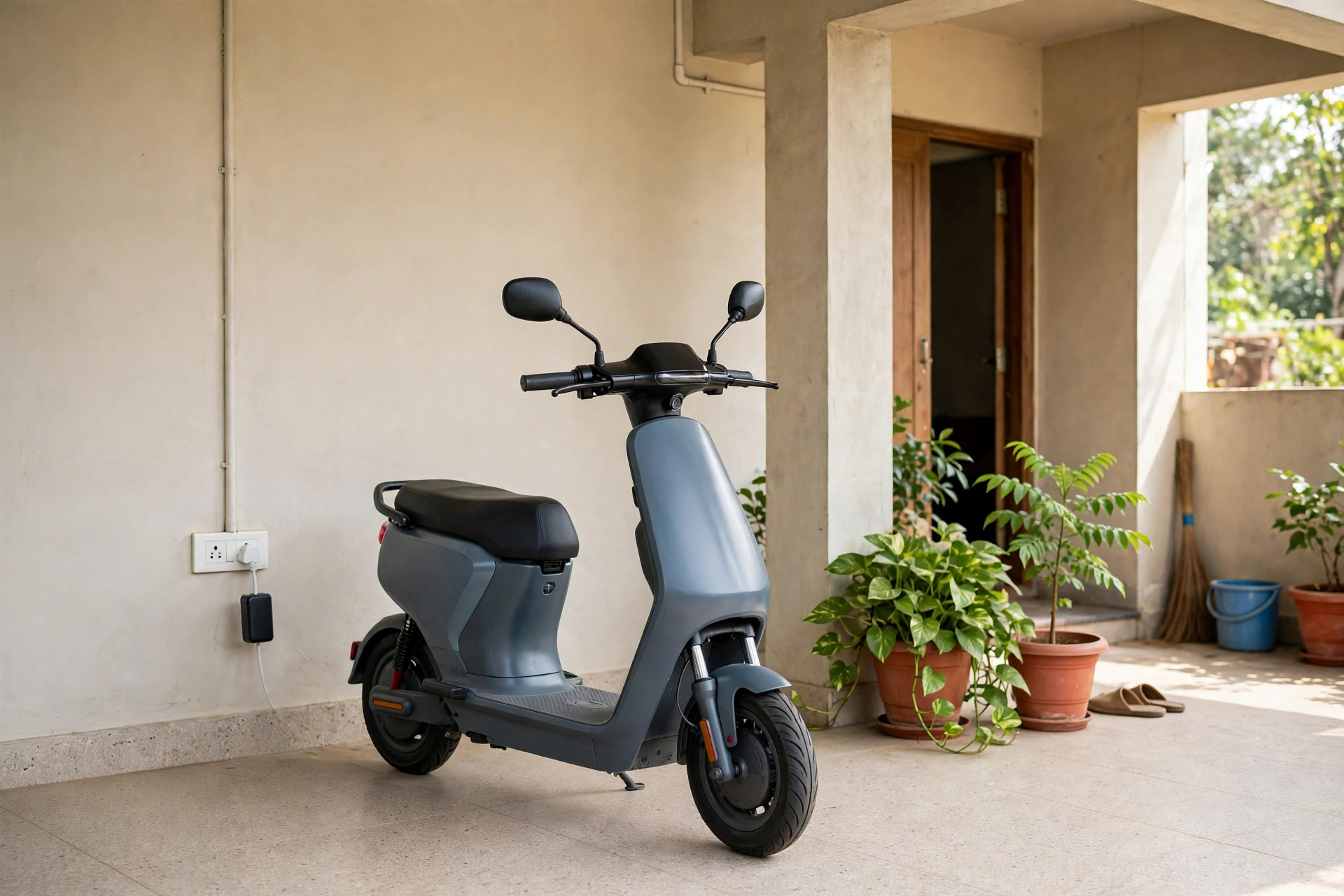
Electric buyers sometimes forget the cost of a home charging setup, any society or parking charges, and the value of time spent planning charging on long trips. Petrol buyers sometimes forget that fuel prices and servicing costs tend to rise over five years, while home electricity tariffs are comparatively stable, though not fixed. Both sides should also budget for accident repairs, accessories and riding gear, which are similar for both.
FAQ
Q: Is an electric two-wheeler always cheaper over five years?
A: No. It usually wins for regular city riders doing high annual kilometres, but low-mileage riders may find a petrol scooter cheaper, especially if a battery replacement falls inside the ownership period.
Q: What is the biggest unknown in this comparison?
A: Battery life and replacement cost. Ask for the warranty terms and the out-of-warranty replacement price before buying, because that single item can change the result by tens of thousands of rupees.
Q: Should I include resale value in total cost of ownership?
A: Yes, if you plan to sell. Battery health and service records strongly affect an electric scooter's resale value, while petrol scooters have a more established second-hand market.
Q: How do I estimate my own energy cost per kilometre?
A: For electric, divide your electricity cost per charge by the realistic range per charge. For petrol, divide the fuel price per litre by your realistic kilometres per litre. Use real-world figures, not brochure claims.
Conclusion
Total cost of ownership is not a slogan; it is a calculation, and the honest answer depends on how far you ride, how long you keep the vehicle, and what happens to the battery. In the worked example above — 9,000 km a year for five years — the electric scooter came out about Rs 72,200 ahead after its higher purchase price, before any battery replacement or resale difference. Change the distance or add a battery replacement, and the gap narrows. Run the numbers with your own riding pattern, insist on battery warranty and replacement prices in writing, and choose the option that wins under realistic assumptions, not just the one with the lowest sticker price or the lowest cost per kilometre.
Frequently Asked Questions (FAQ)
Is an electric two-wheeler always cheaper over five years?
No. It usually wins for regular city riders doing high annual kilometres, but low-mileage riders may find a petrol scooter cheaper, especially if a battery replacement falls inside the ownership period.
What is the biggest unknown in this comparison?
Battery life and replacement cost. Ask for the warranty terms and the out-of-warranty replacement price before buying, because that single item can change the result by tens of thousands of rupees.
Should I include resale value in total cost of ownership?
Yes, if you plan to sell. Battery health and service records strongly affect an electric scooter's resale value, while petrol scooters have a more established second-hand market.
How do I estimate my own energy cost per kilometre?
For electric, divide your electricity cost per charge by the realistic range per charge. For petrol, divide the fuel price per litre by your realistic kilometres per litre. Use real-world figures, not brochure claims.