The outlay is about 64% higher than Rabi 2025-26 (Rs 37,952.29 crore) because of rising international fertiliser prices.
DAP stays at a fixed Rs 1,350 per 50-kg bag for farmers.
NBS covers 28 grades of P&K fertilisers including DAP and NPKS; the subsidy goes to manufacturers and importers, and farmers buy at subsidised prices.
The Union Cabinet has approved the Nutrient Based Subsidy (NBS) rates for Rabi 2026-27, clearing a fertiliser subsidy package of Rs 62,370.02 crore for phosphatic and potassic (P&K) fertilisers. The decision, taken at the Cabinet meeting chaired by Prime Minister Narendra Modi on 11 November 2026, covers the Rabi season from 1 October 2026 to 31 March 2027 and is aimed at keeping fertilisers available to farmers at affordable prices through the sowing season. The question many farmers and readers are asking now is simple: what are the NBS rates for Rabi 2026-27, and what do they actually change on the ground?
The short answer is that the government has fixed the per-nutrient subsidy rates that decide how much support fertiliser companies get for every kilogram of nutrient sold, and it has set aside about 64 percent more money than last Rabi season to pay for it. The tentative budgetary requirement of Rs 62,370.02 crore is Rs 24,417.73 crore higher than the Rs 37,952.29 crore required for Rabi 2025-26. The increase reflects the sharp rise in international prices of fertilisers and key inputs such as urea, DAP, muriate of potash (MOP) and sulphur, which the government cited as the reason for resetting the rates.
What Are the NBS Rates for Rabi 2026-27?
Under the approved NBS rates for Rabi 2026-27, the subsidy has been fixed at Rs 94.21 per kg for nitrogen (N), Rs 66.11 per kg for phosphorus (P), Rs 2.38 per kg for potash (K) and Rs 10.42 per kg for sulphur (S), as reported by [The Hindu BusinessLine](https://www.thehindubusinessline.com/economy/agri-business/cabinet-approves-62370-crore-fertiliser-subsidy-for-rabi-season/article71689297.ece). These per-kg rates are the building blocks of the subsidy: the support on any bag of fertiliser is calculated from the nutrients it contains, so a product rich in phosphorus, such as DAP, attracts a larger subsidy than one with a lower nutrient content.
The rates apply to 28 grades of P&K fertilisers, including di-ammonium phosphate (DAP) and various NPKS grades, which combine nitrogen, phosphorus, potash and sulphur in different proportions. The subsidy is paid to fertiliser manufacturers and importers at the notified rates, and farmers benefit indirectly because the companies then sell these fertilisers at controlled, affordable prices. Urea is not covered by the NBS scheme; it appears in the Cabinet decision only among the international prices the government considered while fixing the rates.
Why the Fertiliser Subsidy Jumped by 64 Percent
The Rs 62,370 crore figure is a tentative budgetary requirement, not final spending, but the jump from last season is real and large. Global fertiliser prices have stayed high, and India imports a large share of its P&K fertilisers and raw materials, so the cost of keeping retail prices stable has risen sharply. Rather than letting that cost pass on to farmers in the middle of the Rabi sowing window, the government has absorbed it through a bigger subsidy bill.
The decision was announced after the Cabinet meeting by Union Minister for Information and Broadcasting Ashwini Vaishnaw, who said the approved rates would ensure the uninterrupted availability of fertilisers to farmers at affordable and reasonable prices. The fertiliser package was part of a wider set of Cabinet decisions on the same day worth an estimated Rs 77,101 crore, which also included the extension of the Noida Metro Aqua Line and the continuation of two credit guarantee schemes for five more years.
What It Means for Farmers This Rabi Season
For farmers, the most concrete part of the announcement is the price of DAP. The government has kept DAP available at a fixed price of Rs 1,350 per 50-kg bag, unchanged despite the rise in international prices, [The Hindu](https://www.thehindu.com/news/national/cabinet-approves-62370-cr-subsidy-for-pk-fertilisers-in-rabi-season/article71689318.ece) reported after the Cabinet meeting. DAP is one of the most widely used fertilisers for Rabi crops such as wheat, mustard and chickpea, applied at sowing time, so holding its price steady matters most in the weeks when farmers are buying inputs.
The second practical effect is availability. Rabi sowing is time-sensitive: a delay of even a week in fertiliser supply can push sowing late and cut yields. By notifying the NBS rates for the full six-month season in advance and backing them with a larger outlay, the government is signalling to manufacturers and importers that supplies should keep flowing without the shortages and black-market premiums that farmers have faced in some past seasons. State governments and district administrations will still need to monitor local distribution, since national availability does not always translate into timely supply at every retail point.
Farmers can also use the season to think about balanced fertilisation. Subsidised prices make DAP and NPKS grades attractive, but overuse of a single fertiliser without matching the soil's actual needs wastes money and harms soil health over time. A [soil health card](https://indiaask.tech/question.php?slug=soil-health-card-explained) tells a farmer which nutrients the field actually lacks, and following it helps get the full benefit of the subsidised fertiliser rather than simply applying more of it. Getting the dose right matters even more in a season when the government is spending record amounts to keep these inputs cheap.
How the NBS Scheme Works
The Nutrient Based Subsidy scheme has been in force since 1 April 2010 and is administered by the Department of Fertilisers under the Ministry of Chemicals and Fertilisers. Before NBS, the subsidy was fixed product by product. Under NBS, the subsidy is linked to the nutrient content of each fertiliser, which encourages companies to offer grades matched to what crops actually need and gives farmers a transparent basis for comparing products.
Under the scheme, the government notifies per-kg subsidy rates for the four nutrients — nitrogen, phosphorus, potash and sulphur — and the subsidy on each fertiliser grade is worked out from its nutrient composition. The rates are reset every season by the Union Cabinet, taking into account international prices, the exchange rate and the need to keep retail prices affordable. That seasonal reset is why the Rabi 2026-27 rates were on the Cabinet's agenda now, just as sowing gathers pace across north and central India.
The Bigger Picture: Food Security and the Farm Economy
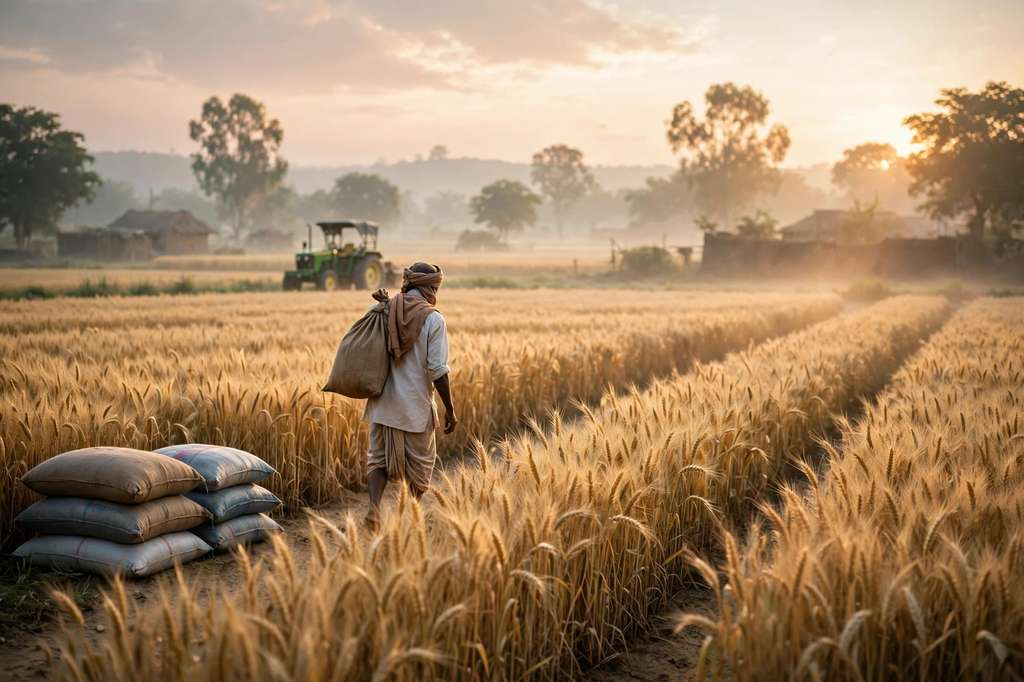
Fertiliser subsidy is one of the largest items in the government's farm spending, and the Rabi season is when its importance peaks. Wheat alone covers tens of millions of hectares in the Rabi season, and the crop's yield depends heavily on timely application of DAP and other P&K fertilisers at sowing. Keeping these inputs affordable is therefore not just a farm welfare measure; it is a food security measure, since a weak Rabi harvest feeds into food inflation months later.
The higher outlay also has a fiscal side. At Rs 62,370 crore for one season, the fertiliser subsidy bill for the full year will be substantial, and the final spending will depend on actual sales volumes and international prices through March 2027. The government has chosen to absorb that cost rather than raise prices for farmers, a trade-off it has made repeatedly when global prices spike. Whether the tentative figure holds will become clear as the season progresses and the Department of Fertilisers reports actual offtake.
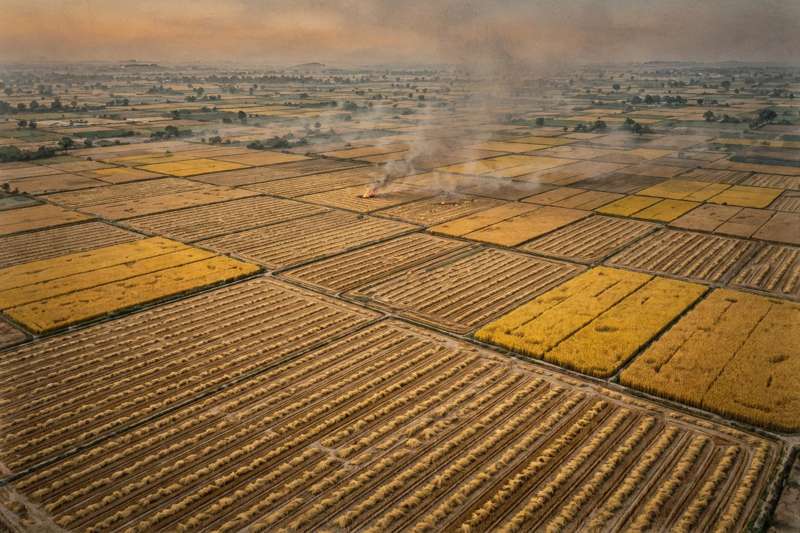
The timing of the decision also matters for the wider farm economy. The Rabi season follows the Kharif harvest, and farm incomes in this period depend on both the price farmers get for their Kharif produce and the cost of inputs for the next crop. In Punjab, for instance, farmers have been dealing with the aftermath of the harvest season, including the annual debate over [stubble burning](https://indiaask.tech/question.php?slug=punjab-stubble-burning-diwali-2026-1152-farm-fires-explained) and the cost of clearing fields for wheat sowing. A stable, affordable fertiliser supply removes one source of uncertainty from that calculation.
Conclusion
The Cabinet's approval of the NBS rates for Rabi 2026-27 locks in a Rs 62,370 crore fertiliser subsidy for the season, with DAP held at Rs 1,350 per bag and per-kg rates of Rs 94.21 for nitrogen, Rs 66.11 for phosphorus, Rs 2.38 for potash and Rs 10.42 for sulphur. The 64 percent jump in the outlay shows how much global prices have risen, and how much the government is willing to spend to shield farmers from that rise. For farmers, the test of the decision will be practical: whether DAP and NPKS grades are actually available at the fixed price in their local market through the sowing window. If distribution holds up, the Rabi season should start on a stable footing.
The Union Cabinet has fixed the Nutrient Based Subsidy rates at Rs 94.21 per kg for nitrogen, Rs 66.11 per kg for phosphorus, Rs 2.38 per kg for potash and Rs 10.42 per kg for sulphur. The rates apply to P&K fertilisers for the Rabi season from 1 October 2026 to 31 March 2027.
How much is the fertiliser subsidy for Rabi 2026-27?
The tentative budgetary requirement is Rs 62,370.02 crore, which is Rs 24,417.73 crore (about 64 percent) higher than the Rs 37,952.29 crore required for Rabi 2025-26. The figure is tentative, so final spending may differ based on actual sales and international prices.
What is the price of a DAP bag in Rabi 2026-27?
DAP remains available to farmers at a fixed price of Rs 1,350 per 50-kg bag. The government has kept the price unchanged despite the rise in international fertiliser prices.
Which fertilisers are covered by the NBS scheme?
The NBS scheme covers 28 grades of phosphatic and potassic (P&K) fertilisers, including DAP and various NPKS grades. The subsidy is paid to manufacturers and importers based on the nutrient content, and farmers buy the fertilisers at subsidised prices. Urea is not covered under NBS.