Home > General Knowledge > Will Indian Railways Remove RAC? What the Proposed Change Means for Train Passengers, Explained
Will Indian Railways Remove RAC? What the Proposed Change Means for Train Passengers, Explained
By Vijay Pawar · 2026-11-14 · 7 min read · General Knowledge
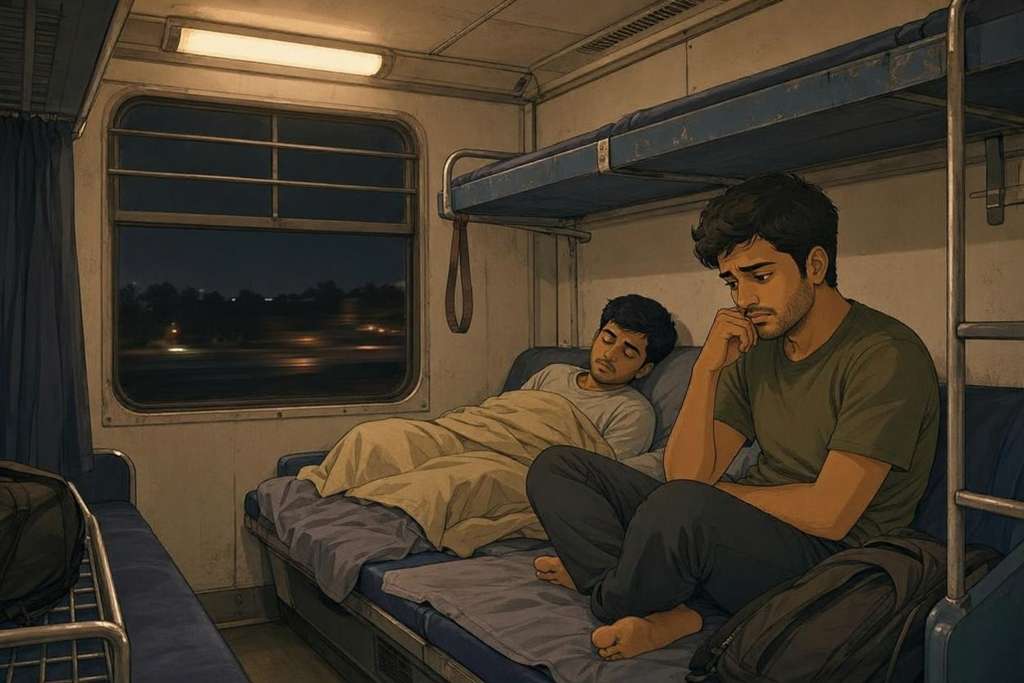
Editorial illustration: the interior of an Indian Railways sleeper coach at night, with two passengers sharing one side lower berth, symbolising the RAC system under review.
Key Takeaways
Indian Railways is examining whether to scrap the decades-old RAC system, under which two passengers share one side-lower berth while each pays the full fare — but no final decision has been announced.
A parliamentary panel (the Public Accounts Committee) has questioned charging full fare for shared accommodation and recommended that the Railways review the practice.
The Vande Bharat Sleeper already runs with no RAC, no waiting list and no Tatkal: every passenger gets an individual berth across its 823 berths in 16 coaches.
Reported alternatives include individual accommodation, revised fares or partial refunds, but no replacement mechanism has been officially confirmed.
The current RAC rules continue to apply until the Railways makes an official announcement, so passengers should keep booking as normal.
Will Indian Railways remove RAC? That is the question millions of train passengers are asking after reports that the Railways is examining whether to scrap its decades-old Reservation Against Cancellation system. Under RAC, two passengers share a single side-lower berth even though each of them pays the full ticket fare. The proposal is still under review and no final decision has been announced, but the fact that the new Vande Bharat Sleeper trains have been designed with no RAC provision at all shows which way the thinking is moving.
For regular passengers, RAC is a familiar compromise. It guarantees a place on the train when confirmed berths run out, but it does not guarantee a berth of your own. On a crowded overnight journey, that can mean a long, uncomfortable night squeezed into half a berth. The review now under way is about whether that compromise is still fair, and what should replace it.
What Is RAC in Indian Railways?
RAC stands for Reservation Against Cancellation. It is a booking status that sits between a confirmed ticket and a waitlisted ticket. When all confirmed berths on a train are sold out, the Railways issues RAC tickets up to a fixed quota. An RAC ticket holder is allowed to board the train and travel in the reserved coach, but does not get a full berth to begin with.
Instead, two RAC passengers are allotted one side-lower berth between them. During the day the berth works as seating for both passengers, and at night both of them share it for sleeping. If a confirmed passenger cancels before the journey, the freed berth is allotted to an RAC passenger, who then gets a full berth of their own. If no cancellation comes through, the two passengers share the berth for the whole journey.
The arrangement has existed for decades, and it serves a practical purpose: it lets more people travel on busy routes instead of turning them away with a waitlisted ticket. A waitlisted passenger cannot board the train at all, while an RAC passenger at least gets on board. For many travellers, especially on routes where trains run full for weeks, RAC has been the only way to reach home for a festival or a family emergency.
Why Is Indian Railways Reviewing the RAC System Now?
The immediate trigger is a question of fairness. An RAC passenger pays the full ticket fare but receives only half a berth, and on many journeys no individual berth at all. Reports on 13 and 14 November 2026 say the Railways is examining the possibility of scrapping the facility amid growing concerns over passenger convenience and the fairness of charging the entire fare for shared accommodation. (https://www.freepressjournal.in/amp/mumbai/indian-railways-may-scrap-decades-old-rac-system-vande-bharat-sleeper-to-have-no-shared-berths)
A parliamentary panel has also taken up the issue. The Public Accounts Committee has questioned the practice of collecting the full fare from RAC passengers who do not receive an individual sleeping berth, and has recommended that the Railways review the arrangement. That recommendation has added weight to a debate that passenger groups have raised for years.
The review comes at a time when the Railways is trying to reposition train travel as a more comfortable experience. New trains, cleaner coaches and better food have all been part of that push. Against that background, the image of two strangers sharing one berth at full price sits awkwardly with the promise of a better journey.
What the Vande Bharat Sleeper Shows About the Future
The clearest signal of the direction of travel comes from the Vande Bharat Sleeper. The new overnight trains have been designed with no RAC provision at all. Every passenger gets an individual berth, and tickets are issued only against confirmed berth availability. (https://indiaask.tech/question.php?slug=varanasi-new-delhi-vande-bharat-sleeper-explained)
The booking rules for the Vande Bharat Sleeper underline the difference. All available berths are opened for booking from the beginning of the Advance Reservation Period, and passengers are allotted individual berths with no arrangement for two passengers to share a berth under RAC. There is no Tatkal quota and no waiting list on these trains either, and fares are fixed rather than dynamic, so they do not rise as the date of travel approaches. Only the existing Ladies, Persons with Disabilities, Senior Citizen and Duty Pass quotas apply.
The trains themselves are built for comfort. Each 16-coach trainset has 11 AC Three-Tier coaches, four AC Two-Tier coaches and one AC First Class coach, with a total capacity of 823 passengers — 611 berths in AC 3-Tier, 188 in AC 2-Tier and 24 in AC First Class. (https://infra.economictimes.indiatimes.com/amp/news/railways/vande-bharat-sleeper-train-what-sets-it-apart-from-other-indian-railways-services/134972133) The trainsets were designed by BEML at its Bengaluru complex in collaboration with the Integral Coach Factory, and ten trainsets are to be manufactured. The first service, the Howrah–Kamakhya Vande Bharat Sleeper Express, was flagged off by Prime Minister Narendra Modi from Malda Town on 17 January 2026 and began regular commercial operations on 22 January 2026.
The Vande Bharat Sleeper model is not, by itself, proof that RAC will disappear from ordinary trains. The Railways has not taken a final decision on discontinuing the facility across its wider network. But the new trains show that the Railways is now willing to design a service around the principle that every passenger should get a full berth, even if that means fewer tickets on each train.
What Could Replace RAC If It Is Scrapped?
If the Railways does decide to end RAC, it will need something in its place, because simply removing the facility would leave a gap. On busy routes, RAC tickets are often the only way passengers can travel when confirmed berths sell out months in advance. Taking that option away without a replacement would push more passengers onto the waiting list, and waitlisted passengers cannot board the train.
Reports suggest the Railways could consider alternative arrangements, including providing individual accommodation, introducing revised fare structures, or offering partial refunds to passengers who do not receive full berths. None of these options has been officially confirmed, and no replacement mechanism has been announced.
Each option carries a trade-off. Individual berths for everyone would be more comfortable but would reduce the number of passengers a train can carry. A revised fare structure could charge RAC passengers less than the full fare, which would be fairer but would cut revenue. Partial refunds would compensate passengers after the journey, but would not solve the discomfort of sharing a berth overnight. The Railways will have to weigh passenger comfort against capacity and revenue before it settles on an answer.
What This Means for Passengers Right Now
For now, nothing has changed. Indian Railways has not announced any final decision or implementation date for scrapping RAC, and the current RAC reservation rules continue to apply. Passengers should not assume that RAC tickets have been abolished, and should keep booking as they normally would.
What passengers should watch for is an official announcement from the Ministry of Railways. Any change to RAC would be a major reform affecting millions of travellers, and it would need to be notified with clear rules on how existing bookings would be treated, what would happen to passengers already holding RAC tickets, and when the new system would take effect. Ticket rules keep changing alongside the trains themselves — for instance, passengers booking at PRS counters can add travel insurance for 45 paise covering up to Rs 10 lakh. (https://indiaask.tech/question.php?slug=indian-railways-prs-counter-travel-insurance-45-paise-explained)
In the meantime, the Vande Bharat Sleeper offers a preview of what a no-RAC journey looks like: a confirmed berth for every passenger, no sharing, and no waiting list. Whether that model spreads to the rest of the network will depend on the outcome of the review now under way.
Conclusion
The review of the RAC system is about a simple question: should a passenger who pays the full fare have to share a berth? The parliamentary panel thinks the practice deserves a fresh look, the Railways is examining the option of scrapping it, and the Vande Bharat Sleeper already runs without it. But no decision has been taken for the wider network, and the current rules remain in force. Until the Railways announces a final decision, RAC stays — and so does the debate over whether comfort should come before capacity on India's crowded trains.
Indian Railways is examining the possibility of scrapping the decades-old RAC (Reservation Against Cancellation) system, but no final decision has been announced. The proposal is under review after concerns about passenger comfort and the fairness of charging full fare for a shared berth, and a parliamentary panel has recommended reviewing the practice. The current RAC rules continue to apply until an official announcement is made.
What is RAC in Indian Railways?
RAC stands for Reservation Against Cancellation. It is a booking status between a confirmed ticket and a waitlisted ticket. Two RAC passengers share one side-lower berth, paying the full fare each. If a confirmed passenger cancels, the freed berth is given to an RAC passenger; otherwise the two passengers share the berth for the whole journey.
Does the Vande Bharat Sleeper have RAC?
No. The Vande Bharat Sleeper has no RAC provision, no waiting list and no Tatkal quota. Tickets are issued only against confirmed berths, so every passenger gets an individual berth. The 16-coach trainset has 823 berths in total — 611 in AC 3-Tier, 188 in AC 2-Tier and 24 in AC First Class — and fares are fixed rather than dynamic.
What could replace RAC if it is scrapped?
No replacement has been officially confirmed. Options reported to be under consideration include providing individual accommodation, revised fare structures, or partial refunds for passengers who do not get a full berth. Simply removing RAC without a replacement would push more passengers onto waiting lists, and waitlisted passengers cannot board the train, so the Railways must settle the alternative before any change.
Read Next on IndiaAsk
The Vande Bharat Sleeper already runs with no RAC provision at all. The Varanasi–New Delhi Vande Bharat Sleeper shows how the new overnight service works, with its timings, stops and coach layout. Varanasi Delhi Vande Bharat Sleeper: Timings, Stops, Coaches