Home > Elections & Governance > What Did Sonia Gandhi Reveal in Her Memoir 'Belonging'? PM Post, Cancer Battle and Modi Explained
What Did Sonia Gandhi Reveal in Her Memoir 'Belonging'? PM Post, Cancer Battle and Modi Explained
By Vijay Pawar · 2026-11-11 · 10 min read · Elections & Governance
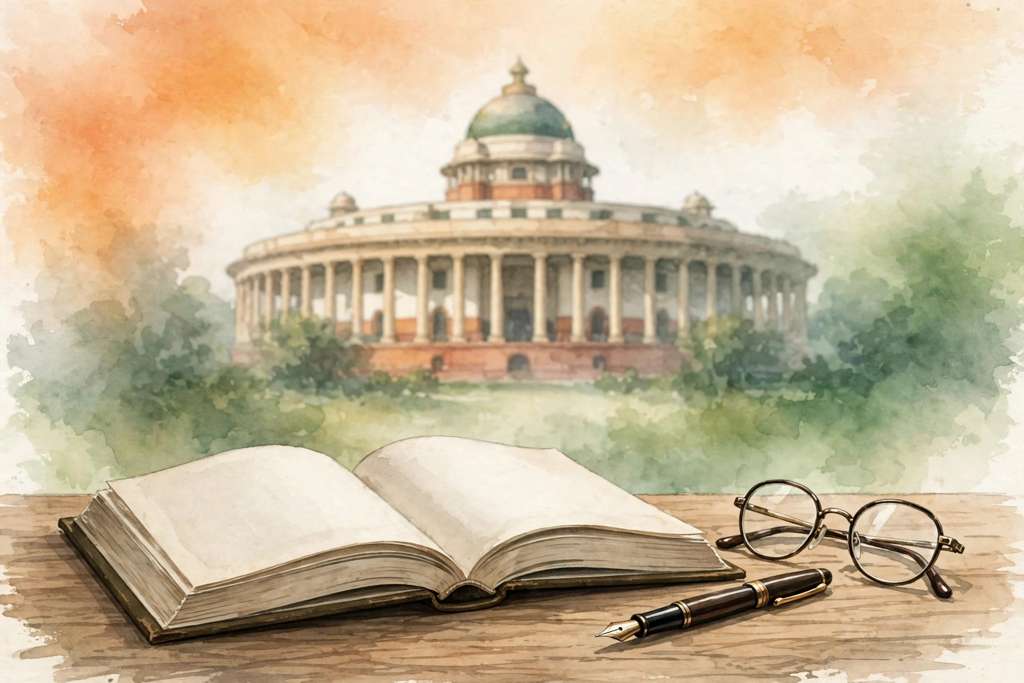
Editorial illustration: an open memoir book with a fountain pen and reading glasses on a wooden desk, with the Indian Parliament House in soft focus behind — no text, no real person, no logos.
Key Takeaways
Sonia Gandhi's memoir 'Belonging: A Journey of Love' was released on 10 November 2026 by HarperCollins India; it is 544 pages long.
She reveals she told her children 'Absolutely not!' months before the 2004 election when asked if she would become prime minister.
She feared the BJP would use her Italian origin as a political issue and felt the post could wound the country she loved.
She chose Manmohan Singh as prime minister for his 'unquestionable' integrity and his experience as the finance minister behind the 1991 economic reforms.
She writes about battling cancer twice, with surgery in Milan under Dr Umberto Veronesi and a second surgery in Rotterdam, kept private from the media.
Congress Parliamentary Party chairperson Sonia Gandhi's memoir, *Belonging: A Journey of Love*, reached bookstores on Tuesday, 10 November 2026, and it has already become one of the most talked-about books of the year. The Sonia Gandhi memoir is a 544-page personal account published by HarperCollins India, and it revisits the biggest decisions of her life — why she turned down the prime minister's post in 2004, her private battle with cancer, her distant equation with Prime Minister Narendra Modi, and the family tragedies that shaped her. Sonia Gandhi has said the book is not a political book but a personal one, an account of the place she came to call home. Yet its revelations touch some of the most consequential moments in modern Indian politics, which is why the memoir has triggered a sharp political debate within a day of its release.
What Is the Sonia Gandhi Memoir 'Belonging' About?
*Belonging: A Journey of Love* traces Sonia Gandhi's life from her Italian upbringing and her meeting with Rajiv Gandhi at a restaurant in Cambridge in 1965, through her reluctant entry into politics, to her years as Congress president and the leader of the United Progressive Alliance (UPA) government. The book covers the Emergency, Operation Blue Star, the 1992 Babri Masjid demolition, the 2002 Gujarat riots, the Shah Bano controversy and the Anna Hazare-led anti-corruption movement that put the UPA government on the defensive. It also describes her personal losses, including the assassinations of Indira Gandhi and Rajiv Gandhi, and the loss of her first child, who was born prematurely and died shortly after birth.
The memoir had already made news before its release. Penguin Random House India had clarified that it would not publish the book in India, following reports that the publisher had sought editorial changes and deletions in parts of the manuscript, reportedly including references to Prime Minister Modi, the RSS and China's occupation of Indian territory. HarperCollins India subsequently announced that it would publish the memoir on 10 November 2026. Early [coverage of the memoir's revelations](https://www.newindianexpress.com/india/2026/Nov/10/belonging-sonia-gandhis-memoir-reopens-babri-2004-pm-decision-rajivs-assassination) records how the book revisits the Babri demolition, the 2004 prime minister decision and Rajiv Gandhi's assassination.
Why the Sonia Gandhi Memoir Says She Turned Down the PM Post
The most discussed revelation in the book concerns the days after the Congress-led UPA won the 2004 Lok Sabha elections, when Sonia Gandhi was widely expected to become prime minister. She writes that she had discussed the possibility with her children, Rahul and Priyanka Gandhi, months before the election. When one of them asked whether she would accept the post if the Congress won, her reply was emphatic: "Absolutely not!"
Her children opposed the idea because they had lived through the trauma of their grandmother Indira Gandhi's assassination and the brutal murder of their father Rajiv Gandhi. In their minds, holding the prime minister's office was linked with heightened danger. Sonia Gandhi writes that she had kept her views to herself during the campaign because the Congress was fighting for survival and she did not want a leadership struggle inside the party.
After the victory, the pressure intensified. Party colleagues and alliance leaders urged her to accept the post, and in one meeting she mumbled "theek hai" — "all right" — which the leaders took as agreement. She later told her children she did not want the job and had been pressured. In a late-night moment of reflection she writes that her mind cleared and she heard herself say, "Sonia, be true to yourself. You've always known it. Just leave it!"
She also feared that her Italian origin would become the focus of a political campaign. She writes that the BJP and its allies would for certain use her "foreign origin" as an issue, and asks how she could agree to hold the office of prime minister knowing it could wound the country she loved. At the Congress Parliamentary Party meeting the next day, she told the gathering, "The post of prime minister is not my aim. Today that voice tells me I must humbly decline this post." She added, "Power in itself has never attracted me, nor has position been my goal." The 2004 election itself decided who would form the government, and understanding [how Lok Sabha elections work](https://indiaask.tech/question.php?slug=lok-sabha-elections-india) helps explain why the choice of prime minister after the results mattered so much.
Why She Chose Manmohan Singh as Prime Minister
After declining the post, Sonia Gandhi had to identify someone who could lead the new government. She writes that several senior Congress leaders were qualified and willing, but Dr Manmohan Singh stood out as a person of "unquestionable" integrity with a deep and consummate understanding of governance. She pointed to his experience as finance minister in the early 1990s, when he introduced economic reforms under prime minister P. V. Narasimha Rao, and said his appointment would reassure people about the UPA's economic policies at a time when the government would be supported by the Communist parties. He was not allied to any camp in the party, which she saw as a strength.
Singh was sounded out privately, initially refused, and was then persuaded to agree. On 18 May 2004, Sonia Gandhi took him to Rashtrapati Bhavan, and he went on to serve two terms as prime minister. [NDTV's report on why she picked Manmohan Singh](https://www.ndtv.com/india-news/sonia-gandhi-book-belonging-a-journey-of-love-congress-mp-on-why-she-picked-manmohan-singh-as-pm-12306530?pfrom=home-ndtv_topscroll) quotes the same passage from the memoir, in which she describes him as a person of unquestionable integrity. Singh, who died in 2024 at the age of 92, is remembered as the architect of the 1991 reforms and as a leader whose personal honesty was rarely questioned even by his critics.
Sonia Gandhi's Cancer Battle: Milan, Rotterdam and Privacy
One of the most personal sections of the memoir deals with Sonia Gandhi's health. She reveals that she was diagnosed with cancer twice during the second term of the UPA government, and writes about the emotional impact of receiving treatment. She recalls walking into a dark and gloomy hospital reception with her daughter Priyanka and feeling her spirits sink.
She travelled to Milan for surgery under renowned Italian surgeon Dr Umberto Veronesi, preferring to keep her medical condition away from the media spotlight. She later underwent another surgery in Rotterdam after doctors detected a growth in her pancreas during follow-up examinations. She writes that she was not keen to be at the centre of a media frenzy that would have accompanied surgery in Delhi, asking whether being a public figure meant she was not allowed even a modicum of privacy. Back in 2011, she had reportedly undergone a surgery, but the ailment was not disclosed at the time. The memoir is the first time she has spoken about these health battles in her own words.
Sonia Gandhi on PM Modi: 'Practically No Real Contact'
The memoir also offers a rare glimpse into Sonia Gandhi's personal equation with Prime Minister Narendra Modi. Despite more than a decade as political rivals, she writes that she has had "practically no real contact" with him. Their meetings, she says, are largely limited to formal greetings at semi-official gatherings, where they exchange a namaste. She writes that he tends to look away and avoid eye contact when they meet, though she also remembers that he once enquired about her health after a hospital stay.
Beyond the personal, she describes a fundamental ideological divide between them, arguing that their differences concern two contrasting visions of India. She writes that she learnt about India from her family, their lives of service and their faith in a nation encompassing many races, cultures, languages and faiths, based on liberty and equality for all. By contrast, she argues that Modi's idea of India was shaped by the RSS and its ideological understanding of the country, affirming a fundamentalism in which his faith and culture superseded all others. Her son [Rahul Gandhi](https://indiaask.tech/question.php?slug=rahul-gandhi-acquitted-sultanpur-defamation-case-october-2026), now the Leader of Opposition in the Lok Sabha, has carried forward much of this ideological argument in Parliament.
The Personal Story Behind the Politics
What makes the memoir different from a standard political autobiography is how much of it is personal. Sonia Gandhi writes about arriving in India as a young Italian woman, learning to belong to a family and a country that were not her own by birth, and gradually becoming one of India's most influential political figures. She describes her initial reluctance to enter politics after Rajiv Gandhi's assassination, and how the party eventually drew her in. The book also records small, human moments — finding grenades at home during the years of political violence, the warmth of her family life, and her relationship with her children — that rarely appear in political histories.
The Publishing Row and the Political Reaction
The memoir's release has already triggered a political confrontation. The BJP has accused Sonia Gandhi of selectively revisiting historical events to defend the Nehru-Gandhi family, with party leaders describing parts of the book as an attempt at sugar-coating historical wrongs and whitewashing the past, particularly on the Babri Masjid demolition. Congress leaders have dismissed the criticism as an attempt to politicise her personal recollections, pointing out that she has described the book as personal rather than political.
The debate is likely to continue as more readers finish the 544-page book and as political commentators examine its accounts of the Emergency, Operation Blue Star and the UPA years against the historical record. For now, the memoir has done what few political books manage: it has put a deeply personal story at the centre of the national conversation.
Why This Memoir Matters
Memoirs by Indian political leaders are rare, and ones that speak frankly about turning down the country's top job, about secret cancer treatment and about family tragedy are rarer still. The book matters for three reasons. First, it gives Sonia Gandhi's own version of the 2004 decision, ending years of speculation about why she stepped aside for Manmohan Singh. Second, it documents the human cost of political life in India — the security fears, the health battles fought in secret and the grief of losing family members to assassination. Third, it states her ideological case against the current political order in her own words, rather than through party statements.
Conclusion
*Belonging: A Journey of Love* is, as its author insists, a personal book — but its personal revelations answer questions that have surrounded Indian politics for two decades. Why did Sonia Gandhi say no to the prime minister's post in 2004? Because her children feared for her safety, because she did not want her foreign origin to become a weapon against the country she loved, and because, in her own words, power never attracted her. What did she endure in private? Two battles with cancer, treated quietly in Milan and Rotterdam. And what does she think of her principal political opponent? That they have had practically no real contact, and that they stand for two different ideas of India. Whatever readers make of her politics, the memoir ensures that the story of one of India's most consequential political figures will now be told, at least in part, in her own voice.
When was Sonia Gandhi's memoir 'Belonging' released?
Sonia Gandhi's memoir 'Belonging: A Journey of Love' was released on Tuesday, 10 November 2026. The 544-page book is published in India by HarperCollins India.
Why did Sonia Gandhi refuse to become prime minister in 2004?
She writes that her children Rahul and Priyanka opposed it, fearing for her safety after the assassinations of Indira Gandhi and Rajiv Gandhi. She also feared the BJP would use her Italian origin as a political issue, and she felt her inner voice telling her to stay true to herself. She told the Congress Parliamentary Party, 'The post of prime minister is not my aim.'
What did Sonia Gandhi reveal about her cancer treatment in her memoir?
She reveals she was diagnosed with cancer twice during the UPA government's second term. She had surgery in Milan under renowned Italian surgeon Dr Umberto Veronesi, and later another surgery in Rotterdam after doctors found a growth in her pancreas. She kept the treatment private to avoid a media frenzy.
What did Sonia Gandhi say about PM Modi in her memoir?
She writes that she has had 'practically no real contact' with Prime Minister Narendra Modi despite years as political rivals. Their meetings are limited to formal greetings at official gatherings, where he tends to look away and avoid eye contact, though he once asked about her health after a hospital stay. She also describes their differences as two contrasting visions of India.
Read Next on IndiaAsk
The 2004 election itself decided who would form the government, and understanding how Lok Sabha elections work helps explain why the choice of prime minister after the results mattered so much. Lok Sabha Elections: How Voting, Seats and Results Work