By IndiaAsk Editorial Team · 2026-02-15 · 4 min read · Elections & Governance
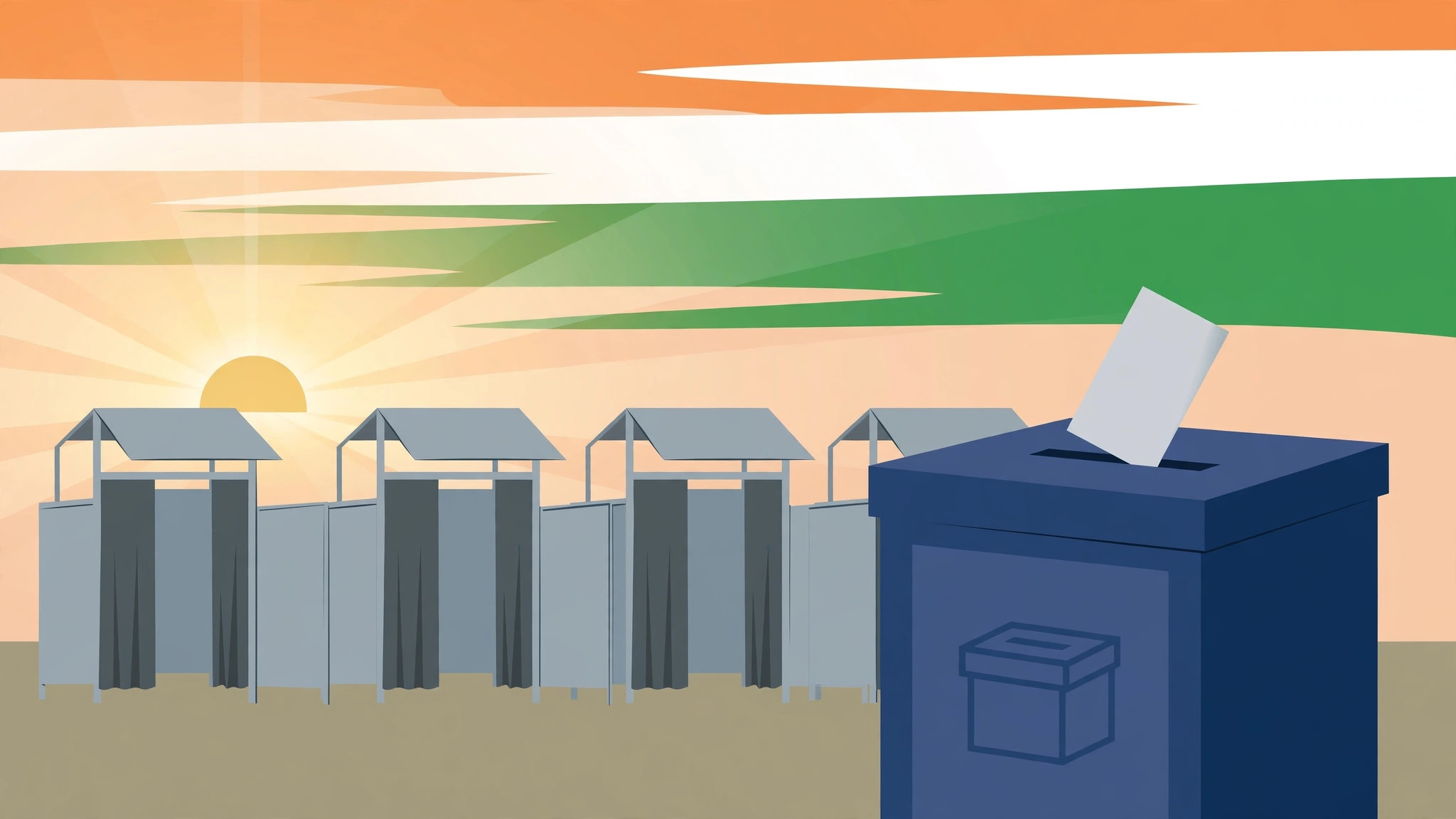
Editorial illustration: Lok Sabha elections are conducted by the Election Commission of India.
Key Takeaways
The Election Commission of India, an independent constitutional body, conducts Lok Sabha elections.
India is divided into parliamentary constituencies, each electing one member; there are 543 elected seats.
Any Indian citizen aged 18 or above whose name is on the electoral roll can vote, using an electronic voting machine with a paper audit trail.
Lok Sabha elections use first-past-the-post: the candidate with the most votes in a constituency wins, even without more than half the votes.
The party or alliance winning a majority of seats is invited to form the government, and its leader usually becomes Prime Minister.
Lok Sabha elections are the largest democratic exercise in the world, and understanding how they work helps every citizen take part in them more confidently. The Lok Sabha is the lower house of Parliament, and its members are directly elected by the people. The responsibility for conducting these elections lies with the Election Commission of India, which is an independent constitutional body.
Constituencies and the Electoral Roll
India is divided into parliamentary constituencies for Lok Sabha elections. Each constituency elects one member to the Lok Sabha. At present, there are 543 elected seats, and the total number of seats, along with the boundaries of constituencies, is determined on the basis of population and the delimitation process. Delimitation is carried out from time to time so that each constituency has a roughly similar population, although the number of seats has been frozen for a long period to avoid penalising states that controlled population growth.
Any Indian citizen who is at least eighteen years old has the right to vote, provided their name is on the electoral roll of their constituency. Voters must register in advance, and it is important to check that their name, address and other details are correct before an election. On polling day, voters go to their assigned polling station, verify their identity, and cast their vote using an electronic voting machine. The machine records the vote for the chosen candidate, and a paper slip is also printed for verification in a voter-verifiable paper audit trail unit.
Candidates and Campaigning
Candidates can stand for election as members of a political party or as independent candidates. To become a candidate, a person must meet the eligibility conditions laid down in the Constitution and election law, including age and citizenship requirements, and must file a nomination with the returning officer. Candidates also declare their assets, criminal cases if any, and educational qualifications in an affidavit, so that voters can make an informed choice. Campaigning takes place over several weeks, during which parties and candidates present their promises and programmes, and the Model Code of Conduct applies to keep the campaign fair.
Counting and Forming a Government
Counting of votes takes place after polling is completed in all phases, because Lok Sabha elections are usually held in multiple phases across different states and regions. The candidate who receives the highest number of votes in a constituency wins that seat — this is called the first-past-the-post system. It does not require a candidate to win more than half of all votes, only more votes than any other candidate. Once results are declared, the party or alliance that wins a majority of seats is invited to form the government, and its leader usually becomes the Prime Minister.
The Election Commission also takes several steps to ensure free and fair elections. These include the use of photo electoral rolls, deployment of observers, videography at sensitive polling stations, strict monitoring of election expenditure, and action against violations of the Model Code of Conduct. Special arrangements are made for voters who cannot easily reach a polling station, including postal ballots for certain categories and facilities for senior citizens and persons with disabilities.
For citizens, participating in Lok Sabha elections is not limited to voting on one day. It also includes checking the electoral roll, understanding the candidates and their promises, following debates, and holding elected representatives accountable after the election. A well-informed voter strengthens democracy far more than a voter who only turns up on polling day. When people understand how constituencies are formed, how votes are counted and how a government is formed, they can follow election results with clarity instead of confusion, and they can ask sharper questions of those who seek their vote.
Frequently Asked Questions (FAQ)
How many elected seats are there in the Lok Sabha?
There are 543 elected seats, one from each parliamentary constituency.
Who can vote in a Lok Sabha election?
Any Indian citizen aged eighteen or above whose name is on the electoral roll of their constituency.
What is the first-past-the-post system?
The candidate with the highest number of votes in a constituency wins, even without winning more than half of all votes.
Who conducts Lok Sabha elections?
The Election Commission of India, an independent constitutional body.