By IndiaAsk Editorial Team · 2026-02-01 · 4 min read · Constitution & Law
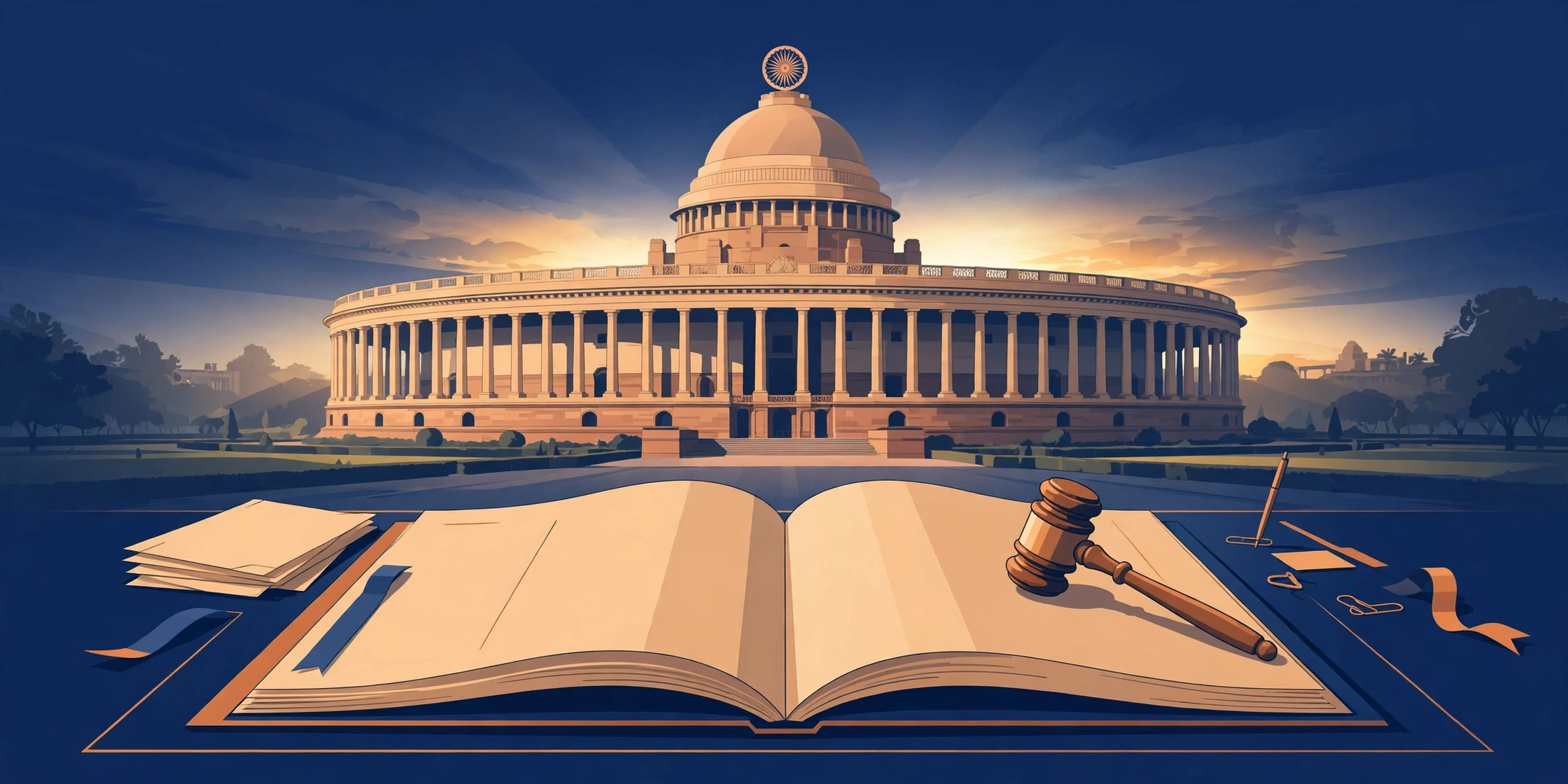
Editorial illustration: fundamental rights are legally enforceable, not mere declarations.
Key Takeaways
Fundamental rights are described in Part III of the Constitution and are protected by the courts.
The right to equality bars the state from discriminating only on grounds of religion, caste, sex, place of birth or descent.
The right to freedom covers speech, peaceful assembly, association, movement and choice of profession — with reasonable restrictions.
The right against exploitation prohibits human trafficking, forced labour and children working in hazardous jobs.
The right to constitutional remedies lets a citizen approach a high court or the Supreme Court directly through a writ petition.
Fundamental rights are one of the most important features of the Indian Constitution. They are the rights that protect every citizen from arbitrary action by the state and guarantee a dignified, free life. These rights are described in Part III of the Constitution and are protected by the courts — that is, if a citizen's fundamental right is violated, they can directly approach a high court or the Supreme Court.
The right to equality is given in the early articles of the Constitution. It means that the state cannot discriminate against any citizen only on the grounds of religion, caste, sex, place of birth or descent. All are equal before the law and are entitled to equal protection of the law. The principle of equality of opportunity in public employment also applies, although special provisions exist for the upliftment of weaker sections of society, so that equality is visible in real life and not only on paper.
The Right to Freedom
The right to freedom gives citizens the freedom of speech and expression, to assemble peacefully, to form associations, to move freely within the country and to choose a profession of their choice. This right protects a person's dignity and creativity. However, this freedom is not unlimited — reasonable restrictions can be imposed for public order, national security, decency and the protection of the rights of others. This balance strengthens democracy, because one person's freedom ends where another person's freedom begins.
Protection Against Exploitation
The right against exploitation is extremely important for the protection of human dignity. It prohibits human trafficking, forced labour and the employment of children in hazardous work. Similarly, the right to freedom of religion gives every person the freedom to practise, profess and propagate their religion and to run religious institutions, provided this does not harm public order or the rights of others. Given India's religious diversity, this right is an important basis for social harmony.
Cultural and educational rights give minority communities the right to preserve their language, script and culture and to run their own educational institutions. This arrangement accepts India's plurality and recognises that national unity does not mean cultural uniformity, but respect for diversity. The right to education is also now part of fundamental rights, under which children aged six to fourteen years have the right to free and compulsory education.
The Right to Constitutional Remedies
All these rights get their real strength from the right to constitutional remedies. If a fundamental right is violated, a citizen can seek relief from the courts through a writ petition. Courts can issue orders such as habeas corpus, mandamus, prohibition, certiorari and quo warranto. This is why fundamental rights are called the soul of the Constitution — they are not merely declarations, but legally enforceable rights. Citizens should also know about their fundamental duties, because rights and duties complement each other, and a responsible democracy rests on a balance of both.
It is also important to understand that the interpretation of fundamental rights has evolved over time. Through their judgments, courts have expanded the meaning of the right to life and personal liberty to include aspects such as a dignified life, health, a clean environment and privacy. The scope of rights has also changed through constitutional amendments, such as the later addition of the right to education. This development shows that fundamental rights are not a fixed list, but a living system that moves forward with the changing needs of society.
For an ordinary citizen, the practical meaning of these rights is best understood through everyday examples. The right to equality means that a government office cannot refuse you a service because of your religion or caste. The right to freedom means you can express an opinion, join a peaceful protest or choose your work, within reasonable limits set by law. The right to constitutional remedies means that these are not favours granted by officials, but rights you can enforce in court. Knowing the names of the rights is less important than knowing this simple test: if the state treats you unfairly or stops you from exercising a basic freedom, the Constitution gives you a legal path to challenge that action, and that path is itself a fundamental right.
Frequently Asked Questions (FAQ)
How many fundamental rights are there?
They are mainly divided into six groups — equality, freedom, protection against exploitation, freedom of religion, cultural and educational rights, and the right to constitutional remedies.
What can you do if a fundamental right is violated?
You can file a writ petition in a high court or the Supreme Court; this right itself is a fundamental right.
Are fundamental rights unlimited?
No. Reasonable restrictions can be imposed for public order, security and the protection of the rights of others.
Which age group does the right to education cover?
Children aged six to fourteen years have the right to free and compulsory education.