Home > Constitution & Law > Maharashtra vs FSSAI: Why the State Took Its Food-Safety Powers Fight to the Bombay High Court
Maharashtra vs FSSAI: Why the State Took Its Food-Safety Powers Fight to the Bombay High Court
By IndiaAsk Editorial Team · 2026-10-25 · 8 min read · Constitution & Law
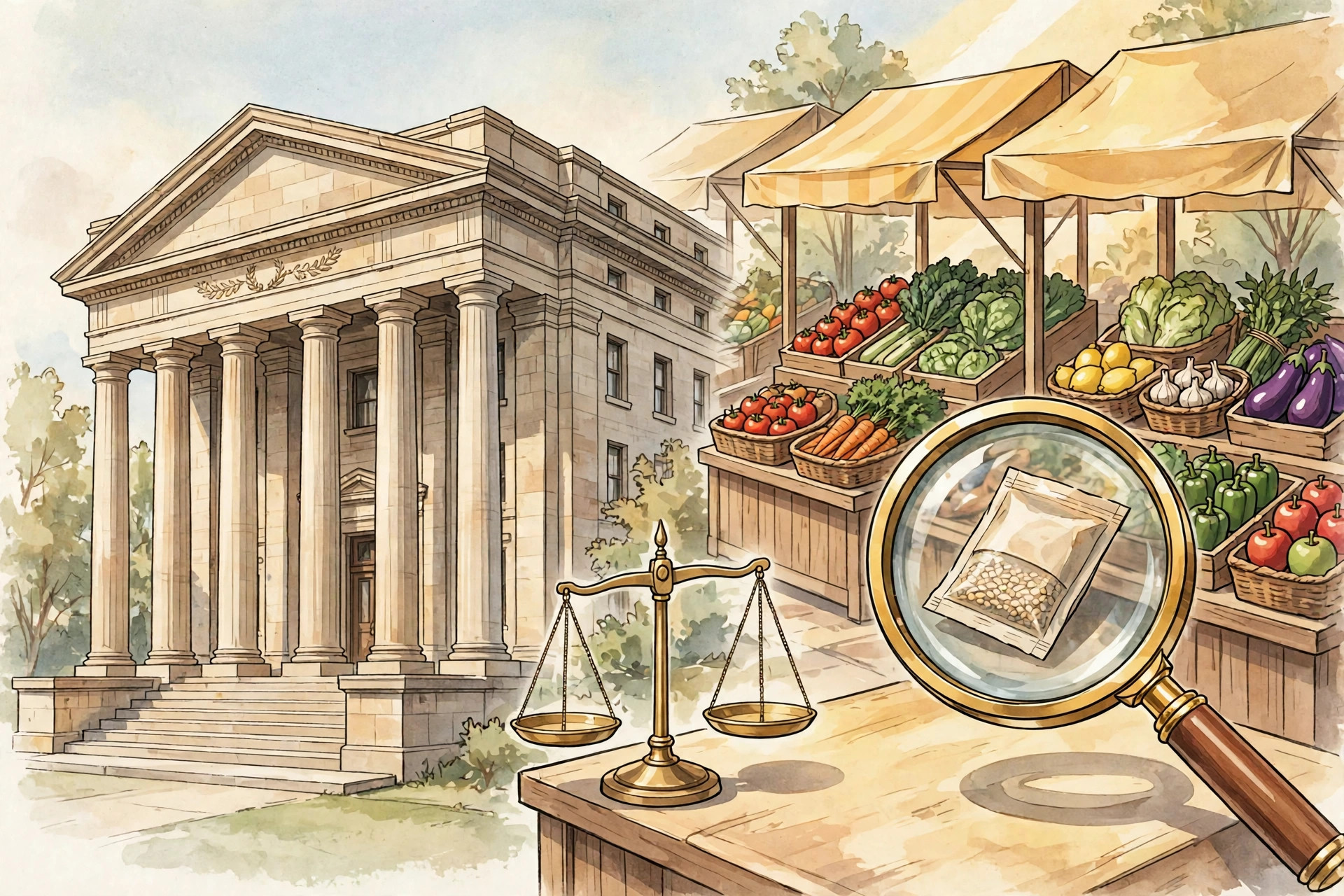
Editorial illustration: Maharashtra has challenged FSSAI's central food-safety enforcement system in the Bombay High Court, arguing that licensing and inspection powers under the 2006 Act belong to the states.
Key Takeaways
Maharashtra has challenged FSSAI's central food-safety regulations in the Bombay High Court, alleging a parallel enforcement regime that usurps state powers.
The petition targets the 2011 Licensing Regulations, the 2018 Recruitment Regulations and the 2026 Amendment Regulations, plus central posts such as the Central Licensing Authority and Central Food Safety Officers.
The flashpoint is a 12 May 2023 FSSAI directive that Maharashtra says barred state officers from inspecting centrally licensed businesses.
Maharashtra argues the Food Safety and Standards Act, 2006 was designed as a decentralised system, with states handling licensing and enforcement.
The case is listed for hearing on 26 November, and the court has not yet decided the challenge; the Centre and FSSAI's full response was not yet on record in reports of the filing.
Maharashtra has taken a long-running argument about who controls food safety in India to the Bombay High Court, challenging several central food-safety regulations and orders made by the Food Safety and Standards Authority of India (FSSAI). The state says the central regulator has built a parallel enforcement system that takes over powers the Food Safety and Standards Act, 2006 gives to the states. The case, State of Maharashtra v. Union of India and Others, is a dispute about federalism as much as about food: it asks the court to decide where central standard-setting ends and state-level enforcement begins.
The petition was filed through Maharashtra's Commissioner of Food Safety, Tukaram Mundhe, and came up before a bench of Chief Justice Mahesh Chandra Tripathi and Justice Advait Sethna. Reports of the hearing say the court will hear the matter on 26 November. It is important to be clear about the status of the case at this stage: the arguments summarised here are Maharashtra's contentions, as reported by legal and news outlets covering the filing. The stand of the Union government and FSSAI on these specific contentions was not yet on record in those reports, and the court has not yet decided the challenge. The case therefore explains a live legal question, not a concluded verdict.
What Maharashtra has challenged
Maharashtra's petition challenges the constitutional validity of several central instruments: the Food Safety and Standards (Licensing and Registration of Food Businesses) Regulations, 2011; the FSSAI Recruitment Regulations, 2018; and the 2026 Amendment Regulations. It also challenges central orders and notifications that, in the state's telling, changed how food businesses are licensed and inspected in practice.
At the centre of the challenge are posts and authorities that Maharashtra says do not exist in the statute at all: a Central Licensing Authority, Central Food Safety Officers and central analysts. The state argues that the FSSAI chief executive officer had no statutory authority to create this parallel administrative structure. On Maharashtra's reading of the Act, the chief executive's enforcement role is limited, extending principally to imported food articles at entry points, rather than to routine enforcement against domestic food businesses on the ground.
The petition also seeks the quashing of the contested regulations, a stay of an FSSAI directive dated 12 May 2023, and a direction to the central regulator to return registration records held on its online licensing platform, the Food Safety Compliance System (FoSCoS). Those three prayers show what the state actually wants in practical terms: not just a declaration about the law, but a halt to the current arrangement and a restoration of state control over licensing records.
The 2023 directive that escalated the dispute
The dispute did not begin with this petition. According to the state's case, it escalated after FSSAI issued a directive on 12 May 2023 barring state food safety officers from inspecting businesses that hold a central licence. From Maharashtra's perspective, that single instruction cut state officers out of a large and growing part of the food economy, even when they suspected a violation on the ground.
The state also points to the FoSCoS portal as the mechanism through which this shift happened. Its argument is that the online system was deployed in a way that systematically brought food businesses under central jurisdiction, so that the question of who inspects a business was effectively settled by which portal processed its licence, rather than by the statute's own division of powers.
A further flashpoint is the turnover threshold for central licensing. Reports of the petition say businesses with a turnover of Rs 50 crore or more fall under the Central Licensing Authority, and that notifications dated 10 and 13 March revised those licensing thresholds. Senior state food safety officials have been reported as saying they are trying to reclaim the state's right to inspect every food business operator as it sees fit. The threshold matters because it decides, for a very large number of mid-sized and large food companies, which authority's officers can walk through the door.
The legal argument: a decentralised design
Maharashtra's core legal argument is about the design of the 2006 Act itself. The state says Parliament intended a decentralised system. Under that design, the Food Authority sets standards at the national level, while implementation rests primarily with state machinery: State Commissioners of Food Safety, Designated Officers and Food Safety Officers, Food Analysts, and, in the wider scheme of the Act, Panchayati Raj Institutions and Urban Local Bodies.
That division is not unusual in Indian regulation. Central bodies commonly set uniform standards so that a food product sold in Mumbai and in Lucknow meets the same safety criteria, while states carry out the day-to-day work of licensing, inspection, sampling and prosecution, because they are closer to the businesses and the consumers involved. Maharashtra argues that subsequent central orders and regulations have steadily dismantled that arrangement, concentrating both standard-setting and enforcement in the Centre.
The counter-question, which the court will have to weigh, is how far a central regulator may go in organising its own administration. A national regulator that sets standards for the whole country will inevitably need staff, systems and a licensing apparatus, and the Centre may argue that central licensing for larger businesses brings uniformity, prevents forum-shopping between states, and makes sense for businesses operating across state borders. Those arguments were not set out in the reports of Maharashtra's filing, and they may emerge when the Union and FSSAI file their replies. The case is therefore best read as a contest between two plausible readings of the same statute: one that treats decentralisation as the Act's binding architecture, and one that treats central administration as a legitimate way of giving effect to national standards.
Why this matters beyond Maharashtra
Although only Maharashtra has filed this petition, its outcome could matter across India for three reasons. First, the same central licensing structure applies in other states, so a ruling that the central posts and authorities lack statutory backing would force a rethink of the national arrangement, not just the position in Maharashtra.
Second, the case touches everyday food safety. Licensing and inspection decide who checks a restaurant kitchen, a packaged-food factory, a dairy unit or a street-food supplier, and what happens when a sample fails. If two authorities both claim jurisdiction, a business can face duplicate inspections or, worse, fall between two stools while each authority assumes the other is acting. If only one authority is clearly in charge, accountability is sharper: consumers and businesses know exactly whom to approach and whom to blame when enforcement fails.
Third, the dispute is part of a wider pattern of Centre-state litigation over regulatory turf, in which states argue that central agencies have expanded beyond their statutory remit through regulations, circulars and portals rather than through amendments passed by Parliament. Courts in such cases often focus on a narrow but decisive question: did the parent Act actually authorise what the regulator did? That is a question of statutory interpretation, and its answer here will turn on the text of the 2006 Act, the rules made under it, and the specific powers given to the Food Authority and its chief executive.
What happens next
The next hearing is reported to be on 26 November, when the court is expected to take the matter further. Before any final decision, the Union government and FSSAI will have the opportunity to respond to Maharashtra's contentions, and the court may consider interim relief, including the state's request to stay the May 2023 directive. Until then, the existing licensing and inspection arrangement continues to operate, and food businesses should continue to follow the licence conditions they already hold rather than assuming the system has changed.
For students of current affairs and law, the case is a useful example of how federalism is argued in practice: not through grand statements about the Constitution, but through a detailed challenge to specific regulations, a dated circular, a portal's operation and a turnover threshold. The headline is a state suing a central regulator; the substance is a set of administrative details that decide who inspects the food on India's shelves.
Conclusion
Maharashtra vs FSSAI asks a deceptively simple question: under the Food Safety and Standards Act, 2006, who is supposed to license and inspect a food business — the state that Parliament placed at the centre of enforcement, or a central authority that has grown up around it? Maharashtra says the answer is the state, and that the central licensing apparatus, the 2023 bar on state inspections of centrally licensed units, and the revised turnover thresholds all exceed what the statute allows. The Centre and FSSAI have yet to set out their full response in the reported proceedings, and the Bombay High Court has yet to rule. Until it does, the case stands as a clear, live illustration of how regulatory power is contested in India's federal system — and a reminder that food safety depends not only on good standards, but on a clear answer to the question of who enforces them.
Frequently Asked Questions (FAQ)
What has Maharashtra challenged in the Bombay High Court?
Maharashtra has challenged the constitutional validity of central food-safety regulations, including the 2011 Licensing Regulations, the 2018 Recruitment Regulations and the 2026 Amendment Regulations, along with central orders that created a Central Licensing Authority, Central Food Safety Officers and central analysts. It says these create a parallel enforcement regime that the Food Safety and Standards Act, 2006 does not authorise.
Why does Maharashtra say the 2006 Act supports its case?
The state argues the Act was designed to decentralise food regulation: the central Food Authority sets standards, while State Commissioners of Food Safety, Designated Officers, Food Safety Officers and Food Analysts carry out licensing and enforcement on the ground. It says later central orders and regulations have steadily dismantled that arrangement.
What is the 12 May 2023 FSSAI directive about?
According to Maharashtra's petition, the directive barred state food safety officers from inspecting businesses holding a central licence. The state has asked the court to stay it, arguing it prevents state officers from acting against suspected violations at centrally licensed establishments.
What happens next in the case?
The matter is reported to be listed for hearing on 26 November before a bench of Chief Justice Mahesh Chandra Tripathi and Justice Advait Sethna. The Union government and FSSAI will have the opportunity to respond, and the court has not yet decided the challenge, so the existing licensing arrangement continues for now.
Read Next on IndiaAsk
The dispute turns on what Parliament authorised in the parent Act — the same law-making process that turns a bill into an enforceable statute. How a Bill Becomes Law in India
Maharashtra's challenge is framed as a constitutional-validity case, raising questions about how central power is limited within India's constitutional framework. Fundamental Rights in the Indian Constitution