Home > Elections & Governance > What Is Nitish Setu? Bihar's New 19.7-Km Ganga Bridge, Its Cost and Why It Matters, Explained
What Is Nitish Setu? Bihar's New 19.7-Km Ganga Bridge, Its Cost and Why It Matters, Explained
By Vijay Pawar · 2026-11-22 · 8 min read · Elections & Governance
Prime Minister Narendra Modi inaugurated Nitish Setu on 21 November 2026 — a six-lane cable-stayed bridge over the Ganga in Bihar, built at a cost of around Rs 4,280 crore, linking Kachhi Dargah in Patna with Bidupur in Vaishali.
Key Takeaways
Prime Minister Narendra Modi inaugurated Nitish Setu on Saturday, 21 November 2026 — a six-lane extradosed cable-stayed bridge over the Ganga in Bihar.
The 19.7-km project, built at a cost of around Rs 4,280 crore, comprises a 9.76-km main bridge and about 10 km of approach roads, linking Kachhi Dargah on NH-22 in Patna with Bidupur on NH-322 in Vaishali via Raghopur Diyara island.
Nitish Setu is expected to ease congestion on the Mahatma Gandhi Setu and the JP Setu and speed up travel between Patna and the districts of north Bihar.
The Bihar government named the bridge after former chief minister Nitish Kumar on 13 November 2026, and the name has triggered a political row over credit for the project and over naming public infrastructure after a living leader.
The bridge was part of development projects worth around Rs 34,470 crore announced the same day, and the project itself was first commissioned in 2012.
Prime Minister Narendra Modi inaugurated Nitish Setu on Saturday, 21 November 2026, a six-lane cable-stayed bridge across the Ganga in Bihar that links Patna with Vaishali district. So what is Nitish Setu, and why is a bridge making national news? Built at a cost of around Rs 4,280 crore, the 19.7-km project — a 9.76-km main bridge plus about 10 km of approach roads — connects Kachhi Dargah on National Highway 22 in Patna district with Bidupur on National Highway 322 in Vaishali district, giving north and south Bihar a new, direct road link across the river.
What Is Nitish Setu?
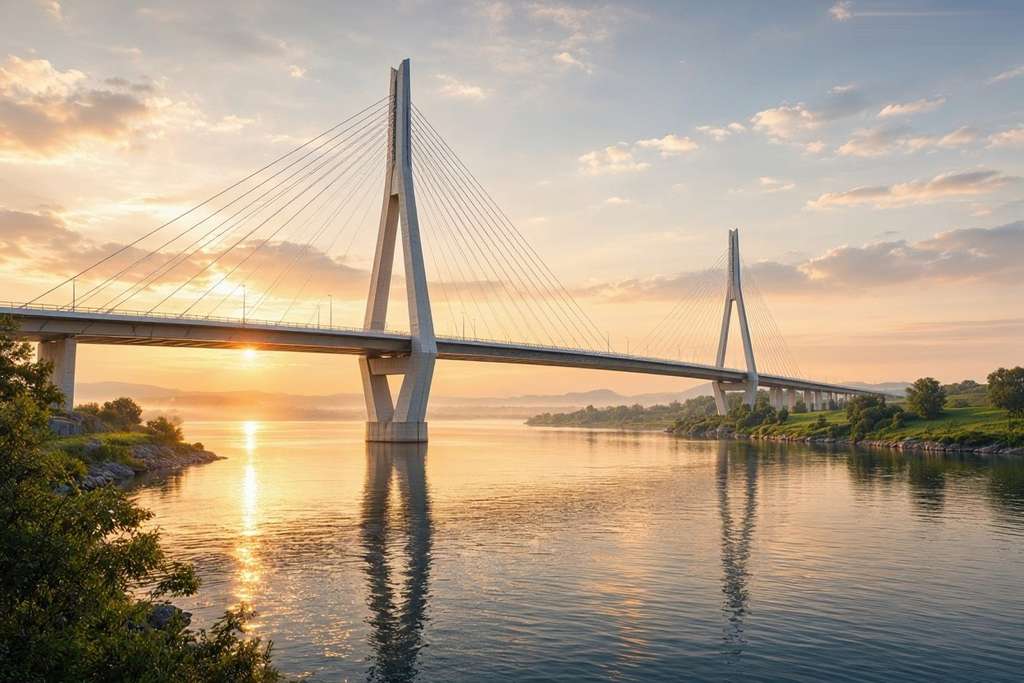
Nitish Setu is a six-lane extradosed cable-stayed road bridge over the River Ganga in Bihar. It was formerly known as the Kachhi Dargah–Bidupur bridge, and it links Kachhi Dargah on the outskirts of Patna with Bidupur in Vaishali district, passing through Raghopur Diyara island in the middle of the river. The bridge is about 32 metres wide, has spans of up to 150 metres between its main supporting pillars, and includes pedestrian pathways. Dozens of well foundations anchor it in the river and in the diara — the riverine, flood-prone land along the Ganga.
The Prime Minister's Office has described it as one of India's longest bridges. The structure was built as an extradosed cable-stayed bridge, a design in which cables run from tall pylons to support the deck — a form chosen for long spans over a wide, shifting river like the Ganga. For people travelling between Patna and Vaishali, it is a second major crossing in addition to the older bridges that have carried the region's traffic for decades.
Nitish Setu Length, Cost and Route
The headline numbers of Nitish Setu are straightforward, and they are the reason the bridge is being talked about well beyond Bihar:
- **Total project length:** 19.7 km, made up of a 9.76-km main bridge over the Ganga and about 10 km of approach roads.
- **Cost:** around Rs 4,280 crore, according to the Prime Minister's Office.
- **Route:** Kachhi Dargah on NH-22 in Patna district to Bidupur on NH-322 in Vaishali district, via Raghopur Diyara island.
- **Lanes:** six, with pedestrian pathways on the sides.
The bridge was part of a much larger set of announcements on the same day. Along with Nitish Setu, the Prime Minister inaugurated and laid the foundation stone for development projects worth around Rs 34,470 crore in Vaishali, spanning road connectivity, energy, urban infrastructure, water resources, education, healthcare and transport. The day also saw the launch of 100 PM-eBuses and the Griha Pravesh of more than 26,900 PMAY (Urban) beneficiaries. The visit marked the completion of one year of NDA government rule in Bihar, which added to the political weight of the occasion.
Why the Bridge Matters for Bihar
The most practical reason Nitish Setu matters is traffic. The existing Ganga crossings near Patna — the Mahatma Gandhi Setu and the JP Setu — have carried far more vehicles than they were designed for, and congestion on them is a daily problem for commuters, trucks and buses. Nitish Setu is expected to take a share of that load, cutting journey times between Patna and the districts of north Bihar.
The connectivity gain goes beyond one city pair. By linking NH-22 on the southern bank with NH-322 on the northern bank, the bridge stitches together two national highway corridors and gives the whole of north Bihar — Vaishali, Muzaffarpur and the districts beyond — a faster route to the state capital. For farmers and traders, that means produce and goods can reach Patna's markets more quickly; for patients and students, it means shorter, more reliable trips to the capital's hospitals and colleges. Raghopur, the river island the bridge passes through, also gets a direct road connection it never had before.
There is a longer story here too. The project was first commissioned in 2012, so the bridge reaching completion in 2026 is the end of a journey of more than a decade. Large river bridges in Bihar are slow, difficult builds — foundations have to be sunk in a wide river that shifts course, and work can only proceed in the dry months. That history is part of why the inauguration was treated as a milestone rather than a routine opening.
The Naming Row Over Nitish Setu
The bridge's name has been as much in the news as its engineering. On 13 November 2026, the Bihar government named the completed structure Nitish Setu, after former chief minister and JD(U) chief Nitish Kumar, a long-serving leader of the state and a key ally in the ruling NDA. The decision has set off a political argument over who should get credit for the project and whether a public bridge should carry a living leader's name, a debate that has run alongside the inauguration coverage.
Supporters of the name point to Nitish Kumar's long record in Bihar's politics and government, while critics question naming public infrastructure after a serving political figure. The argument is not unusual in India — bridges, roads and schemes are regularly named after leaders, and those names are regularly contested. What is unusual is the scale: a bridge of this size carrying the name of a leader who is still active in politics guarantees that the debate will continue well after the opening ceremony.
What Happened on Inauguration Day
Prime Minister Modi visited Bihar on Saturday, 21 November 2026. At around 1:15 pm he visited Nitish Setu in Vaishali district, and later addressed a public meeting at Rajapakar in Vaishali, where the wider package of projects worth around Rs 34,470 crore was inaugurated and launched. Before the bridge ceremony, he shared a warm moment with former chief minister Nitish Kumar at Patna airport, and later walked along the six-lane bridge with senior leaders, waving a gamcha towards the gathered crowd — a gesture that recalled his campaign appearances in the state.
The Prime Minister also used the visit to draw a contrast with earlier governments in Bihar, saying that headlines about the state used to be about scams and were now about investments. The inauguration was covered widely across national media, with the bridge's length, cost and name leading most reports.
For the full official account of the visit and the projects announced, the Press Information Bureau's release is the primary source: https://www.pib.gov.in/PressReleasePage.aspx?PRID=2339070®=48&lang=2 — and The Economic Times reported the inauguration and the Rs 34,470 crore project package here: https://economictimes.indiatimes.com/news/india/pm-modi-inaugurates-nitish-setu-other-projects-worth-rs-34470-crore-in-bihar/printarticle/136049666.cms
How Nitish Setu Compares With Bihar's Other Ganga Bridges
Bihar has built several crossings over the Ganga, but few on this scale. The Mahatma Gandhi Setu, opened in 1982, was for decades the only road link between Patna and north Bihar and is now chronically congested. The JP Setu (Digha–Sonepur) added a rail-cum-road crossing further west. Nitish Setu, at 9.76 km of main bridge, is among the longest bridges in the country and adds a third major road crossing in the Patna region, roughly midway between the older ones.
The comparison matters because it explains the politics as well as the engineering. Every new Ganga bridge in Bihar changes which towns and districts can reach Patna easily, and therefore which regions benefit most from the state's growth. A bridge that shortens the Patna–Vaishali run and opens up Raghopur is, in practical terms, a development project for an entire belt of north Bihar — which is why its opening was marked with a prime ministerial visit and a package of projects many times the bridge's own cost.
Readers following the Prime Minister's programme of inaugurating large projects across states may also want to read our explainer on his Karnataka visit and its Rs 15,600 crore projects: https://indiaask.tech/question.php?slug=pm-modi-karnataka-visit-rs-15600-crore-projects-explained — and for the pattern of these state visits, our explainer on his Gujarat visit in October: https://indiaask.tech/question.php?slug=pm-modi-gujarat-visit-30-31-october-2026-explained
Conclusion
Nitish Setu is more than a new bridge: it is a 19.7-km, Rs 4,280 crore link between Patna and Vaishali that eases pressure on Bihar's older Ganga crossings, connects the Raghopur island to the road network for the first time, and arrives wrapped in a political debate about its name. Inaugurated by Prime Minister Modi on 21 November 2026 as part of a Rs 34,470 crore package for Bihar, it will be judged over the coming years on a simple test — whether the journey between north and south Bihar actually gets faster, and whether the districts it serves feel the difference.
Frequently Asked Questions
### What is Nitish Setu?
Nitish Setu is a six-lane extradosed cable-stayed bridge over the River Ganga in Bihar, inaugurated by Prime Minister Narendra Modi on 21 November 2026. It links Kachhi Dargah in Patna district with Bidupur in Vaishali district, passing through Raghopur Diyara island.
### How long is Nitish Setu and how much did it cost?
The total project is 19.7 km long, comprising a 9.76-km main bridge over the Ganga and about 10 km of approach roads. It was built at a cost of around Rs 4,280 crore.
### Why is it called Nitish Setu?
The Bihar government named the bridge Nitish Setu on 13 November 2026, after former chief minister and JD(U) chief Nitish Kumar. The name has triggered a political row over credit for the project and over naming public infrastructure after a living leader.
### Which bridges will Nitish Setu decongest?
Nitish Setu is expected to ease the load on the Mahatma Gandhi Setu and the JP Setu, the existing Ganga crossings near Patna, by giving traffic between Patna and north Bihar a new, direct route.
Nitish Setu is a six-lane extradosed cable-stayed bridge over the River Ganga in Bihar, inaugurated by Prime Minister Narendra Modi on 21 November 2026. It links Kachhi Dargah in Patna district with Bidupur in Vaishali district, passing through Raghopur Diyara island.
How long is Nitish Setu and how much did it cost?
The total project is 19.7 km long, comprising a 9.76-km main bridge over the Ganga and about 10 km of approach roads. It was built at a cost of around Rs 4,280 crore.
Why is it called Nitish Setu?
The Bihar government named the bridge Nitish Setu on 13 November 2026, after former chief minister and JD(U) chief Nitish Kumar. The name has triggered a political row over credit for the project and over naming public infrastructure after a living leader.
Which bridges will Nitish Setu decongest?
Nitish Setu is expected to ease the load on the Mahatma Gandhi Setu and the JP Setu, the existing Ganga crossings near Patna, by giving traffic between Patna and north Bihar a new, direct route.