Home > Constitution & Law > Why Was Mahadev Betting App Kingpin Sourabh Chandrakar Extradited From Oman?
Why Was Mahadev Betting App Kingpin Sourabh Chandrakar Extradited From Oman?
By Vijay Pawar · 2026-11-01 · 9 min read · Constitution & Law
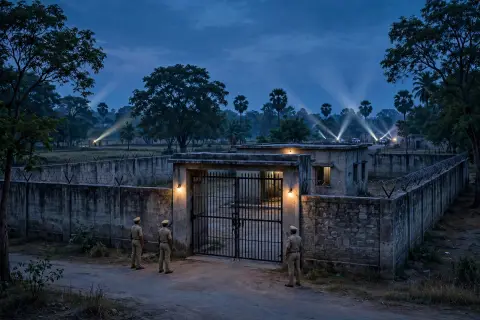
Original editorial illustration: a generic courthouse with scales of justice, a smartphone lying face-down with abstract playing-card and cricket-ball shapes fading away, and an aeroplane silhouette in a dusk sky — no text, no logos, no real person.
Key Takeaways
Sourabh Chandrakar, described by the CBI as promoter of the Mahadev Online Book illegal betting syndicate, was extradited from Oman to India on 1 November 2026.
He is wanted in two CBI cases with chargesheets filed and one ED money-laundering case with a prosecution complaint filed.
The extradition followed a Red Corner Notice, detention by the Royal Oman Police, formal CBI and ED proposals with evidence, and Oman's approval.
He will be medically examined, taken to Raipur after transit remand, and produced before the CBI Special Judge in Raipur on 2 November 2026.
Extradition is not a conviction: the allegations of conspiracy, cheating, forgery, corruption and money laundering remain to be proved in court.
Why was Mahadev betting app kingpin Sourabh Chandrakar extradited from Oman? The answer, announced by the Central Bureau of Investigation (CBI) on Sunday, 1 November 2026, is the end of a long international chase: Chandrakar, described by the agency as the promoter of the Mahadev Online Book illegal betting syndicate, has been brought back to India from Oman and will be produced before a special court in Raipur, Chhattisgarh, on Monday, 2 November 2026. The Mahadev betting app extradition is being presented by the CBI as a significant milestone in India's efforts to bring back fugitives who run alleged criminal enterprises from abroad.
The extradition did not happen overnight. It followed a Red Corner Notice, detention by the Royal Oman Police, formal extradition proposals from the CBI and the Enforcement Directorate (ED) backed by evidence gathered in India, and approval by the authorities in Oman. A specially deputed CBI team then travelled to Oman and escorted Chandrakar back to India. He will first undergo a medical examination and be taken to Raipur after obtaining transit remand, the agency said.
What happened on 1 November 2026
In a statement on Sunday, the CBI said it had, in coordination with other central agencies, successfully secured the extradition of Sourabh Chandrakar from the Sultanate of Oman. Chandrakar, who hails from Durg in Chhattisgarh, is one of the promoters of the alleged Mahadev Online Book betting syndicate, a case investigators have pegged at around Rs 6,000 crore. The agency said a CBI team specially deputed to Oman escorted him back to India, as reported by [The Hindu](https://www.thehindu.com/news/national/mahadev-betting-app-kingpin-sourabh-chandrakar-extradited-from-oman-to-india/article71653674.ece).
The next steps are procedural but important. Chandrakar will be medically examined, taken to Raipur after transit remand is obtained, and produced before the CBI Special Judge in Raipur on Monday, 2 November. That court appearance matters because it is where the custody and trial process in the Indian cases formally moves forward, after years in which the accused was outside the country.
Chandrakar is wanted in two CBI cases in which chargesheets have already been filed, and in one ED case in which a prosecution complaint has been filed. The CBI chargesheets invoke the Prevention of Corruption Act, 1988, provisions of the Indian Penal Code, 1860, relating to criminal conspiracy, cheating and forgery, and the Chhattisgarh Gambling (Prohibition) Act. These are allegations at this stage: the charges will be tested in court, and Chandrakar has the right to defend himself against them.
How the extradition was secured
Extradition is not the same as a deportation or a simple arrest abroad. It is a formal legal process in which one country asks another to hand over a person wanted for prosecution, and the requested country examines the request and the evidence before approving it. In this case, the chain described by the CBI ran as follows: an Interpol Red Corner Notice was issued against Chandrakar, the Royal Oman Police located and detained him, and the CBI and the ED sent formal extradition proposals to Oman along with the evidence collected during the investigation.
The request was pursued in coordination with Indian government agencies, the Interpol National Central Bureau in India and the authorities in Oman. Once Oman approved the request, a CBI team travelled to Muscat and escorted Chandrakar back, as also reported by [Business Today](https://www.businesstoday.in/india/story/mahadev-betting-app-case-cbi-extradites-key-accused-sourabh-chandrakar-from-oman-565000-2026-11-01). Reports of the case have said Chandrakar was detained in Oman in July 2026, months before Sunday's extradition — a reminder that approval and transfer can take time even after a person is located.
The CBI described the outcome in broad terms, calling it "a significant milestone in India's sustained efforts to bring back fugitives who operate transnational criminal enterprises against Indian citizens from abroad, and to make them face the due process of Indian law." That framing matters beyond this one case: India has repeatedly sought the return of economic offenders and alleged scam promoters living abroad, and each successful extradition is used by agencies to argue that distance no longer guarantees impunity.
What is the Mahadev Online Book case
The Mahadev Online Book case concerns an alleged large-scale illegal online betting syndicate that operated through multiple platforms and websites rather than a single app. According to the CBI, Mahadev Online Book was one of the largest illegal online betting syndicates in the country, run from outside India. It offered illegal betting on cricket, football, card games and other events through a network of franchised "panels" and "branches" spread across India, which enrolled users and collected stakes from them.
Investigating agencies identify Chandrakar and Ravi Uppal as the principal promoters of the network. The two are alleged to have built and controlled the syndicate from Dubai after moving there around 2019, using a franchise-style system in which local panel operators ran betting panels and branches, enrolled users, created betting IDs and collected money. The ED has alleged that the promoters retained around 70 to 75 per cent of the profits generated by the panels, with the remainder going to panel operators, and that proceeds were routed through thousands of mule bank accounts, hawala channels and cryptocurrency transactions before being invested in assets in India and the UAE.
The scale claimed by investigators is striking, and readers should treat the different figures carefully because they come from different filings at different times. The CBI describes the case as pegged at around Rs 6,000 crore. Separately, the ED has attached properties linked to the network: in March 2026, it provisionally attached 18 properties in Dubai and two in New Delhi with a combined estimated market value of nearly Rs 1,700 crore, linked to Chandrakar and entities controlled by him and his associates, according to reporting of the agency's action. The CBI has also disclosed that it filed eight chargesheets against 100 accused in the Mahadev betting investigation and issued seven Red Corner Notices, as reported in September 2026.
The CBI took up the Mahadev Online Book cases at the request of the Chhattisgarh government. That origin is significant: the case began as a state investigation before it became a national and then an international one, as the network's alleged operations, money trail and promoters spread beyond one state and beyond India's borders.
Why the case also involves corruption allegations
The Mahadev case is not only about illegal betting. The CBI's chargesheets also invoke the Prevention of Corruption Act, and the agency has alleged that a portion of the betting proceeds was used to pay protection money to public servants to ensure the syndicate's uninterrupted functioning. That allegation — that illegal betting was sustained not merely by technology and demand but by payments to officials — is why the case has drawn political attention in Chhattisgarh and beyond, and why it is investigated by both the CBI and the ED: the CBI on the criminal and corruption side, the ED on the money-laundering side under the Prevention of Money Laundering Act.
As with all allegations in the chargesheets, these claims remain to be proved in court. The extradition changes the forum, not the verdict: Chandrakar will now face the proceedings in India, where the prosecution must prove its case and the defence can challenge the evidence, including evidence gathered abroad and the material submitted to Oman in support of extradition. That court process — charges tested on evidence, with acquittal possible where the case is not proved, as in a recent defamation case — is explained in our report on [Rahul Gandhi's acquittal in the Sultanpur defamation case](https://indiaask.tech/question.php?slug=rahul-gandhi-acquitted-sultanpur-defamation-case-october-2026).
What happens next after the Mahadev betting app extradition
The immediate next step is the production before the CBI Special Judge in Raipur on 2 November 2026. Courts in such cases typically decide questions of custody — whether the accused remains in judicial or police custody while the investigation and trial proceed — and the trial then moves through the charges already filed. The ED's separate money-laundering case will proceed on its own track, with its prosecution complaint and attached properties forming part of that process.
Two wider questions will follow the courtroom steps. The first is about the other promoters and accused: the CBI's disclosure of seven Red Corner Notices suggests the net extends beyond Chandrakar, and the fate of co-promoter Ravi Uppal and other accused will be watched closely. The ED's parallel money-laundering track is familiar from other recent high-profile arrests, including the case explained in our report on [why Azam Khan was arrested by the ED after his release from jail](https://indiaask.tech/question.php?slug=ed-arrests-azam-khan-after-rampur-jail-release-explained). The second is about the money: attachment of properties is a provisional step, and whether those assets are ultimately confiscated depends on the outcome of the money-laundering proceedings.
What this means for online betting in India
The extradition also lands at a time when India's legal position on online betting and gaming is under sharp public debate. Betting on games of chance is broadly prohibited in most Indian states, and the Mahadev case is prosecuted as an illegal betting operation, not as a regulated gaming business. The case is therefore a warning about the risks on both sides of such networks: for users, who can lose money to unregulated panels with no consumer protection, and for operators, who face criminal prosecution, money-laundering charges and extradition even when they operate from abroad.
For ordinary readers, the practical lesson is simple. Platforms that promise betting on cricket, football or card games through informal panels, agents and personal betting IDs operate outside the regulated system, and money paid into them has no legal safeguard. The Mahadev investigation shows how far agencies are now willing to go — across borders, through Interpol and extradition treaties — to pursue the people behind such networks.
Conclusion
The Mahadev betting app extradition of Sourabh Chandrakar from Oman closes one chapter of a long investigation and opens another in a Raipur courtroom. The CBI has brought back an accused it describes as a kingpin of a Rs 6,000-crore illegal betting syndicate, wanted in two CBI cases and one ED case. What follows — custody, trial, the money-laundering proceedings and the pursuit of other accused — will determine whether the extradition becomes a conviction or merely a return. For now, the message from the agencies is clear: operating an alleged illegal betting empire from abroad is no longer a guarantee of staying out of reach of Indian courts.
Why was Sourabh Chandrakar extradited from Oman to India?
Chandrakar, described by the CBI as the promoter of the Mahadev Online Book illegal betting syndicate, was extradited because he is wanted in two CBI cases in which chargesheets have already been filed and one Enforcement Directorate money-laundering case. After a Red Corner Notice led to his detention by the Royal Oman Police, India sent formal extradition proposals with evidence, Oman approved the request, and a CBI team escorted him back to India on 1 November 2026.
When will Sourabh Chandrakar be produced in court?
The CBI has said Chandrakar will undergo a medical examination and be taken to Raipur after obtaining transit remand, and will be produced before the CBI Special Judge in Raipur on Monday, 2 November 2026.
What is the Mahadev Online Book betting case about?
Investigators allege Mahadev Online Book was one of India's largest illegal online betting syndicates, run from outside India through franchised panels and branches that enrolled users and collected stakes on cricket, football, card games and other events. The CBI describes the case as pegged at around Rs 6,000 crore, and the ED is separately pursuing money-laundering proceedings with properties attached.
Is Sourabh Chandrakar convicted in the Mahadev betting case?
No. Extradition brings an accused to face trial; it is not a conviction. The allegations in the CBI chargesheets and the ED prosecution complaint — including criminal conspiracy, cheating, forgery, corruption and money laundering — remain to be proved in court, where Chandrakar can defend himself.
Who else is accused in the Mahadev betting app case?
Investigating agencies identify Ravi Uppal as the other principal promoter of Mahadev Online Book alongside Chandrakar. The CBI has disclosed that it filed eight chargesheets against 100 accused in the investigation and issued seven Red Corner Notices, so the proceedings extend well beyond one person.