Home > Constitution & Law > Why Is the Indus Waters Treaty in the News? India's 'Absolutely No Change' Stand as Pakistan Minister Visits Delhi, Explained
Why Is the Indus Waters Treaty in the News? India's 'Absolutely No Change' Stand as Pakistan Minister Visits Delhi, Explained
By Vijay Pawar · 2026-11-21 · 8 min read · Constitution & Law
India says there is 'absolutely no change' on the Indus Waters Treaty as Pakistan minister Musadik Malik visits Delhi for the SCO forum.
Key Takeaways
The MEA said on 20 November 2026 there is 'absolutely no change' in India's decision to keep the Indus Waters Treaty in abeyance.
Pakistan minister Musadik Malik is in Delhi for the SCO Civilisational Dialogue Forum (20–22 November 2026) — the first Pakistani minister's visit since May 2023.
India placed the 1960 treaty in abeyance on 23 April 2025, a day after the Pahalgam attack killed 26 people, until Pakistan ends support for cross-border terrorism.
The treaty divides six rivers: eastern Ravi, Beas and Sutlej to India; western Indus, Jhelum and Chenab to Pakistan.
The visit is a multilateral SCO engagement, not a bilateral dialogue — a point the government stressed as the opposition questioned its Pakistan policy.
The Indus Waters Treaty is back in the headlines. On 20 November 2026, hours after Pakistan's Climate Change Minister Musadik Masood Malik landed in New Delhi, India's Ministry of External Affairs made its position plain: there is "absolutely no change" in the decision to keep the 1960 water-sharing treaty in abeyance. The statement, delivered by MEA spokesperson Randhir Jaiswal at his weekly media briefing, ended any speculation that Malik's visit might signal a softening of India's stand. For readers following India-Pakistan relations, the episode raises a simple question: what exactly is the Indus Waters Treaty, why was it suspended, and what happens next?
What Is the Indus Waters Treaty?
The Indus Waters Treaty is a water-sharing agreement signed in 1960 between India and Pakistan, brokered with the assistance of the World Bank. It governs how the waters of the Indus river system — six rivers that flow through both countries — are shared. Under the treaty, India has rights over the three eastern rivers, the Ravi, the Beas and the Sutlej, while Pakistan has rights over the three western rivers, the Indus, the Jhelum and the Chenab, subject to specified provisions that allow India limited uses such as hydropower generation and irrigation on the western rivers.
For more than six decades, the treaty survived wars, military standoffs and long periods of frozen dialogue between the two countries. It was often described as one of the most durable water-sharing agreements in the world, precisely because it kept working even when almost everything else in the bilateral relationship had stopped. That is why India's decision in April 2025 to place it in abeyance — rather than formally ending it — was such a significant moment.
Why Did India Place the Treaty in Abeyance?
India placed the Indus Waters Treaty in abeyance on 23 April 2025, a day after the Pahalgam terror attack in Jammu and Kashmir killed 26 people on 22 April 2025. The decision was taken after a meeting of the Cabinet Committee on Security, India's highest decision-making body on security matters. The government announced that the treaty would remain in abeyance until Pakistan credibly and irrevocably ended its support for cross-border terrorism.
The move was part of a series of measures taken after the attack, and it was followed weeks later by Operation Sindoor, India's military action on 7 May 2025 targeting terror infrastructure in Pakistan and Pakistan-occupied Kashmir. The four-day military confrontation that followed kept the treaty dispute unresolved through the rest of 2025 and into 2026.
Pakistan rejected India's decision, arguing that the treaty cannot be unilaterally suspended. Musadik Malik himself had earlier criticised the suspension in strong terms and said he would take the dispute to the United Nations and international arbitration. That history is exactly why his arrival in New Delhi drew so much attention.
Why Is the Indus Waters Treaty in the News Now?
Malik arrived in New Delhi on Friday, 20 November 2026, to lead Pakistan's delegation at the first SCO Civilisational Dialogue Forum, being held at the historic Purana Qila in Delhi from 20 to 22 November 2026. The forum, inaugurated by Prime Minister Narendra Modi, is India's flagship initiative under the Shanghai Cooperation Organisation, a grouping of ten members: China, Russia, India, Pakistan, Kazakhstan, Kyrgyzstan, Tajikistan, Uzbekistan, Iran and Belarus.
Malik's visit is significant for two reasons. It is the first visit by a Pakistani federal minister to India since Bilawal Bhutto Zardari attended an SCO meeting in Goa in May 2023, and the first trip by a Pakistani leader to India since Operation Sindoor. India had formally extended invitations for the forum to all member countries on 28 October 2026 under established multilateral practice, and Pakistan confirmed Malik's participation on 14 November. Notably, India had originally invited Pakistan's Federal Minister for National Heritage and Culture, Aurangzeb Khan Khichi, but Islamabad nominated Malik instead.
India's [SCO Civilisational Dialogue Forum in Delhi](https://indiaask.tech/question.php?slug=sco-civilisational-dialogue-delhi-november-2026-explained) explains the dates, the venue and Pakistan's participation in the same event. The forum is a multilateral gathering, not a bilateral meeting — a distinction the government has been keen to underline.
What Did the Government Say?
Responding to questions about Malik's arrival and his earlier remarks on the treaty, MEA spokesperson Randhir Jaiswal said: "As far as the IWT is concerned, we have made our position very clear, and that is where it remains. There is absolutely no change." The MEA's firm stand was [reported by Moneycontrol](https://www.moneycontrol.com/news/india/absolutely-no-change-india-holds-firm-on-indus-waters-treaty-as-pakistan-minister-visits-delhi-14085942.html), which noted that the treaty remains in abeyance pending action on cross-border terror.
BJP leader Nalin Kohli reinforced the point, saying India could not engage in bilateral talks with Pakistan as long as terrorism against the country continued. "India did not extend any special invitation to Pakistan. Our bilateral relations remain exactly as they were," he said, adding that there could be no dialogue while terrorism was directed against India.
Malik, for his part, avoided a direct response when asked about his earlier comments on the treaty. "I have already stated and I reiterate that all our discussions here are taking place within a multilateral framework. Let us focus on that," he told reporters. Asked about visiting India after a long gap, he said he hoped visits between the two countries would continue.
Why the Opposition Is Questioning the Visit
The visit has triggered a political debate at home. Congress leaders Surendra Rajput and Pramod Tiwari questioned the government's Pakistan policy, with Rajput accusing the Centre of "compromising" its foreign policy. Samajwadi Party leader Fakhrul Hasan Chand said the BJP was "confused", pointing out that the government says talks and terrorism cannot go together, yet a Pakistani minister was visiting India. NCP (SP) leader Clyde Crasto also questioned why the government was allowing a Pakistani minister to visit.
The BJP's response has been that a multilateral forum is not a bilateral dialogue, and that inviting all SCO members is standard practice. [NDTV's report on the row](https://www.ndtv.com/india-news/sco-meeting-musadik-malik-india-visit-confused-foreign-policy-opposition-jabs-bjp-over-pak-minister-musadik-malik-at-sco-meet-in-delhi-12352922?pfrom=top_widget_trending) captures the opposition's charge that the government is "confused" on Pakistan policy. The exchange shows how any contact with Pakistan — even in a multilateral setting — becomes a domestic political issue in India. [India and Pakistan have also sparred at the United Nations in recent weeks](https://indiaask.tech/question.php?slug=india-pakistan-un-exchange-october-2026), a reminder that the diplomatic contest plays out on several stages at once.
What Does Abeyance Actually Mean?
Placing a treaty in abeyance is not the same as cancelling it. In practical terms, it means India has paused the operation of the treaty and the cooperation mechanisms built around it, including the regular meetings of the Permanent Indus Commission and the sharing of hydrological data. India has also moved ahead with hydropower and water-use projects on the western rivers that Pakistan had objected to under the treaty's provisions.
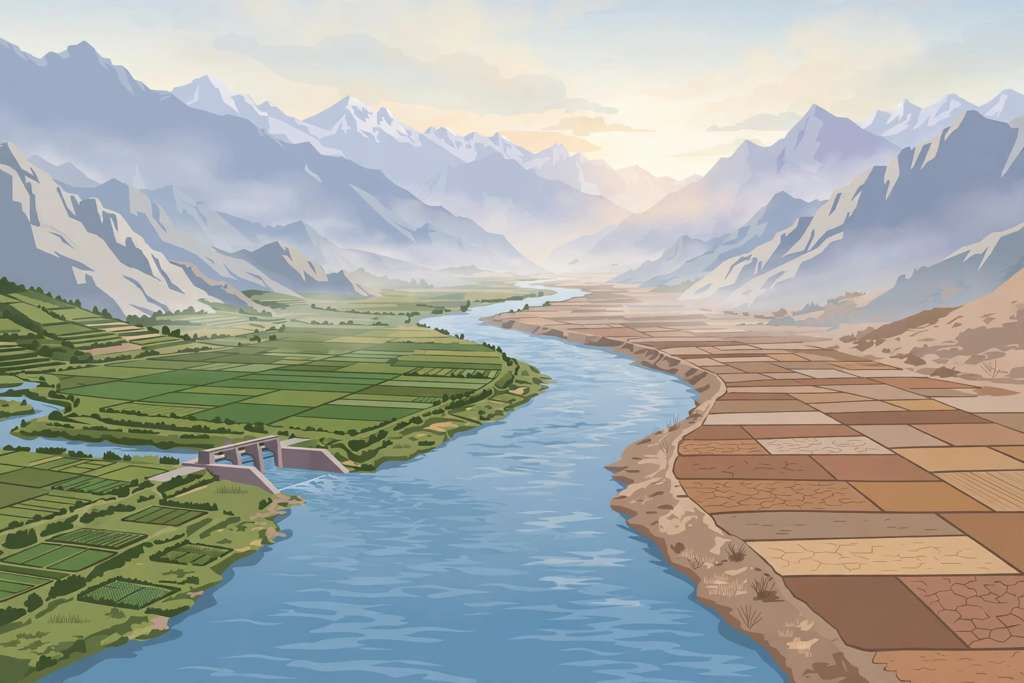
For Pakistan, the stakes are high. The Indus river system is the backbone of its agriculture and a major source of drinking water, so any change in flows — or even uncertainty about them — carries economic and political consequences. For India, the treaty has become a lever of pressure linked directly to action on terrorism, a linkage the government has stated openly and repeatedly. Neither side has shown any sign of backing down, and the dispute has now lasted well over a year and a half without a resolution mechanism being used.
What Happens Next?
Three things are worth watching. First, whether Malik's presence at the forum leads to any informal contact with Indian officials beyond the multilateral sessions — so far, both sides have said there is no bilateral engagement planned. Second, whether Pakistan pursues the international arbitration route Malik had earlier threatened, and how the World Bank, as the treaty's broker, responds. Third, whether the domestic political debate in India changes the government's calculations, or whether the "absolutely no change" line holds through the rest of the SCO forum and beyond.
For now, the position is clear. The Indus Waters Treaty remains in abeyance, India has linked any reconsideration to Pakistan ending its support for cross-border terrorism, and a Pakistani minister's first visit to India in more than three years has not changed that. The water question, once considered the most stable part of the India-Pakistan relationship, is now firmly tied to the hardest question of all — terrorism — and there is no sign of movement on either side.
Conclusion
The Indus Waters Treaty made news again not because anything about the treaty changed, but because a Pakistani minister came to Delhi while it stayed suspended. The MEA's message was deliberately blunt: the treaty's status is unchanged, the condition for restoring it is unchanged, and a multilateral visit does not amount to a bilateral thaw. Until Pakistan takes what India calls credible and irreversible action against cross-border terrorism, the 1960 agreement will remain in abeyance — and the rivers that once kept flowing through every crisis will stay at the centre of the dispute.
The Indus Waters Treaty is a 1960 water-sharing agreement between India and Pakistan, brokered with the World Bank's help. It divides the use of six rivers: India has rights over the eastern rivers Ravi, Beas and Sutlej, while Pakistan has rights over the western rivers Indus, Jhelum and Chenab.
Why did India suspend the Indus Waters Treaty?
India placed the treaty in abeyance on 23 April 2025, a day after the Pahalgam terror attack killed 26 people. The government said it would remain in abeyance until Pakistan credibly and irrevocably ended its support for cross-border terrorism.
Who is Musadik Malik and why is he in India?
Musadik Masood Malik is Pakistan's Federal Minister for Climate Change and Environmental Coordination. He arrived in New Delhi on 20 November 2026 to lead Pakistan's delegation at the SCO Civilisational Dialogue Forum at Purana Qila, held from 20 to 22 November 2026.
Has India's stand on the Indus Waters Treaty changed?
No. MEA spokesperson Randhir Jaiswal said on 20 November 2026 that India's position remains exactly where it was: 'There is absolutely no change.' The treaty stays in abeyance.
What is the SCO Civilisational Dialogue Forum?
It is a three-day forum hosted by India in Delhi from 20 to 22 November 2026, bringing together the ten members of the Shanghai Cooperation Organisation — China, Russia, India, Pakistan, Kazakhstan, Kyrgyzstan, Tajikistan, Uzbekistan, Iran and Belarus — for dialogue on shared civilisational heritage.