Home > General Knowledge > SCO Civilisational Dialogue in Delhi Explained: 20-22 November Forum at Purana Quila, the Pakistan Minister Invitation, and What It Does Not Mean
SCO Civilisational Dialogue in Delhi Explained: 20-22 November Forum at Purana Quila, the Pakistan Minister Invitation, and What It Does Not Mean
By IndiaAsk Editorial Team · 2026-10-27 · 7 min read · General Knowledge
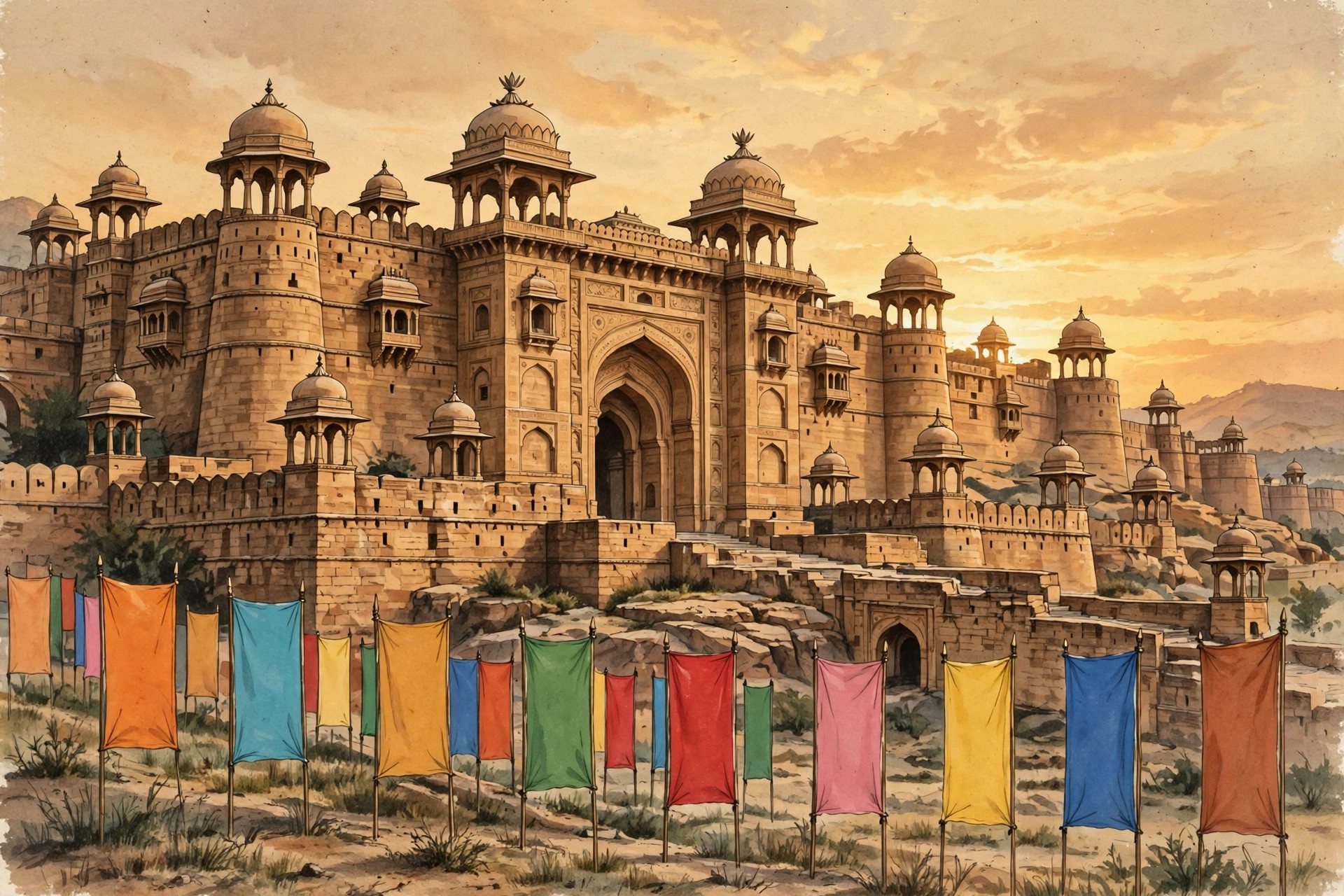
The SCO's first Civilisational Dialogue Forum will be held at Delhi's Purana Quila from 20 to 22 November 2026. (Illustration)
Key Takeaways
India will host the SCO's first Civilisational Dialogue Forum in New Delhi from 20 to 22 November 2026 at Purana Quila.
Pakistan's culture minister Aurangzeb Khan Khichi has been invited, but Pakistan has not yet confirmed its delegation.
If he attends, it would be the first visit by a Pakistani minister to India since the Goa SCO meeting in 2023.
The forum covers civilisational linkages, heritage, education and traditional knowledge, not bilateral negotiations.
The idea was proposed by PM Modi at the 2025 Tianjin SCO summit and adopted by the grouping.
What has been announced
India will host the first-ever Civilisational Dialogue Forum of the Shanghai Cooperation Organisation (SCO) in New Delhi from 20 to 22 November 2026. The three-day forum will be held at Purana Quila, the 16th-century fort in the heart of the capital, and Prime Minister Narendra Modi is expected to inaugurate it. The event is being organised jointly by the Ministry of Culture and the Ministry of External Affairs.
The forum is the first of its kind for the SCO, a ten-member grouping that includes India, China, Russia, Iran, Belarus and the Central Asian states, along with Pakistan. Culture ministers from all ten member states have been invited, as have representatives from the grouping's fifteen dialogue partners and observer countries. In total, representatives from more than 25 countries are expected to take part.
The headline that has drawn the most attention concerns one invitation in particular. According to reports in The Hindu and the news agency IANS, carried by The New Indian Express, India has invited Pakistan's Minister for National Heritage and Culture, Aurangzeb Khan Khichi, to attend. If he comes, it would be the first visit to India by a Pakistani minister since the SCO foreign ministers' meeting in Goa in 2023, which was attended by then foreign minister Bilawal Bhutto, and the first since the four-day military conflict between India and Pakistan in May 2025.
One important qualification must be stated plainly at the outset: Pakistan has not yet confirmed who will lead its delegation. The invitation is confirmed by diplomatic sources quoted in the reporting; attendance is not. Any reading of the event that treats a Pakistani minister's presence as a done deal would be getting ahead of the facts.
What the forum is actually about
The Civilisational Dialogue Forum is a cultural forum, not a security summit or a bilateral negotiation. Its stated themes are civilisational linkages, cultural diplomacy, heritage, education and traditional knowledge systems. In practical terms, that means discussions about shared histories, the preservation of monuments and manuscripts, cultural exchanges, and how ancient knowledge traditions relate to modern societies.
The idea was proposed by Prime Minister Modi at the SCO leaders' summit in Tianjin in 2025 and was subsequently adopted by the grouping. That origin matters because it explains the format: this is an Indian initiative inside a multilateral framework, rather than a bilateral event that happens to involve many countries. The distinction shapes everything from who is invited to what, if anything, can be agreed at the end.
The choice of venue is deliberate. Purana Quila, also called the Old Fort, was built in the 16th century during the reign of Emperor Humayun. Officials quoted in the reporting point to its archaeological significance: excavations at the site have revealed layers spanning nearly 3,000 years, from the pre-Mauryan, Mauryan, Sunga, Kushana and Gupta periods through the post-Gupta era to medieval Rajput, Sultanate and Mughal periods. Hosting a dialogue about civilisations inside a fort that literally contains many layers of Indian history is a statement in itself, and it is one the organisers clearly intend visitors to notice.
Why the Pakistan invitation matters
India and Pakistan have had deeply strained relations for years, and the May 2025 conflict made the atmosphere worse. Against that background, even a cultural invitation carries symbolic weight. Multilateral forums have often been the one channel through which the two countries continue to meet when bilateral contact is frozen, and the SCO is one of the few organisations in which both sit as full members.
That pattern has continued through 2026. In September 2026, India sent its SCO National Coordinator, Alok Dimri, to Islamabad for a planning meeting ahead of Pakistan's presidency of the grouping and the SCO leaders' summit scheduled for August 2027. The Delhi forum in November and the Islamabad summit the following year are therefore two ends of the same multilateral calendar, with each country hosting SCO events in turn.
It is worth being precise about what the invitation does and does not signal. It does not, by itself, mean that bilateral talks are resuming, that trade or travel restrictions are changing, or that either side has softened its positions on the disputes between them. Cultural diplomacy works at a different level: it keeps a door open and a conversation going in a setting where attendance does not require either side to concede anything on security or territorial questions. Whether that door leads anywhere further depends on decisions far beyond a three-day cultural forum.
Background: what the SCO is
The Shanghai Cooperation Organisation began in the late 1990s as a forum for China, Russia and Central Asian states to manage border and security issues, and it has since grown into a broad Eurasian grouping covering security, economic and cultural cooperation. India and Pakistan both became full members in 2017, which is why the two countries regularly encounter each other at SCO meetings even when their bilateral relationship is at a low point.
The organisation now has ten full members, alongside observer states and dialogue partners that participate in various formats. Its summits and ministerial meetings are the most visible events, but much of its work happens in sectoral meetings on subjects ranging from trade and transport to health, education and culture. The Civilisational Dialogue Forum is a new addition to that calendar, and its first edition will test whether a cultural track can become a permanent part of the SCO's work.
For India, the forum also fits a broader diplomatic approach: using hosting opportunities to present India's civilisational heritage to an international audience, while keeping engagement with difficult neighbours inside multilateral rules where no single bilateral dispute dominates the agenda.
What to watch between now and 20 November
The first thing to watch is Pakistan's response. Confirmation of its delegation, and at what level, will determine how much attention the forum receives and how it is interpreted in both countries. A ministerial visit would be newsworthy precisely because it has not happened since 2023; a lower-level delegation would still be normal SCO business but with far less symbolism.
The second is the programme itself. The list of speakers, the themes of each session and any joint statement or declaration issued at the end will show whether the forum is mainly ceremonial or whether it produces concrete cooperation, such as heritage partnerships, museum exchanges or joint research on traditional knowledge.
The third is the wider calendar. With Pakistan set to hold the SCO presidency and host the leaders' summit in August 2027, the November forum in Delhi is part of a sequence, not a one-off. How each side handles the other's hosting turn will be read as a signal of how far multilateral courtesy extends when bilateral ties remain frozen.
Conclusion
The SCO Civilisational Dialogue Forum is a genuinely new event: the first forum of its kind, hosted by India, at a historic venue, with more than 25 countries invited. The invitation to Pakistan's culture minister is the most closely watched detail, but it is still only an invitation, and the reporting is clear that Pakistan has not yet confirmed its delegation.
Read in that light, the forum is best understood as cultural diplomacy doing what it is designed to do: creating a shared space, under multilateral rules, where countries that disagree sharply on many things can still talk about history, heritage and civilisation. Whether that space produces anything more durable will only become clear once the delegates actually arrive at Purana Quila on 20 November.
Frequently Asked Questions (FAQ)
When and where is the SCO Civilisational Dialogue Forum being held?
The first SCO Civilisational Dialogue Forum will be held in New Delhi from 20 to 22 November 2026, at Purana Quila (the Old Fort). Prime Minister Narendra Modi is expected to inaugurate the three-day event, which is organised by the Ministry of Culture and the Ministry of External Affairs.
Has Pakistan confirmed that its minister will attend?
No. India has invited Pakistan's Minister for National Heritage and Culture, Aurangzeb Khan Khichi, according to diplomatic sources quoted by The Hindu and IANS, but Pakistan has not yet confirmed who will lead its delegation. Attendance should not be treated as confirmed until an official announcement is made.
Why would a Pakistani minister's visit be significant?
If Minister Khichi attends, it would be the first visit to India by a Pakistani minister since the SCO foreign ministers' meeting in Goa in 2023, and the first since the four-day India-Pakistan conflict in May 2025. The significance is symbolic: it would show that multilateral engagement continues even while bilateral relations remain strained.
What will the forum actually discuss?
The forum focuses on civilisational linkages, cultural diplomacy, heritage, education and traditional knowledge systems. It is a cultural event, not a security summit or a bilateral negotiation, so it does not by itself signal any change in trade, travel or security policies between India and Pakistan.