Home > Economy > Maruti Suzuki Q2 FY27 Explained: Record Sales of Nearly 7 Lakh Cars, Yet Profit Falls 26% as Costs Surge
Maruti Suzuki Q2 FY27 Explained: Record Sales of Nearly 7 Lakh Cars, Yet Profit Falls 26% as Costs Surge
By IndiaAsk Editorial Team · 2026-10-28 · 9 min read · Economy
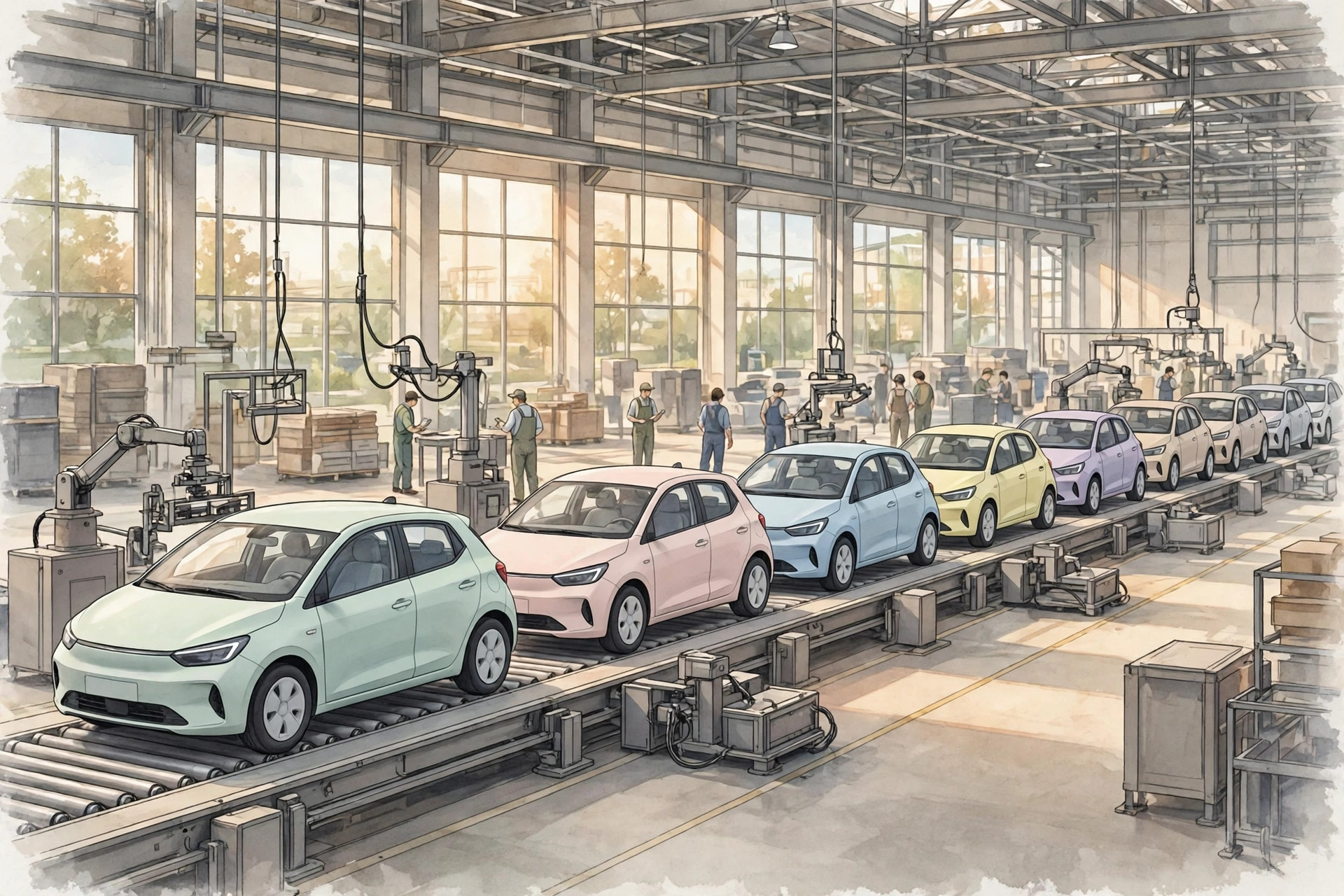
Original illustration of new small cars rolling off a factory assembly line.
Key Takeaways
Maruti Suzuki sold a record 696,654 vehicles in Q2 FY27, up 26.5 per cent year on year.
Consolidated net profit still fell 26.36 per cent to Rs 2,466.1 crore, while revenue rose 26 per cent to Rs 53,355.5 crore.
Material costs jumped about 48 per cent to Rs 37,488.5 crore, driven by higher steel and copper prices linked to the West Asia conflict.
Standalone profit of Rs 2,414.9 crore differs from consolidated profit because the latter includes subsidiaries and joint ventures.
The company has raised prices three times since May 2026, including up to Rs 20,000 on select models in September.
Maruti Suzuki India, the country's largest carmaker by sales, has reported one of the most talked-about quarterly results of this earnings season: it sold more cars in a single quarter than ever before, yet its profit fell by more than a quarter. The results for the July to September 2026 quarter, announced on 27 October 2026, capture a puzzle that many large manufacturers are facing right now — strong demand on the showroom floor, but rising costs eating into every rupee earned.
This explainer breaks down what actually happened, why profit fell despite record sales, what the two different profit figures in the news mean, and what the result could mean for car buyers and for the wider economy.
What happened: the headline numbers
For the second quarter of financial year 2026-27 (Q2 FY27), Maruti Suzuki reported a consolidated net profit of Rs 2,466.1 crore, down 26.36 per cent from Rs 3,349 crore in the same quarter last year. On a standalone basis — that is, for the carmaking company alone, without its subsidiaries and joint ventures — net profit was Rs 2,414.9 crore, down about 27 per cent year on year.
At the same time, revenue surged. Consolidated revenue from operations rose 26 per cent to Rs 53,355.5 crore, from Rs 42,344.2 crore a year earlier. Standalone net sales rose 26 per cent to a record Rs 50,615.5 crore, compared with Rs 40,135.8 crore in the corresponding quarter of the previous financial year.
The standalone profit also came in below what analysts had expected. Data compiled by LSEG had pointed to a profit of around Rs 3,105 crore, according to a Reuters report carried by The Hindu BusinessLine, while the reported standalone figure was Rs 2,415 crore. A miss against expectations matters because markets often judge a company not only against last year, but against what was forecast.
Record sales: nearly 7 lakh cars in three months
The most striking part of the result is the sales volume. Maruti Suzuki sold a total of 696,654 vehicles in the July to September quarter, its highest-ever quarterly volume and a 26.5 per cent increase over the same period last year.
The growth was broad-based. Domestic passenger vehicle sales were strong across categories, with small car sales rising 35.9 per cent and SUV sales jumping 68.2 per cent, helped by recently introduced models and by festive-season buying ahead of Diwali. The company's share of the domestic passenger vehicle market rose by 2.2 percentage points to 40.8 per cent during the quarter — a reminder of just how dominant Maruti remains in the Indian car market.
The half-year picture tells the same story of volume strength. From April to September 2026, Maruti sold 1,379,378 vehicles, up 27.9 per cent year on year. That included record domestic sales of 1,146,523 units and exports of 232,855 units. Half-year net sales reached Rs 1,005,746 million, the highest ever for a half-year period. Yet half-year net profit still fell, to Rs 57,670 million from Rs 70,609 million a year earlier.
In other words, the company is selling far more cars than before — but making less money on each one, and less money overall.
Why profit fell: costs rose faster than revenue
The core reason is simple arithmetic: expenses grew even faster than sales. Consolidated total expenses in the quarter shot up to Rs 50,619 crore, from Rs 39,018.4 crore a year earlier. The single biggest item, the cost of materials consumed, rose to Rs 37,488.5 crore from Rs 25,324.2 crore — an increase of about 48 per cent.
The company and analysts link this cost pressure mainly to the ongoing West Asia conflict, which has pushed up prices of critical raw materials such as steel and copper and disrupted supply chains. Indian automakers have responded by raising prices through the year. Maruti raised prices of select models by up to Rs 20,000 in September 2026, its third price hike since May. But even three hikes were not enough to fully offset the jump in input costs in this quarter.
Two other factors squeezed profit. First, operating profit (EBIT) fell 17 per cent to Rs 2,803.7 crore, from Rs 3,382 crore a year earlier, as adverse commodity prices weighed on margins. Second, non-operating income dropped sharply to Rs 429.8 crore from Rs 966.1 crore a year earlier, because of mark-to-market losses on the company's invested surplus — in plain terms, the value of some of its investments fell on paper, reducing other income. Adverse foreign exchange movements also hurt margins, according to the company's commentary.
So the profit fall is not a story of weak demand. It is a story of a cost shock, a currency drag, and lower treasury income landing in the same quarter.
Standalone versus consolidated: why two profit figures?
Readers may have noticed two different profit numbers in news reports — Rs 2,414.9 crore and Rs 2,466.1 crore — and wondered which one is correct. Both are correct; they measure different things.
The standalone figure covers Maruti Suzuki India Ltd alone, the company that makes and sells the cars. The consolidated figure adds the results of its subsidiaries and joint ventures, such as its insurance broking and component businesses. Because those extra businesses contributed a small net addition, consolidated profit is slightly higher than standalone profit.
The same distinction applies to revenue. Standalone net sales were Rs 50,615.5 crore, while consolidated revenue from operations, which includes servicing and ancillary revenue from the wider group, was Rs 53,355.5 crore. When comparing Maruti with last year, the important thing is to compare like with like — standalone with standalone, or consolidated with consolidated. On either basis, the direction is the same: revenue up about 26 per cent, profit down about 26 to 27 per cent.
Background: a bellwether quarter for India's auto industry
Maruti's results are watched far beyond its own shareholders because the company is a bellwether for Indian consumption. With a domestic market share above 40 per cent, its sales are often read as a signal of how confident middle-class households feel about big purchases.
The festive season is traditionally the strongest period for car sales in India, and this quarter benefited from that demand, especially for compact cars. BusinessLine's morning report on 28 October 2026 also noted that discussions on BS-VII emission standards are underway within SIAM, the auto industry's apex body, ahead of consultations with the government. Stricter emission norms would eventually affect vehicle technology and pricing across the industry, though they are not an immediate factor in this quarter's numbers.
Analysts quoted in the results coverage expect sales growth to moderate in the second half of the financial year, partly because the comparison base is higher: demand a year earlier was boosted by tax cuts. Reports tracking the results also noted pending customer bookings of around 2 lakh vehicles at the end of September and network inventory of roughly 17 days — signs that demand was still running ahead of immediately available supply when the quarter closed.
What this means for car buyers
For buyers, the practical takeaway is that car prices have already been moving up. Three price hikes since May, including the September increase of up to Rs 20,000 on select models, show that manufacturers are passing at least part of higher input costs to customers. If commodity prices stay elevated, further adjustments cannot be ruled out, though no such announcement has been made as part of these results.
At the same time, strong sales and a large pending order book suggest waiting periods may persist for popular models. Buyers comparing models should look at the on-road price, including any recent hikes, rather than older advertised prices, and check current offers with dealers, since festive-period schemes can change quickly.
None of this is a prediction about any particular model's price. It is simply the pattern visible in the company's own numbers: higher costs are being shared between the company, through lower margins, and customers, through higher prices.
What this means for the economy and investors
For the wider economy, the result sends a mixed but useful signal. On the demand side, record vehicle sales point to resilient household spending during the festive season. On the supply side, the margin squeeze shows how global geopolitical tensions can reach Indian factory floors through steel, copper and currency channels, even when domestic demand is healthy.
For investors, the result is a reminder that revenue growth alone does not guarantee profit growth. Input costs, exchange rates and treasury income can move a company's bottom line sharply in a single quarter. The gap between the reported profit and analyst estimates also shows why markets can react negatively to a result even when sales hit a record — expectations matter, and this quarter fell short of them.
Whether margins recover will depend largely on commodity prices, exchange rates and the company's ability to hold prices in the coming quarters. The next two quarters will show whether this was a one-quarter cost shock or a longer squeeze.
Conclusion
Maruti Suzuki's Q2 FY27 result is a tale of two halves: a record on the sales front and a sharp fall on the profit front. The company sold 696,654 vehicles, its best quarter ever by volume, and grew revenue by about 26 per cent. But a near-48 per cent jump in material costs, adverse currency movements and lower non-operating income cut consolidated net profit by 26.36 per cent to Rs 2,466.1 crore.
The result does not suggest that Indians have stopped buying cars. If anything, it suggests the opposite — demand is strong enough to set records even after three price hikes since May. What it does show is how exposed even the strongest domestic manufacturers are to global cost shocks, and why profit, not just sales, is the number to watch when judging a company's health in a turbulent quarter.
Frequently Asked Questions (FAQ)
Did Maruti Suzuki sell more cars but earn less profit in Q2 FY27?
Yes. In the July to September 2026 quarter, Maruti Suzuki sold a record 696,654 vehicles, up 26.5 per cent year on year, and consolidated revenue from operations rose 26 per cent to Rs 53,355.5 crore. Yet consolidated net profit fell 26.36 per cent to Rs 2,466.1 crore, because expenses — especially material costs — rose even faster than revenue.
Why did Maruti Suzuki's profit fall despite record sales?
Three main reasons: the cost of materials consumed jumped about 48 per cent to Rs 37,488.5 crore, linked to higher steel and copper prices amid the West Asia conflict; adverse foreign exchange movements hurt margins; and non-operating income fell to Rs 429.8 crore from Rs 966.1 crore a year earlier due to mark-to-market losses on invested surplus. Operating profit (EBIT) fell 17 per cent to Rs 2,803.7 crore.
Why do news reports show two different Maruti profit figures, Rs 2,414.9 crore and Rs 2,466.1 crore?
Both are correct and measure different things. Rs 2,414.9 crore is the standalone net profit of Maruti Suzuki India Ltd alone, while Rs 2,466.1 crore is the consolidated net profit, which also includes subsidiaries and joint ventures such as insurance broking and component businesses. On either basis, profit fell about 26 to 27 per cent year on year.
Will Maruti Suzuki car prices rise further after this result?
No further hike has been announced in these results, but prices have already risen three times since May 2026, including an increase of up to Rs 20,000 on select models in September. If steel, copper and other input costs stay high, further adjustments cannot be ruled out. Buyers should check the current on-road price with dealers rather than relying on older advertised prices.