Millet Farming Explained: Shree Anna Crops, Their Benefits, and What Farmers Should Know Before Sowing
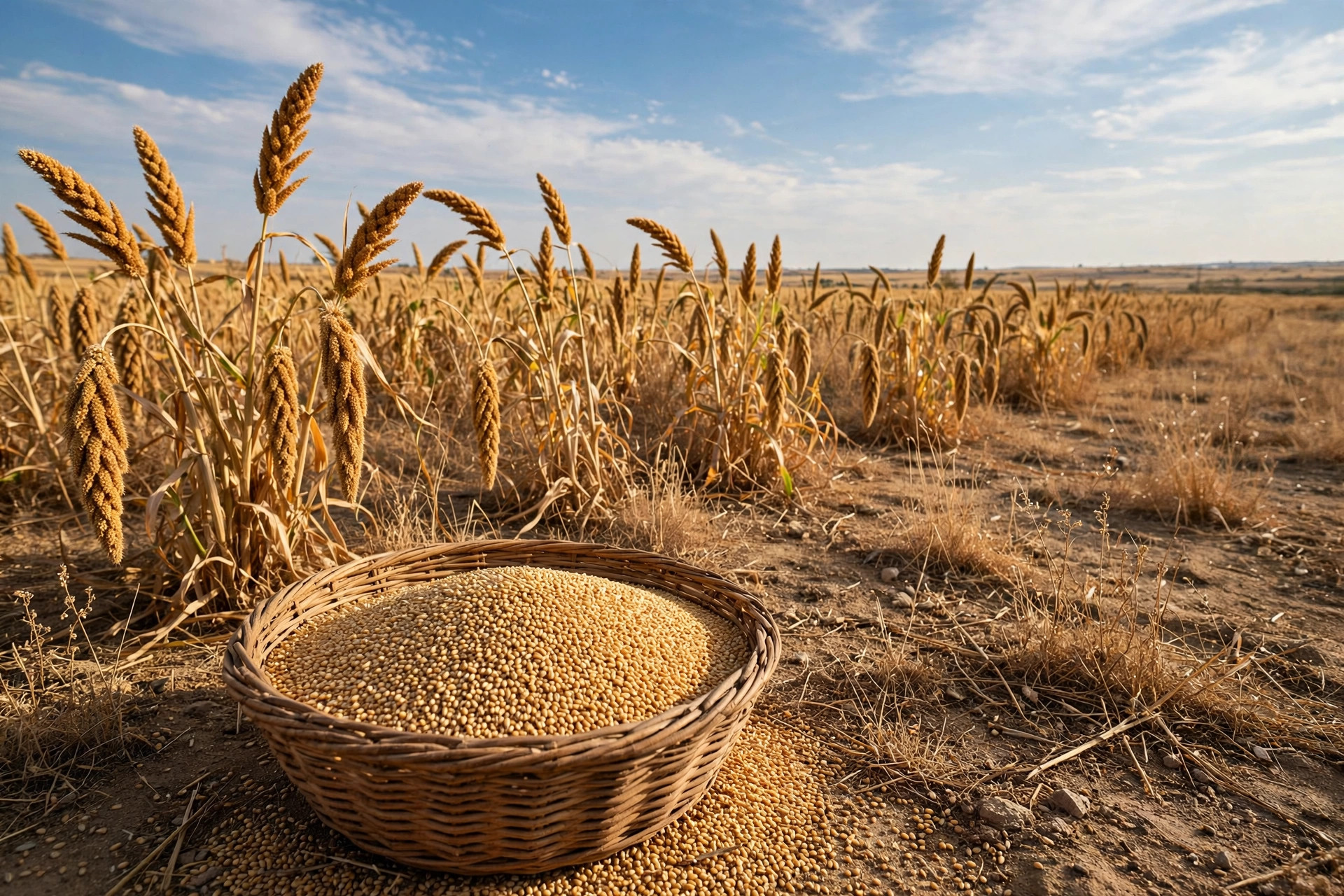
Key Takeaways
- Millets include jowar, bajra, ragi and small millets such as kodo, kutki, foxtail and little millet.
- They need less water, tolerate heat, and finish in a short duration, suiting rainfed and marginal fields.
- Millets also provide nutrition for the family and fodder for livestock, especially jowar and bajra.
- Sow shallow, control weeds early, and protect moisture at germination, flowering and grain-filling.
- Market depth and prices vary by district, so confirm a local buyer before committing a large area.
Millet Farming Explained: Shree Anna Crops, Their Benefits, and What Farmers Should Know Before Sowing
Millets were once everyday food across large parts of India, then quietly slipped to the margins as rice and wheat, backed by assured procurement and changing diets, took centre stage. In recent years they have returned to public conversation under the name Shree Anna, a term that reflects their nutritional value and their place in traditional diets. For a farmer, however, the question is not fashion or nostalgia. It is practical: do millets suit my land, my water, my labour and my market, and what do I need to know before sowing them?
The honest answer is that millets are neither a miracle crop nor a poor farmer's last resort. They are a family of hardy, short-duration grains — including jowar, bajra, ragi, and smaller millets such as kodo, kutki, foxtail and little millet — with real strengths in dry and low-input conditions, and real limitations in processing, marketing and, in some areas, price discovery. A farmer who understands both sides can make a sound decision. A farmer who sows on hype alone may be disappointed at harvest or at the mandi.
Why Millets Suit Difficult Conditions
The strongest agronomic case for millets is resilience. Most millets need less water than paddy and many wheat varieties, tolerate heat better, and complete their life cycle in a relatively short duration. Bajra thrives in sandy, low-fertility soils where other cereals struggle. Jowar handles dry spells and provides both grain and fodder, which matters in mixed crop-livestock systems. Ragi grows on hill slopes and poorer soils, and stores well after harvest.
That hardiness translates into lower input risk. In a rainfed field where irrigation is uncertain, a crop that can survive a dry gap of two weeks is worth more than a crop that yields spectacularly with full water but collapses without it. Millets also generally need less fertiliser than intensive cereals, and their pest and disease pressure is often lower, though not absent. For a farmer with limited irrigation, limited capital, or a field that is marginal for paddy, these traits can make the difference between a harvested crop and a failed one.
Short duration is a second advantage. A millet sown at the start of the rains can often be harvested in time to sow a second crop, or to free the field for a rabi crop. That flexibility is valuable in double-cropping systems, and it reduces exposure to late-season pests, diseases and weather risks that longer crops face.
Nutrition, Fodder and the Farm System
Millets are valued nutritionally because they are rich in fibre, minerals and, in some cases, protein, and because several have a lower glycaemic index than refined rice or wheat. That nutritional profile is why public programmes, school meals and urban health-conscious consumers have shown renewed interest. For the farming household itself, growing a millet means the family eats a more diverse grain, which is a quiet but real benefit that does not show up in a mandi receipt.
The crop also fits livestock farming. Jowar and bajra stalks provide fodder, and in many regions the fodder value is a major part of the economics, sometimes rivalling the grain. A farmer who keeps cattle or buffaloes should therefore evaluate a millet not on grain yield alone, but on grain plus fodder, and on the saving in purchased feed. Intercropping millets with pulses is another traditional practice worth reviving: the pulse fixes nitrogen, the millet provides structure and shade, and the combination spreads risk across two crops with different markets.
Soil health benefits follow from the same logic. Millets' root systems and lower chemical dependence suit rotations that rest the soil after intensive cereals. Rotating a millet into a field that has grown paddy or wheat for years can break pest and disease cycles and improve soil structure, even if the millet season's cash return is modest.
Before Sowing: Variety, Seed, Sowing and Care
Variety selection for millets follows the same principles as for any crop, with a local twist: many millets have strong regional varieties adapted to local rainfall, soil and taste preferences. A variety that does well in one district may be a poor fit in another, so local trials, Krishi Vigyan Kendra advice and neighbouring farmers' experience over two or three seasons matter more than a distant success story. Check duration, grain colour and size, fodder yield, and tolerance to local stresses such as blast in ragi or shoot fly in jowar.
Use good seed, from a reliable source, and check germination before sowing, as with any crop. Millets are usually sown at a shallow depth, because their seeds are small, and sowing too deep is a common cause of poor establishment. Seed rate, spacing and thinning vary by millet and by sowing method, so follow the local recommendation rather than guessing. Early weed control is important: millets grow slowly at first, and weeds can overtake them in the first few weeks. One timely interculture or weeding often pays for itself many times over.
Water management is about timing, not volume. Millets tolerate dry spells, but they still need moisture at germination and at flowering and grain-filling. A single life-saving irrigation at the critical stage, where available, can protect yield far more than frequent light watering. Watch for the crop's key pests and diseases by walking the field, and act on local advice rather than spraying preventively without a diagnosis.
The Market Question: Where Will the Grain Go?
This is where many millet plans succeed or fail, and it deserves attention before sowing, not after harvest. Unlike paddy and wheat in many regions, millets do not always enjoy the same depth of procurement, mandi arrival and price transparency. In some states and districts, procurement and minimum support price operations for certain millets exist; in others, the farmer must rely on local traders, direct sales, farmer producer organisations, or value-added processing. Prices can therefore vary widely by place and season, and a farmer should check the local situation before committing a large area.
Practical steps help. Talk to local traders and farmer producer organisations before sowing about which millet and variety they buy, and at what quality standard. Consider a small area in the first year, learn the marketing channel, and expand only when a buyer is confirmed. Explore whether dehulling, milling or processing is available nearby, because unprocessed small millets are harder to sell and to cook, while processed grain reaches more buyers. Direct marketing — to local consumers, self-help groups, or urban buyers interested in traditional grains — can fetch better returns but needs time, packaging and consistent quality.
Value addition is promising but not automatic. Millet flour, flakes, snacks and ready mixes have a growing urban market, yet they require processing equipment, food-safety compliance and marketing skill. A farmer producer organisation or a local entrepreneur may be a better route into that market than an individual farmer attempting processing alone.
Conclusion
Millets, or Shree Anna, deserve their renewed attention, but they deserve it as farm crops, not slogans. They offer hardiness, low water need, short duration, nutrition and fodder, and they fit dry, rainfed and rotation systems well. Their limits — processing needs, uneven markets and variable local prices — are manageable when the farmer checks the local buyer before sowing, starts on a modest area, chooses a locally proven variety, and sows and weeds it with care. On those terms, millets can be a resilient, sensible part of a farming system, and a crop that feeds both the family and the soil it grows in.