Home > Economy > What Is India's Rs 68,816 Crore 1150 kV Transmission Project? India's Highest-Voltage Power Corridor Explained
What Is India's Rs 68,816 Crore 1150 kV Transmission Project? India's Highest-Voltage Power Corridor Explained
By Vijay Pawar · 2026-11-13 · 8 min read · Economy
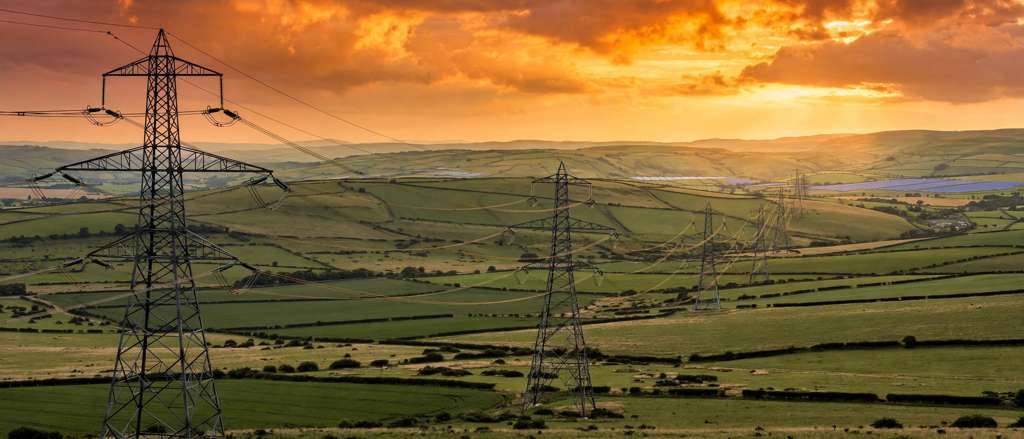
Editorial illustration: high-voltage transmission towers carrying power lines across farmland at sunset, symbolising India's new 1150 kV corridor linking western renewable hubs to eastern industrial demand.
Key Takeaways
The National Committee on Transmission approved a Rs 68,816 crore (about $7.34 billion) 1150 kV corridor at its 45th meeting on 9 November 2026.
The 1150 kV Raigarh Kotra-Rourkela-Kolaghat double-circuit lines will be the highest voltage level in the Indian transmission system, above the current 765 kV maximum.
The first phase links Chhattisgarh, Odisha and West Bengal and connects with a 6,000 MW system carrying renewable power from Rajasthan's Bhadla solar region.
The scheme has three parts — Part-A Rs 18,000 crore, Part-B Rs 17,000 crore, Part-C Rs 33,816 crore — to be awarded simultaneously under tariff-based competitive bidding, with a 72-month build time.
Only Phase-I was approved for now because of the lower projected utilisation of Phase-II, and one committee member questioned whether peak demand had been overestimated.
India has approved its biggest and most ambitious power transmission project yet — a 1150 kV transmission project that will carry clean electricity from the solar-rich west of the country to the industrial east. The National Committee on Transmission (NCT) cleared the Rs 68,816 crore (about $7.34 billion) ultra-high-voltage corridor at its 45th meeting on 9 November 2026, and the minutes of the meeting were released late on Tuesday, 11 November. When built, the 1150 kV Raigarh Kotra–Rourkela–Kolaghat double-circuit lines will operate at the highest voltage level ever used in the Indian transmission system, well above the 765 kV lines that are the highest in service today.
The question many people are asking is simple: what is the 1150 kV transmission project, and why does India need a power line this big? The short answer is that India is adding renewable energy capacity far faster than its grid can move it. Solar parks in Rajasthan and Gujarat generate enormous amounts of power in the middle of the day, but the factories, steel plants and green hydrogen units that need that power are coming up hundreds of kilometres away in the east. Without a high-capacity corridor, clean power would be stranded where it is generated while the east continues to depend on costlier and dirtier sources. This project is the bridge between the two.
What the project will build
The scheme, formally called the Ultra High-Capacity Transmission Corridor at 1150 kV, interconnects the Western Region and the Eastern Region grids. Its backbone is a 1150 kV ultra-high-voltage alternating current (UHVAC) system, with 1150 kV double-circuit lines running from Raigarh Kotra in Chhattisgarh through Rourkela in Odisha to Kolaghat in West Bengal. A 1150 kV line can transmit far more power than a 765 kV line over the same corridor, with lower transmission losses and less land needed for the right of way — a major advantage in a densely populated country where acquiring land for new lines is slow and expensive.
The corridor will build new 1150/400 kV substations at Raigarh Kotra-III in Chhattisgarh, at Bolangir (New), Godipada (Khorda) and Rourkela (New) in Odisha, and at Kolaghat (New) in West Bengal, along with 765 kV and 400 kV downstream links and extensions at existing substations. According to the committee's records, the 1150 kV network offers a thermal transfer capability of about 14,000 MVA, a step-change over the existing 765 kV system.
The project is divided into three parts, with a combined estimated cost of Rs 68,816 crore. Part-A, estimated at Rs 18,000 crore, covers the Raigarh Kotra-III, Bolangir (New) and Godipada (Khorda) substations and the 1150 kV lines connecting them, of about 174 km and 301 km. Part-B, estimated at Rs 17,000 crore, covers the Rourkela (New) and Kolaghat (New) substations, with 1150 kV lines of about 218 km and 363 km. Part-C, the largest component at Rs 33,816 crore, includes a 400/220 kV, 1x500 MVA pooling station at Bhadla-IV in Rajasthan and 6,000 MW (4x1,500 MW) ±800 kV voltage source converter (VSC)-based high-voltage direct current (HVDC) terminal stations at Bhadla-IV and Raigarh Kotra-III, with 100% reverse power capability. All three parts will be awarded simultaneously under the tariff-based competitive bidding (TBCB) mode. Part-A will be routed through REC Power Development and Consultancy Limited, while Part-B and Part-C will go through PFC Consulting Limited. The implementation timeframe for all three parts is 72 months — about six years — from the date of allocation.
Why the east, and why now
The rationale recorded in the NCT minutes is straightforward. Studies carried out for 2031-32 indicate substantial generation additions in Rajasthan, Maharashtra, Chhattisgarh and the North Eastern Region, while bulk demand growth is expected in Odisha — driven by green hydrogen and green ammonia projects — and other industrial regions in the east. The corridor connects the renewable energy generation centres of Gujarat and Rajasthan and the emerging green hydrogen nodes in the Eastern region, and its first phase links Chhattisgarh, Odisha and West Bengal with a 6,000 MW high-voltage system carrying renewable power from Rajasthan's Bhadla solar region, one of the largest solar parks in the world.
The timing also matters for India's climate commitments. India has set a target of 500 GW of non-fossil fuel generation capacity by 2030, and in October 2026 the government approved the Green Energy Corridor Phase-3 scheme to strengthen renewable evacuation. But generation targets mean little if the power cannot reach consumers. As of 31 August 2026, India's total interregional transfer capacity stood at 120,340 MW, of which the eastern–western corridor accounted for 22,790 MW, or around 20 per cent. The new corridor is designed to close that gap at scale, moving bulk solar and wind power across the country instead of leaving it bottled up in the west.
The technology itself has been in preparation for some time. A technical committee constituted by the Central Electricity Authority (CEA) had already recommended the introduction of 1150 kV transmission systems in India, and the CEA's newly introduced Manual on Transmission Planning Criteria, 2026 was essentially brought out to address 1150 kV systems. The project was deliberated at consultation meetings of the Central Transmission Utility of India Limited (CTUIL) with stakeholders in October 2026 before being taken up by the NCT.
The debate: is the demand real?
Not everyone on the committee was fully convinced. S R Narasimhan, a member of the NCT, questioned whether peak demand had been overestimated and suggested that upgrading existing networks might deliver more value than building a brand-new ultra-high-voltage system. It is a fair question: a Rs 68,816 crore project is a large bet, and its economics depend on the renewable generation and industrial demand actually materialising by the early 2030s.
The committee's answer, in effect, was to approve only Phase-I for now. The scheme had been proposed in two phases, and only Phase-I was recommended at this stage because of the relatively lower projected utilisation of Phase-II. That staged approach limits the immediate commitment while keeping the door open for the second phase if demand grows as projected. The committee also agreed that ±800 kV VSC-based HVDC should be considered for the Bhadla-IV to Raigarh Kotra-III link, a technology choice that gives the corridor flexibility to move power in either direction.
What it means for consumers and industry
For ordinary electricity consumers, the most important effect is indirect but real. Cheaper solar power from Rajasthan can only lower tariffs in the east if it can physically get there; transmission is the missing link between low-cost generation and the consumer's bill. For industry, the corridor matters even more directly. Steel, aluminium and green hydrogen plants in Odisha, Chhattisgarh and West Bengal need large volumes of reliable, low-carbon power, and their investment decisions depend on knowing that power will be available. A dedicated high-capacity corridor gives those investors confidence, and it supports the green hydrogen and green ammonia hubs the eastern states are counting on for jobs.
For the power sector, the project sets a new benchmark. If the 1150 kV system works as designed, it becomes the template for future interregional corridors, and India joins a small group of countries — China has operated 1100 kV lines for years — that run transmission at this scale. The six-year construction timeline means the corridor is expected to be ready around 2032-33, roughly in step with the 2031-32 demand horizon the planners used.
What happens next
With the NCT's recommendation in place, the next steps are the bidding process and the award of the three parts through REC Power Development and Consultancy Limited and PFC Consulting Limited. Detailed construction start dates, individual contract packages and commissioning schedules have not yet been made public, and those will be watched closely by developers, state utilities and investors. The project will also need land, right-of-way clearances and environmental approvals across five states, which is often where large transmission projects slow down.
The bottom line is that the 1150 kV transmission project is not just a bigger power line. It is the physical backbone of India's energy transition — the infrastructure that decides whether the solar power generated in the Thar desert can actually light up factories and homes in the east. At Rs 68,816 crore and six years of construction, it is a large and long bet, but it is a bet on a problem India has to solve: moving clean power from where the sun shines to where the demand is.
For more on India's clean energy push, read [How Did India Hit Its 50% Clean Energy Target Five Years Early, and What Is the New 500 GW Goal?](https://indiaask.tech/question.php?slug=india-50-percent-clean-energy-target-five-years-early-500-gw-goal-explained) and [Why Has India Banned Lithium-Ion Battery Black Mass Exports? DGFT Order, Critical Minerals and EV Impact Explained](https://indiaask.tech/question.php?slug=why-india-banned-lithium-ion-battery-black-mass-exports-explained). The scale of the investment is also visible in the wider economy — see [Why Did Moody's Raise India's GDP Growth Forecast to 7% for FY27?](https://indiaask.tech/question.php?slug=why-moodys-raised-india-gdp-growth-forecast-7-percent-fy27-explained).
The approval was first reported by [The Hindu BusinessLine](https://www.thehindubusinessline.com/news/committee-approves-69000-cr-indias-biggest-1150-kv-transmission-project/article71692661.ece) and confirmed by [Reuters via Business Standard](https://www.business-standard.com/amp/industry/news/govt-approves-high-capacity-power-corridor-to-support-clean-energy-boom-126111100593_1.html), with detailed scheme documents covered by [Power Peak Digest](https://powerpeakdigest.com/nct-1150kv-west-east-transmission-corridor/) and background on the earlier deliberations by [T&D India](https://www.tndindia.com/ultra-high-voltage-1150kv-interregional-corridor-linking-western-and-eastern-grids-under-discussion/).
It is a Rs 68,816 crore ultra-high-voltage transmission corridor approved by the National Committee on Transmission on 9 November 2026. The 1150 kV Raigarh Kotra-Rourkela-Kolaghat double-circuit lines will carry renewable power from western India to the industrial east, and will be the highest voltage level ever used in the Indian transmission system, above the current 765 kV maximum.
How much does the 1150 kV transmission corridor cost and how long will it take to build?
The scheme is estimated at Rs 68,816 crore (about $7.34 billion), split into Part-A at Rs 18,000 crore, Part-B at Rs 17,000 crore and Part-C at Rs 33,816 crore. The implementation timeframe for all three parts is 72 months, or about six years, from the date of allocation, so the corridor is expected to be ready around 2032-33.
Which states will the 1150 kV corridor connect?
The first phase links Chhattisgarh, Odisha and West Bengal, with new substations at Raigarh Kotra-III in Chhattisgarh, Bolangir (New), Godipada (Khorda) and Rourkela (New) in Odisha, and Kolaghat (New) in West Bengal. It also connects with a 6,000 MW high-voltage system carrying renewable power from Rajasthan's Bhadla solar region, and the corridor is meant to serve renewable generation centres in Gujarat and Rajasthan and green hydrogen nodes in the east.
Why does India need a 1150 kV transmission line instead of more 765 kV lines?
A 1150 kV line can transmit far more power than a 765 kV line over the same corridor, with lower transmission losses and less land needed for the right of way. India is adding renewable capacity faster than its grid can move it, and studies for 2031-32 show large generation additions in the west and strong demand growth in the east, so a higher-capacity corridor is needed to move bulk solar and wind power across the country.