Home > Science & Environment > Is E20 Petrol Safe for Your Vehicle? 893 Samples Tested, Karnataka Row Explained
Is E20 Petrol Safe for Your Vehicle? 893 Samples Tested, Karnataka Row Explained
By Vijay Pawar · 2026-11-08 · 8 min read · Science & Environment
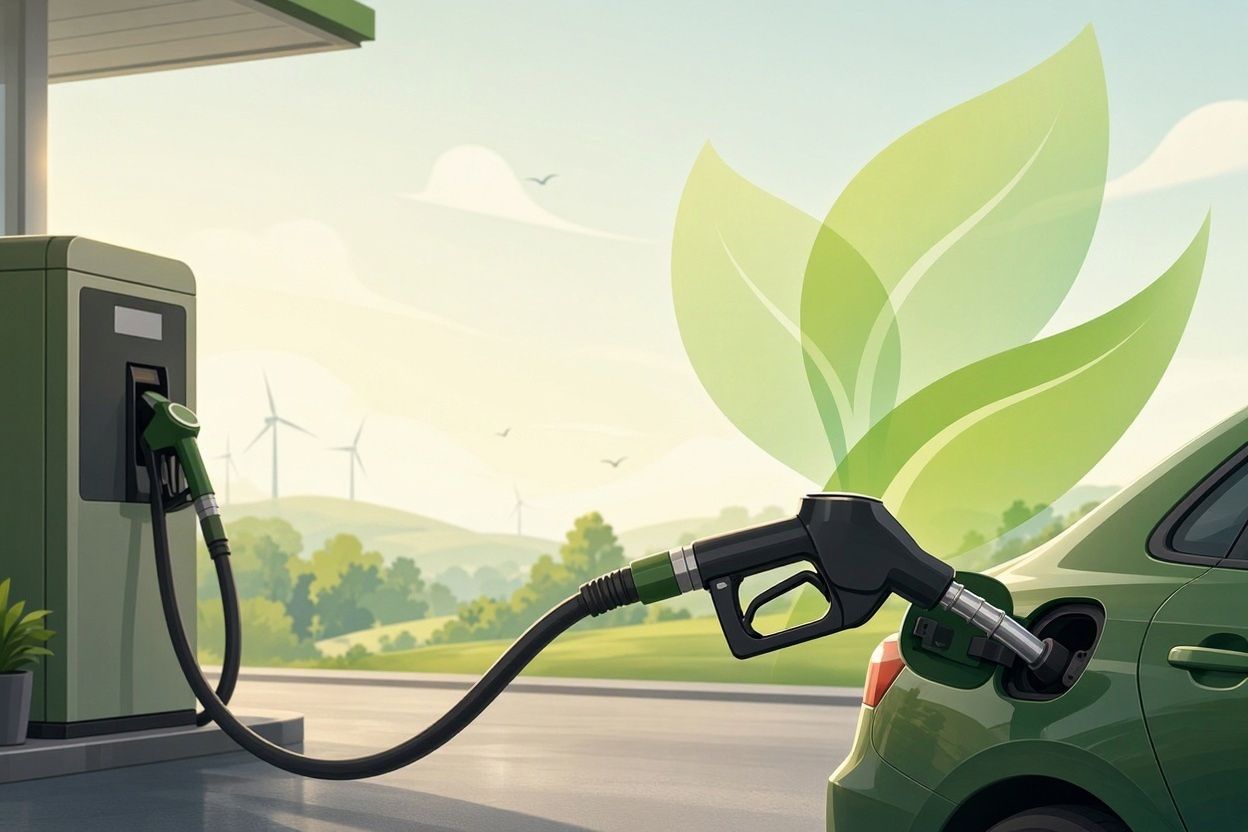
Editorial illustration: a petrol pump with a fuel nozzle and a green ethanol leaf motif, no text, no logos, no real person.
Key Takeaways
The Petroleum Ministry said 893 E20 samples from 27 states and UTs were all within the prescribed 19-21% ethanol range under IS 17021.
Karnataka claimed its October 2026 exercise found 26-31% ethanol at some outlets, with the highest figure at 31.2%.
In Karnataka, the Centre said all 56 samples tested were between 19% and 20%, averaging 19.30%.
The dispute turns on sampling and testing method: the prescribed procedure requires six one-litre samples and testing at a specified laboratory.
The ministry has called for a joint verification exercise to settle the conflicting figures.
Is E20 petrol safe for your vehicle? That is the question thousands of Indian motorists have been asking since a row broke out between the Karnataka government and the Centre over how much ethanol is actually in the petrol sold at pumps. On 7 November 2026, the Ministry of Petroleum and Natural Gas answered with test results: 893 samples of E20 petrol collected from 27 states and Union Territories were all found within the prescribed ethanol range of 19 to 21 per cent. The ministry's statement directly challenged Karnataka's claim, made a day earlier, that petrol at some outlets in the state contained between 26 and 31 per cent ethanol. Until both sides test the same fuel by the same method, the two figures stand as competing claims — and this article explains what each side says, how the tests work, and what it means for your vehicle.
What Happened: The Karnataka Claim and the Centre's Reply
The dispute began with a press release from Karnataka's Department of Food, Civil Supplies, Consumer Affairs and Legal Metrology on 6 November 2026. The state government said its October 2026 exercise had found ethanol content of 26 to 31 per cent in petrol at certain retail outlets, with the highest reported figure at 31.2 per cent. According to reports of the state's findings, 11 of 14 samples tested were above the 20 per cent mark. Karnataka said it would keep testing fuel and publish the results.
A day later, on 7 November, the Ministry of Petroleum and Natural Gas issued a detailed clarification. The three public-sector oil marketing companies — Indian Oil Corporation (IOCL), Bharat Petroleum (BPCL) and Hindustan Petroleum (HPCL) — said the claims were not supported by tests conducted under the prescribed statutory and technical procedures, and that the certificates cited by the state did not contain the complete technical details needed to validate the ethanol figures. The ministry said E20 petrol supplied by the three companies across the country, including Karnataka, conforms to IS 17021, the Bureau of Indian Standards specification for ethanol-blended motor gasoline.
How the 893 Samples Were Tested
The Centre's figures come from a nationwide quality-monitoring exercise run by the oil marketing companies and the Centre for High Technology (CHT), the petroleum ministry's technical body, under their Quality Coordination Cell. As part of that exercise, 893 E20 samples drawn from depots and retail outlets across 27 states and Union Territories were tested for ethanol content under IS 17021, Annex C, at refinery and oil company quality-control laboratories. The samples came from all three companies: 330 from IOCL, 280 from BPCL and 283 from HPCL. According to the ministry, all 893 samples were within the prescribed 19 to 21 per cent ethanol range.
Karnataka received special attention in the statement. All 56 samples tested in the state, covering different locations and all three oil companies, were reported to be within specification, recording ethanol content between 19 and 20 per cent, with an average of 19.30 per cent. The ministry also pointed out that the ethanol supply year 2025-26, which ended on 31 October 2026, saw state refiners blend 1,134 crore litres of ethanol — a measure of how large the blending programme has become.
What Is E20 Petrol?
E20 is petrol blended with a nominal 20 per cent ethanol by volume. Ethanol is an alcohol made mainly from sugarcane, maize and other feedstocks, and blending it into petrol is a central part of India's energy policy: it cuts crude oil imports, reduces carbon monoxide and hydrocarbon emissions, and gives farmers and distilleries a large, assured market. India advanced its 20 per cent blending target from 2030 to 2025-26, and E20 is now the standard petrol sold across the country.
The "20" in E20 is a nominal figure, which is why the standard allows a range. Under IS 17021, E20 must contain between 19 and 21 per cent ethanol. That tolerance exists because blending happens at scale at refineries and depots, and small variations are expected. A figure above 21 per cent would mean the fuel is not E20 as specified — which is exactly what Karnataka alleges and what the Centre denies.
Why the Two Sides Disagree: Sampling and Testing
The heart of the row is not just the numbers but the method. The ministry said Karnataka's October 2026 exercise bypassed the statutory sampling procedure set out in the Motor Spirit and High Speed Diesel (Regulation of Supply, Distribution and Prevention of Malpractices) Order, 2005, issued under the Essential Commodities Act, 1955, read with the Marketing Discipline Guidelines 2024. The prescribed procedure requires six one-litre samples to be drawn, with two handed to the dealer against acknowledgement, two retained by the oil company or department, and two sent to a laboratory specified under Schedule III of the Control Order or notified in the Official Gazette.
According to the ministry, samples drawn during the September 2026 exercise were routed through the State Level Coordinator to designated oil company laboratories and tested for the quality parameters requested under the guidelines. The October exercise, by contrast, reportedly involved samples drawn without the participation of oil company representatives, and the findings rely on certificates from a third-party laboratory rather than testing at a laboratory specified under the Control Order. The oil companies have therefore asked for a transparent, joint verification exercise — both sides testing the same fuel by the same method — to settle the gap between the two sets of findings.
The testing method itself is also specified. Under IS 17021:2018, as amended by Amendment No. 3 in August 2025, ethanol content in E20 fuel must be determined through prescribed methods: Fourier Transform Infrared Spectroscopy (FTIR) under ASTM D5845, water extraction under Annex C, or gas chromatography under ASTM D4815/D6839. This matters because different methods, different sample handling and different laboratories can produce different numbers from the same fuel.
What This Means for Your Vehicle
For most motorists, the practical question is simpler than the dispute: is the petrol in my tank safe for my car or bike? The government and the oil companies maintain that E20 sold at pumps meets the prescribed standard and is safe for vehicles. Ethanol blending at 20 per cent is the national standard, and vehicles manufactured in recent years are built with materials designed for it.
Owners of older vehicles have raised a separate concern that runs alongside this dispute: whether E20 affects mileage or engine parts in vehicles designed before ethanol blending became standard. Some owners have reported lower fuel efficiency, and the debate over older vehicles continues. But it is important to keep the two issues apart. The Karnataka row is about whether specific pumps sold fuel above the 21 per cent limit; it is not a finding that E20 as a fuel is unsafe. Until joint verification is completed and published, neither the 31.2 per cent figure nor the 19.30 per cent average should be treated as the final word on what was in any particular tank.
If you are concerned, the practical steps are straightforward. Buy fuel from authorised outlets, keep your service schedule, and if your vehicle is old, check your manufacturer's guidance on ethanol-blended fuel. Any suspected case of adulterated fuel can be reported to the oil company or the state food and civil supplies department, which can trigger a sample test under the prescribed procedure.
What Happens Next
The ministry has called for a joint verification exercise that both sides can accept, and Karnataka has said it will continue testing and publishing results. What matters now is whether the two sides test the same samples, in the same way, in laboratories both accept — because only that can settle a dispute where the two sets of figures are so far apart. Until then, the 893-sample exercise and the Karnataka findings remain what they are: two different accounts of the same fuel, produced by two different methods, awaiting one agreed test.
Conclusion
The E20 petrol row shows how a technical question — how much ethanol is in a litre of petrol — can become a public dispute when the testing method itself is contested. The Centre's nationwide exercise found all 893 samples within the 19 to 21 per cent range, including all 56 samples in Karnataka at an average of 19.30 per cent. Karnataka's October exercise found up to 31.2 per cent at some outlets. The gap between those figures is large, and the resolution now depends on joint verification under the prescribed procedure. For motorists, the message is to rely on the agreed standard and the authorised testing process — not on either side's headline number alone.
What did the government's 893-sample E20 petrol test find?
On 7 November 2026, the Ministry of Petroleum and Natural Gas said 893 E20 petrol samples collected from 27 states and Union Territories were all within the prescribed 19 to 21 per cent ethanol range under BIS standard IS 17021. The samples came from IOCL (330), BPCL (280) and HPCL (283) depots and retail outlets, tested at refinery and oil company quality-control laboratories. In Karnataka, all 56 samples were between 19 and 20 per cent, averaging 19.30 per cent.
What did Karnataka claim about ethanol in petrol?
In a press release on 6 November 2026, the Karnataka government said its October 2026 exercise found ethanol content of 26 to 31 per cent in petrol at certain retail outlets, with the highest reported figure at 31.2 per cent. The Centre rejected the claim, saying the sampling and testing did not follow the prescribed statutory procedure and the certificates lacked the technical details needed to validate the figures.
What is E20 petrol and how much ethanol should it contain?
E20 is petrol blended with a nominal 20 per cent ethanol by volume. Under BIS standard IS 17021, E20 must contain between 19 and 21 per cent ethanol. Ethanol is made mainly from sugarcane and other feedstocks; blending it into petrol cuts crude oil imports and emissions and supports farmers and distilleries.
Is E20 petrol safe for your vehicle?
The government and oil companies maintain that E20 sold at pumps meets the prescribed standard and is safe for vehicles. Owners of older vehicles have separately raised concerns about mileage and engine parts, but that debate is different from this dispute, which is about whether specific pumps sold fuel above the 21 per cent limit. The ministry has called for a joint verification exercise to settle the conflicting figures.