Police Recruitment Exams Explained: Constable and Sub-Inspector Selection, Physical Tests and Preparation
Key Takeaways
- Constables do patrol, traffic and guard duties; sub-inspectors investigate and lead teams.
- Selection usually runs from written test to physical tests, documents and medical examination.
- Physical fitness must be built early, with measured running practice and pacing.
- Written preparation works best with syllabus-based study and reviewed mock tests.
- Document mismatches and fake agents are common, avoidable causes of failure.
Police Recruitment Exams Explained: Constable and Sub-Inspector Selection, Physical Tests and Preparation
When people say they want to join the police, they usually mean very different jobs. A constable patrols streets, manages traffic, guards important places and is often the first face of the police that a citizen meets. A sub-inspector investigates cases, leads a small team, records statements, prepares case papers and supervises constables on duty. Above them are inspectors and officers who lead police stations and districts. This guide focuses on the two entry levels most aspirants target, constable and sub-inspector, and explains how selection generally works in India, what the physical tests demand, and how to prepare without falling for rumours.
Constable and Sub-Inspector: Two Different Jobs
A constable's work is practical, physical and public-facing. Constables work in shifts, stand on duty for long hours, respond to emergencies, escort accused persons, maintain order at events and help citizens at police stations and help desks. The job requires stamina, alertness, basic literacy and numeracy, local language skills and the ability to stay calm with the public. A sub-inspector's work adds responsibility: understanding criminal law and procedure, writing clear reports, collecting evidence properly, questioning witnesses and accused persons within the law, and managing a team. The sub-inspector therefore needs stronger academic preparation, especially in reasoning, law-related general knowledge and written expression, in addition to physical fitness.
The Selection Stages, in Order
Most police recruitments follow a recognisable sequence, even when the exact order varies slightly. First comes the online application, where candidates must fill personal details, upload a photograph and signature in the prescribed format, and pay the fee if applicable. Mistakes here are surprisingly common: a wrong category, a blurred photograph or a misspelt name can create problems at document verification later. Read the form slowly, keep a copy of the submitted form, and check that your name matches your school certificate and identity proof.
Next comes a written or computer-based examination, which shortlists candidates for the physical stages. Those who qualify then face physical measurement and physical efficiency tests. Measurement usually covers height and chest where applicable, with relaxations for certain categories and regions as specified in the notification. The efficiency test typically includes running, long jump or high jump, and sometimes shot put or other events, with separate standards for men and women. Candidates who clear the physical stages then go through document verification and a medical examination, and a final merit list is prepared, usually combining written marks and physical performance as per the notified formula. Some forces also conduct a trade or skill test for specialist constable roles such as drivers, wireless operators or clerks.
Physical Tests: What They Really Demand
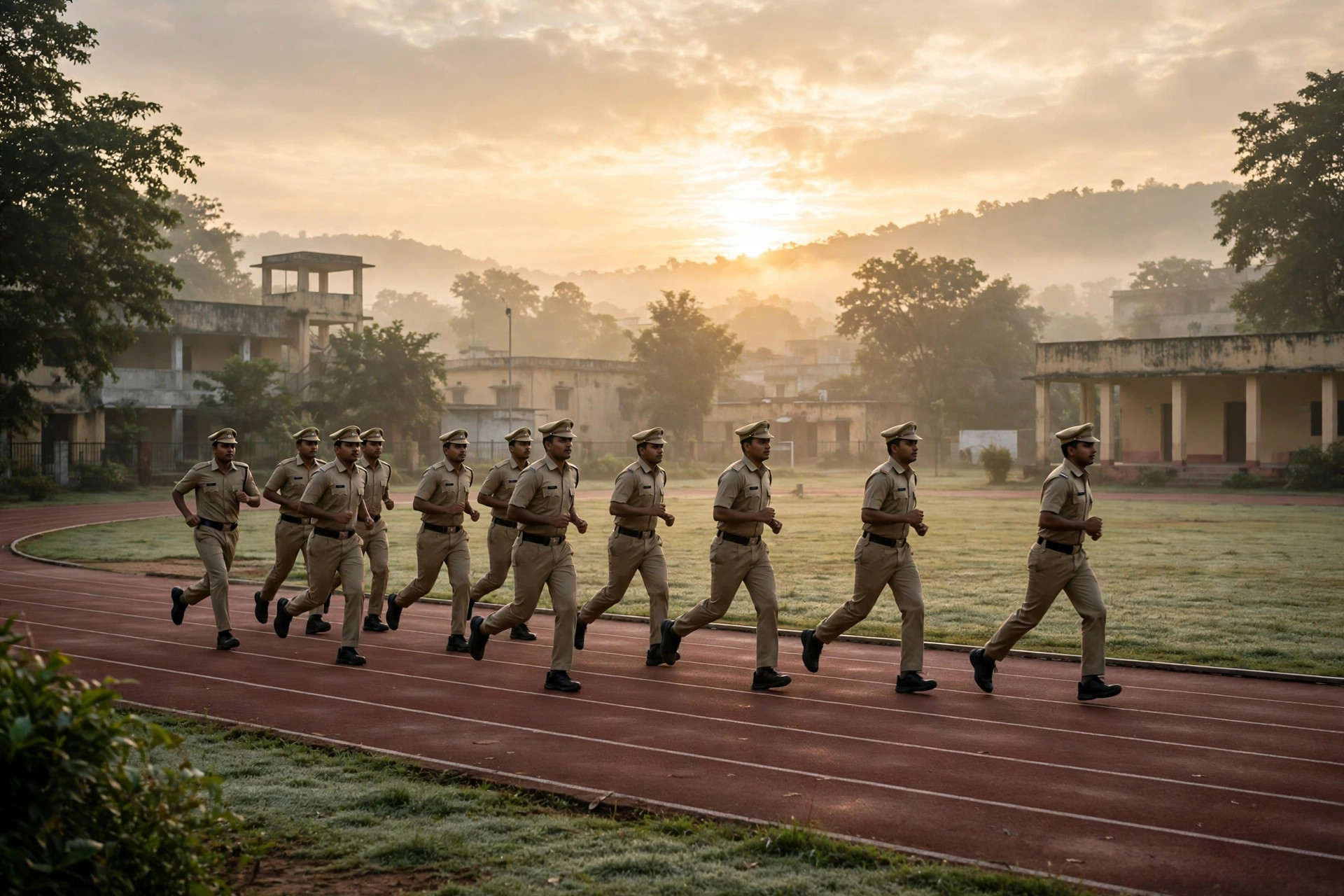
Physical tests are where many academically strong candidates fail, because they treat fitness as something to start after the written examination. In reality, running standards in police recruitment are demanding for a person who has not trained regularly, and they cannot be achieved in a few weeks of crash training without risking injury. A sensible approach is to build a base early: regular running several times a week, gradually increasing distance and speed, along with basic strength work for legs and core, flexibility exercises and proper rest. Practise on a measured track when possible, so that you know your actual timing rather than guessing it from a casual run.
Technique matters as much as stamina. For jumps, practise the take-off and landing properly instead of merely trying harder each time, and for running, learn pacing so that you do not sprint the first half and collapse in the second. Footwear, hydration and warm-up also matter on test day, and candidates should avoid trying a new diet, new shoes or an unfamiliar energy drink on the morning of the test. Women candidates should train to the notified standard for their category, not to a generic fitness video, and should practise in suitable clothing and footwear well before the test. If you have an old injury, get it assessed early and train around medical advice, because hiding an injury rarely survives a medical examination and can worsen the damage.
Written Preparation That Actually Works
Written preparation for police examinations rewards consistency more than long, irregular bursts of study. Start with the notified syllabus and previous years' question patterns where officially available, and divide your week between general knowledge, reasoning, mathematics and language. For general knowledge, focus on Indian history, geography, polity, economy, science in everyday life and current affairs from reliable newspapers, rather than memorising lists of facts without understanding. For reasoning, practise daily in short sets and review your mistakes, because speed in this section comes from pattern recognition built over time. For mathematics, revise school-level arithmetic, percentages, ratios, averages and basic algebra until you can solve questions accurately under time pressure.
Mock tests are useful only if you analyse them honestly. After each mock, list the questions you got wrong, the questions you guessed, and the questions that took too long, and then revise those topics before the next mock. Many aspirants waste mocks by taking one after another without review, which only repeats the same errors faster. For sub-inspector aspirants, add a habit of reading about important laws and landmark developments in simple language, and practise writing short, clear paragraphs, because a police officer's written work must be precise and legally careful. Keep a small notebook of current affairs and legal terms, and revise it weekly instead of cramming at the end.
Documents, Medical Standards and Common Pitfalls
Document verification is a quiet stage that eliminates candidates who were otherwise successful, so it deserves the same care as the examination. Keep your education certificates, birth proof, domicile or residence proof, category certificate where applicable, and identity proof in one folder, and check that names, dates and spellings match across documents. If there is a mismatch, such as a different spelling of your father's name on two certificates, get it corrected through the proper authority well in advance, because explanations on the day of verification may not be accepted. Carry originals as instructed, along with the copies and photographs specified in the call letter.
Medical examination generally checks eyesight, hearing, general fitness and the absence of conditions that would prevent police duty, with standards again set by the notification. Candidates should avoid last-minute attempts to game a medical test and should disclose relevant medical history honestly. Beyond documents and medicals, the most common pitfalls are trusting fake notifications, paying agents who promise selection, and sharing admit card details or one-time passwords with strangers. Police recruitment is a government process with a published procedure; no agent can insert a name into a merit list, and any such offer is a fraud. Report it through official channels and move on.
Conclusion
A police career begins long before the examination hall, with the decision to build fitness, academic skill and character together. Choose your target post honestly, prepare for its specific syllabus and physical standard, and follow the stages in order: careful application, written preparation with reviewed mocks, steady physical training, and ready documents. Check the official notification of your chosen force for every current rule, and treat every other source as secondary. If you fail at one stage, identify it precisely, whether it was running time, reasoning speed or a document error, and fix that stage before the next attempt. The police need officers who are fit, fair, literate in the law and calm under pressure, and those qualities are built day by day, not in the final week before a test.