PM Kaushal Vikas Yojana Explained: Free Skill Training, Certificates and How Youth Can Enrol
Key Takeaways
- PMKVY offers short-term training in practical trades, not years of study.
- Recognition of Prior Learning can certify skills learned informally on the job.
- Assessment is separate from training, which is what makes the certificate credible.
- PMKVY is not a job guarantee, despite what some agents may claim.
- Choosing a trade with local demand matters more than choosing a fashionable one.
PM Kaushal Vikas Yojana Explained: Free Skill Training, Certificates and How Youth Can Enrol
Many young people in India finish school or college and still struggle to find work, not because they lack effort, but because employers want a specific, demonstrable skill. A degree may show general education, but a job in healthcare support, retail, construction, beauty services, electronics repair, logistics or hospitality usually requires hands-on training, safety awareness and workplace behaviour. Pradhan Mantri Kaushal Vikas Yojana, usually shortened to PMKVY, was created to bridge that gap. It offers short-term skill training to youth, with a focus on people who have dropped out of formal education, are unemployed, or want to move from informal work into a recognised trade.
This guide explains what PMKVY is, who can take part, what kinds of courses are available, how training and certification work, and how a young person can enrol without falling for agents who charge money for a supposedly free process. Where course lists, training centres and rules can change over time, always check the official PMKVY or Skill India portal and the current scheme guidelines before applying.
What PMKVY Actually Does
PMKVY is a flagship skill development scheme run under the Skill India Mission. Its central idea is simple: identify skills that employers actually need, train candidates in those skills through approved training partners, and then assess them independently so that the certificate means something to an employer.
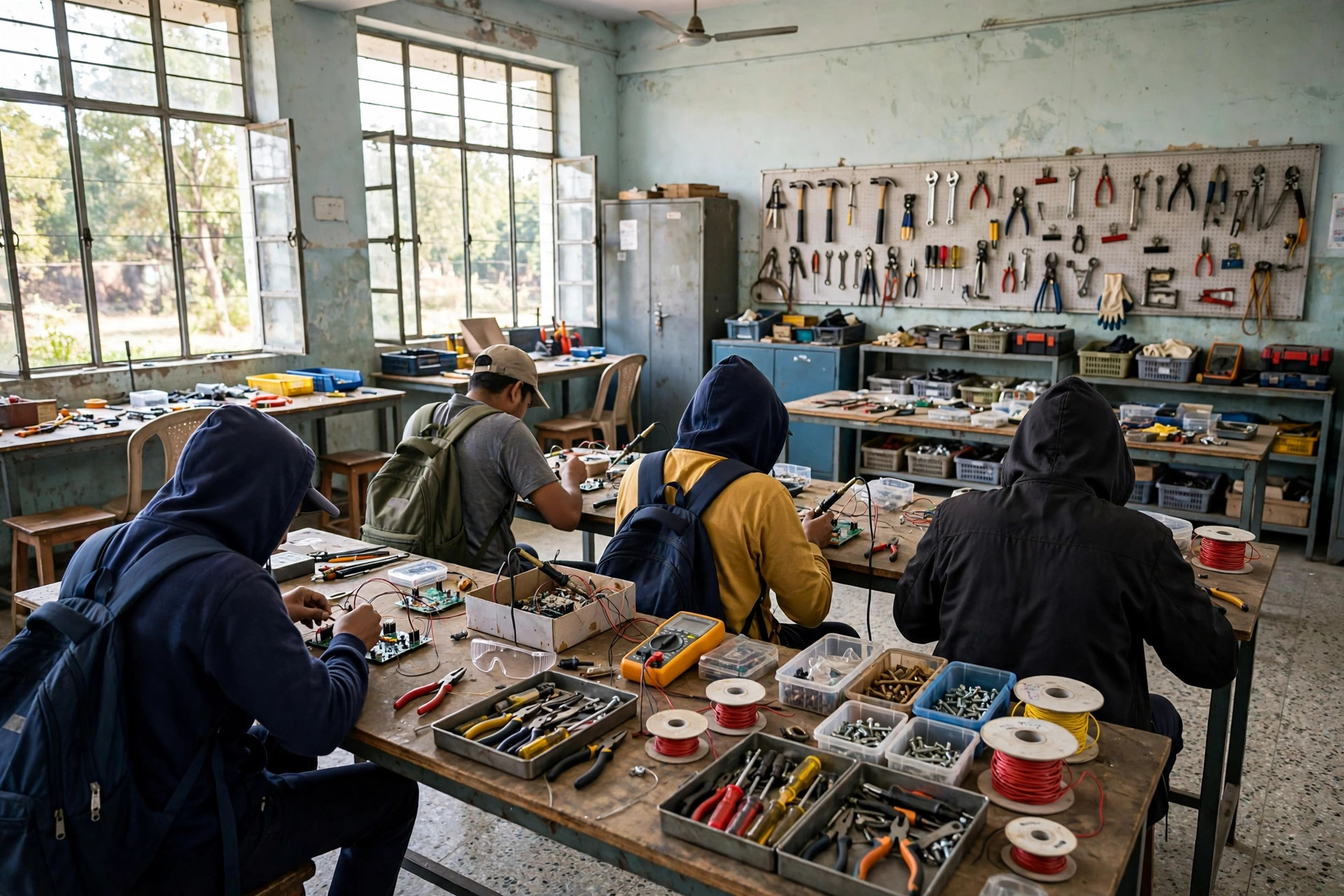
Training is usually short-term, lasting weeks rather than years. That matters for a young person who cannot afford to spend several more years in education, or for a worker who needs to upgrade skills quickly. A course might cover, for example, the basics of customer service and billing for a retail assistant, infection control and patient handling for a general duty assistant in healthcare, wiring and safety for an electrician's helper, or food handling and hygiene for a hospitality role. The exact trades on offer vary by district and by demand, so two neighbouring districts may not offer exactly the same list.
A second important part of PMKVY is Recognition of Prior Learning, often called RPL. Many workers already know a trade — they may have learned tailoring, masonry, plumbing or driving from family or on the job — but they have no certificate to prove it. RPL assesses what they already know against a national standard and, where they meet it, certifies that skill. For an experienced worker, this can be more valuable than sitting through a basic course they do not need.
Who Can Enrol, and Who Benefits Most
PMKVY is aimed primarily at Indian youth, particularly school and college dropouts and unemployed young people seeking entry-level work. Exact eligibility conditions, age limits and required documents can vary by the version of the scheme currently running and by the course, so the official portal is the final authority. In general, a candidate needs basic identity documents, and for some courses a minimum education level may apply because the work itself requires reading, counting or basic English.
The scheme is especially useful in a few common situations. A student who left school after Class 10 and is unsure what to do next can use a short course to test a trade and gain a certificate. A graduate who keeps getting rejected for lack of experience can add a practical skill and a recognised credential to a CV. A young woman who wants to work close to home can look for courses in trades with local demand, such as beauty and wellness, healthcare support or tailoring. A migrant worker returning home can use RPL to formalise years of informal experience.
That said, PMKVY is not a job guarantee. No genuine training centre should promise a government job, a fixed salary or placement abroad in exchange for enrolment. Placement support may be offered by some training partners, but the honest value of the scheme is the skill and the certificate, plus the confidence and workplace readiness that come with structured training.
How Training and Assessment Work
Once a candidate chooses a trade and a training centre, the process usually follows a clear sequence. First, the candidate registers, either online or at the centre, and provides identity and education details. The centre verifies the details and confirms the batch, timing and duration. Training then combines theory with practical work: classroom learning, demonstrations, practice on equipment, and often soft skills such as communication, workplace safety, time management and basic digital literacy.
Assessment is a separate step. In a well-run system, the people who train you are not the only people who judge you. An independent assessor checks whether you can actually perform the tasks to the required standard, through practical tests, questions or a demonstration. Only candidates who pass receive certification. That separation matters, because it is what makes an employer trust the certificate.
How to Enrol, Step by Step
Start on the official Skill India or PMKVY portal, not on a random advertisement or a WhatsApp forward. Search for training centres in your district and look at the trades available, the centre address and the batch timings. If you can, visit the centre in person before enrolling. A genuine centre will have classrooms or workshops, trainers, equipment for the trade and a clear notice board with course details. Ask simple, direct questions: How long is the course? What will I learn each week? Who assesses me? What certificate will I get, and who issues it? Is there any fee, and if so, for what exactly?
Be careful with middlemen. If someone asks for a large payment to secure a PMKVY seat, a certificate without training, or a guaranteed job, walk away and report the matter through the official portal's grievance channel if one is available. Free or subsidised training does not mean there are never any incidental costs, but those should be explained openly by the centre, not demanded in cash by an agent.
After enrolment, treat attendance seriously. Short courses move fast, and missing a week can mean missing a whole module. Practise the practical tasks repeatedly, ask the trainer to correct your technique, and use any mock assessment offered. If you are preparing for RPL, gather evidence of your work beforehand: photographs of completed work where appropriate, references from employers or customers, and a clear account of how long you have done the trade and what tasks you handle independently.
Choosing the Right Trade for Your Area
A common mistake is choosing a fashionable trade with little local demand. Before enrolling, spend a day observing your own town or city. Which businesses are hiring? Are new hospitals, warehouses, hotels, retail stores or workshops opening nearby? Talk to two or three local employers, shop owners or contractors and ask what skills they struggle to find. A trade that matches local demand gives you a much better chance of earning soon after training.
Conclusion
PM Kaushal Vikas Yojana works best when it is understood for what it is: a route to a practical skill and a recognised certificate, not a shortcut to a job. Young people who choose a trade with real local demand, attend training seriously, pass an independent assessment and keep their certificate safe give themselves a genuine advantage in the job market. Check the official portal for current courses, centres and eligibility, visit the centre before enrolling, and avoid anyone who promises a certificate or a job for money. Done honestly, a short skill course can be the first concrete step from uncertainty about work to a trade you can actually earn from.