ISRO NVS-03 Launch on 30 October 2026 Explained: NavIC's New Satellite, Indigenous Atomic Clock, and Why India Needs It
Key Takeaways
- ISRO will launch NVS-03 on 30 October 2026 at 11:51 pm from Sriharikota aboard the GSLV-F18 mission.
- NVS-03 is the third satellite in the second-generation NavIC series, planned alongside NVS-01, NVS-02, NVS-04 and NVS-05 to ensure continuity of navigation services.
- It carries an indigenous atomic clock, addressing the imported-clock failures that weakened earlier NavIC satellites.
- It adds the L1 civilian band alongside the existing L5 and S bands, widening NavIC's services for consumer devices across India and up to 1,500 km beyond its borders.
- NavIC had fallen to only three satellites providing positioning, navigation and timing services, below the four needed for independent positioning, after clock failures, ageing spacecraft and the NVS-02 propulsion problem in January 2025.
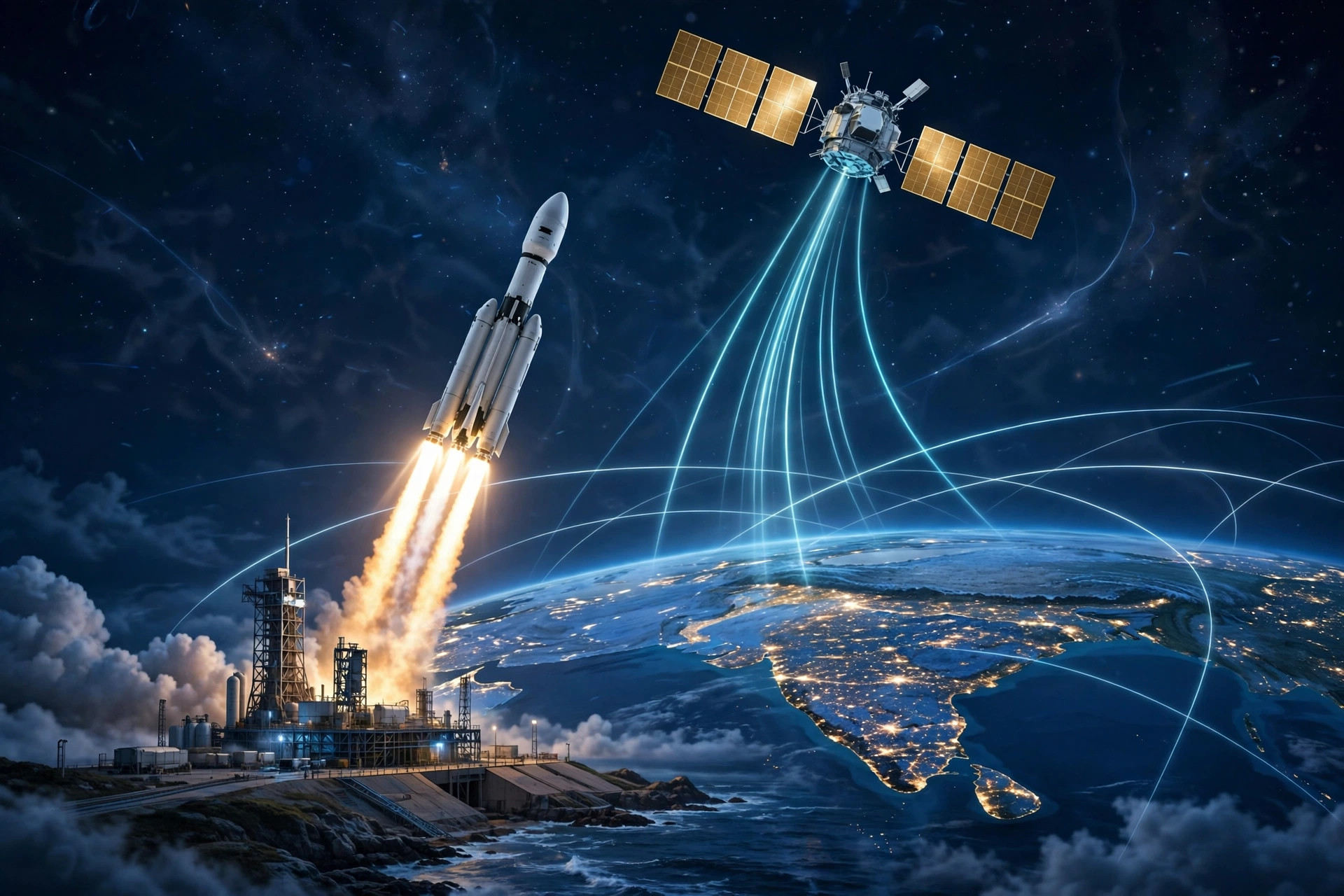
India is about to take an important step towards fixing its own satellite navigation system. The Indian Space Research Organisation (ISRO) will launch its next-generation navigation satellite, NVS-03, on Friday, 30 October 2026, at 11:51 pm from the Satish Dhawan Space Centre at Sriharikota in Andhra Pradesh. The satellite will fly aboard a Geosynchronous Satellite Launch Vehicle (GSLV), in the mission designated GSLV-F18.
This is not just another launch. NVS-03 is the third satellite in the second generation of NavIC, India's homegrown alternative to the United States' GPS. It carries an indigenous atomic clock, adds a new civilian signal band, and is meant to restore a capability India has been struggling to maintain: the ability to fix its own position independently, without depending on a foreign system. This explainer sets out what is launching, what the satellite carries, why NavIC needed help, and what happens after liftoff.
What is launching, and when
NVS-03 is the third satellite in the next-generation navigation series envisaged to provide continuity of navigation services for the IRNSS, the Indian Regional Navigation Satellite System. ISRO has said five second-generation NavIC satellites — NVS-01, NVS-02, NVS-03, NVS-04 and NVS-05 — are planned to augment the NavIC base-layer constellation with enhanced features and ensure continuity of service.
The launch is scheduled for 30 October 2026 at 11:51 pm from Sriharikota, aboard the GSLV-F18 mission. The satellite had been moved to Sriharikota months in advance, and the launch campaign began in September 2026, according to reports of the mission's progress. ISRO announced the date on Wednesday, 28 October, after clearing the mission for a launch attempt at the end of October.
NavIC — Navigation with Indian Constellation — is designed to provide accurate position, velocity and timing services to users in India and in a region extending about 1,500 km beyond the Indian landmass. That is its primary service area. It offers two types of service: a Standard Positioning Service open to civilian users, and a Restricted Service for authorised users, including strategic users such as the armed forces.
What NVS-03 carries: an indigenous atomic clock and a new signal band
Two features of NVS-03 matter most, and both are about independence and usefulness.
First, the satellite carries an indigenous atomic clock, alongside procured atomic clocks. An atomic clock is the heart of any navigation satellite: the satellite broadcasts the exact time its signal was sent, and a receiver on the ground works out its position by comparing the times at which signals arrive from several satellites. If the clock drifts, the position is wrong. Earlier NavIC satellites suffered failures in imported rubidium atomic clocks, which weakened the constellation. Flying a clock developed in India — by the Space Applications Centre in Ahmedabad — reduces dependence on imported components and addresses one of the reliability problems that dogged the first generation.
The indigenous clock is not new to this mission: NVS-01, the first second-generation satellite, launched aboard GSLV-F12 on 29 May 2023, was the first to fly an indigenous atomic clock. NVS-03 continues that approach.
Second, NVS-03 adds the L1 band in addition to the existing L5 and S bands. The L1 signal is the civilian band used widely by consumer devices, and its inclusion is meant to widen NavIC's services, including compatibility with ordinary electronic devices such as smartphones. In practical terms, that is what could eventually put NavIC into more people's pockets, rather than leaving it as a system used mainly by specialised receivers. The satellite's signals, taken together, provide positioning information across India and up to 1,500 km beyond its borders.
Background: why NavIC needed fixing
NavIC was conceived after the 1999 Kargil conflict, when India recognised the risk of depending on a foreign-controlled navigation system in a crisis. The original plan was a seven-satellite regional system. The first-generation IRNSS satellites were launched from 2013 onwards, and the system was declared operational in the years that followed.
But the constellation ran into trouble. Atomic clock failures affected several first-generation satellites, one launch failed, and ageing spacecraft gradually reduced the number of satellites actually providing positioning, navigation and timing services. The problems continued into the second generation: NVS-02, launched in January 2025, reached geosynchronous transfer orbit but could not be manoeuvred into its intended orbit after a technical problem with its propulsion system.
The result, as the government has previously stated and as recent reporting has noted, was that only three satellites were providing positioning, navigation and timing services through the system. That matters because a receiver needs signals from at least four satellites to work out a three-dimensional position on its own. With fewer than four fully operational satellites, NavIC could not reliably provide independent positioning, and users had to fall back on other systems.
That is the gap NVS-03 is meant to help close. Its successful deployment, once commissioned, would take the constellation closer to the minimum needed for independent positioning, though NVS-04 and NVS-05, still under development, are also part of the plan to restore the constellation properly.
Why this launch matters beyond one satellite
For ordinary users, the stakes are everyday ones: more accurate location services for transport, mapping, agriculture, disaster management and emergency response, delivered by a system India controls. Navigation satellites also provide precise timing, which matters for telecom networks, power grids and financial systems, all of which rely on synchronised clocks even when their users never think about satellites.
For India strategically, the stakes are larger. A country that can navigate and time its own operations without asking permission from another country's system has a freedom that matters most exactly when it is under strain — in a conflict, a disaster, or a diplomatic crisis. That was the original lesson of Kargil, and it remains the reason NavIC exists.
The launch also comes at a moment when ISRO has been proceeding cautiously. After mixed fortunes with its missions in 2026, the agency has taken a careful approach to launches, and the successful GSLV flight that carried the EOS-05 earth-observation satellite in September 2026 helped clear the path for NVS-03. A successful NVS-03 mission would therefore also be a confidence-building result for the GSLV Mk II, the rocket carrying it.
What happens after liftoff
A successful launch is only the first step, and readers should not expect NavIC services to change overnight. After liftoff, the satellite must be placed into its intended orbit, its systems tested, and its signals validated before it is commissioned into service. As reporting on the mission has noted, orbital deployment, testing and commissioning will all be required before NVS-03 can be counted as restoring NavIC's independent positioning capability.
That sequence is normal for navigation satellites: the satellite first reaches a transfer orbit, is then manoeuvred into its final geosynchronous orbit, and only then begins the checks that confirm its clocks, signals and payloads are working as designed. If any of those steps throws up a problem — as happened with NVS-02's propulsion system — the timeline can slip. The honest measure of success, then, is not just the launch on 30 October, but the announcement, weeks later, that NVS-03 is operational and contributing to NavIC services.
Conclusion
The NVS-03 launch on 30 October 2026 is a repair mission as much as a new mission. It carries an indigenous atomic clock to fix a known weakness, adds the L1 civilian band to widen NavIC's usefulness, and is aimed at restoring a constellation that had fallen below the number of satellites needed for independent positioning. If it succeeds and is commissioned, India will be closer to a navigation system it owns, controls and can rely on — for everyday users, for the economy, and for strategic needs.
The launch itself, late on Friday night from Sriharikota, is worth watching. But the real test will come after it: whether NVS-03 settles into orbit, passes its tests, and takes its place in a NavIC constellation that can once again find its own position.