INDIA Bloc's 'Public Impeachment' of CEC Gyanesh Kumar Explained: What Happens Today, Why It Is Symbolic, and How a CEC Can Actually Be Removed
Key Takeaways
- The INDIA bloc's 'public impeachment' of CEC Gyanesh Kumar on 30 October 2026 is a symbolic protest at Mallikarjun Kharge's residence, not a proceeding of Parliament, and it cannot remove the CEC.
- Former Lok Sabha Speaker Meira Kumar is to preside, Kharge will move the motion, Rahul Gandhi will give the concluding remarks, and the motion will be put to a vote, with invites saying 3.30 pm onwards.
- The opposition alleges SIR irregularities under its 'vote chori' campaign and demands the CEC's resignation; the Election Commission told the Supreme Court its three SIR orders were approved unanimously and Form 6 was unchanged.
- A CEC can actually be removed only like a Supreme Court judge, for proved misbehaviour or incapacity, by a special majority in both Houses of Parliament followed by a Presidential order; no CEC has ever been removed this way.
- Voters have a practical route regardless of the politics: SIR claims and objections run until 25 November in Delhi, with final rolls due on 30 November in five states and 22 December in Delhi, and the court hears the SIR dispute next on 17 November.
On Friday afternoon, 30 October 2026, the opposition INDIA bloc will stage an unusual piece of political theatre in New Delhi: a "public impeachment" of Chief Election Commissioner Gyanesh Kumar. It will not take place in Parliament, it will not be conducted by MPs acting in their constitutional capacity, and it cannot remove the Chief Election Commissioner from office. It is, by the organisers' own framing and by every news report of the plan, a symbolic protest.
That distinction is the key to understanding the event. The proceedings are designed to look like a parliamentary debate — a chair, a motion, speakers, a vote — but they carry no legal force. Their purpose is political: to keep the opposition's campaign against the Election Commission's Special Intensive Revision (SIR) of electoral rolls in the headlines, two days before a large opposition rally in Delhi on 1 November, and to put public pressure on a constitutional office-holder whom the opposition wants to resign.
What is happening today, and where
The event is scheduled for Friday afternoon at the official residence of Congress president Mallikarjun Kharge, 10, Rajaji Marg, New Delhi. Invites sent to INDIA bloc MPs, titled "The Public Impeachment of Gyanesh Kumar", say the proceedings will begin at 3.30 pm onwards, although at least one report has described a three-hour sitting starting at 4 pm. Readers should therefore treat the afternoon timing as the plan, with the exact start time varying slightly between reports.
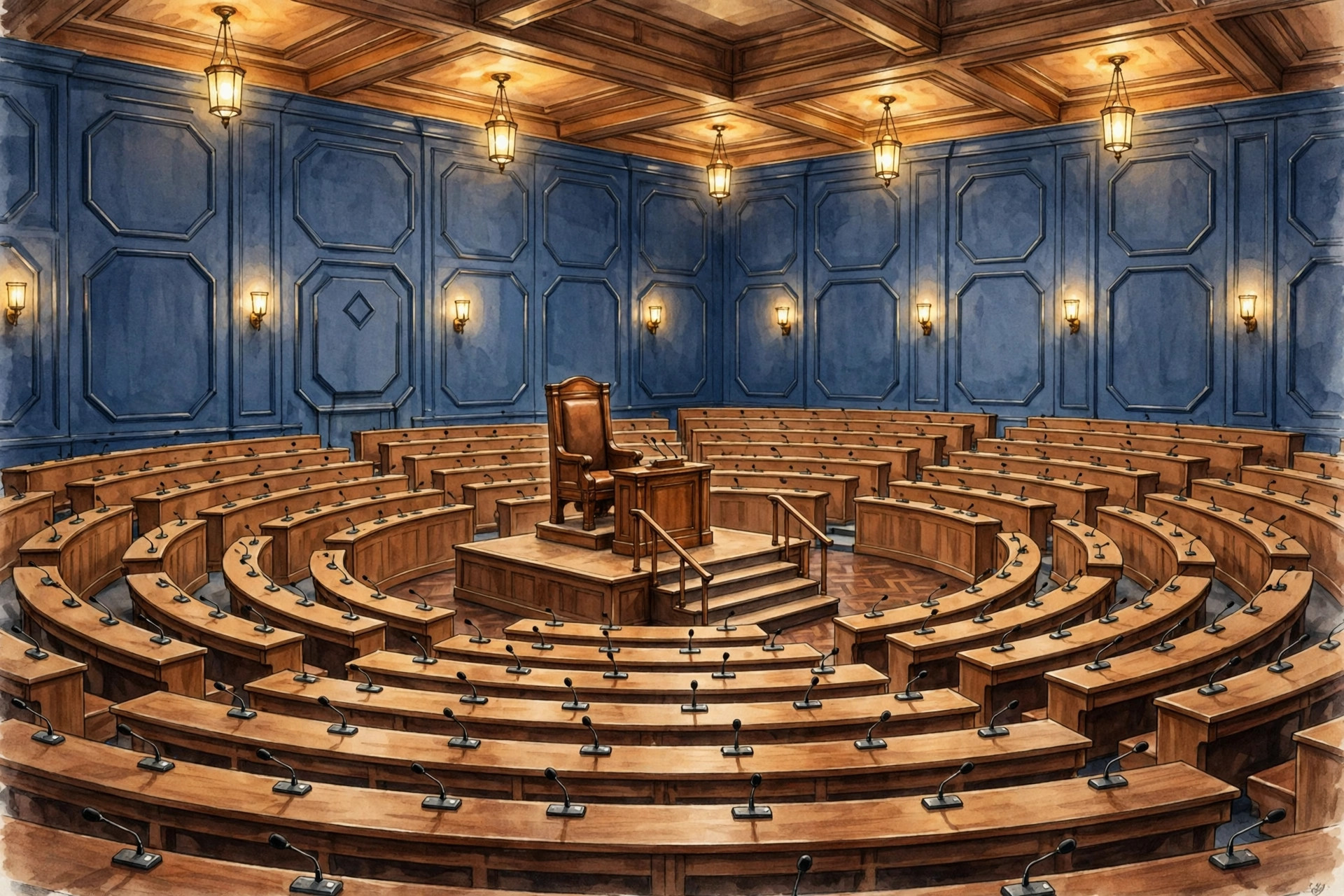
The format, as finalised at a meeting of INDIA bloc leaders at Kharge's residence on Thursday, 29 October, follows a parliamentary pattern. Former Lok Sabha Speaker Meira Kumar will preside over the proceedings. Kharge, who is also the Leader of the Opposition in the Rajya Sabha, will move the symbolic motion against the Chief Election Commissioner. Leaders from the bloc's parties will then speak — reports variously put the number of speakers at around 30 to 40, representing about 21 parties — before Leader of the Opposition in the Lok Sabha Rahul Gandhi delivers the concluding remarks and the motion is put to a vote.
According to reports of the plan, the two Leaders of the Opposition will get about 20 minutes each, while parties such as the Samajwadi Party and the Trinamool Congress will get about 10 minutes each. Congress general secretaries Priyanka Gandhi Vadra, Jairam Ramesh and K. C. Venugopal took part in Thursday's preparatory meeting, along with Meira Kumar, Trinamool MP Derek O'Brien, Samajwadi Party's Harendra Malik, Jharkhand Mukti Morcha's Mahua Maji and CPI(M) MP John Brittas, among others. The Hindu reported that Priyanka Gandhi Vadra was supervising the finer details of the event.
One deliberate choice in the planning is worth noting. The Hindu reported, citing sources, that the event will avoid imagery that could be seen as mocking Parliament as an institution: there are unlikely to be impersonations, posters or banners depicting the Prime Minister, the Home Minister or the Chief Election Commissioner. The organisers appear to want the focus on the charges against the Election Commission, not on a spectacle that could itself become the controversy.
The venue itself tells part of the story. The Congress has said it was denied permission to hold the event at other locations, which is why the proceedings moved to Kharge's residence. The event is also described in reports as a curtain-raiser for the opposition's rally on Sunday, 1 November, at Delhi's Ramlila Maidan against alleged "vote theft" and the SIR exercise.
Why the opposition is doing this: the SIR and "vote chori" campaign
The immediate trigger is the SIR — the Election Commission's intensive revision of electoral rolls, now under way in several states. The opposition, led by the Congress, has campaigned for months under the slogan "vote chori" (vote theft), alleging irregularities in the revision process and in electoral rolls more broadly, and demanding Chief Election Commissioner Gyanesh Kumar's resignation.
The specific legal dispute behind the slogans concerns how SIR decisions were taken inside the three-member Election Commission. A report in The Indian Express in September 2026 alleged that Election Commissioners Sukhbir Singh Sandhu and Vivek Joshi had objected on record at least 14 times over ten months to SIR-related decisions and orders that they said were issued without their knowledge or recommendation. Rahul Gandhi, Kharge and other INDIA bloc leaders then approached the Supreme Court, challenging what they describe as the unilateral and arbitrary exercise of the Commission's collective powers during SIR, and raising questions about changes to voter-enrolment Form 6, the functioning of electoral databases, and the alleged exclusion of voters without adequate notice or an effective way to get their names restored.
It is important to be precise about the status of these claims: they are allegations made by the opposition and by petitioners before the Supreme Court. They have not been established as findings against the Chief Election Commissioner by any court.
What the Election Commission says in reply
The Election Commission has strongly rejected the allegations. In a counter-affidavit filed before the Supreme Court, the Commission said that all three SIR orders — dated 24 June 2025, 27 October 2025 and 14 May 2026 — were approved unanimously by the CEC and both Election Commissioners, and that the affidavit itself was cleared by all three members.
The Commission's argument, as reported from the affidavit, is that notes, suggestions, questions and remarks recorded during internal file discussions do not constitute final decisions. Under the usual procedure, it said, a file is examined by one Election Commissioner, then the other, and finally the CEC. It also denied that the statutory Form 6 used for voter registration had been amended, saying the declaration collected during SIR is a separate document used to match applicants' details with older records, and that Form 6 and the SIR declaration would be displayed separately in online applications from 21 October 2026.
The Commission further cited Article 324(5) of the Constitution — the provision that protects the CEC from removal except in the manner applicable to a Supreme Court judge — and argued that its functioning cannot be restrained on the basis of newspaper reports.
The Supreme Court has not decided the dispute. On 5 October, the court declined to order the CEC's immediate suspension but agreed to examine the challenged decisions. On 27 October, a three-judge bench led by Chief Justice Surya Kant gave the petitioners 10 days to respond to the Commission's affidavit, with the matter next listed for 17 November. That court timeline matters: whatever happens at Kharge's residence on Friday, the legal questions about SIR decision-making will be tested in court, not at a symbolic sitting.
Why today's event cannot remove the CEC
This is the most misunderstood part of the story, and it is worth setting out plainly. A "public impeachment" by an alliance of parties at a private residence has no constitutional status. It is not a proceeding of Parliament, it is not an inquiry under any law, and its vote does not bind anyone.
The real removal process is deliberately difficult, because the Constitution gives the CEC the same protection as a judge of the Supreme Court. Article 324(5) says the Chief Election Commissioner "shall not be removed from his office except in like manner and on the like grounds as a Judge of the Supreme Court". The grounds are narrow: proved misbehaviour or incapacity. The procedure runs through Parliament: a motion must be supported by a large number of MPs (at least 100 members of the Lok Sabha or 50 members of the Rajya Sabha under the Judges (Inquiry) framework), an inquiry committee examines the charges, and both Houses must then pass an address for removal by a special majority — a majority of the total membership of each House and at least two-thirds of the members present and voting — in the same session. Only then does the President issue the removal order.
No Chief Election Commissioner has ever been removed through this procedure. The word "impeachment" itself is, strictly speaking, used in the Constitution for the President of India; for a CEC, the correct term is removal by parliamentary address. The opposition's use of "public impeachment" is therefore a campaign label, not a legal description — a way of staging, in public, the case it believes Parliament should one day hear.
That does not make the event meaningless. Symbolic protests of this kind are a normal part of democratic politics: they mobilise supporters, force a response from the institution under attack, and set the tone for the larger rally that follows. But voters should not mistake the symbolism for the process. If the opposition wants the CEC removed, it would need to win that parliamentary arithmetic and prove the charges through the constitutional procedure — or win its case in the Supreme Court, which is a separate track with its own limits.
What has already changed on the ground: the SIR deadlines
One practical development sits alongside the politics, and it affects ordinary voters directly. A day before the planned public impeachment, the Supreme Court asked the Election Commission to consider extending the deadline for filing claims and objections in the ongoing SIR. The Commission then extended the timelines in six states and reopened the process in five: claims and objections can now be filed until 13 November in Maharashtra, 20 November in Andhra Pradesh and Haryana, 25 November in Nagaland and Delhi, and 26 November in Telangana, while final electoral rolls will be published on 30 November in the five states and on 22 December in Delhi.
That extension is the part of this story with immediate, practical consequences. Anyone who believes their name has been wrongly left out of a draft roll, or who wants to object to an entry, now has a longer window in those states — but the window still closes, and the correct step is to file a claim or objection through the official process, not to wait for a political event to resolve it.
What to watch after Friday
Three things will show whether today's event mattered beyond the headlines. First, the tone and turnout at the 1 November rally: a large, disciplined rally strengthens the opposition's claim to be speaking for a broad public concern, while a thin one weakens it. Second, the Supreme Court hearing on 17 November, where the petitioners' response to the Election Commission's affidavit will be tested — that is where the factual dispute about unanimous decisions and Form 6 will actually be examined. Third, the SIR process itself: whether the extended claims-and-objections windows produce large numbers of corrections, and whether the final rolls published on 30 November and 22 December are accepted as credible by parties across the spectrum.
For now, the honest summary is this. The INDIA bloc will hold a symbolic, parliamentary-style sitting on Friday afternoon to press its demand for the Chief Election Commissioner's resignation over the SIR. The Election Commission denies the underlying allegations and says its decisions were unanimous. The courts have not yet ruled. And the only process that can actually remove a CEC runs through Parliament by a special majority — a bar the opposition has not attempted to clear, and one that today's event, by design, does not even try to meet.
Conclusion
Today's "public impeachment" should be read for what it is: a protest staged in parliamentary dress, not a parliamentary act. Its organisers have chosen a former Speaker to preside, a motion, speeches and a vote, precisely because the form borrows Parliament's authority without possessing it. The substance of the dispute — whether SIR decisions were taken properly, whether voters were wrongly excluded, and whether the Election Commission acted within its constitutional mandate — remains where it was on Thursday: contested, with the opposition's allegations on one side, the Commission's detailed denial on the other, and the Supreme Court yet to decide.
Voters have the most to gain from keeping those two tracks separate. The political track will play out at rallies and press conferences. The legal and administrative track — the claims-and-objections windows, the court hearing on 17 November, and the final rolls — is where individual voting rights will actually be won or lost. Watching both, without confusing one for the other, is the surest way to judge what Friday's event really achieved.