How Can Beginners Start Goat Farming in India? Breeds, Shed, Feed and Income Explained
Key Takeaways
- Beginners can start with five to ten goats and expand as the herd and experience grow
- Choose a breed that suits your climate and local market, not fashion
- A dry, ventilated shed with ten to fifteen square feet per animal is enough to begin
- Vaccination against PPR, enterotoxaemia and foot-and-mouth disease plus deworming prevent most losses
- Income comes from meat, milk, manure and breeding stock, with better prices around festivals
How Can Beginners Start Goat Farming in India? Breeds, Shed, Feed and Income Explained
Goat farming is one of the oldest and most practical income sources for small farmers in India, and it is gaining fresh attention for a simple reason: it needs less land, less capital and less time to start paying back than most other livestock businesses. Goats adapt to varied climates, eat a wide range of fodder, reproduce quickly, and give the farmer several products at once: meat, milk, manure and breeding stock. For a small or marginal farmer, a landless household, or a young person looking for a rural business, a small goat unit can become a steady second income, and over time, a main one.
This guide covers the practical decisions a beginner faces: which breed to choose, how to build a low-cost shed, what to feed, how to protect the herd's health, and how to sell. It describes typical ranges reported by farming guides, not promises: actual income depends on your local market, your management and the price at the time you sell.
Why Goats Suit Small Farmers
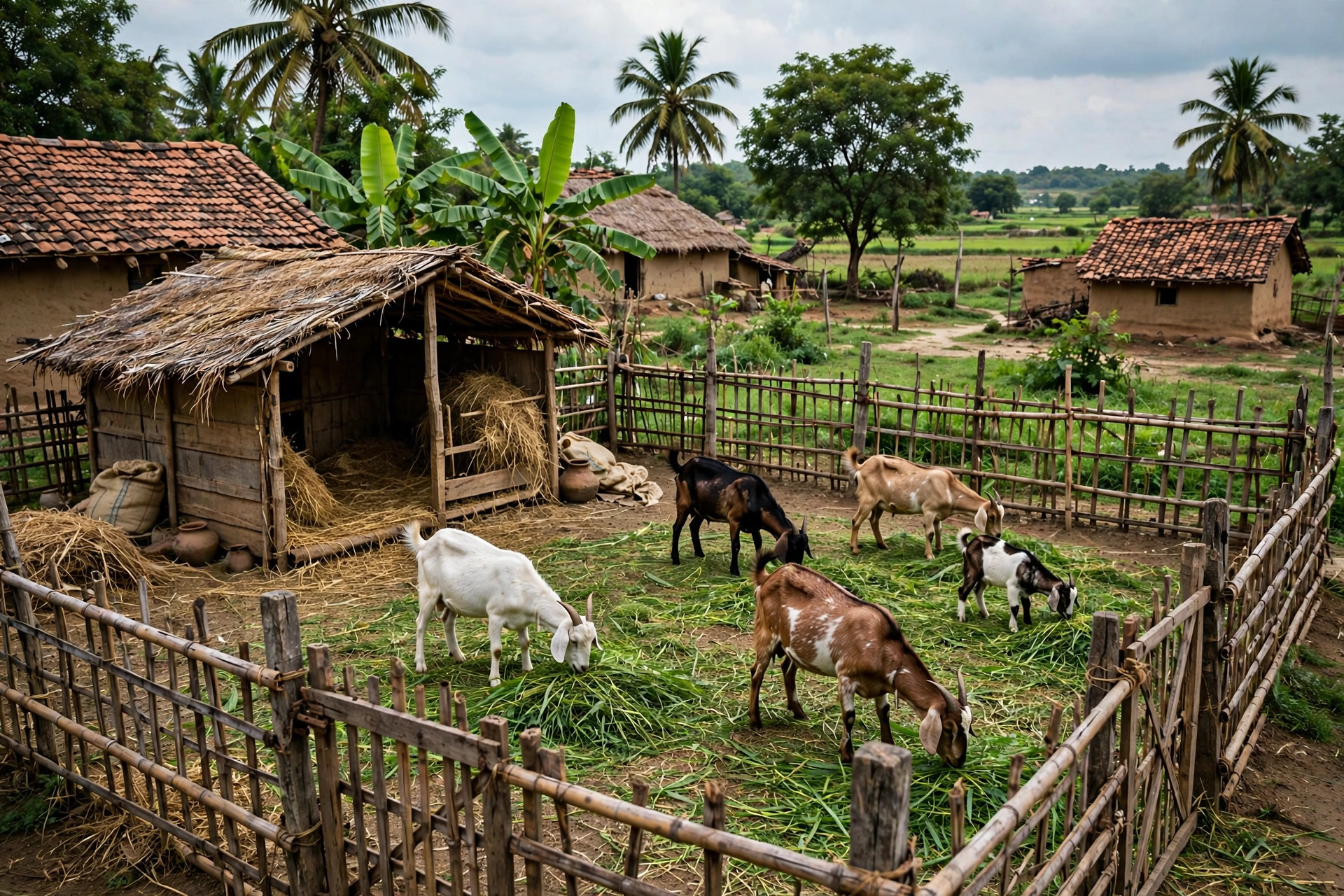
The first advantage is scale. A beginner can start with five to ten goats and learn the work before expanding, whereas dairy farming usually demands a larger upfront investment in animals, equipment and feed. Goats need relatively little space: a simple shed with roughly ten to fifteen square feet per animal, good ventilation, a dry floor and protection from rain, cold wind and direct heat is enough to begin. Even a household with half an acre, or only a backyard with grazing access nearby, can manage a small unit.
The second advantage is reproduction. A doe's gestation period is about five months, and she commonly gives birth to twins, which means a small herd can grow noticeably within two years if kids survive and are well managed. The third advantage is demand. Goat meat is in steady demand across India, prices rise around festivals and weddings, and goat milk sells at a premium in local markets. Manure, often ignored, is valuable organic fertiliser for the farmer's own fields or for sale to other farmers. Together, these make goats a business with multiple income streams rather than a single bet.
Choosing the Right Breed for Your Purpose
Breed selection is the decision that most affects profit, and it should follow your market, not fashion. For meat, widely kept Indian breeds include Black Bengal, known for meat quality and adaptability, Sirohi from Rajasthan and Gujarat, and Osmanabadi from Maharashtra, all hardy in their home regions. For milk, Jamunapari is famous as a high-yielding breed, and Barbari from Uttar Pradesh and Haryana is valued for both milk and adaptability. Crossbred and Boer goats are kept for fast weight gain in some commercial units, but they need better feed and management, so beginners are usually better off with a local or well-adapted breed.
Before buying, visit local goat markets and talk to farmers in your area about which breeds perform well there. A breed that thrives in Rajasthan's dry climate may struggle in a humid coastal district, and local buyers pay better for animals they know. Buy from reputable farmers or local markets rather than unknown traders, check that the animals are active, alert and free of visible disease, and ask for the vaccination history. Starting with healthy local animals is worth more than starting with an impressive-looking breed that falls sick in your climate.
Shed, Feed and Daily Management
A goat shed does not need to be expensive, but it must be dry, ventilated and secure. Raise the floor slightly so that water drains away, provide a roof that keeps out rain and direct sun, and fence the yard so that goats are safe from stray dogs and theft. Separate young kids from adults for the first weeks, and keep a small isolation space for any sick animal, so that one illness does not spread through the herd.
Feeding is where profit is made or lost. Goats need a mix of green fodder, dry fodder and a small amount of grain concentrate, plus clean water at all times. Growing your own fodder, such as napier grass, berseem or stylo, on spare land cuts the largest recurring cost. Grazing on open land during the day, supplemented with stall feeding, suits most small units. Watch for the common beginner error of underfeeding: underfed goats grow slowly, produce less milk and fetch lower prices, so the money saved on feed is lost many times over at sale. Keep a simple daily routine: feeding and watering at fixed times, cleaning the shed regularly, and observing each animal briefly, so that a goat that stops eating or moves slowly is noticed on day one, not day five.
Health Care: Vaccination and Common Diseases
Disease is the biggest risk to a beginner's herd, and prevention is far cheaper than treatment. The essential vaccinations for goats in India include PPR (peste des petits ruminants), enterotoxaemia and foot-and-mouth disease, given on the schedule recommended by your local veterinary officer. Deworming at regular intervals is equally important, especially for grazing animals. Keep a health record for each animal: vaccination dates, deworming dates, breeding dates and any treatment given. This record is useful for your own management, and it increases buyer confidence when you sell breeding stock.
Build a relationship with your nearest veterinary officer or livestock assistant before you face an emergency. Know the symptoms that need urgent attention: sudden loss of appetite, diarrhoea, difficulty breathing, swelling, or a goat that isolates itself from the herd. Quarantine new animals for a couple of weeks before mixing them with your herd, so that a disease bought at a market does not wipe out your existing animals. Clean water, dry bedding and timely vaccination prevent more losses than any medicine bought after the fact.
Selling, Income and Growing the Herd
Plan your sales before you need the money. The main selling routes are local meat shops, weekly livestock markets, direct sale to neighbours and festival buyers, and sale of breeding stock to other farmers. Festival seasons and weddings usually bring better prices, so timing sales around them, where your herd's age and weight allow, improves returns. Selling directly to local buyers usually gives a better margin than selling through middlemen, but it requires your own effort in finding buyers and negotiating.
Income grows with the herd. A farmer who starts with ten does and manages breeding well can expect the herd to grow substantially within two years, as kids mature and join the breeding stock. Farming guides commonly describe annual income from a well-managed small unit reaching into lakhs of rupees over time, but treat such figures as illustrations, not guarantees: feed costs, mortality, veterinary expenses and market prices all vary. Keep records of every expense and sale from day one, because a farmer who knows their actual cost per animal makes better decisions about when to expand, when to sell and which animals to keep for breeding. Support is available through the National Livestock Mission, NABARD-supported loans and state animal husbandry schemes; your district animal husbandry office and bank can explain the current options without any agent's fee.
Conclusion
Goat farming rewards patience and daily attention more than large capital. Start small, choose a breed that suits your climate and market, build a dry and ventilated shed, feed well, vaccinate on schedule, and sell with a plan. The herd will grow, your experience will grow with it, and a business that began with a handful of goats can become a reliable part of your household income. The farmers who succeed are rarely the ones who start biggest; they are the ones who manage best, record honestly, and expand only when their first small herd is healthy and profitable.