Riding Gear for Electric Scooter Riders Explained: Helmets, Jackets and the Safety Choices That Matter
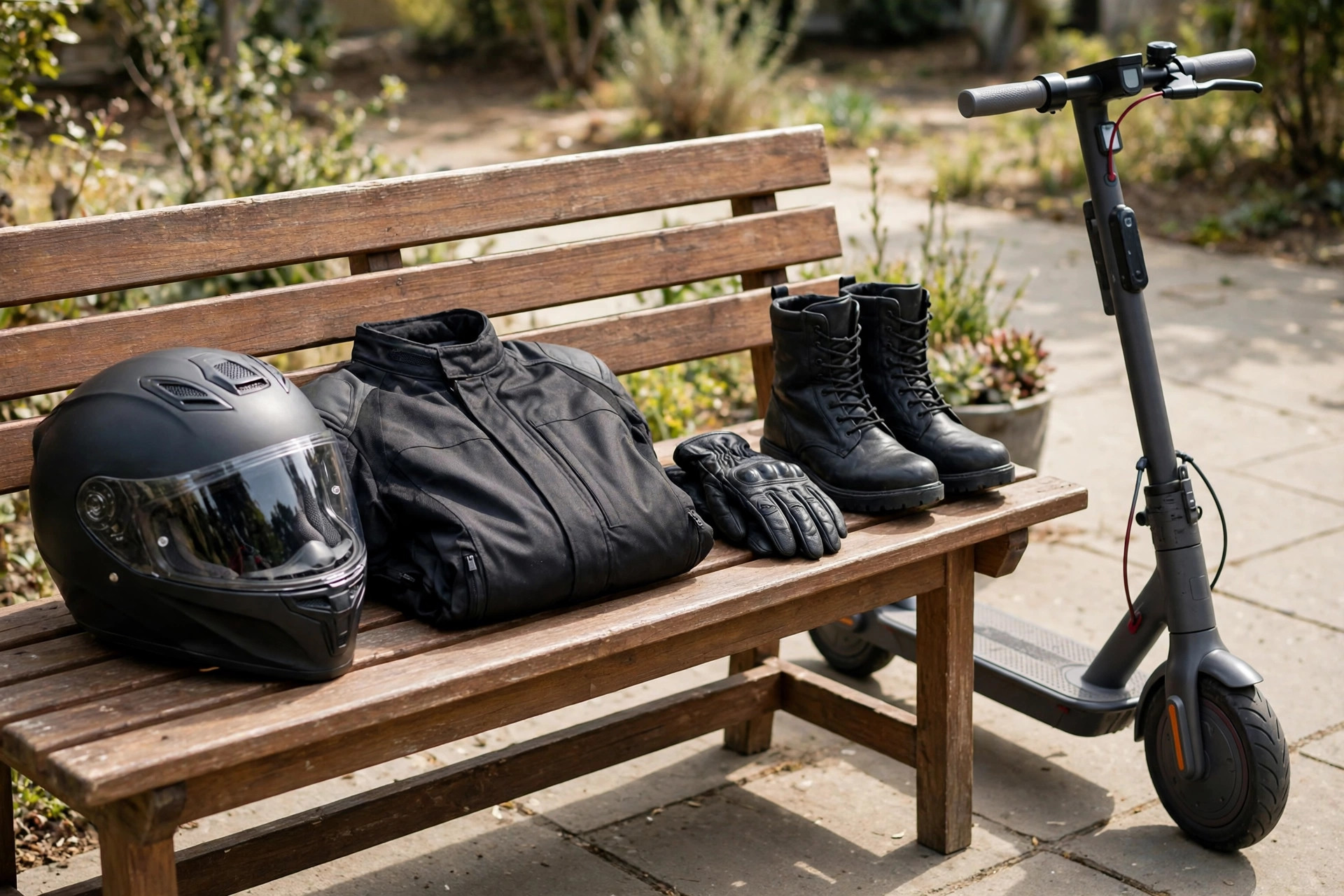
Key Takeaways
- A well-fitting certified helmet, worn with the strap fastened on every ride, is the single most important piece of gear.
- A ventilated riding jacket with shoulder, elbow and back protection shields skin from road rash.
- Gloves protect the hands that hit the ground first, and closed shoes beat sandals for safety.
- Electric scooters are quiet, so bright clothing, reflective elements and working lights are essential visibility gear.
- Buy gear in priority order, helmet first, and choose gear comfortable enough to wear on every ride.
Riding Gear for Electric Scooter Riders Explained: Helmets, Jackets and the Safety Choices That Matter
Electric scooters feel friendly and unintimidating, which is part of their charm, but it also leads many riders to treat safety gear as optional. A scooter may be quiet and easy to ride, but a fall at city speeds hurts just the same whether the engine is electric or petrol. The right gear does not need to be expensive or uncomfortable, but it does need to be chosen with care. This guide covers what actually matters, what to prioritise, and how to choose gear that you will actually wear every day.
The Helmet: The One Thing You Must Not Skip
If you buy only one piece of gear, make it a good helmet, and wear it on every single ride, including short trips to the neighbourhood shop. Most scooter accidents happen close to home, at ordinary city speeds, and head injuries are the most serious consequence of a fall.
A full-face helmet offers the best protection because it covers the chin and jaw, which are frequently injured in falls. An open-face helmet is better than nothing and is more comfortable in hot weather, but it leaves the face exposed. Half helmets that perch on top of the head offer the least protection and are best avoided.
Fit matters as much as the helmet itself. A helmet should sit level on your head, feel snug without painful pressure points, and stay in place when you shake your head. The chin strap should be fastened every time; an unstrapped helmet can fly off in a crash and protect nothing. Try helmets on before buying, and be suspicious of any helmet that feels loose or wobbles.
Check for a recognised safety certification mark for your country when buying, and be wary of extremely cheap helmets that carry no certification at all. A helmet that has been in a crash, even if it looks fine, should be replaced, because the protective material inside may have done its job once and cannot be relied on again. As a general rule, helmets also age: manufacturers often suggest replacing them after several years of regular use, so check the guidance for yours.
Jackets: More Than Just a Layer
A riding jacket protects you in two ways: it shields your skin from road rash in a fall, and it protects you from wind, cold and rain while riding. Ordinary fashion jackets do neither job well. A proper riding jacket uses abrasion-resistant material and includes padding or armour at the shoulders, elbows and back.
For Indian conditions, ventilation matters enormously. A heavy, unventilated jacket will be abandoned by May, and gear you do not wear protects no one. Look for jackets with mesh panels or removable liners that let you adapt to the season. Many riders keep one mesh jacket for summer and add a windproof layer or rain cover in the monsoon and winter.
Fit is again important: the jacket should be snug enough that the armour stays over your joints, but loose enough to ride comfortably. Try it on while seated in a riding position, not just standing in the shop, and check that the sleeves still cover your wrists when you reach forward.
If a full riding jacket feels like too much, a reinforced jacket with shoulder and elbow protection is a meaningful step up from a regular jacket. The key principle is simple: some abrasion resistance and some armour is far better than none.
Gloves, Footwear and the Details People Forget
Hands are almost always the first thing to hit the ground in a fall, because we instinctively put them out. Riding gloves protect your palms from abrasion and improve your grip on the handlebars, especially in rain or sweat. Short gloves are fine for city riding, but they should cover the palms fully and fit snugly without bunching. In winter, insulated gloves also keep your hands warm enough to operate the brakes and throttle precisely, which is a safety matter in itself.
Footwear is equally overlooked. Sandals and loose slippers are a poor choice on any two-wheeler: they offer no protection, can slip off, and can catch on footrests. Closed shoes with a firm sole and ankle coverage are the minimum sensible standard. Proper riding boots are better, but sturdy closed shoes are a realistic everyday choice that most riders can manage.
Two smaller items deserve mention. Eye protection matters if your helmet has no visor: even a small stone or insect at speed can cause a dangerous flinch. And reflective elements on your jacket, helmet or bag make you visible to other drivers at dawn, dusk and night, when scooter riders are hardest to see.
Being Seen: Visibility Is Safety Gear Too
Electric scooters are quiet, which means other road users may not hear you coming. Visibility therefore matters more than it does on a louder vehicle. Bright or light-coloured clothing helps in daylight, and reflective strips or a reflective vest help enormously at night.
Your scooter's lights matter as well. Keep headlights, tail lights and indicators clean and working, and use dipped headlights in low light even if you can see well yourself, because the point is for others to see you. If you ride at night regularly, consider adding reflective tape to the scooter's sides or your helmet, in places that do not interfere with lights or the number plate.
Riding style is part of visibility too. Positioning yourself where drivers can see you, avoiding blind spots beside large vehicles, and signalling clearly all reduce the chance of a collision far more effectively than any single piece of gear.
Choosing Gear on a Real Budget
Good gear does not have to mean the most expensive gear. A sensible priority order helps when money is tight:
1. **Helmet first.** Spend the most here, and never compromise on fit and certification.
2. **Gloves second.** They are relatively affordable and protect the body part most likely to touch the ground.
3. **Jacket third.** A ventilated riding jacket pays for itself in comfort and protection.
4. **Footwear fourth.** Sturdy closed shoes may already be in your wardrobe.
5. **Visibility extras last.** Reflective strips and vests are cheap and can be added any time.
Buy gear you will actually wear. The best helmet in the world is useless if it sits at home because it is too hot, too heavy or uncomfortable. Comfort, fit and ventilation are not luxuries; they are what turn a purchase into a habit.
Looking After Your Gear
Gear needs a little care to keep working. Clean your helmet's outer shell and visor regularly, and wash removable liners as directed. Store gear away from direct sunlight and damp, which degrade materials over time. Check straps, zips and fasteners periodically, and replace any item that is cracked, torn or has lost its padding. A jacket with burst seams or a helmet with a broken strap should be repaired or replaced, not ignored.
Conclusion
Riding gear is not about looking like a professional racer. It is about a handful of practical choices: a well-fitting certified helmet worn every time, a ventilated jacket with real protection, gloves and closed shoes, and enough visibility that other road users notice you. Start with the helmet, add the rest as you can, and choose gear comfortable enough to wear on every ride. On an electric scooter, as on any two-wheeler, the gear you wear is the only protection you have, and it only works if it is on you when you need it.