Mann Ki Baat's 139th Episode Explained: Vocal for Local, Deep-Tech Start-ups and What the 25 October Broadcast Means
Key Takeaways
- The 139th Mann Ki Baat episode aired on 25 October 2026, marking 12 years of the programme since 3 October 2014.
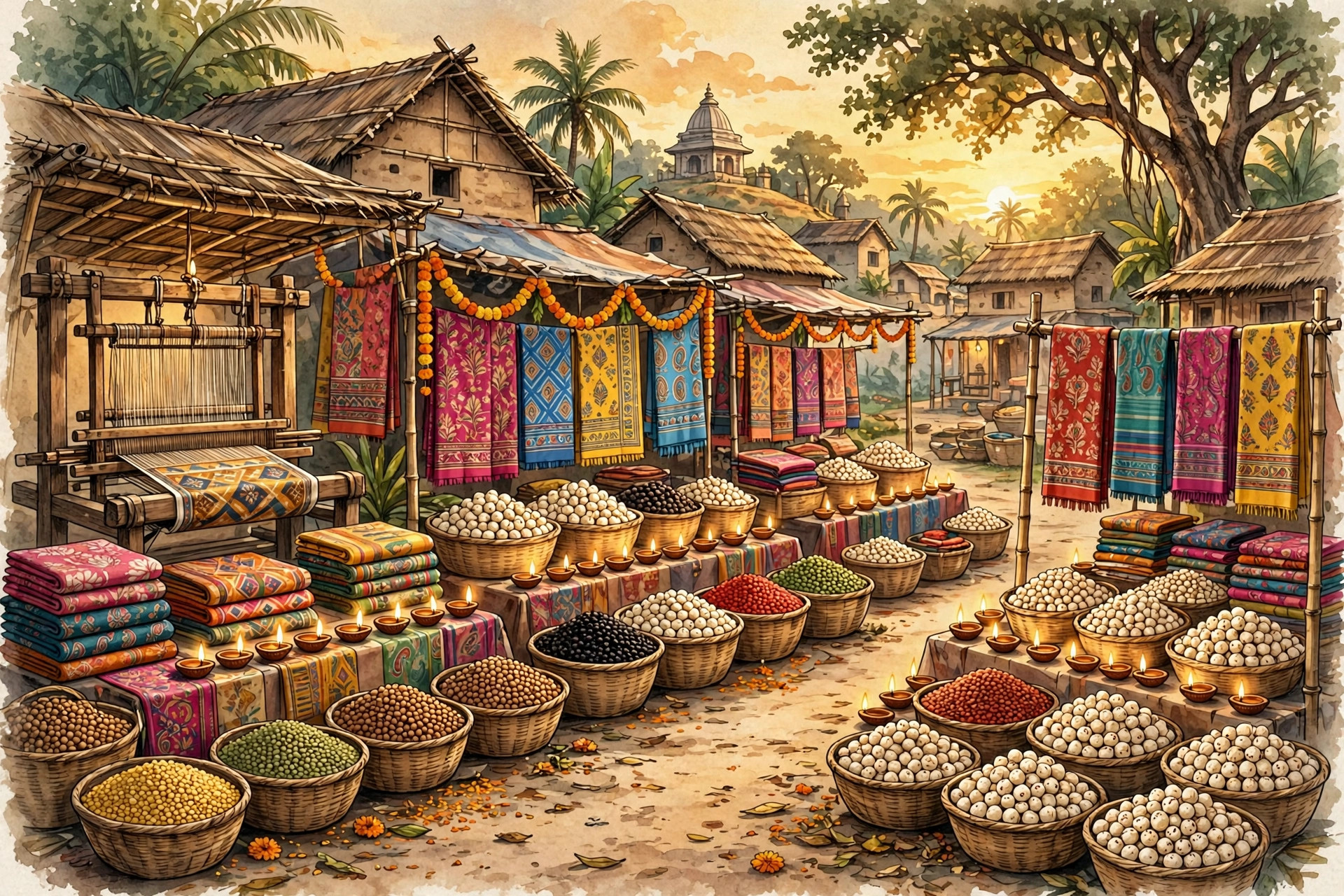
- Modi urged festive-season shoppers to prioritise local artisan products, citing Purnia makhana reaching Greece and Kalaburagi arhar dal exported to the Maldives.
- Khadi Gram Udyog sales exceeded Rs 28 crore in a single day on Gandhi Jayanti, Rs 1.5 crore more than the previous year.
- The episode highlighted IIT Madras deep-tech work, including a brain-mapping centre aiming to study 100 human brains and start-ups in health, finance, transport and defence.
- No new scheme, fund or subsidy was announced in the episode; it was a showcase of priorities, not a policy document.
What happened
On 25 October 2026, Prime Minister Narendra Modi addressed the 139th episode of his monthly radio programme, Mann Ki Baat. The episode marked 12 years of the broadcast, which began on 3 October 2014, on Vijayadashami. Modi described the programme as a "pilgrimage" that connects him with ordinary citizens, a framing that underlines what Mann Ki Baat has become: less a policy announcement platform and more a showcase of people, places and small initiatives from across the country.
This episode's central message was about the economic potential of local products. Ahead of the festive season of Diwali and Chhath, Modi urged listeners to prioritise products made by local artisans while shopping. He argued that the "Vocal for Local" spirit is now carrying Indian products into international markets. "This spirit of 'Vocal for Local' is now taking our products to global markets," he said, according to reports of the broadcast.
Two farm examples carried the point. Makhana, or fox nut, from Purnia in Bihar is now reaching Greece, and arhar dal from Kalaburagi in Karnataka is being exported to the Maldives. The message to farmers was direct: new global markets are opening up for Indian produce, and quality, packaging and branding decide whether a local crop becomes an export.
Why Khadi featured so prominently
The episode returned to a theme Modi has raised in Mann Ki Baat for years: Khadi. He said sales of Khadi Gram Udyog products exceeded Rs 28 crore in a single day on Gandhi Jayanti this year, Rs 1.5 crore more than the previous year. The point, as he put it, is that the popularity of Khadi keeps growing, and the benefits reach the artisans whose skills and hard work produce these goods.
The Khadi and Village Industries Commission (KVIC) later underlined the scale of the sector. Its chairman, Manoj Goel, said the sector's turnover surpassed Rs 1.87 lakh crore in the 2025-26 financial year, providing employment to over 2.04 crore people, and that a turnover target of Rs 2.51 lakh crore has been set for the near future. Those figures come from KVIC's own account of the sector, and they help explain why Khadi appears so often in the programme: it is one of the few artisan sectors where a festive-season purchase can be directly linked to rural livelihoods.
The appeal itself is not new. Modi first urged listeners to buy at least one Khadi product in the programme's first episode in 2014, and repeated the appeal in later episodes. What changed in this episode is the context: the appeal was tied to exports, branding and packaging, not just to buying Khadi as a gesture.
From farm produce to branded products
Two examples showed how value addition, rather than raw produce alone, creates income. In Punjab's Malwa region, the Nav-Trinjan initiative of the Kheti Virasat Mission promotes organic cotton cultivation, and its weaving school has, according to the Prime Minister, transformed the lives of many women. The chain matters here: organic cotton, local weaving and a school that trains women weavers together turn a crop into a craft and a livelihood.
In Maharashtra, tribal communities market honey, mahua, chironji and bamboo-based items through the Shabari Naturals initiative. Modi pointed out that the packaging, which carries an imprint of tribal art, has received Japan's Good Design Award. The lesson he drew was about packaging: a good product in poor packaging struggles to travel, while thoughtful packaging can carry a village product into a premium market. A Karnataka start-up making packaging material from bamboo and agricultural residue was cited in the same spirit, showing that even the packaging itself can be a rural enterprise.
The millet stories from the Northeast made a similar point from the farming side. In Meghalaya's Khanduli village, two women friends developed millet-based cookies, cakes, muffins and baby food, which raised demand for the grain. In Nagaland's Kezoma village, where millet farming had stopped for over a decade, the community resumed cultivation in 2024 and held its first millet festival in 2025. In both cases, processing and local demand came first; the crop followed.
Deep-tech start-ups at IIT Madras
The second half of the episode turned to technology, drawing on Modi's visit to Chennai earlier in October. He said he had inaugurated the Sudha Gopalakrishnan Brain Centre at IIT Madras, which is creating high-resolution digital 3D images of the human brain and aims to map and study 100 human brains in minute detail using the Param Shakti supercomputer. He described it as the first mission of its kind in the world, and said the data would be made available as an open-source resource for research across fields.
He also highlighted start-ups from IIT Madras's incubation ecosystem. The ventures he named were working on gold-quality verification to prevent fraud, faster recovery of money lost to bank fraud, and AI-assisted screening for cervical cancer. Others included an electric vehicle that can fly over the sea, fast-charging batteries for drones and electric vehicles, and AI applications in defence. The common thread was practical problem-solving: young entrepreneurs building advanced technology for everyday problems in finance, health, transport and security, rather than technology for its own sake.
Modi also paid tribute to scientist Narinder Singh Kapany, widely known as the "Father of Fibre Optics", ahead of his 100th birth anniversary on 31 October. The tribute linked the deep-tech present to an Indian scientific past, a reminder that today's fibre-optic networks rest on work done decades ago.
Health, environment and the human stories
Two other milestones rounded out the episode. The e-Sanjeevani telemedicine service has delivered nearly 50 crore consultations, a figure that shows how far remote healthcare has travelled in India, particularly for people far from a specialist hospital. And in Tehri Garhwal, villagers and local officials restored the Heval river through rainwater harvesting, groundwater recharge and tree planting, an example of community-led conservation that needed no large project to succeed.
These stories explain the programme's format. Mann Ki Baat does not announce new schemes in every episode; it selects examples that illustrate priorities the government wants to encourage, whether that is buying local, processing farm produce, backing deep-tech research or protecting a river. The selection itself is the message.
What it means, and what it does not
For listeners, the practical takeaway is modest but concrete. During the festive season, choosing a local artisan's product over a mass-produced import puts money directly into a craft livelihood, and the Khadi sales figures suggest many listeners already do this. For farmers and artisan groups, the export and packaging examples point to a harder lesson: reaching a market in Greece or the Maldives, or winning a design award in Japan, depends on consistent quality, honest branding and packaging that survives the journey.
For start-ups and researchers, the IIT Madras examples signal that deep-tech work in health, defence and clean transport has the Prime Minister's attention. But attention is not funding, and Mann Ki Baat is not a scheme document. No new fund, subsidy or programme was announced in this episode, and readers should not treat a mention in the programme as a government order or a grant.
Conclusion
The 139th episode of Mann Ki Baat used the programme's 12th anniversary to join two ideas that are often kept apart: the village artisan and the deep-tech laboratory. One stands for livelihoods rooted in tradition, the other for research aimed at the future. Modi's argument was that both need the same things: quality, good packaging, honest branding and a market that values what India makes. Whether the festive-season appeal changes shopping habits this Diwali will be visible in sales figures, not speeches. But the examples chosen, from Purnia's makhana to an IIT Madras brain-mapping mission, show a government keen to present local enterprise and advanced research as two sides of the same self-reliance story.