Farm Machinery on Rent: How Custom Hiring Centres Work, What They Cost, and When Renting Beats Buying
Key Takeaways
- Custom hiring centres own and maintain a fleet and rent machines, often with an operator for complex machines such as harvesters.
- Rental is usually per hour or per acre; confirm fuel, operator, transport, minimum charges and extras before work starts.
- Ownership cost includes purchase, interest, depreciation, insurance, shed, maintenance and idle time, not just the machine price.
- Renting beats buying for small holdings, seasonal work, trials and costly-to-maintain machines; buying wins for frequent, time-critical use.
- Book early in peak season, prepare the field, and check sowing depth, harvest loss or tillage uniformity while the operator is present.
Farm Machinery on Rent: How Custom Hiring Centres Work, What They Cost, and When Renting Beats Buying
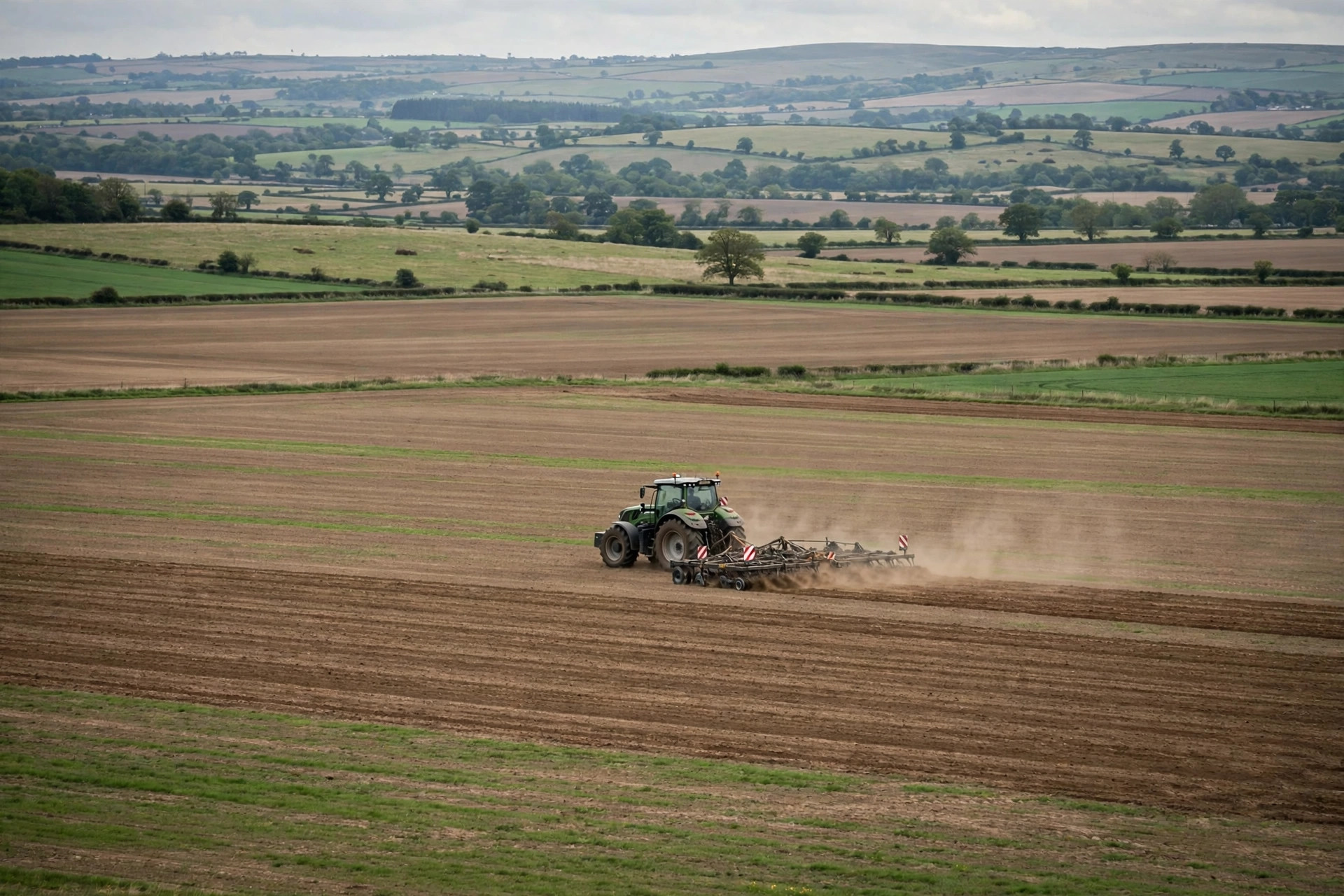
A tractor, a combine harvester or a rotavator can transform a farm, but buying one outright is a large investment that many small and medium farmers cannot justify for a machine used only a few days a year. Custom hiring centres, often called CHCs, exist to solve that problem: they own the machinery and rent it out, with or without an operator, so farmers pay for use rather than ownership. This article explains how these centres work, what rental typically includes and excludes, how charges are structured, and how to decide when renting beats buying.
The idea is not new. Neighbours have long shared bullocks, threshers and tractors informally. Custom hiring formalises that sharing: a centre maintains a fleet, schedules bookings, charges a rate, and takes responsibility for maintenance and, in many cases, operation. Government-supported centres, cooperative centres, farmer producer organisation fleets and private rental entrepreneurs all operate under the same basic model, though their rates, booking rules and coverage differ.
How a Custom Hiring Centre Works
A typical centre keeps a register or a booking system for its machines — tractors with implements such as cultivators, seed drills, rotavators and sprayers, and sometimes harvesters, threshers and transplanters. A farmer books a machine for a date or a time slot, often in advance during peak sowing or harvest, when demand is highest. The centre confirms availability, sends the machine with an operator where required, and records the work done, usually in hours or in acres covered.
The operator question matters. For tractors and simple implements, some centres rent the machine alone and the farmer arranges the driver. For harvesters and more complex machines, the centre usually supplies a trained operator, because the machine is expensive and mistakes are costly. When an operator is included, the farmer should clarify who is responsible for fuel, for damage, for working hours, and for what happens if the machine breaks down mid-field. A clear agreement on these points before work starts prevents disputes later.
Scheduling is the centre's hardest job. During sowing and harvest windows, every farmer wants the machine on the same few days. Centres that work well publish a booking order, keep a waiting list, and communicate delays promptly. Farmers who book early, keep their field ready — bunds clear, field dry enough, stones removed where possible — and confirm the day before are more likely to get timely service. Last-minute booking during peak season is possible, but it often means waiting or accepting a less convenient slot.
Maintenance and quality are the centre's responsibility, but the farmer should still check the basics on arrival: is the implement the right one, is it in working order, and does the operator understand the field layout and any obstacles such as trees, wells or electric poles? A quick walk of the field with the operator saves time and avoids damage to both crop and machine.
What Rental Costs — and What It Does Not Include
Rental charges are usually quoted per hour or per acre, and the basis matters. A per-hour rate can be fair for work where field conditions vary, but it can also penalise a farmer if the machine is slow due to the centre's own maintenance problems. A per-acre rate is easier to compare across centres, because the farmer knows the total for the field, but it assumes a standard field condition. Farmers should ask which basis applies, what is included, and what triggers extra charges — for example, extra hours, night work, transport to a distant field, or work in wet or difficult conditions.
Fuel is a common source of confusion. Some rates include fuel, others exclude it, and some charge fuel separately at actuals. Similarly, the operator's wages, food or stay may or may not be included. Transport of the machine to the village may be included within a radius and charged beyond it. The safest approach is to get the total expected cost in writing or by message before work starts: rate, basis, fuel, operator, transport, and any minimum charge. A rate that looks cheapest on paper can become the most expensive if fuel and transport are added later.
Other costs are easy to overlook. If the machine arrives and the field is not ready, the farmer may still pay for the visit or for waiting time. If work is interrupted by rain, the question of who bears the cost of a return visit should be settled in advance. If the machine damages a bund, a tree or a neighbouring crop, liability should be clear. None of these are reasons to avoid hiring, but they are reasons to agree terms before the machine enters the field, not after a dispute arises.
Comparing rental with ownership needs the same total-cost thinking. Ownership cost is not just the purchase price. It includes interest or opportunity cost of capital, depreciation, insurance, shed, maintenance, repairs, operator wages and the cost of idle time when the machine sits unused for most of the year. For a machine used only a few days annually, those fixed costs spread over very few working days make ownership expensive per acre. For a machine used frequently across a large holding or across multiple seasons, ownership can become cheaper per acre, provided the owner can maintain it and keep it busy.
When Renting Beats Buying — and When It Does Not
Renting beats buying in several clear situations. Small holdings are the first: a farmer with a few acres cannot spread a tractor's fixed cost thinly enough to justify ownership. Seasonal or one-off operations are the second: a farmer who needs a combine for harvest only, or a laser leveller once in several years, gains nothing from owning it year-round. The third is trial: renting a new implement, such as a happy seeder or a precision planter, lets a farmer test whether it suits their soil and cropping system before committing capital. The fourth is risk: renting transfers maintenance, breakdown and obsolescence risk to the centre, which is valuable for complex machines that need specialist servicing.
Buying makes sense when use is frequent and predictable. A large farmer, a group of farmers who share a machine formally, or a farmer who also does custom work for neighbours can keep a machine busy enough to justify ownership. Buying also makes sense when timeliness is critical and the local hiring centre cannot guarantee a slot during the peak window — for example, a harvest that must be completed before forecast rain. In that case, owning the machine is not just a cost decision but a risk decision about control over timing.
A middle path suits many farmers: own the simple, frequently used implements, such as a cultivator or a small sprayer, and hire the expensive, rarely used machines, such as a harvester or a rotavator for a specific operation. Another middle path is group ownership through a cooperative or producer organisation, where members share both cost and scheduling, with rules for priority and maintenance. Group ownership works best when rules are written down and a responsible person manages bookings and upkeep; informal sharing without rules often fails when peak demand arrives.
Booking Smart: Practical Tips for Farmers
Book early for peak operations, and keep a backup plan. During sowing and harvest, a centre's schedule can slip due to breakdowns or weather. Having the phone number of a second centre, or a neighbour with a machine, as backup is prudent. Prepare the field before the machine arrives: clear access for a trailer, mark obstacles, and ensure the field is in the right moisture condition for the operation. A rotavator in a waterlogged field or a harvester in a lodged, wet crop will do poor work no matter how good the machine is.
Check the work as it proceeds, not only at the end. For sowing, check seed depth and spacing in the first few rows. For harvesting, check grain loss behind the machine. For levelling or tillage, check depth and uniformity. Raising a problem early, while the operator is still present, is far easier than complaining after the machine has left. Keep a record of the date, machine, operator, hours or acres, rate and total paid — that record helps compare centres next season and resolve any billing question.
Farmers should also ask about newer options where available. Some centres and private platforms now allow booking by phone or app, with published rates and tracking. Others are linked to government schemes that subsidise hiring for certain groups or operations, and eligibility rules change over time, so a check with the local agriculture office or the centre itself is worthwhile. Whatever the booking channel, the fundamentals do not change: clear rate, clear inclusions, ready field, and timely communication.
Conclusion
Custom hiring centres let farmers use modern machinery without bearing the full cost of ownership, by paying per hour or per acre for a machine, often with an operator, booked in advance and maintained by the centre. Renting beats buying for small holdings, seasonal operations, trial of new implements, and complex machines that are costly to maintain, while buying wins when use is frequent, predictable and time-critical. The key to a good hiring experience is not finding the lowest headline rate, but agreeing the total cost — rate basis, fuel, operator, transport and extras — before work starts, preparing the field, booking early in peak season, and checking work as it proceeds. Used wisely, hiring is not a second-best option for farmers who cannot afford to buy; it is a rational, flexible way to get the right machine at the right time, for exactly as long as it is needed.