Electric Scooter Service and Maintenance Costs Explained: What You Actually Pay After the First Year
Key Takeaways
- The quiet first year is misleading: tyres, brakes and small parts wear with mileage.
- Regenerative braking helps brakes last longer, but they still need inspection and replacement.
- The battery fades gradually and is the largest long-term cost to budget for.
- Use authorised service for battery, motor and controller work; local mechanics suit tyres and brakes.
- Budget in three buckets: running costs, routine maintenance, and occasional long-term costs.
Electric Scooter Service and Maintenance Costs Explained: What You Actually Pay After the First Year
One of the most attractive promises of an electric scooter is that it costs less to run than a petrol scooter. There is no engine oil to change, no spark plugs, no clutch, and far fewer moving parts to wear out. That promise is broadly true, but it is incomplete. After the first year, owners start to discover a different set of costs, some small and regular, some occasional, and one that is potentially large. Understanding that full picture before you buy, or before your first service bill surprises you, helps you budget honestly and avoid the feeling that you were misled.
The key idea is simple: electric scooters do not eliminate maintenance, they change it. You trade engine-related work for battery care, electrical checks, and the same wear-and-tear items every two-wheeler shares, such as tyres and brakes. The total is usually lower than for a petrol scooter used the same way, but it is not zero, and the timing of costs matters. Some years will feel almost free. Other years will include a bigger item that makes the average look very different.
The first year is misleading, and that is normal
Many new scooters come with a period of included service or warranty cover, and in the first months there is simply not much to wear out. Tyres are new, brakes are fresh, and the battery is at its best. It is easy to conclude from this quiet period that an electric scooter needs no attention at all. That conclusion is understandable, and it is also the reason the second and third years can feel like a shock.
As mileage builds up, routine items begin to appear. Tyres wear down, brake pads thin out, and small parts such as cables, fasteners and seals need checking. None of this is a fault. It is normal use, and it happens to every vehicle that travels Indian city roads daily, with their potholes, speed breakers, dust and heat. The difference is that electric scooter owners sometimes expect none of it, because marketing emphasised how little maintenance is needed. A more useful expectation is this: regular, modest upkeep, with occasional larger items, rather than no upkeep at all.
What you actually pay for, item by item
Start with the items every two-wheeler shares. Tyres are the most regular cost. How often you need them depends on your mileage, your riding style, road conditions and tyre quality, but city riders should expect tyre replacement to be a recurring expense over the life of the scooter, not a one-time purchase. Brake pads and brake servicing follow a similar pattern. Brakes on electric scooters often last longer than on petrol scooters because regenerative braking helps slow the vehicle, but they still wear, and they still need inspection and eventual replacement. Ignoring soft or noisy brakes to save money is a false economy, because brake failure costs far more than brake service.
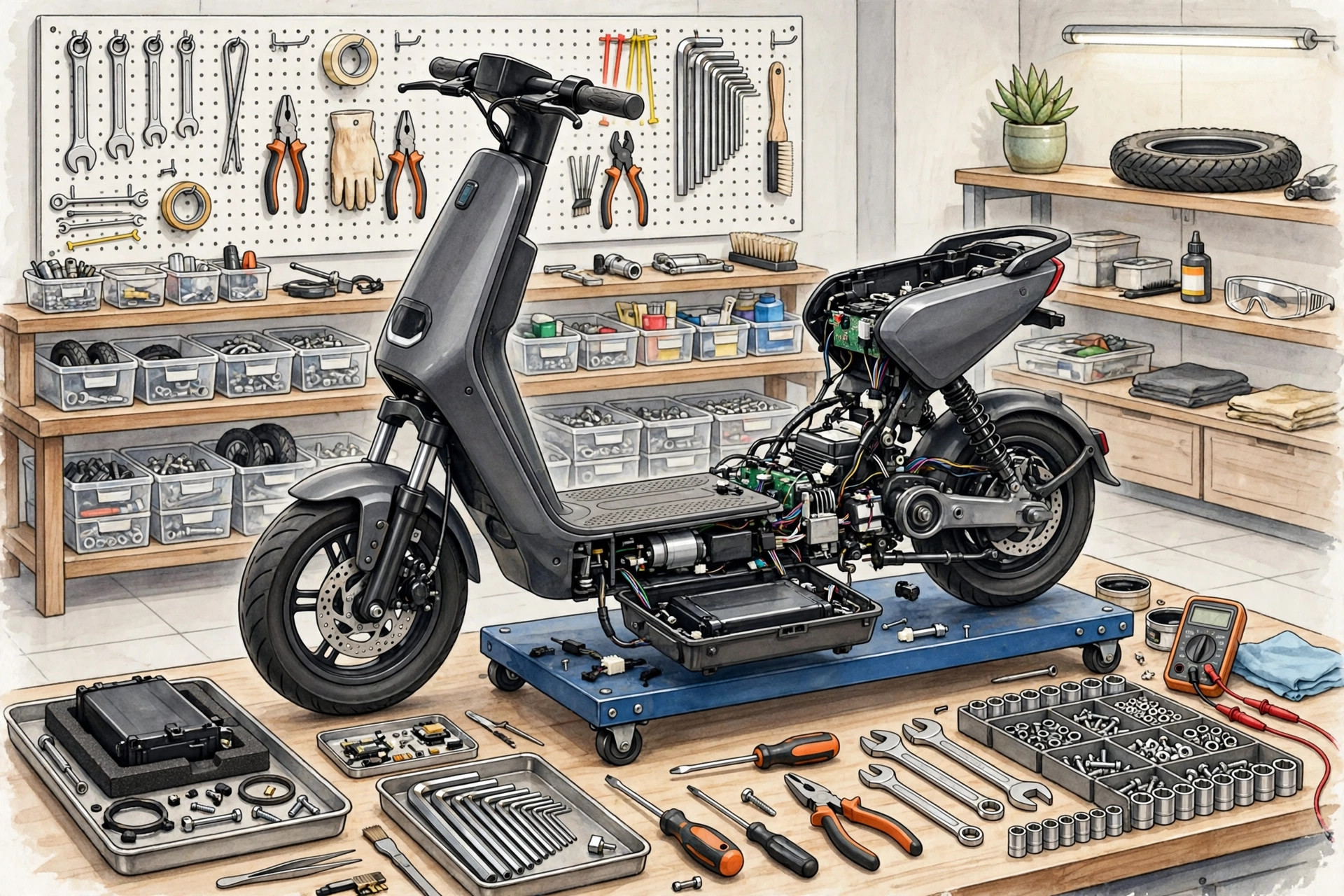
Then there are the electric-specific checks. A service visit for an electric scooter typically includes inspecting the battery connections, the motor, the controller and the wiring, checking for software updates, and looking at seals and fasteners. These checks may not involve replacing parts every time, but they are worth doing, because they catch small electrical or wear issues before they become failures. Some service centres charge a labour fee for this inspection even when no parts are needed, and that fee is a legitimate part of ownership. Ask what a service visit includes before you book it, so you are not surprised by the bill.
Smaller items add up quietly. A worn charging cable, a damaged charging port cover, a cracked mirror, a failing light or a seat latch that no longer closes properly are all minor on their own. Together, over a year or two, they form a noticeable part of maintenance spending. Keeping a simple record of what you spend, even just a note on your phone, helps you see the real pattern instead of relying on memory, which tends to forget the small bills and remember only the big ones.
The battery question: the cost everyone worries about
No honest discussion of electric scooter costs can avoid the battery. It is the most expensive single component, and its health shapes both running costs and resale value. The good news is that a battery does not usually fail suddenly without warning in normal use. It gradually delivers less range over time, and how quickly that happens depends on usage, charging habits, heat and age. Many owners will use the same battery for years without needing to replace it, especially if their daily distance is well within the scooter's range.
The important budgeting point is not to assume replacement is imminent, nor to assume it will never happen. Instead, think of the battery as a long-term item. If you ride daily and plan to keep the scooter for many years, it is wise to set aside a small amount regularly, or at least to be aware that a future battery replacement or refurbishment could be a significant expense. Check your warranty terms carefully: what is covered, for how long, and under what conditions. Warranty cover for the battery is often described in specific terms, and understanding those terms now prevents arguments later. If a service centre suggests battery work, ask for a clear explanation of what is wrong, what the options are, and what each option costs, before agreeing.
There is also a hidden cost to poor battery care. Frequently draining the battery completely, leaving the scooter unused for long periods in extreme heat, or using a damaged charger can shorten battery life. Good habits, such as following the manufacturer's charging guidance and keeping the scooter reasonably charged during long breaks, cost nothing and protect the most valuable part of your vehicle. Battery care is not just a technical topic. It is a financial one.
Service centres, spares and the value of authorised work
Where you get service matters as much as what service you get. Authorised service centres usually charge more for labour than a local mechanic, but they also have access to genuine parts, proper diagnostic tools and manufacturer guidance. For electrical and battery-related work, that expertise matters. A local mechanic may be excellent with tyres, brakes and general fitting, and using one for those items can save money sensibly. For anything involving the battery, motor or controller, authorised expertise is usually worth the extra cost, because a mistake there can be expensive or unsafe.
Spare parts availability is another factor that varies. Common items such as tyres, brake pads and mirrors are usually easy to find. Model-specific electrical parts may take longer to source, especially for less common models or older scooters. Before buying a scooter, it is worth asking about service network coverage in your area and typical waiting times for parts. A scooter that is cheap to buy but hard to service locally can become expensive in time and frustration, even if individual parts are not costly.
Keep your service records. They help a service centre understand your scooter's history, they support warranty claims, and they make a future sale easier, because a buyer can see that the scooter was looked after. A folder of bills and service notes is one of the cheapest ways to protect resale value.
How to budget without guessing
A practical way to budget is to separate costs into three buckets. The first bucket is regular running costs: electricity for charging, plus small consumables. The second bucket is routine maintenance: periodic service visits, tyres and brakes as they wear. The third bucket is occasional or long-term costs: larger parts, accident repairs, and eventually battery work. Most months, only the first bucket will be active. Some months, the second bucket will appear. Rarely, the third bucket will demand attention. Planning in buckets stops a single large bill from feeling like a betrayal of the electric promise, because you already knew that category existed.
Compare like with like when judging whether electric ownership is cheaper. A fair comparison with a petrol scooter includes fuel, engine service, oil and related parts on one side, and electricity, electric-specific service and battery considerations on the other, over the same mileage and the same number of years. On that basis, many city riders will find electric running cheaper overall, even after accounting for maintenance. But the saving is a total over years, not a guarantee that every single year will be cheap. The first year may look almost free, a later year may include tyres and brake work, and a much later year may include battery considerations. The average is what matters.
Five habits that keep costs down
You do not need mechanical skill to keep maintenance costs sensible. Ride smoothly, avoiding harsh acceleration and braking where traffic allows, because that reduces wear on tyres and brakes. Keep tyres at the pressure recommended in your manual, because under-inflated tyres wear faster and reduce efficiency. Get small problems checked early, before a worn pad damages a disc or a loose fastener causes a larger failure. Follow the manufacturer's service schedule, even when the scooter feels fine, because inspections catch what daily riding hides. Finally, charge and store the scooter as the manual suggests, especially during long breaks or extreme weather, because battery health is the largest long-term cost lever you control.
Conclusion
After the first year, an electric scooter's maintenance costs are real but manageable, and usually lower than the equivalent petrol scooter's costs over the same period. Expect regular spending on tyres and brakes, periodic service inspections, small replacement parts, and the long-term possibility of battery work. Do not expect zero spending, and do not fear a single large bill as proof that electric ownership has failed. Budget in buckets, use authorised service for electrical work, keep your records, and look after the battery with simple daily habits. That approach turns maintenance from an unpleasant surprise into an ordinary, predictable part of owning a scooter that is still, for most city riders, a genuinely economical way to travel.