Monsoon Care for Your Electric Scooter: Rain, Waterlogging and Charging Safety Explained
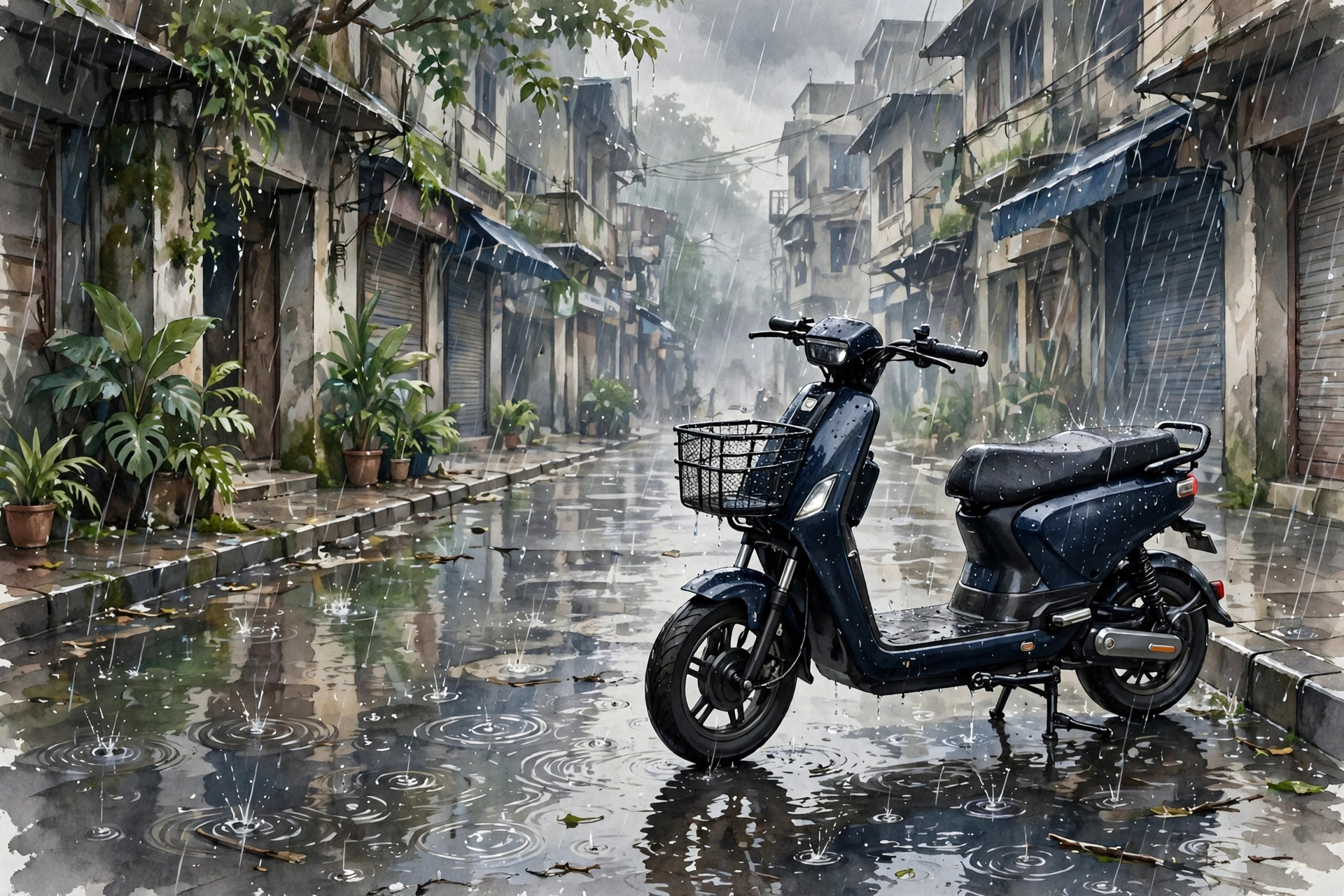
Key Takeaways
- Ride in rain with care, but refuse flooded roads where you cannot see the surface.
- Water reaching the footboard is the line not to cross, and a stalled scooter in water should not be restarted until dry.
- Charge only when the charging port, charger and socket are dry and sheltered.
- After wet rides, wipe down, clear debris and let the scooter dry before charging.
- Avoid high-pressure washing on the battery area, motor, display and seals.
Monsoon Care for Your Electric Scooter: Rain, Waterlogging and Charging Safety Explained
The first heavy shower of the monsoon changes everything about a daily commute. Roads that were dusty a week ago turn slippery, drains overflow at familiar corners, and a ride that took twenty minutes suddenly needs far more attention. For an electric scooter rider, the season brings one extra question that a petrol scooter rider rarely worries about in the same way: what does all this water mean for a vehicle that runs on a battery, a motor and a lot of electronics? The honest answer is reassuring and cautious at the same time. Modern electric scooters are built to be ridden in the rain. They are not built to be submerged, pressure-washed carelessly, or charged while soaking wet. Learning where that line sits is the whole skill of monsoon care, and it is mostly about habits, not expensive accessories.
A useful way to think about it is to separate three different kinds of water exposure. Light rain while riding is normal use. Splashes from puddles and wet roads are also expected, though they carry grit and grime with them. Standing water deep enough to reach the motor, the battery casing or the footboard is a different category altogether, and it is the one to avoid. Once you make that distinction, most monsoon decisions become straightforward: ride in the rain if you need to, slow down and stay visible, but do not treat a flooded street as a test of your scooter.
Why rain itself is less scary than standing water
Electric scooters carry their most sensitive parts low in the body, which is also where water collects. Manufacturers seal connectors, battery housings and motor units against rain and splashes, and the owner's manual usually describes the level of protection in its own words. That protection is designed for water coming from above and from the sides during normal riding. It is not designed for a scooter sitting in a flooded lane with water pressing in from every direction for a long time. The longer a vehicle sits in standing water, the more chances water has to find a weak seal, a worn gasket or a small crack that dry weather would never reveal.
That is why experienced riders treat depth as the deciding factor, not whether it is raining. If you cannot see the road surface through the water, you cannot know whether there is a pothole, an open drain cover or a sudden dip underneath. A hidden pothole can damage a wheel or throw you off balance, and that risk exists for any two-wheeler. For an electric scooter, the added concern is that a dip can suddenly raise the water level around the motor and battery far higher than you expected when you entered the stretch. Turning around, waiting, or taking a longer route on higher ground is not overcautious in that situation. It is the cheapest repair you will ever make.
Riding in the rain: braking, grip and visibility
Wet roads change braking in ways that catch even confident riders out. Tyres need a little more distance to stop, painted road markings and metal covers become surprisingly slippery, and the first rain after a dry spell lifts oil and dust to the surface, making it slicker than rain later in the season. The practical response is unglamorous but effective: ride slower than you think you need to, brake earlier and more gently, and avoid sudden changes of direction. Use both brakes smoothly rather than grabbing one hard, and give the vehicle ahead of you extra space so a sudden stop does not become an emergency.
Visibility matters as much as grip. Rain reduces what you can see and what others can see of you. Keep your headlamp on even in daytime rain, wear a helmet with a clear visor rather than dark tint in low light, and choose a rain jacket in a bright colour if you have one. A common mistake is to ride with a visor fogged from the inside. Lifting it slightly at slow speeds, or using a simple anti-fog treatment if your helmet maker recommends one, helps more than wiping it with a wet glove every few minutes. If rain becomes so heavy that you cannot see the road ahead clearly, the right move is to stop somewhere safe and wait. No commute is worth riding blind.
The waterlogging rule every owner should memorise
If you remember only one monsoon rule, make it this: do not ride through water that reaches the footboard, and never push a stalled scooter through a flooded stretch hoping it will recover on the other side. Pushing a scooter through deep water can force water into places that riding slowly might not, and trying to restart a vehicle that has cut out in water can make a small problem worse. If your scooter stops in water, switch it off, move it to dry ground if you safely can, and do not switch it back on until it has had time to dry and you have checked for obvious damage. If warning lights stay on, if the scooter behaves oddly, or if you are unsure, have it inspected before your next ride rather than hoping the fault clears itself.
After any ride through heavy rain or shallow standing water, a few minutes of attention pays off. Wipe down the body, especially around the charging port, the display and the handlebar controls. Check that the charging port cover is seated properly and that no mud is packed around the wheels or brakes. Look underneath, as far as you comfortably can, for debris caught near moving parts. You do not need to strip anything down or use special tools for this routine check. You are looking for the obvious: damage, loose parts, trapped debris and water sitting where it should drain away.
Charging safely when everything is damp
Charging deserves its own caution because it is the one moment when electricity from your home meets a wet vehicle. The rule is simple: never plug in a scooter that is visibly wet around the charging port, and never charge outdoors in rain unless the charger, the socket and the connection are all properly sheltered and dry. If you have just come home in a downpour, dry the charging area with a cloth first and let the scooter stand for a while before connecting it. Check the charger cable and plug for damage, cracks or fraying, because a damaged cable that was harmless in dry weather becomes a real hazard when damp.
Where you charge matters too. A covered parking spot, a dry corner of a garage or a sheltered porch is far better than an open area where rain can blow onto the socket. Avoid trailing extension cables across wet ground, and avoid charging on a surface where water pools around the scooter. If your usual charging spot floods during heavy rain, find an alternative for those days rather than improvising with a wet socket. When in doubt, wait until things are dry. A delayed charge is an inconvenience; a wet charging accident is not.
Cleaning, parking and the small jobs that prevent big bills
Monsoon grime is more corrosive than it looks. Road spray carries mud, grit and, in some areas, salty or chemical residue that settles on metal parts, fasteners and brake components. A gentle wash with clean water and a soft cloth, followed by drying, is enough for most scooters. Avoid directing a high-pressure jet at the battery area, the motor, the display, the charging port or any seal, because pressure can push water past protection that rain alone would never breach. After washing, let the scooter dry before charging, and check that brakes feel normal on a short, slow test ride before heading into traffic.
Parking choices during the monsoon also matter. Whenever possible, park under cover and on slightly raised or well-drained ground rather than in a dip where water collects. If covered parking is not available, a breathable cover that does not trap moisture underneath is better than a tight plastic sheet that holds damp air against the body. Move the scooter if you notice water rising near where it is parked, even if that means a short walk in the rain. Finally, keep an eye on tyre tread and brake feel through the season. Worn tyres that were acceptable on dry roads can become genuinely dangerous on wet ones, and brakes that feel soft or gritty after a wet ride deserve attention before the next long journey.
A simple monsoon routine you can actually stick to
The best monsoon care is not a long list you follow once and forget. It is a short routine you repeat without thinking. Before a ride, check tyres, brakes, lights and the charging port cover. During a ride, slow down, keep your distance and avoid flooded stretches. After a ride, wipe down, check for debris and let things dry before charging. Once in a while, look a little closer at seals, cables and fasteners, and book a service check if anything looks worn or damaged. That rhythm protects the battery, the motor and, most importantly, you.
Conclusion
Monsoon riding on an electric scooter is not about fearing water. It is about respecting the difference between rain and flooding, and between a damp scooter and a wet charging connection. Ride in the rain with care, refuse flooded roads, charge only when dry, and clean and inspect a little more often than you do in summer. Those habits cost almost nothing, and they are what keep a scooter reliable through season after season of Indian monsoons. When conditions go beyond what you can see or control, waiting is not a failure of confidence. It is good judgement, and it is usually the decision your scooter would thank you for if it could.