Electric Scooter Battery Recycling Explained: What Happens to an Old Battery and Why Second Life Matters
Key Takeaways
- Batteries retire when they no longer cover regular rides with a buffer
- Second life suits gentler jobs like home energy storage
- Second-life packs must be professionally tested and graded
- Never bin, open or puncture an old battery
- Return retired batteries through authorised take-back routes
Electric Scooter Battery Recycling Explained: What Happens to an Old Battery and Why Second Life Matters
Every electric scooter battery has two lives in its story: the years it spends powering rides, and what happens after it can no longer do that job well. Most owners think about the first life — range, charging and care — and rarely about the second. Yet the end of a battery's riding life is not the end of its usefulness, and how it is handled matters for safety, for the environment and, increasingly, for the cost of the next battery you buy.
A scooter battery is usually retired from riding not because it is completely dead, but because it can no longer hold enough charge for a practical ride. A battery that once covered a full commute may eventually cover only a short hop before needing a charge. At that point it becomes frustrating on a scooter, but it may still store a useful amount of energy. That gap — too weak for a scooter, still useful elsewhere — is where second life and recycling come in.
When Is a Battery Actually Finished?
Battery ageing is gradual. Over hundreds of charge cycles, the battery's capacity slowly falls, meaning a full charge simply holds less energy than it did when new. Heat, deep discharges and very fast charging can speed that decline, while gentle charging habits slow it. Owners usually notice ageing first as range anxiety: trips that used to be comfortable now need careful planning, or the charge percentage drops faster in the last part of the ride.
There is no single day when a battery flips from good to finished. A useful test is whether it still covers your regular rides with a comfortable buffer. If it does, it still has riding life left, even if it is not as strong as new. If it no longer covers your shortest regular ride without worry, it is time to talk to the manufacturer or dealer about assessment. Do not judge a battery by a single bad day in extreme heat or cold; judge it by a pattern over weeks.
It is also important to distinguish a weak battery from a faulty one. A battery that swells, smells unusual, gets very hot during normal charging, or shows a warning that will not clear should be treated as a safety issue, not simply an old battery. Stop using it, keep it away from flammable materials, and contact the dealer or manufacturer for guidance. Never open a battery pack yourself, puncture it or throw it in household waste. The cells inside store a great deal of energy, and damaged cells can be dangerous.
What Second Life Means in Practice
Second life means giving a retired vehicle battery a new, less demanding job. A battery that can no longer power a scooter through traffic may still be perfectly capable of storing solar energy for a home, powering lights, or supporting a small backup system where weight and size matter less and the energy demands are gentler. In such uses the battery is discharged more slowly and charged more gently, which suits an aged battery far better than the stop-start demands of riding.
For an owner, the practical point is simple: when your battery is retired, ask the dealer or manufacturer what second-life or take-back route they offer, rather than assuming the battery is worthless or trying to sell it informally. A reputable route will test the pack, decide whether it is suitable for reuse, and handle the ones that are not. That chain of custody — from your scooter to a tested second use — is what makes second life safe rather than risky.
How Recycling Actually Works
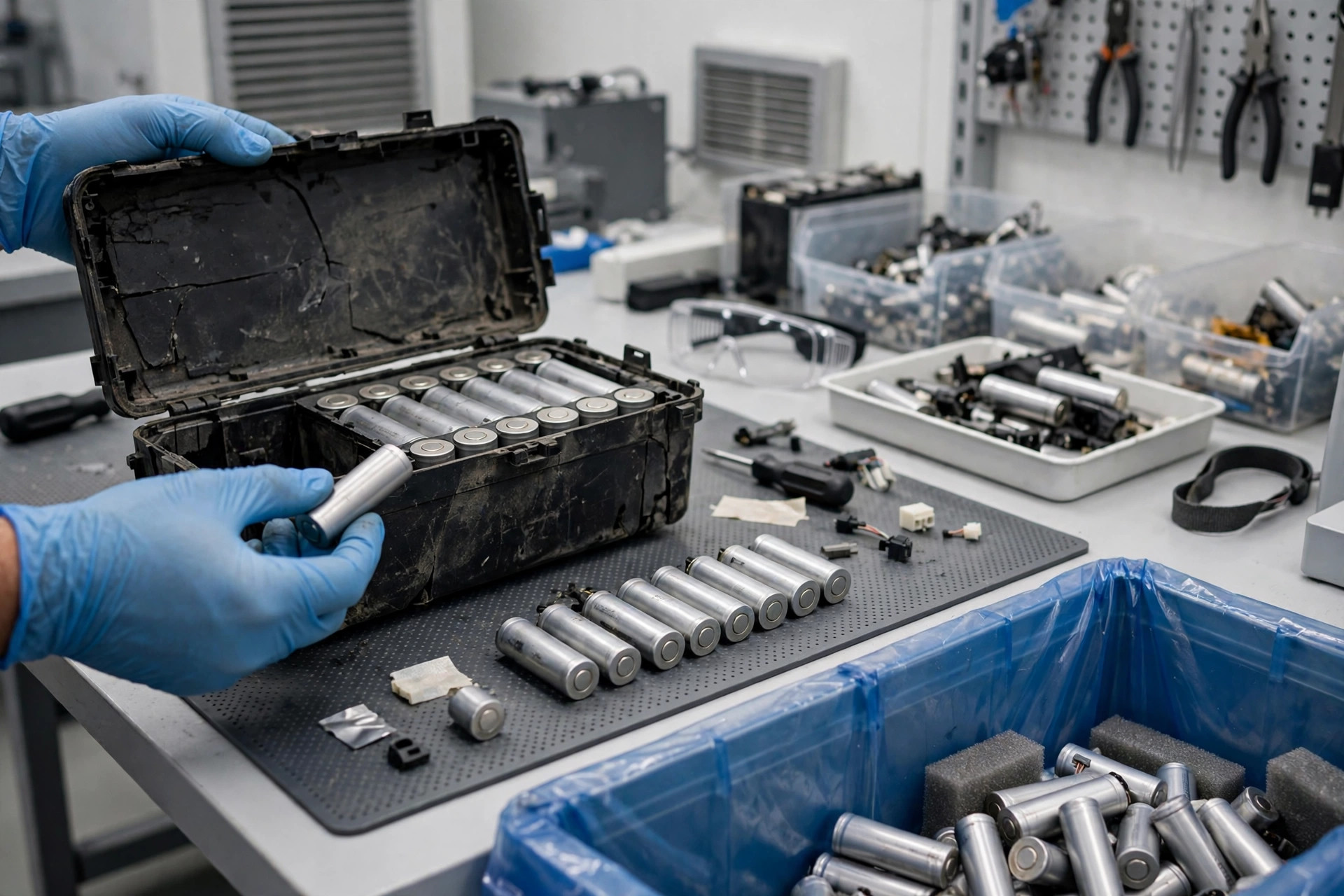
When a battery is truly finished, even for second life, its materials can still be recovered. Recycling starts with safe discharge and dismantling by trained workers in a proper facility, not by breaking the pack apart at home. The pack is taken apart into modules and cells, and the valuable materials inside — including metals used in the electrodes and other components — are separated for reuse in new batteries and other products. The exact process varies by facility and battery chemistry, but the principle is the same: recover what can be reused and dispose of the remainder safely.
This matters because the materials in a battery are finite and mining new ones has environmental costs. Recovering metals from old batteries reduces the need for fresh mining and keeps hazardous materials out of landfills and water. It also matters for safety: a battery dumped in general waste can be crushed in a garbage truck or landfill, damaged, and catch fire. That is why old scooter batteries should never go in a household bin, even if they seem dead. A battery that seems dead can still hold enough energy to be hazardous if damaged.
In India, rules around battery waste management place responsibility on producers and handlers to collect and recycle batteries through authorised channels. As an owner, you do not need to memorise the regulation, but you should use the authorised route: return the battery through the dealer, the manufacturer or an authorised collection point, and keep any receipt or acknowledgement they give you. If a dealer cannot tell you where a returned battery goes, ask the manufacturer directly. A clear answer is a good sign; vagueness is a reason to be cautious.
What Owners Should Do: A Checklist
When your scooter's battery starts to fade, work through this checklist. First, confirm the pattern: track range over a few weeks rather than reacting to one bad ride. Second, get the battery assessed by the dealer or manufacturer, especially if you notice swelling, heat or persistent warnings. Third, ask about warranty or replacement options, because a battery that fails early may be covered even if an old battery is not — check the terms rather than assuming.
Fourth, when the battery is retired, return it through an authorised take-back or recycling route and keep the receipt. Fifth, if you are offered a second-life product made from used batteries, buy only from a reputable supplier who can explain how the pack was tested and graded, what warranty it carries, and what safety systems it includes. A cheap, untested second-life pack with no paperwork is not a bargain; it is a risk.
Finally, think about the next battery you buy. Ask the seller about its expected life, its warranty terms, and its take-back route at the end of life. A slightly more expensive battery from a manufacturer with a clear recycling route may be better value — and far less hassle — than a cheaper one with no plan for what happens afterwards. Your questions as a buyer are part of what pushes the whole system towards better recycling.
Conclusion
An old scooter battery is not waste to be thrown away, and it is not a treasure to be dismantled at home. It is a graded, handled object: first assessed, then reused where it is still safe and useful, and finally recycled through authorised channels so its materials can live again in new products. As an owner, your role is straightforward but important: notice ageing early, treat damage as a safety issue, and return the battery through a proper route when its riding life ends. Done at scale, those small decisions add up to fewer fires, less mining, cheaper storage and a cleaner electric future — a second life that is genuinely worth having.