Delhi's Winter Pollution Plan From 1 November 2026 Explained: No PUC No Fuel, Non-BS-VI Entry Ban, 50% Work From Home and Construction Curbs
Key Takeaways
- Delhi's winter pollution plan starts on 1 November 2026 and runs in its overall form to 28 February 2027.
- Petrol and diesel vehicles registered outside Delhi that do not meet BS-VI standards are barred from entry from 1 November 2026 to 31 January 2027; CNG, electric and emergency vehicles are exempt.
- Vehicles without a valid pollution certificate will be refused fuel at Delhi's 500 ANPR-enabled pumps.
- Offices move to 50% work from home with staggered hours, and parking charges at authorised sites double except at Metro lots.
- Dust-generating construction is banned from 1 November to 31 January, with a full construction and demolition ban from 10 December 2026 to 20 January 2027.
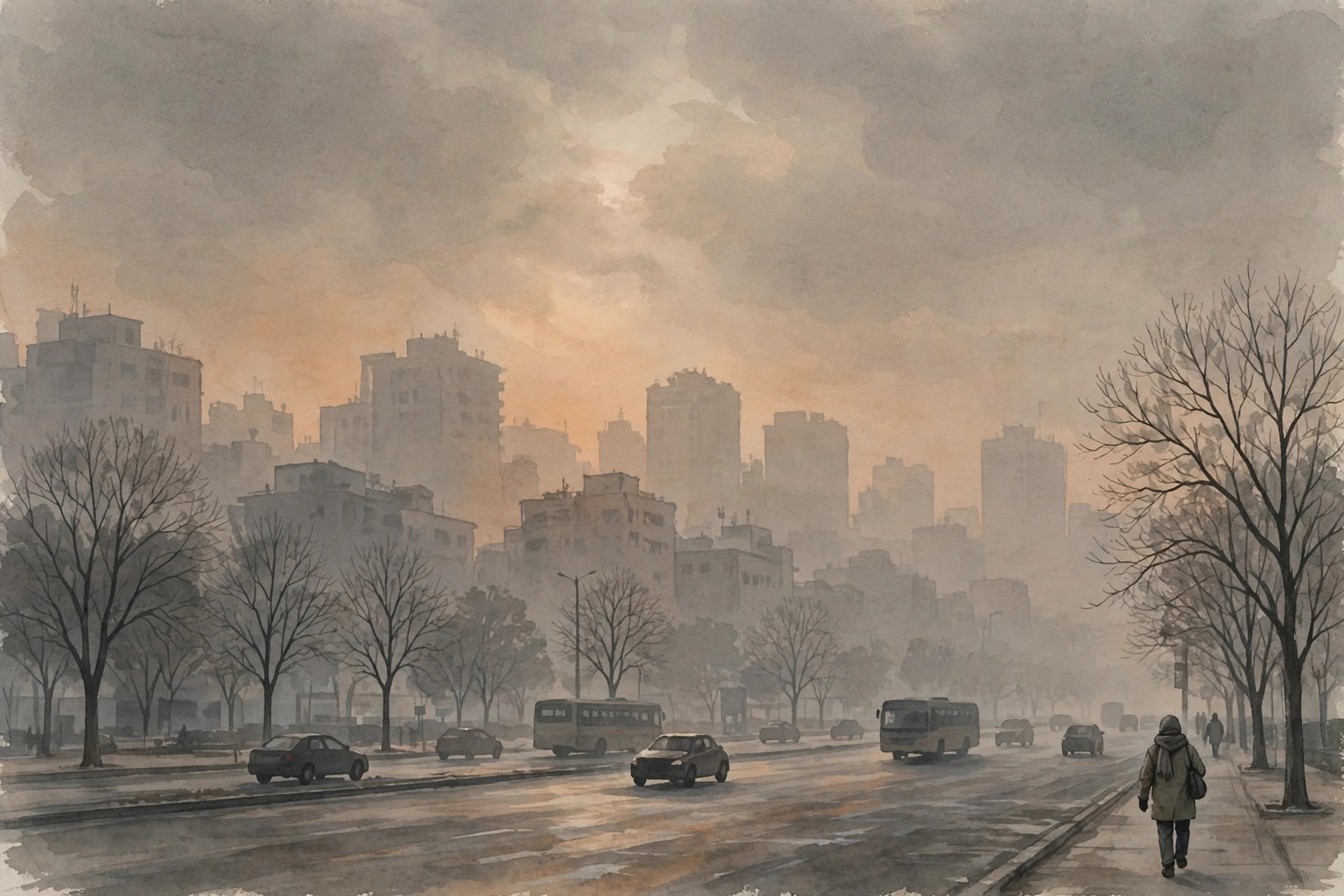
Delhi's winter pollution season arrives with a familiar pattern: the air turns hazy, the morning sky looks washed out, and the Air Quality Index (AQI) climbs into the "poor" and "very poor" bands. For winter 2026-27, the Delhi government has announced a Winter Pollution Master Plan that tightens the rules from 1 November 2026. It covers vehicles entering the capital, fuel sales, office working arrangements, parking charges and construction activity, and it runs, in its overall form, until 28 February 2027.
This explainer sets out what changes from 1 November, who is affected, what is exempt, and what remains uncertain. It is based on the plan as reported by The Hindu BusinessLine and other news reports of the government's announcement; where reports differ on a detail, that difference is flagged rather than smoothed over. Readers who will be directly affected — especially drivers coming into Delhi from other states — should check the latest Delhi Environment Department notification before travelling, since enforcement details can be updated.
What changes from 1 November 2026
The headline measures, as reported, are:
- "No PUC, No Fuel": vehicles without a valid Pollution Under Control Certificate (PUCC) will not be given fuel at Delhi's 500 petrol pumps fitted with Automatic Number Plate Recognition (ANPR) cameras. Vehicles that have crossed their prescribed lifespan will also be refused fuel.
- Entry restriction: petrol and diesel vehicles registered outside Delhi that do not meet Bharat Stage VI (BS-VI) emission standards will be barred from entering the capital from 1 November 2026 to 31 January 2027. Compressed Natural Gas (CNG) and electric vehicles are exempt, as are emergency services.
- Work from home: government and private offices are to operate with 50 per cent of staff working from home — in practice, about two work-from-home days a week for many employees — from 1 November 2026 to 28 February 2027.
- Staggered office hours: Municipal Corporation of Delhi (MCD) offices will run from 8:30 am to 5:00 pm, while Delhi government offices will run from 10:00 am to 6:30 pm, spreading out peak-hour traffic.
- Parking charges doubled: parking fees at authorised parking sites across Delhi will be doubled from 1 November 2026 to 28 February 2027, except at Delhi Metro parking facilities, which are exempt. The aim is to discourage private vehicle use.
- Construction curbs in phases: dust-generating demolition and outdoor civil construction work will be prohibited from 1 November 2026 to 31 January 2027, and a wider ban on all construction and demolition activity will apply from 10 December 2026 to 20 January 2027. Construction sites must have full CCTV coverage, and registration on the Malba App is required for building-plan approvals. Anti-smog guns or mist systems are mandatory in malls, hotels and commercial buildings larger than 3,000 square metres.
Alongside this seasonal plan, the Commission for Air Quality Management (CAQM) has already invoked Stage I of the Graded Response Action Plan (GRAP) for the National Capital Region. GRAP Stage I was triggered after Delhi's AQI reached 244 on 21 October 2026, placing it in the "poor" category. Stage I brings targeted controls such as restrictions on coal and firewood use in tandoors and limits on diesel generator sets. A later reading reported on 26 October showed the AQI at 164 at 7 am, still in the "poor" range at several stations including Jahangirpuri, Vivek Vihar, CRRI Mathura Road, Punjabi Bagh and RK Puram. In other words, the seasonal plan starts against a background of already-poor air, not from a clean baseline.
Why Delhi's air gets worse every winter
Delhi's winter pollution is not caused by any single source, and that is why the plan touches so many activities at once. As temperatures fall, a layer of cooler air near the ground can trap pollutants close to the surface, a phenomenon often described as a temperature inversion. Winds also tend to be calmer, so dust and exhaust disperse less. On top of this seasonal weather effect sit year-round and seasonal sources: vehicular emissions, road and construction dust, industrial emissions, waste burning, and smoke from crop-residue burning in neighbouring states.
This combination explains the shape of the plan. Vehicle measures target exhaust emissions and traffic volume. Construction measures target dust. Staggered hours and work from home target the morning and evening peaks, when a large number of vehicles are on the road at the same time and emissions coincide with the least favourable dispersion conditions. None of these steps, on its own, can clear the air; the plan's logic is to reduce several sources at the same time.
It also explains why enforcement is spread across many agencies. Reports of the plan describe coordination between the Centre and the Delhi government, the CAQM, the Central Pollution Control Board, local bodies, Delhi Police and the Delhi Metro Rail Corporation, among others. Winter pollution crosses state and administrative boundaries, so a measure announced in Delhi alone cannot control what blows in from outside — a limit that matters when judging what the plan can realistically achieve.
What it means for drivers, especially from outside Delhi
The entry restriction is the measure most likely to catch travellers by surprise, so it deserves careful reading. As reported, it applies to petrol and diesel vehicles registered outside Delhi that do not meet BS-VI standards, for the period 1 November 2026 to 31 January 2027. CNG and electric vehicles are exempt, as are emergency vehicles.
Three cautions apply. First, this is not an NCR-wide ban: a BS-IV vehicle can still be driven within its own NCR city, subject to GRAP rules and vehicle-age rules that apply there. The restriction concerns entry into Delhi. Second, some secondary summaries have stressed that the restriction is clearest for commercial vehicles and that the treatment of private cars from other states has been described differently in different reports. Drivers of older private vehicles registered outside Delhi should therefore treat the restriction as a real risk and verify the current position before setting out, rather than assuming either that they are certainly banned or certainly exempt. Third, the "No PUC, No Fuel" rule applies inside Delhi regardless of where a vehicle is registered: without a valid pollution certificate, refuelling at ANPR-enabled pumps will be refused.
For Delhi-registered vehicle owners, the practical message is simpler but still important: keep the pollution certificate current, because the fuel rule makes an expired certificate an immediate problem rather than a fine risked only at a traffic stop. The doubled parking charges and the push towards Metro, electric buses and carpooling are meant to make public transport the easier choice during the winter months, and the staggered office hours should slightly ease the worst congestion peaks even for those who must drive.
Transporters have already raised a practical objection. The All India Motor Transport Congress Association (AIMGTA) has asked for a 15-day pilot before full enforcement of the entry restriction, warning that a sudden ban on older trucks from outside Delhi could force goods to be transferred to smaller vehicles at the border, raise logistics costs and create congestion at entry points. Whether the government grants a pilot or phased rollout is one of the implementation questions still open as the 1 November start date approaches. For businesses that move goods into Delhi, the prudent step is to check which vehicles in the fleet meet BS-VI, which run on CNG or electricity, and what contingency exists if an older vehicle is turned back.
What it means for offices, workers and construction
For office workers, the 50 per cent work-from-home arrangement means fewer commutes during the worst pollution months, but it also means new rostering work for employers. Offices will need to organise teams so that only half the staff are physically present at a time, or so that each employee works from home for about two days a week, while keeping operations running. The staggered timings for MCD and Delhi government offices — 8:30 am to 5:00 pm and 10:00 am to 6:30 pm respectively — are designed to thin out the rush hour rather than to reduce total working hours.
For the construction sector, the phased bans are the sharpest economic measure in the plan. Dust-generating work stops first, from 1 November to 31 January, and then all construction and demolition activity pauses from 10 December to 20 January, the period when winter pollution is typically at its worst. Workers, contractors and homebuyers with projects under way should expect delays during that window, and sites will face closer monitoring, including AI cameras linked to an Integrated Command and Control Centre, expanded air monitoring, hundreds of enforcement teams, anti-smog guns and mist units.
For residents, the most useful parts of the plan may be the least dramatic: mechanised road sweeping, water sprinkling, controls on open waste burning, industrial monitoring and the expansion of public transport options. These do not make headlines, but they address the dust and local emissions that people breathe every day on their own streets.
What the plan does not do — and what to watch
It is important to be clear about what this plan is not. It is not a ban on all older vehicles everywhere in the NCR, and it is not a permanent change to vehicle rules: the entry restriction runs to 31 January 2027 and the wider winter plan to 28 February 2027, unless extended or amended. It also does not, by itself, solve the regional sources of pollution. Crop-residue burning, industrial emissions outside Delhi and weather conditions will continue to influence Delhi's AQI even if every measure in the plan is enforced well.
Three things are worth watching as November begins. First, enforcement: whether the ANPR fuel checks, entry checks and parking charges operate consistently, or whether they vary by location and day. Second, exemptions and edge cases: how emergency vehicles, essential services and specific categories of vehicles are treated in practice, and whether any pilot or phased approach is announced for goods vehicles. Third, the AQI trajectory itself: whether the combination of GRAP Stage I and the seasonal plan holds the AQI in the "poor" range rather than letting it slide into "very poor" or "severe" as winter deepens. If the AQI worsens sharply, GRAP can be escalated to higher stages with stricter measures, which would change the picture again.
Conclusion
Delhi's winter pollution plan for 2026-27 is a broad, practical package: fuel only with a valid pollution certificate, a seasonal entry restriction on older non-BS-VI vehicles from outside Delhi, 50 per cent work from home, staggered office hours, doubled parking charges and phased construction bans, all sitting on top of GRAP Stage I. Its strength is that it attacks several pollution sources at once; its weakness is the same as every Delhi winter plan — it operates within one city while pollution comes from a whole region, and its success will depend on consistent enforcement and on weather that Delhi cannot control. For residents, the immediate steps are simple: check your vehicle's pollution certificate, plan commutes around Metro and carpool options where possible, and, if you drive into Delhi from another state in an older petrol or diesel vehicle, verify the current entry rules before you travel.