Crop Rotation and Intercropping Explained: How Smart Crop Combinations Protect Soil and Income
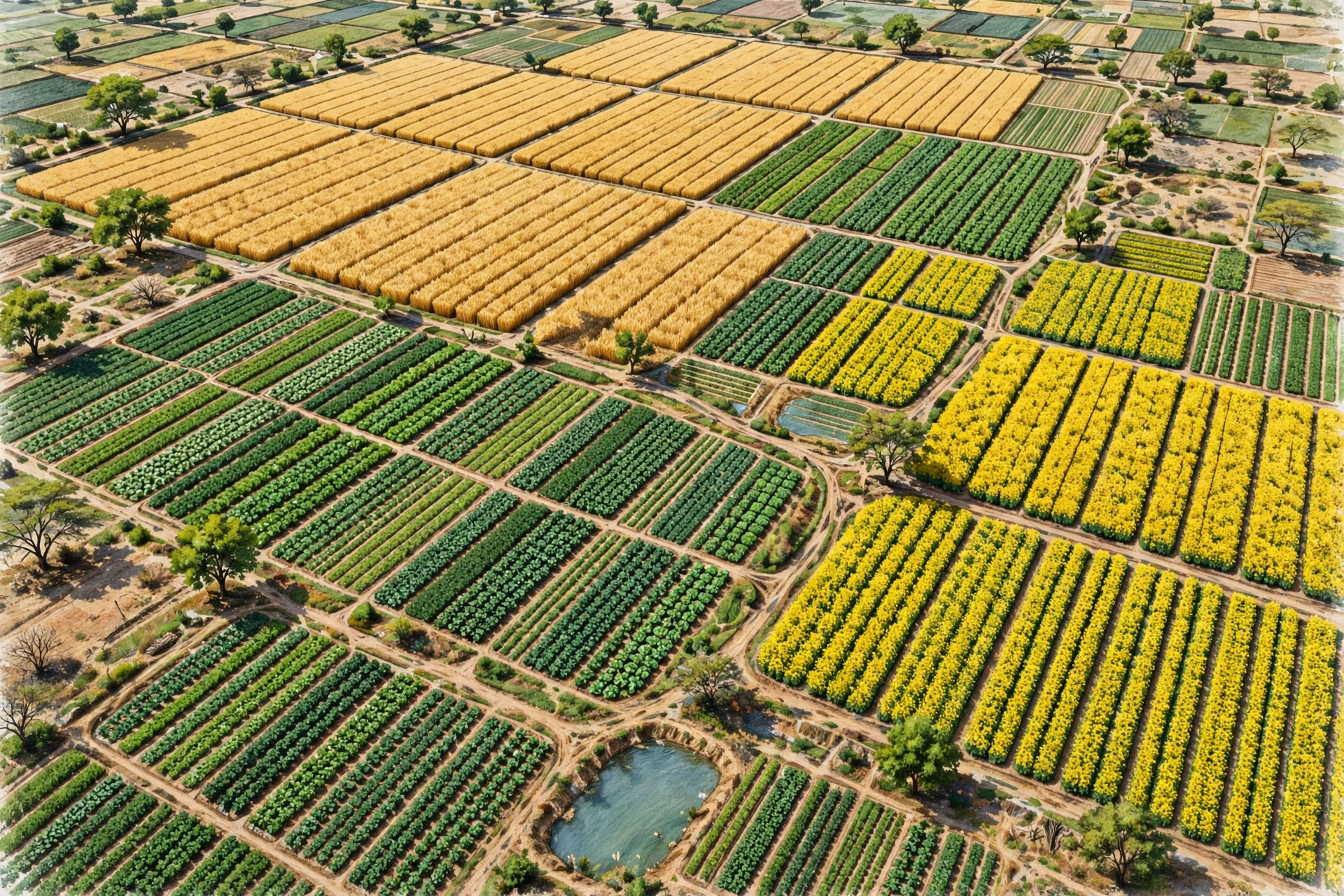
Key Takeaways
- Rotation changes the crop across seasons; intercropping grows two or more crops together.
- Repeating one crop builds up its pests, weeds and specific nutrient depletion.
- Legumes in rotation fix nitrogen and break cereal pest cycles.
- Companion crops should complement, not compete, for light, water and nutrients.
- Test any new combination on part of a field for one season before expanding it.
Crop Rotation and Intercropping Explained: How Smart Crop Combinations Protect Soil and Income
Ask an old farmer why he never grows the same crop on the same plot year after year, and the answer is rarely about theory. He has seen it: yields slip, a particular weed takes over, and one pest returns every season like an uninvited guest. Crop rotation and intercropping are the traditional answers to these problems, and modern agronomy has only confirmed why they work. Rotation means changing the crop grown on a plot across seasons. Intercropping means growing two or more crops together on the same plot at the same time. Both rest on one idea: different crops use the soil differently, feed different pests, and leave different things behind. Used well, they protect the soil, spread risk and steady a farm's income without any new machine or input.
Why Growing the Same Crop Every Season Backfires
Every crop draws a particular mix of nutrients from the soil and leaves a particular pattern of roots, residue and pests behind. Wheat after wheat, for example, keeps pulling the same nutrients from the same soil depth, while the weeds and diseases that thrive in wheat get a fresh host every season. Over years, the soil tires in a specific way that simply adding more fertiliser does not fully fix. The pest and disease pressure also builds up, because the organisms that attack that crop survive in the soil and stubble between seasons and find their host waiting again.
A second problem is risk. A farm that grows one crop depends on one monsoon window, one market and one pest season. If rain fails at flowering or the price dips at harvest, the whole year's income takes the hit. Diversity is the simplest insurance a farmer owns.
How Rotation Works: The Logic of Changing Crops
A good rotation follows a few plain principles. First, alternate deep-rooted and shallow-rooted crops, so different soil layers are used and rested in turn. Second, follow a nutrient-hungry crop such as a cereal with a legume, which fixes atmospheric nitrogen through its root nodules and leaves the soil richer for the next crop. Third, break pest and disease cycles by ensuring the same crop family does not return to the same plot too soon; a gap of two or three seasons is a common rule of thumb. Fourth, alternate crops that leave plenty of residue with crops that leave little, so soil organic matter gets regular top-ups.
Consider a simple three-year rotation on irrigated land. In the first year, a farmer grows a cereal that feeds the family and sells steadily. In the second year, the same plot goes to a legume such as chickpea or moong, which needs less water, fixes nitrogen and breaks the cereal pest cycle. In the third year, the plot takes an oilseed or a vegetable that benefits from the improved soil and fetches a different market window. No step is exotic. The benefit comes from the sequence, not from any single crop. Farmers with limited irrigation can adapt the same logic by rotating a water-hungry crop with a hardy one, so the farm's water demand does not peak in the same way every year.
Intercropping: Two Crops, One Field, Shared Benefits
Intercropping works on a different logic: companionship rather than sequence. When two crops grow together, they should complement rather than compete. A tall crop can shelter a shorter one, a fast crop can be harvested before a slow one needs the space, and a legume can feed nitrogen to a neighbouring cereal. A classic pairing is a cereal with a legume: the cereal uses the upper canopy and the legume fills the lower space, so sunlight, water and nutrients are used more fully than either crop alone would manage.
There are several patterns. In row intercropping, alternate rows of two crops run across the field. In strip intercropping, wider bands of each crop make sowing and harvesting easier with simple machinery. In relay cropping, the second crop is sown into the standing first crop shortly before its harvest, so the field is never empty for long. The right pattern depends on how the farmer sows, irrigates and harvests. A farmer who harvests by hand can manage mixed rows; a farmer using a small machine may prefer strips that keep the crops separate enough to work.
A Worked Example: One Acre, Two Seasons, Less Risk
Take a small farmer with one irrigated acre and a family to feed. In the kharif season, instead of planting the whole acre to a single cereal, she plants three rows of the cereal alternating with one row of a legume. The legume matures earlier, giving an early harvest and some cash while the cereal is still standing. At the end of the season, the legume residue and its nitrogen-fixing roots stay in the soil. In the rabi season, she rotates the plot to a different family altogether, perhaps an oilseed, while the legume moves to another part of the farm.
The economics of this arrangement are worth spelling out. The total grain output of the main crop may dip slightly compared with a pure stand, because part of the land goes to the companion crop. But the farmer gains a second product, an earlier income, lower spending on nitrogen fertiliser for the next crop, and fewer pest outbreaks, since the mixed canopy confuses some pests and the break in host crops interrupts their cycle. Over two or three years, the steadier income and the slowly improving soil usually outweigh the small dip in any single harvest. The key judgement is proportion: the companion crop should be a partner, not a weed. If it grows so vigorously that it shades out the main crop, the ratio needs adjusting next season.
Mistakes to Avoid When Mixing Crops
The commonest mistake is pairing crops that want the same thing at the same time: two tall, heavy-feeding crops that compete for light and water will both yield poorly. Another is ignoring harvest practicality. A combination that looks good on paper fails if both crops mature together and cannot be separated, or if one crop's harvest damages the other. A third mistake is rotating within the same family without realising it, for example following one brassica with another, which does nothing to break the pest cycle. Knowing crop families matters more than memorising individual crop names. Finally, do not change everything at once. Try a new combination on part of a field for one season, compare it honestly with the usual practice, and expand only what actually worked on your soil and with your water.
Conclusion
Rotation and intercropping are not old-fashioned habits to be replaced by modern inputs. They are management tools that use crop biology itself to protect soil, interrupt pests and spread income risk. Rotation works across seasons, intercropping works within a season, and together they let a small farm behave like a diversified business rather than a single bet. Start small: change one plot's sequence this year, or add one companion row to a familiar crop. Watch what happens to the soil, the pests and the cash flow over two seasons, not one. The results that matter in farming are the ones that repeat, and these practices have been repeating for generations for a reason.