Weather Advisories for Farmers Explained: How Agromet Forecasts Help Plan Sowing, Spraying and Harvest
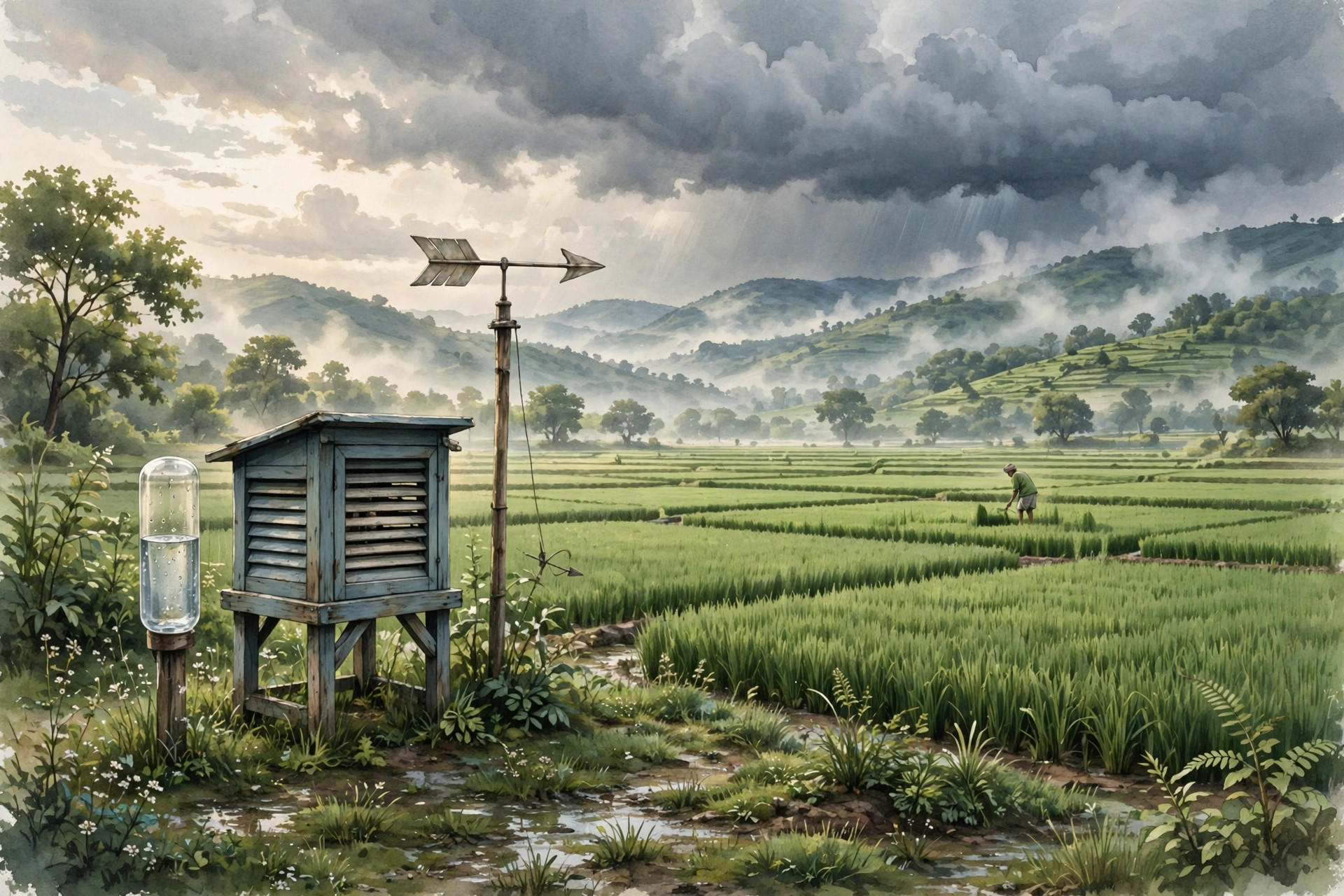
Key Takeaways
- Agromet advisories translate forecasts into crop- and stage-specific farm actions.
- Advice differs by crop stage: rain at sowing helps, rain at harvest harms.
- Check the advisory in the morning, daily during sensitive periods.
- Match spraying to rain-free, low-wind windows so chemicals are not wasted.
- Forecasts are probabilities; local field observation is the final check.
Weather Advisories for Farmers Explained: How Agromet Forecasts Help Plan Sowing, Spraying and Harvest
A farmer's most expensive decisions are often made on a guess about the sky. Sow today and a dry spell follows, and the seed fails. Spray in the morning and rain washes it off by afternoon, and both the chemical and the labour are wasted. Harvest when a storm is coming, and a season's grain gets wet in the field. Weather advisories for farmers exist to replace some of that guessing with planning. In India, agromet advisories combine weather forecasts with crop advice: they do not just say it will rain, they suggest what a farmer growing a particular crop at a particular stage should do about it. Used regularly, they are one of the cheapest risk-management tools a farm has.
What an Agromet Advisory Actually Contains
A general weather forecast tells you about rain, temperature, wind and humidity for a district or region. An agromet advisory goes one step further and translates that forecast into farm actions. It is typically issued for a block or district, covers the next few days, and is timed to the crop season. A typical advisory might warn of heavy rain in the next two days and advise farmers to postpone spraying, ensure field drains are open, and cover harvested produce. Another might note a dry, windy spell and advise irrigation for a crop at flowering, when water stress hurts yield most.
The advice is stage-specific, and that is what makes it useful. The same forecast means different things for different crops. Rain at sowing time can be a blessing that saves an irrigation. Rain at harvest time can ruin standing or threshed grain. A hot, dry wind matters most when a crop is flowering or filling grain. Good advisories therefore mention the crop and its growth stage, so the farmer can judge whether the advice applies to his own field or to a neighbour's different crop. Farmers should always check which district and date the advisory covers, because advice written for another area or last week can mislead.
Where Farmers Get Advisories and How Often to Check Them
Advisories reach farmers through several channels: mobile apps and SMS services run by agricultural departments and meteorological agencies, local radio and television bulletins, WhatsApp groups run by extension workers, and notice boards at block agriculture offices. Many farmers also hear them through fellow farmers or local input dealers. The channel matters less than the habit. A farmer who checks the advisory twice a week will catch most useful warnings, but during sensitive periods such as sowing, spraying and harvest, a daily check is worth the minute it takes.
It helps to keep a simple routine. Check the advisory in the morning before planning the day's work, not after the sprayer is already loaded. And treat the advisory as one input among others: it complements, but does not replace, looking at the sky, feeling the soil and knowing your own field's drainage.
Using the Forecast at Each Critical Decision
Sowing is the first big decision a forecast can improve. If the advisory shows a good rain spell approaching and the soil has enough moisture, sowing just before the rain can save an irrigation and give even germination. But sowing into a forecast of very heavy rain can wash seed away or waterlog the field, so waiting a day or two may be wiser. The rule is to match sowing to soil moisture plus the coming rain, not to the calendar alone.
Spraying is the second. Most sprays need a few rain-free hours to stick and act. An advisory that shows rain within a day is a clear signal to postpone, and one that shows strong wind warns against spraying when drift would carry the chemical onto a neighbour's crop or waste it. Spraying in the cooler morning or evening hours, when the advisory shows lower wind and no imminent rain, gives the chemical its best chance to work.
Irrigation is the third. A forecast of rain in the next day or two can justify delaying an irrigation, saving water, diesel or electricity and avoiding waterlogging. A forecast of a long dry spell during flowering or grain filling is a signal to irrigate in time, because stress at those stages cuts yield more than stress at other times. Harvest is the fourth: when a storm is forecast, bringing forward the harvest of a mature crop, even by a day, can save more value than any other single action in the season.
A Simple Checklist Before Acting on Any Advisory
Before changing a plan because of an advisory, run through a short checklist. First, is this advisory for my district and for the coming days, not an old or distant one? Second, does it mention my crop and its current stage, or am I applying general advice to a special case? Third, what does my own field say: is the soil already wet, is the crop actually at the sensitive stage, is the drain clear? Fourth, what is the cost of being wrong in each direction? Postponing a spray costs a day; spraying before rain wastes the chemical entirely. Usually the cheaper mistake is the safer choice. Fifth, if the decision affects hired labour or a machine booking, tell them early, because a changed plan that nobody knows about helps no one.
This checklist sounds formal, but in practice it becomes a habit within a season. The farmers who benefit most from advisories are not those who follow every word blindly, but those who combine the forecast with their own field knowledge. An advisory that says "rain expected" is a prompt to think, not an order. The thinking is what turns a forecast into a better decision.
What Advisories Cannot Do
Honesty about limits matters. Forecasts are probabilities, not promises, and they get less precise the further ahead they look. A five-day outlook is a guide for planning; a two-day forecast is the one to act on firmly. Local thunderstorms are the hardest to predict, and a district forecast can miss a storm that hits one village and spares the next. Advisories also cannot fix structural problems: they will not drain a waterlogged field, supply irrigation water that does not exist, or change a crop variety's tolerance to heat. What they do is give the farmer time: time to postpone, to prepare, to harvest early or to irrigate before stress bites. Time is often the scarcest resource in a farming season, and that is exactly what a good advisory supplies.
Conclusion
Weather advisories turn a general forecast into farm-specific guidance: when to sow, when to hold off spraying, when to irrigate and when to hurry the harvest. The habit matters more than the technology. Check the advisory for your district before the day's work, match it to your crop's stage and your field's condition, and use the short checklist before changing a plan. No forecast is perfect, and local observation remains the final judge. But a farmer who plans with the sky instead of guessing at it will waste fewer inputs, lose fewer crops to untimely rain, and make the season's hardest calls with better information than a guess.