Green Manure and Cover Crops Explained: How Dhaincha, Sunhemp and Other Cover Crops Rebuild Soil
Key Takeaways
- Green manure crops are grown to improve soil, not harvested for sale
- Legumes such as dhaincha and sunhemp fix nitrogen from the air
- Dhaincha suits waterlogged fields and grows fast in a short window
- Incorporate cover crops while still green and soft, at or before flowering
- Allow roughly two to three weeks after incorporation before sowing the next crop
Green Manure and Cover Crops Explained: How Dhaincha, Sunhemp and Other Cover Crops Rebuild Soil
Every farmer knows a field that used to respond quickly and now seems tired. The same fertiliser gives a smaller response, the soil sets hard after irrigation, water runs off instead of soaking in, and weeds return faster than before. Often the missing piece is not another bag of input. It is organic matter, living roots and time to recover. That is what green manure and cover crops provide, by growing a crop never harvested for sale but ploughed back into the field that grew it.
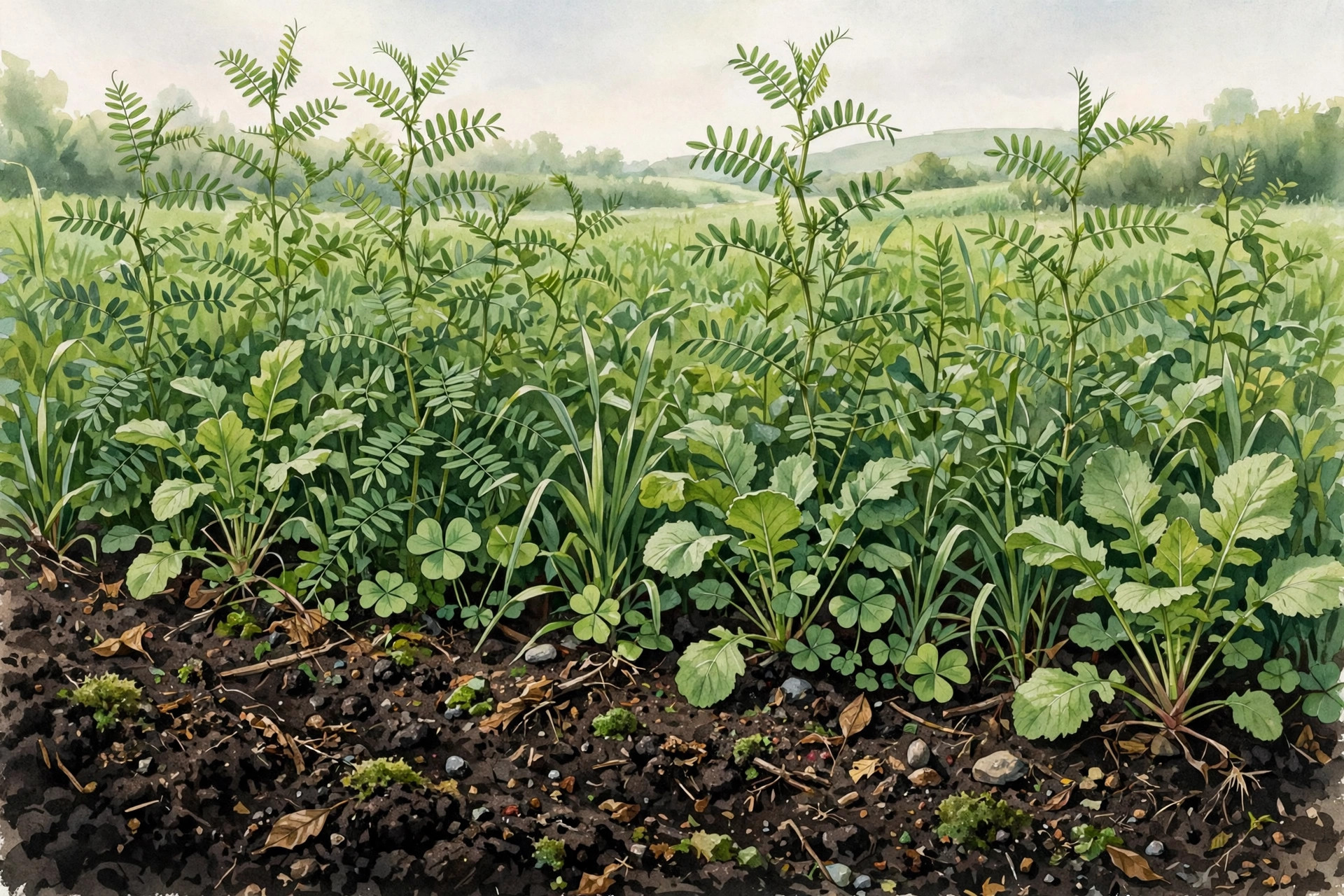
Green manure means a crop grown mainly to improve the soil. A cover crop is broader: any crop grown to cover bare ground between main crops, protect it from rain and sun, suppress weeds and feed soil life. Dhaincha and sunhemp are classic green manures in India, but cowpea, cluster bean, mustard or oats, or a mixture, can serve as a cover. The point is what the plants do while alive, and what they leave behind when incorporated.
Why soil gets tired, and what a living cover changes
Healthy soil is more than loose dirt. It is a structure of crumbs and pores held together by roots, fungal threads and decomposed plant material. Those pores let air reach roots, let rain enter rather than pool, and hold moisture that crops can draw on during a dry spell. Repeated ploughing, long fallows under a hot sun, removal of every stalk after harvest, and heavy reliance on chemical fertiliser alone all push in the opposite direction. Organic matter falls, the surface crusts, and the soil biology that cycles nutrients has less to feed on.
A cover crop interrupts that decline in several ways at once. Its roots open channels that later become passages for water and air. Its leaves shade the ground, keeping the surface cooler and moister. Its residues, once incorporated, feed microbes and earthworms, which release nutrients slowly and build the crumb structure of good soil. None of this happens overnight, but over two or three seasons such fields often become visibly easier to work.
Legumes deserve special mention. Dhaincha, sunhemp, cowpea and moong host bacteria in root nodules that fix nitrogen from the air, and much of that nitrogen reaches the next crop as the material decomposes. Non-legumes such as mustard or oats do not fix nitrogen, but they catch nutrients that would otherwise wash below the root zone. Many farmers therefore mix the two, gaining both nitrogen and bulk.
Choosing the right cover: dhaincha, sunhemp and their companions
Dhaincha is the workhorse of green manuring in irrigated rice country and in many other rotations. It grows fast, tolerates waterlogging better than most green manures, produces a tall, soft crop that is easy to incorporate, and adds a large amount of biomass in a short window. It is typically grown for roughly six to eight weeks and ploughed in while still green and succulent. Wait too long and the stems turn woody, decomposition slows, and incorporation becomes hard work.
Sunhemp plays a similar role and is often chosen where the field is not waterlogged. It establishes rapidly, shades out weeds, and its deep roots help break a compacted layer. Cowpea and cluster bean are useful when water is more limited, or when the farmer also wants some fodder value. Mustard, sown as a cover in cooler months, grows fast and leaves residues that break down readily. Oats and similar cereals are chosen for winter cover and for catching leftover nitrogen after a heavily fertilised crop.
The choice should follow four practical questions. How long is the gap before the next main crop? How much water is available — a thirsty cover in a dry gap can steal moisture the next crop will need. What is the main problem: low nitrogen, hard soil, weeds or erosion? And what seed is available locally, and has a neighbour grown it before? Local experience and advice from the agriculture department are worth more than a catalogue description written for another climate.
Growing and incorporating a cover crop, step by step
Start with the field, not the seed. Clear previous residue enough for good seed-to-soil contact, and sow at the recommended rate. Broadcasting followed by light harrowing works for many small-seeded covers, while line sowing gives more even establishment. A light irrigation helps germination in a dry gap, but the cover should not be pampered like a cash crop; part of its value is that it grows with modest care.
Watch the crop, not the calendar alone. The right time to incorporate is when the plants are lush, green and still soft, usually at or just before flowering for dhaincha and sunhemp. At that stage the biomass is high, the stems are easy to chop and bury, and decomposition is fast. Incorporate with a rotavator or disc harrow, mixing the material into the top layer rather than leaving thick mats on the surface, which dry out and decompose slowly. After incorporation, allow time before sowing the next crop: roughly two to three weeks in warm, moist conditions is a common guide, so the initial flush of decomposition settles and the seedbed is ready. Sowing immediately into freshly buried green material can cause poor germination and temporary nitrogen shortage, because microbes breaking down the residue briefly compete with seedlings for nitrogen. That waiting period is one of the commonest mistakes, and one of the easiest to avoid.
The mistakes that waste a good cover crop
The first mistake is treating the cover as free. Seed, sowing and incorporation all cost time and money, and a cover occupies land that could have grown something else. The return comes as saved fertiliser over time, better water use, easier tillage and steadier yields, not as a cash sale at harvest. Farmers who judge a green manure only by what it would have sold for will always feel disappointed, because its product is the soil itself.
The second mistake is letting the cover become a weed problem. Any cover left to set seed can return as a weed in the next crop, so dhaincha and sunhemp should be incorporated before seeds mature. A cover chosen without checking whether it hosts a pest or disease of the next main crop can also backfire, which is why rotation matters: avoid following a legume cover with a legume main crop if disease pressure is a concern, and rotate plant families where possible.
The third mistake is expecting one season to transform the field. Organic matter builds slowly and is lost quickly under hot, bare fallows. One green manure crop is a good start, not a finished job; the clearest change comes from repeating the practice across rotations.
Conclusion
Green manure and cover crops are not new, and that is part of their strength. Dhaincha, sunhemp and cowpea do unglamorous work: shading bare soil, feeding microbes, fixing nitrogen and returning biomass to the field. Done at the right time, incorporated while still green, and repeated across seasons, they rebuild the foundation every fertiliser and variety depends on. The fairest question is not whether a cover crop pays in one season, but whether the field will be easier and more resilient three seasons from now. On most Indian farms, the answer, patiently earned, is yes.