Electric Motorcycle vs Electric Scooter Explained: Which One Suits Your Commute, Budget and Riding Style
Key Takeaways
- Scooters suit city traffic up to twenty or thirty kilometres a day
- Motorcycles are more stable and comfortable on highways and open roads
- Motorcycles are taller and heavier, so test standstill handling before buying
- Scooter batteries are usually smaller, cheaper to replace and sometimes removable
- Buy for your most frequent ride, and test ride both types before deciding
Electric Motorcycle vs Electric Scooter Explained: Which One Suits Your Commute, Budget and Riding Style
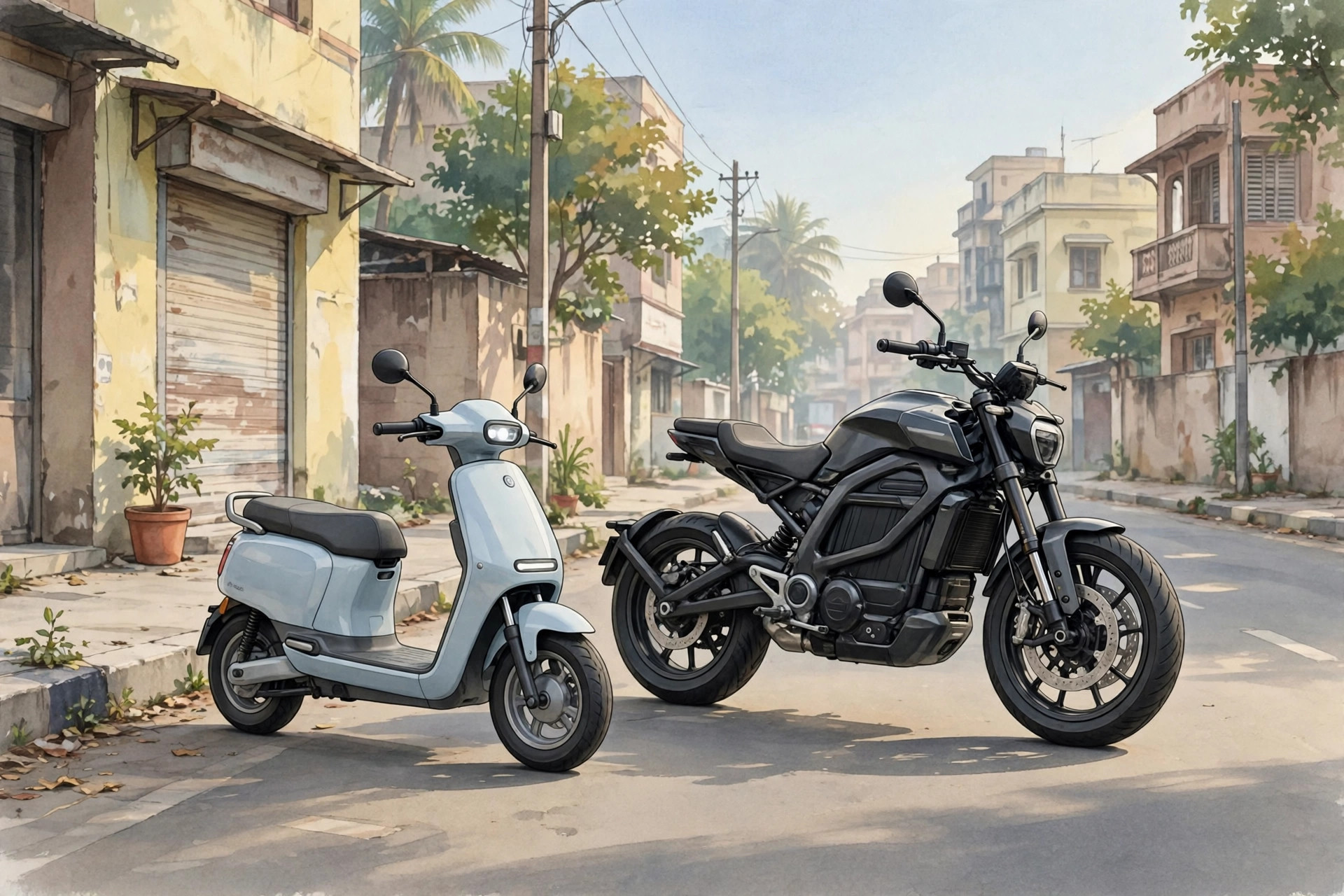
Walk into an electric two-wheeler showroom today and you face a real choice: a step-through electric scooter or a full-sized electric motorcycle. Both run on batteries, both cost far less to run than a petrol vehicle, and both are quiet and smooth. But they are built for different kinds of riders, and picking the wrong one leads to months of small frustrations: a scooter that feels strained on the highway, or a motorcycle that feels like overkill for a five-kilometre school run.
The choice is not about which is better in general. It is about which fits your daily route, your body, your parking situation and your budget. Let us compare them honestly, side by side, so you can decide with your eyes open.
The Daily Commute: City Streets vs Open Roads
The first question is where you actually ride. An electric scooter shines in city traffic. Its step-through design means you get on and off easily, even in tight parking or wearing office clothes. The floorboard gives you space for a bag, the under-seat storage swallows a helmet, and the compact size lets you weave through traffic and park in small gaps. For commutes of up to twenty or thirty kilometres a day on city roads, a scooter is hard to beat for convenience.
An electric motorcycle is built for a different kind of ride. With larger wheels, a longer wheelbase and a riding position that suits higher speeds, it is more stable and comfortable on highways and open roads. If your commute includes a stretch of highway, a flyover-heavy route, or regular intercity trips, a motorcycle will feel planted and confident where a small-wheeled scooter can feel nervous. The trade-off is size: a motorcycle is heavier, harder to push around in a parking lot, and less convenient for short hops with frequent stops.
Think about your longest regular ride, not your average one. A scooter that handles your daily ten kilometres perfectly may still struggle on the occasional weekend trip. Conversely, a motorcycle bought for a weekend trip may feel bulky for the daily grocery run. Buy for the ride you do most often, and rent or borrow for the exception.
Comfort, Riding Position and Who Can Ride It
Riding position is where the two types feel most different. On a scooter you sit upright with your feet flat on a floorboard, your knees relaxed, and the handlebar close at hand. It is an easy, natural posture that suits riders of almost any height and build, and it is forgiving for beginners. On a motorcycle you straddle the tank, grip the tank with your knees, and reach further to the handlebar. It feels more engaged and sporty, but it demands more from your legs, core and wrists, especially in stop-and-go traffic where you are constantly putting a foot down.
Seat height and weight are practical filters. A motorcycle is typically taller and heavier than a scooter, which matters if you are shorter, or if you need to manoeuvre the vehicle in a tight garage. Before deciding, sit on both types, hold them upright, and walk them backwards. If a motorcycle feels like a stretch to manage at a standstill, it will feel like a stretch every day, not just in the showroom.
Pillion comfort also differs. A scooter's long, flat seat usually accommodates a passenger comfortably for city rides, while a motorcycle's pillion seat varies widely: some are generous, others are small and high. If you regularly carry a family member, test the pillion seat with that person before buying.
Running Costs, Maintenance and Practical Ownership
Both types are cheaper to run than petrol equivalents, because electricity costs less per kilometre than fuel and electric motors have fewer moving parts. But the details differ. Electric motorcycles often have larger batteries, which means longer range but also higher replacement cost when the battery eventually ages. Scooters usually have smaller batteries that are cheaper to replace and, in some models, removable for charging at home.
Maintenance is generally simpler on both than on a petrol vehicle: no engine oil, no clutch plates, no exhaust system. Tyres, brakes and suspension still need attention on both, and a motorcycle's larger tyres and chain or belt drive may cost more to maintain than a scooter's simpler setup. Insurance premiums also tend to track the vehicle's value and power, so a higher-priced motorcycle will usually cost more to insure than a scooter.
Charging is another practical difference. A scooter with a removable battery can be charged from a regular wall socket at home, which is a big advantage in apartments without dedicated parking chargers. Motorcycles more often rely on fixed batteries and need a proper charging point. Check how each option fits your home and parking situation before falling in love with a model.
A Simple Decision Framework
If you are still torn, run through these questions honestly. Is your daily ride mostly city traffic under thirty kilometres? A scooter probably fits. Does your route include highways or long open stretches? Lean towards a motorcycle. Do you park in tight spaces or need to carry things daily? A scooter's storage wins. Do you ride for pleasure on weekends and want the feel of a bigger machine? A motorcycle may be worth the extra size and cost. Are you a new rider, or shorter, or less confident handling weight? A scooter is the gentler start, and you can always move up later.
Budget matters too, but think in total terms, not just the showroom price. Add insurance, expected battery replacement over the years you will keep the vehicle, and charging setup costs. A cheaper vehicle that needs an expensive charging installation may not be cheaper overall, and a pricier vehicle with a longer range may save you from needing a second vehicle for longer trips.
Common Mistakes Buyers Make
One common mistake is buying range you will never use. A motorcycle with a very long range sounds impressive, but if you ride fifteen kilometres a day and charge at home, that extra battery is weight and money you carry for no benefit. Another mistake is ignoring the test ride: a ten-minute ride tells you more about seat comfort, handlebar reach and braking feel than any brochure. A third mistake is choosing purely on looks. A motorcycle that looks stunning in photos may be uncomfortable after twenty minutes, and a plain-looking scooter may be the one you love riding daily.
Finally, do not overlook after-sales support. Check that the brand has a service centre within reasonable distance of your home, and ask other owners about parts availability and service quality. An electric two-wheeler is a long-term purchase, and the service network matters as much as the vehicle itself.
Conclusion
There is no universal winner between an electric motorcycle and an electric scooter. The scooter wins on city convenience, easy handling and practical storage; the motorcycle wins on highway stability, longer rides and the sheer pleasure of riding a bigger machine. Match the vehicle to your real daily route, your build, your parking and your budget, test ride both before deciding, and you will end up with the one that fits your life rather than the one that merely looked good in the showroom.